

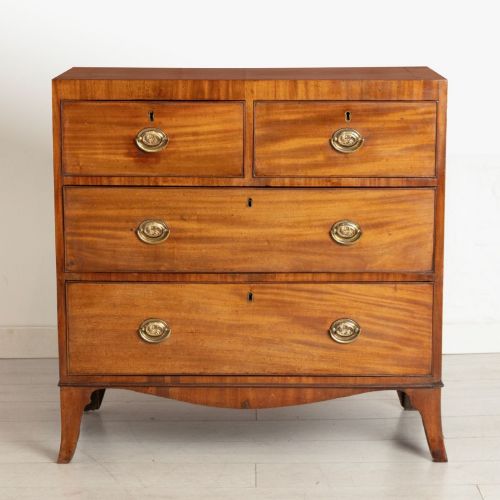
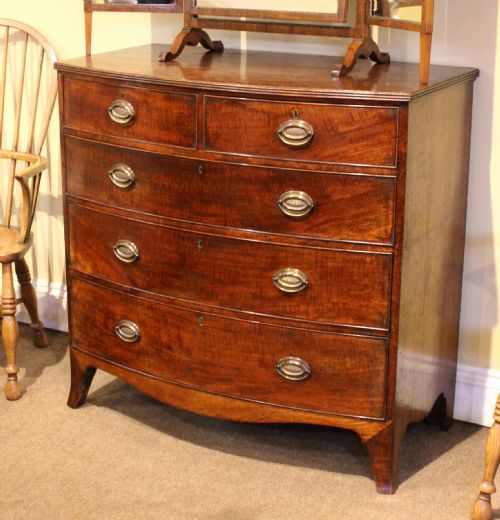

Splay Foot Mahogany Chest
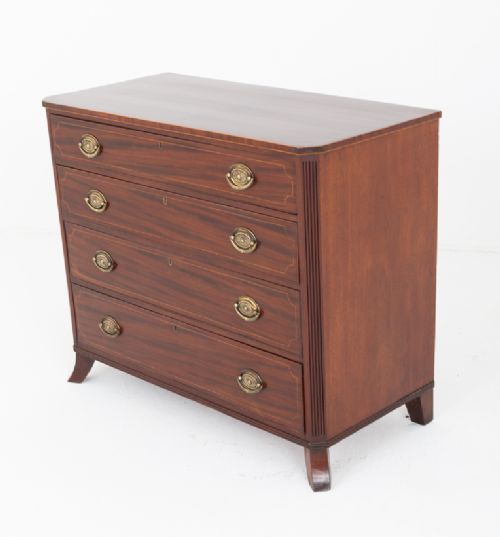
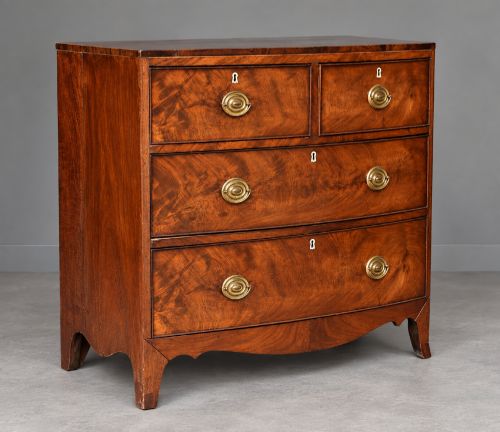
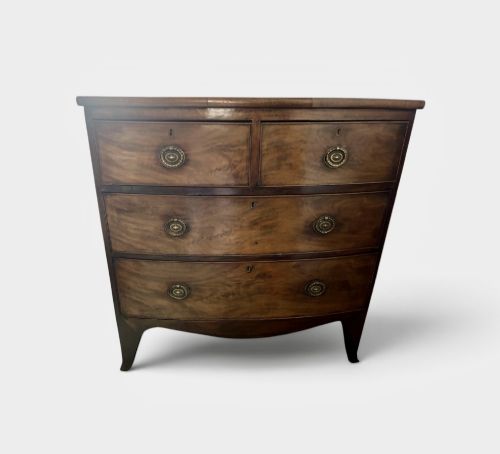
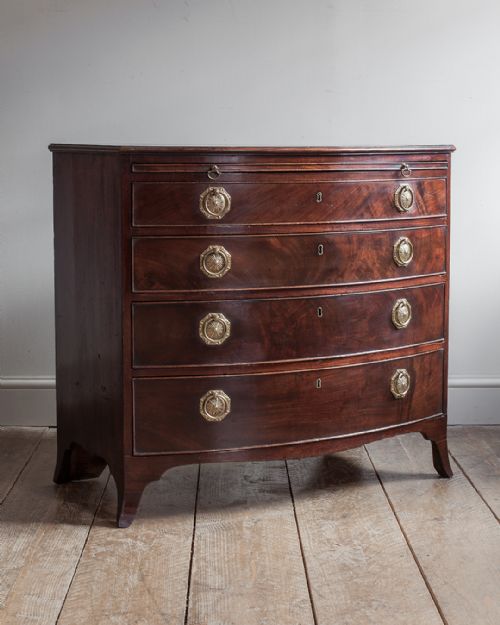
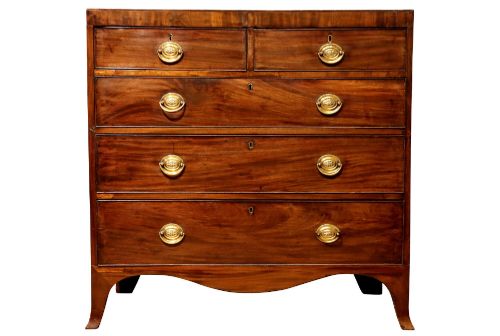
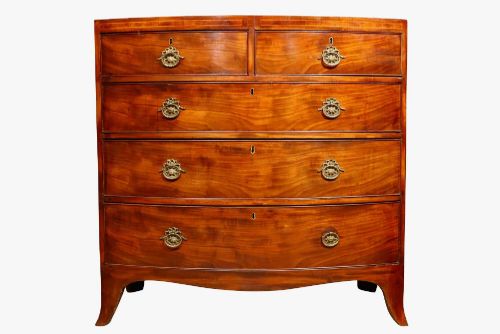
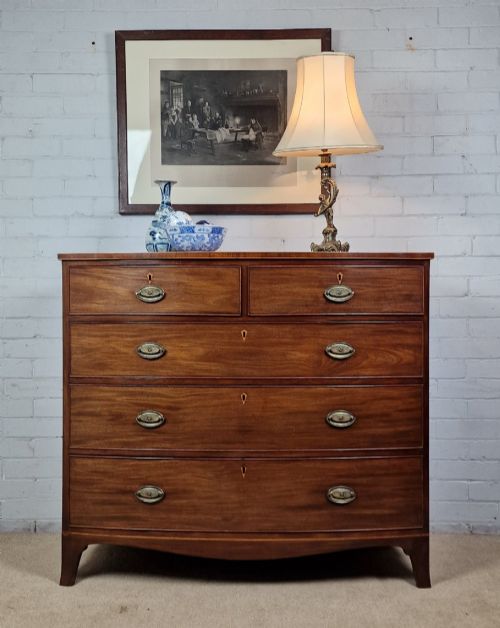
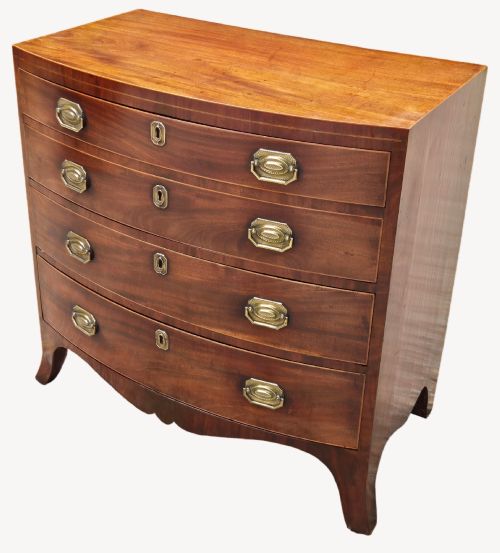
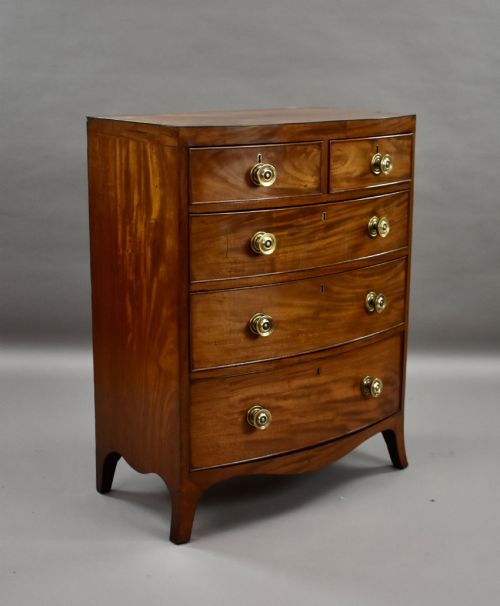
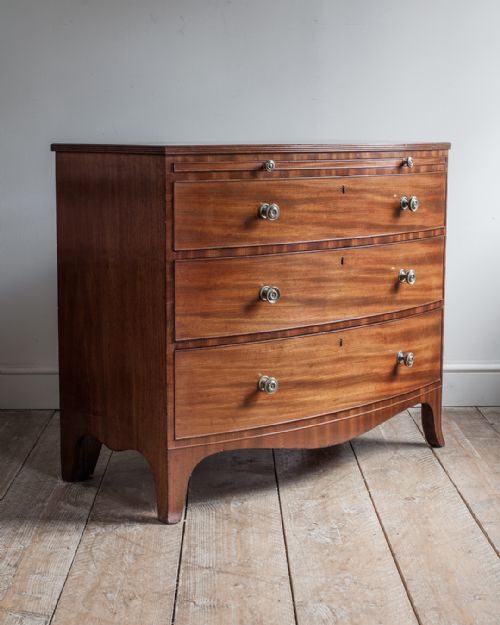
A splay foot mahogany chest brings together rich cabinet timber and distinct outward-angled supports, offering practical storage with distinct period character.
Splay Foot Mahogany Chest
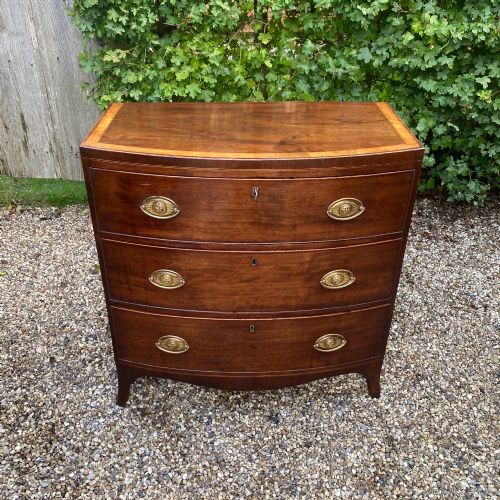
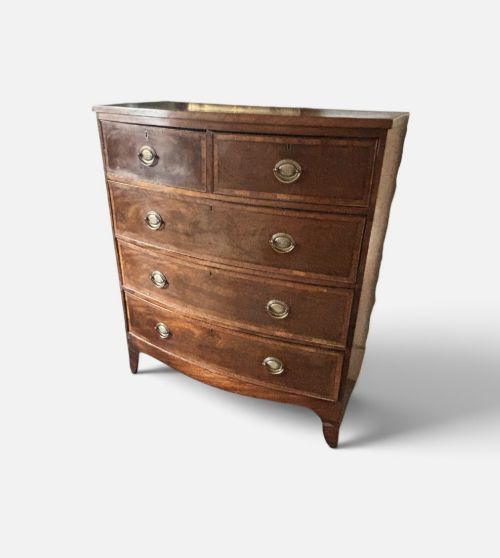
A splay foot mahogany chest is fundamentally a set of drawers constructed from rich timber, featuring characteristic feet that angle outward for stability and visual lift. When searching for a splay foot mahogany chest, buyers frequently encounter bow front designs alongside traditional straight fronts from the Georgian and Regency eras.
The pieces on this page span several decades of British cabinet making, ranging from late eighteenth century George III examples to later nineteenth century interpretations. Most pieces operate as functional domestic storage, appearing in forms such as compact bachelors chests, tallboys, and standard drawer configurations.
Makers across the Georgian and Regency periods utilised the natural grain of mahogany to provide a handsome exterior surface, frequently enhanced by contrasting stringing or crossbanding. These chests served principal bedchambers and dressing rooms, where their proportions offered generous storage without dominating the floor space.
Materials and construction methods
Cabinet makers relied primarily upon solid mahogany and flame mahogany veneers, selecting boards with strong figuring for the principal drawer fronts and top surfaces. Secondary timbers such as oak frequently form the internal drawer linings and carcase backs, providing structural durability that survives centuries of daily use.
Surface decoration often incorporates contrasting stringing and banding in satinwood and boxwood, creating geometric borders around the drawer edges. Brass hardware, including drop handles and escutcheons, completes the construction, fastened securely through the drawer timber.
Many historical drawers still retain faint traces of scented paper lining, left behind by former owners to keep garments smelling fresh.
Distinguishing finer examples
Quality in these chests rests upon the selection of timber veneers and the precision of the cabinet work, particularly around the drawer joints and crossbanded borders. Superior pieces display carefully matched flame mahogany grains that flow naturally across multiple drawer fronts rather than appearing mismatched.
The delicacy and execution of inlay work also separate standard utility items from finer commission pieces, with crisp boxwood and satinwood lines indicating skilled handcraft. Furthermore, the integrity of the original bracket or splay feet and the smoothness of the drawer action define the overall standard of survival.
The Splay Foot Mahogany Chest Glossary
- Bow front
- A cabinet front that curves outward in a convex shape, common in late Georgian and Regency chests to soften room angles.
- Satinwood
- A pale, dense exotic timber utilised for contrasting inlay work and stringing borders on darker mahogany surfaces.
- Crossbanding
- A decorative border technique where veneer strips are laid perpendicularly to the surrounding grain direction.
- Stringing
- Thin inlaid lines of contrasting light wood used to outline drawer fronts and top perimeters on case furniture.
- Flame mahogany
- Timber cut from the fork of the mahogany tree to produce a dramatic, flickering flame-like grain pattern.
Splay Foot Mahogany Chest: Frequently Asked Questions
How do I date a mahogany chest?
Dating relies on examining the construction of the drawers, the timber selection, and the overall stylistic proportions. Earlier pieces from the eighteenth century often feature hand-cut dovetails and solid timber carcases, whereas nineteenth century examples may incorporate machine-sawn elements and distinct veneer patterns.
Secondary woods inside the drawers also offer clues, as oak and deal were utilised in different proportions according to the decade of manufacture. Comparing the hardware fixings and the style of the feet against known period designs helps narrow down the origin.
Were these chests used in bedrooms?
These chests were designed primarily for private chambers and dressing rooms to store folded garments, linens, and personal accessories. Their proportions allowed them to sit comfortably against bedroom walls while providing deep drawer capacity.
In grander houses, smaller bachelors chests doubled as writing surfaces, combining a fold-down desk flap with standard drawer storage below. Their refined exterior finishes meant they were presentable enough for upper bedchambers rather than hidden away in service areas.
What is flame mahogany veneer?
Flame mahogany veneer is sliced from the point where a branch joins the main trunk of the tree, creating a distinctive, undulating pattern that resembles flickering fire. Cabinet makers prized this figured timber for drawer fronts, where it provided a decorative focal point.
Because the veneer was thin, makers laid it carefully over a stable secondary wood base to prevent warping. This technique allowed workshops to produce highly ornamental surfaces without wasting scarce quantities of solid figured timber.
How should I care for mahogany furniture?
Maintaining mahogany requires stable room conditions away from direct heat sources and strong sunlight, which can dry out the timber and fade the rich colour. Gentle dusting with a dry, soft cloth is sufficient for routine upkeep.
Applying occasional specialist wax helps nourish the antique finish and protects the wood from moisture without building up a heavy, cloudy residue. Avoiding synthetic polishes ensures the original patina continues to develop safely over time.