

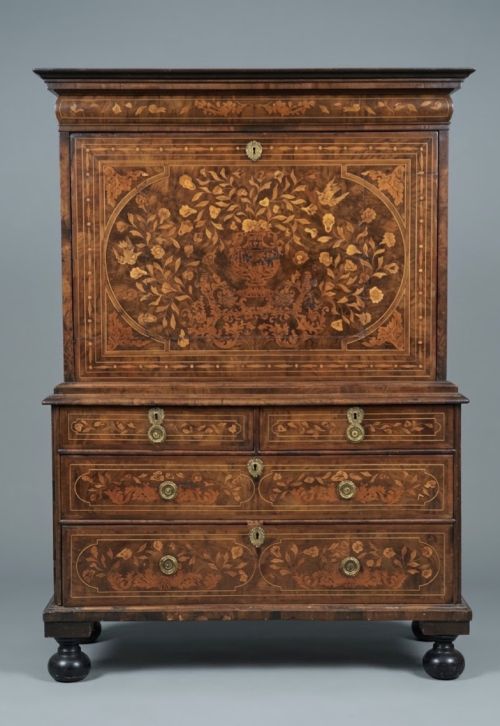
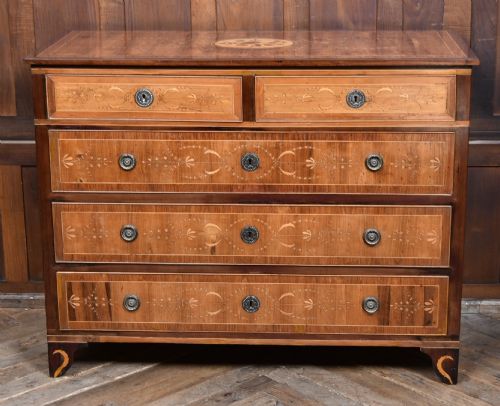
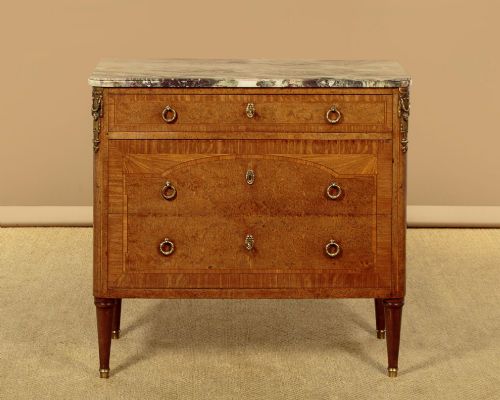
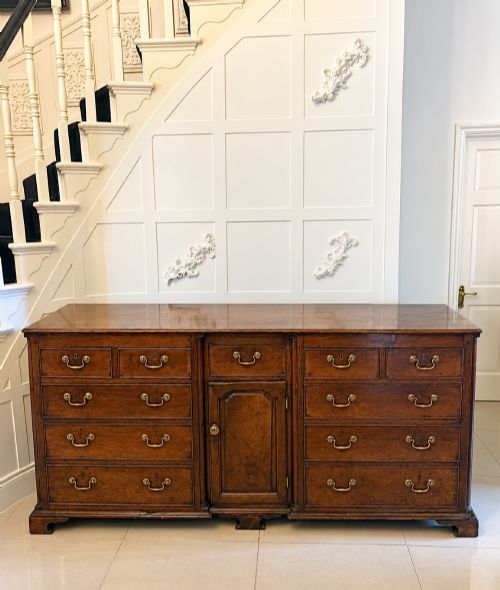
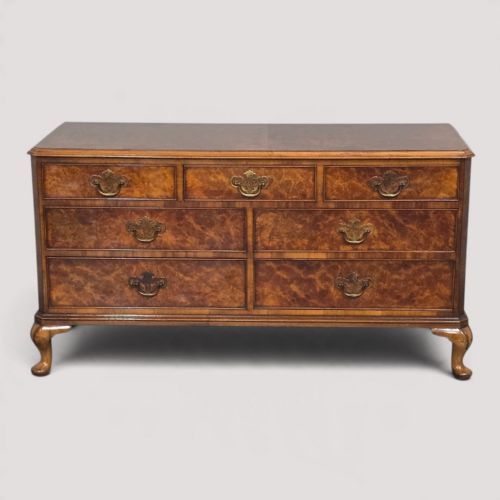
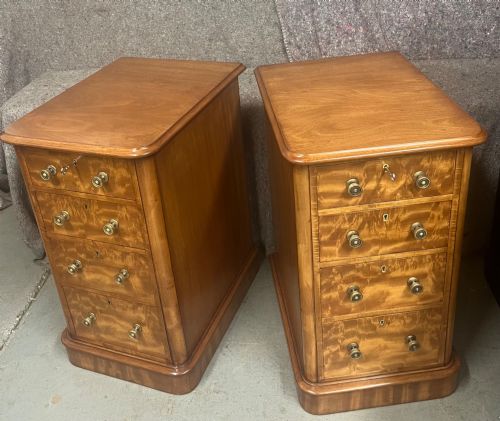
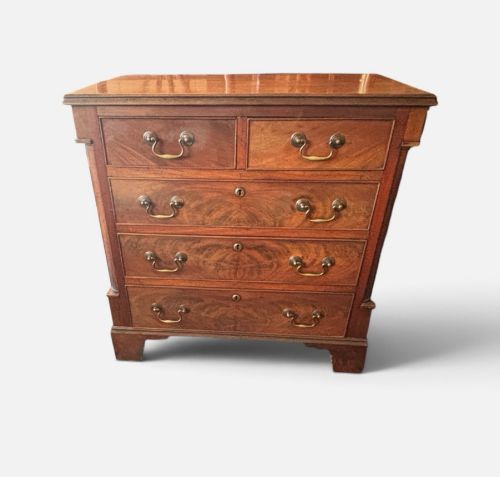
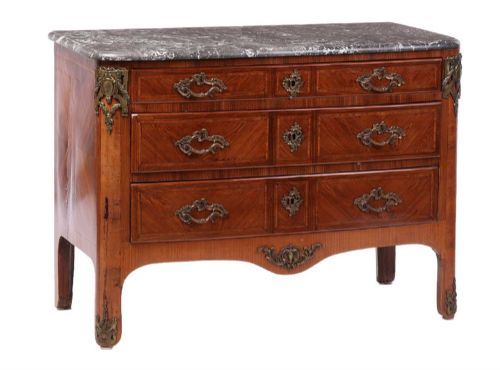
Antique Brown Chest Drawers
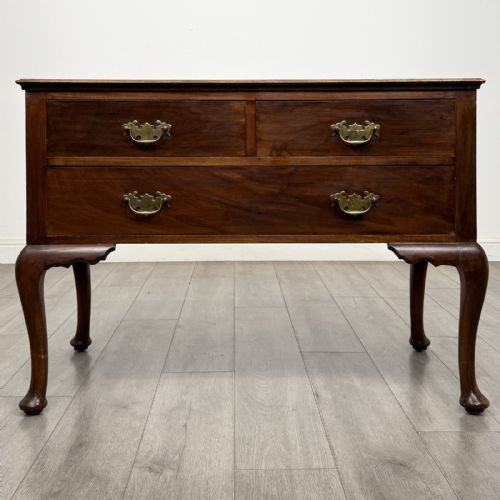
An antique brown chest drawers anchors a room with rich timber tone and solid proportions, offering reliable storage built to last.
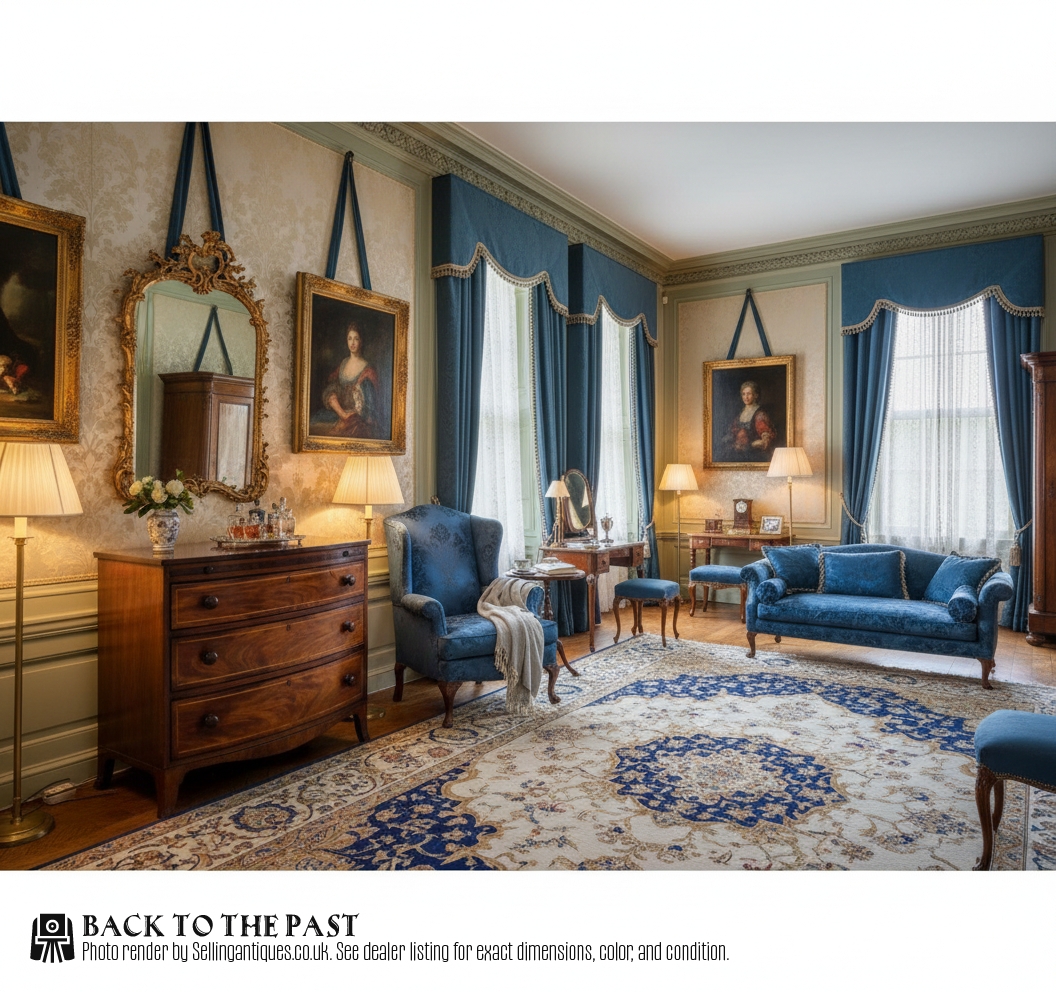
Antique Brown Chest Drawers
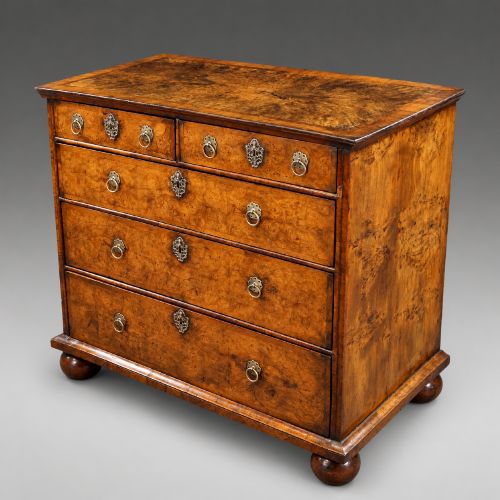
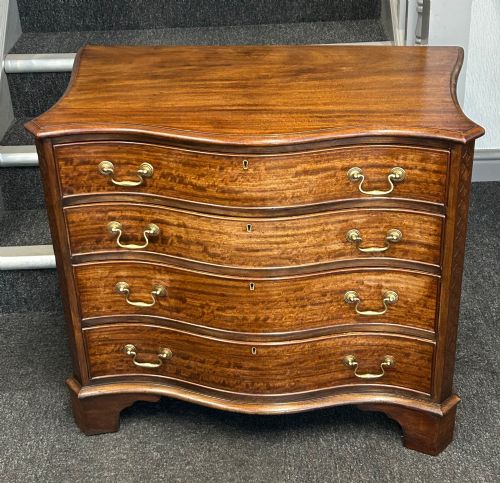
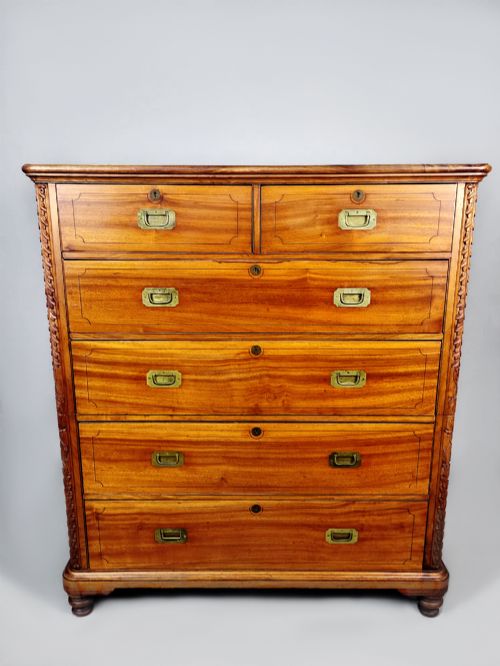
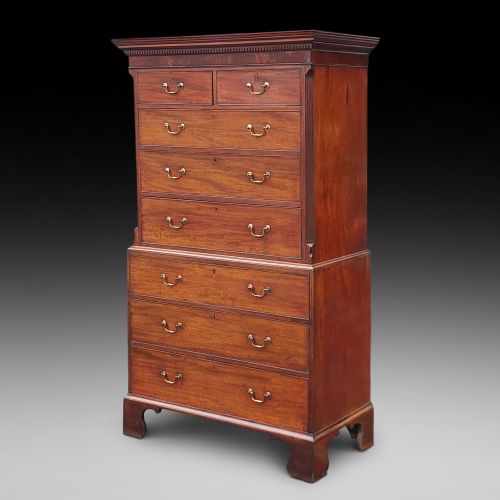
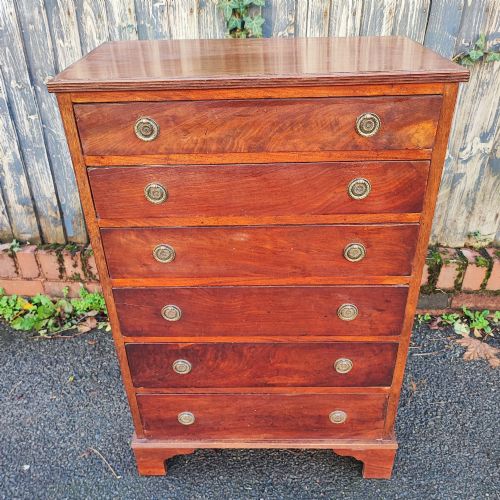
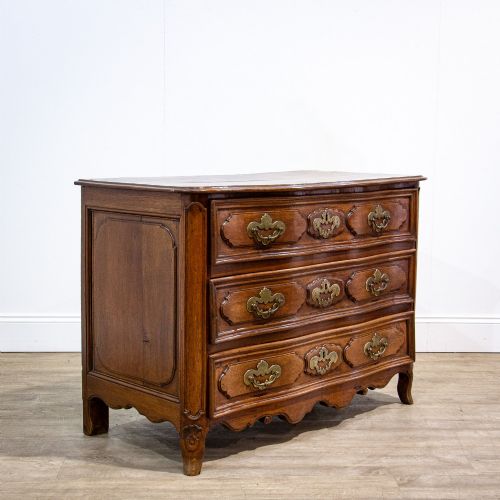
These pieces encompass various forms built for storage, including standard chest of drawers, tallboys, chests on chests, and bureaus rendered in deep natural timber tones. Mahogany, oak, and walnut dominate the selections, yielding the characteristic warm brown palette that buyers seek for domestic interiors.
Georgian and Regency examples appear frequently alongside Victorian, Edwardian, and later twentieth-century iterations. Buyers encounter compact low designs, bow front silhouettes, and grander stacked configurations originating from British workshops and continental makers.
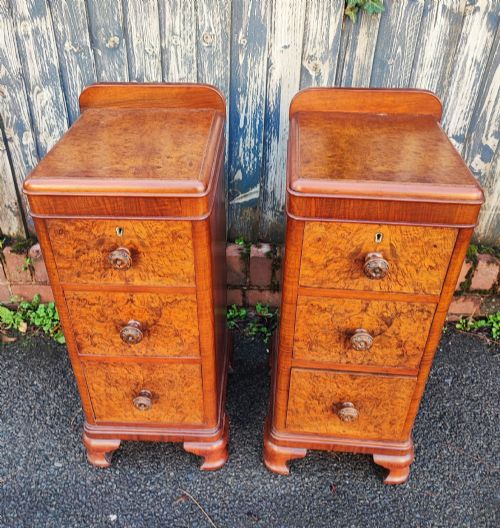
Functionality remains central to these items, whether configured with simple graduated drawers, fitted brushing slides, or specialised bedside cabinets. The persistence of original brasses and figured veneers helps determine the specific period and regional origin of each piece.
Materials and construction methods
Cabinetmakers utilised dense hardwoods such as mahogany, oak, and walnut, often applying figured walnut or burr veneers to primary surfaces to create striking grain patterns. Secondary timbers like pine appear in drawer linings and internal framing.
Traditional joinery underpins the construction, employing hand-cut dovetails for drawer boxes and mortise and tenon joints for structural frames. Decorative techniques include crossbanding, floral marquetry, and satinwood stringing to accent the brown timber ground.
Antique Brown Chest Drawers Retail Price Guide 2026
Typical asking prices for brown chest drawers among the pieces listed under this phrase on Sellingantiques today, from the lower quarter to the upper quarter. They describe what is for sale here now, not the wider market.
Victorian cabinetmakers occasionally carved fierce green man grotesques onto drawer fronts, giving polite storage a delightfully startling woodland guardian.
Assessing craftsmanship and condition
Superior examples display careful timber selection, where veneer matches symmetrically across drawer fronts and grain patterns flow continuously down the facade. Fine craftsmanship reveals itself in tight, precise dovetail joints and smooth drawer operation.
The survival of original hardware, such as pierced brasses and locks, elevates a piece alongside the integrity of the polished finish. Alterations to feet, replaced handles, or heavy restoration diminish historical cohesion.
The Antique Brown Chest Drawers Glossary
- Bow front
- A convex curved cabinet front popular during the Georgian and Regency periods. This shape softens the profile of large storage items.
- Chest on chest
- A tall two-part storage unit where a smaller chest sits directly atop a larger base chest. Also known as a tallboy.
- Brushing slide
- A pull-out shelf integrated above the top drawer used for writing or folding garments. It remains a hallmark of better Georgian case furniture.
- Marquetry
- Decorative veneer patterns formed by fitting together small pieces of wood, ivory, or pewter. Artisans applied this technique to elaborate commodes and bureaus.
- Crossbanding
- A narrow strip of veneer laid around the border of a drawer front with the grain running perpendicular to the centre panel.
Antique Brown Chest Drawers: Frequently Asked Questions
How do I date an antique brown chest drawers?
Examination of construction methods, timber choices, and hardware styles provides the primary clues for dating. Hand-cut dovetails, secondary woods like oak or pine, and specific decorative motifs align pieces with Georgian, Regency, Victorian, or Edwardian eras.
Changes in handles, locks, and foot designs also help narrow down the decade of manufacture. Comparing the secondary timbers inside the drawers with known regional practices confirms the timeline.
How should I care for timber surfaces?
Maintaining antique brown timber requires stable indoor humidity away from direct heat sources and sunlight. Gentle dusting with a dry, soft cloth prevents particulate buildup without harming the polish.
Periodic application of appropriate wax feeds the wood and preserves the depth of the brown colour. Avoid modern silicone sprays that can penetrate and degrade historic finishes.
Where were these pieces used historically?
Bedrooms and dressing rooms served as the primary locations for chests of drawers to store linens and garments. Finer examples with brushing slides also appeared in libraries and studies for administrative tasks.
Bedside variants stood adjacent to sleeping quarters to hold night essentials. Larger scaled chests on chest occupied principal chambers in substantial homes.