


Mahogany Bench Seat
When you search for a mahogany bench seat, you uncover a versatile form spanning centuries of domestic comfort and architectural utility.
Mahogany Bench Seat
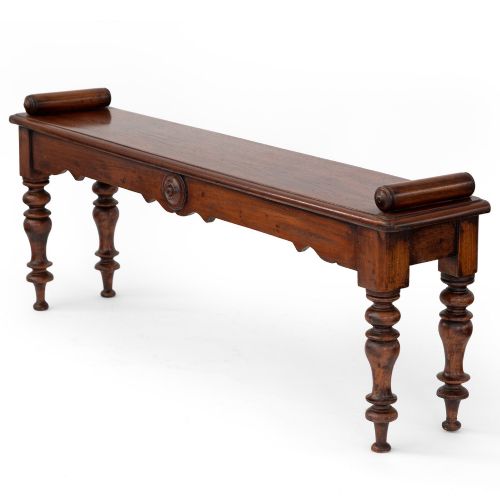
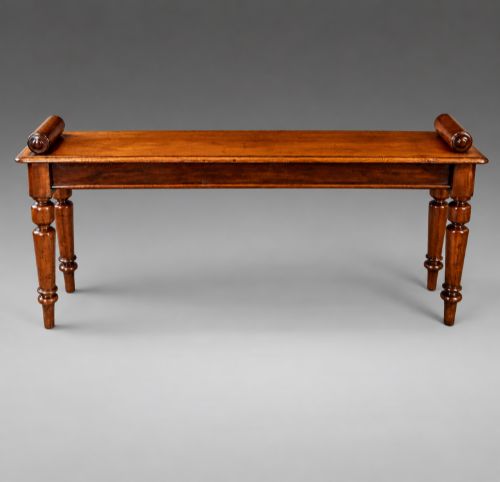
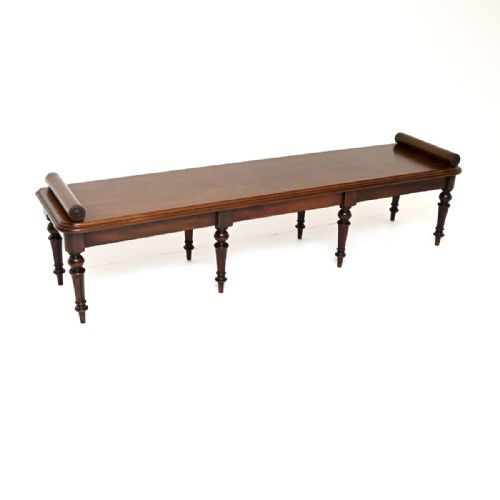
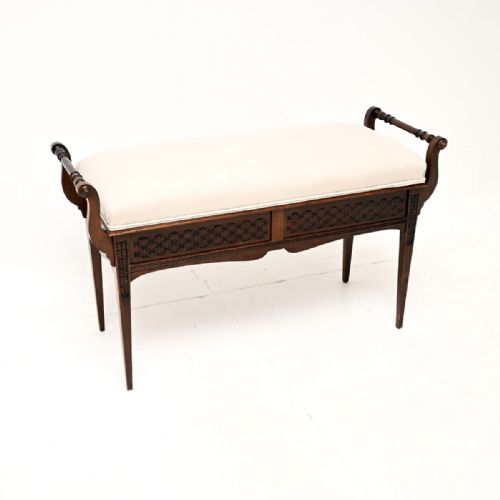
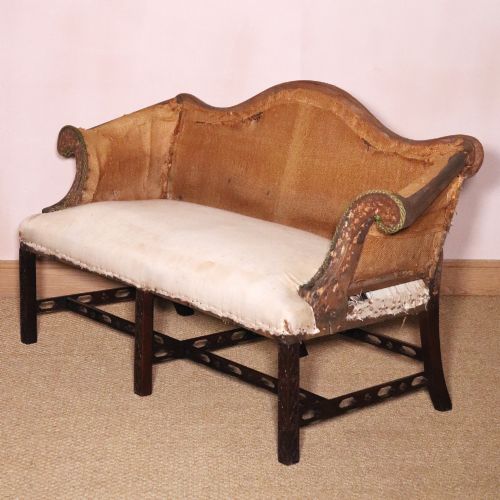
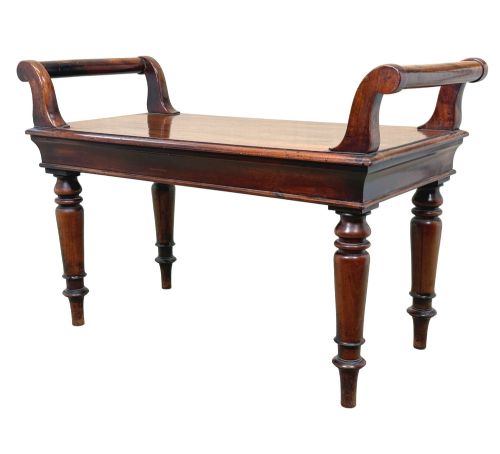
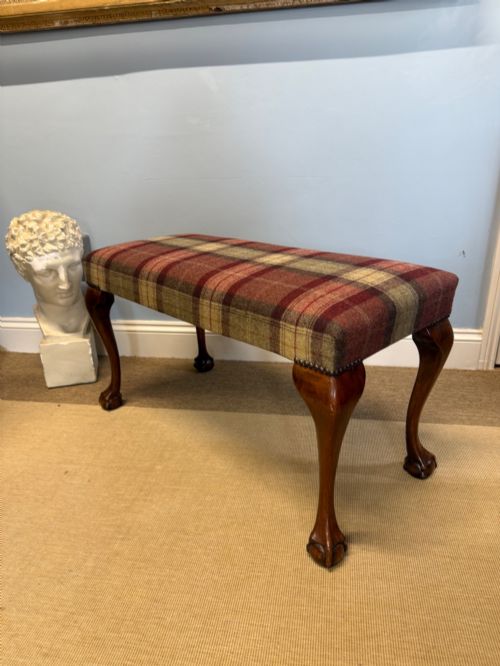
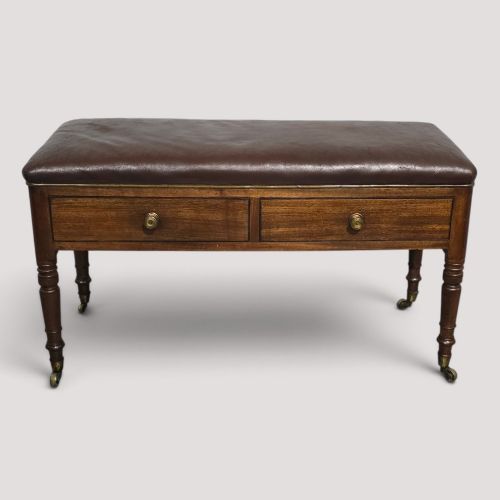
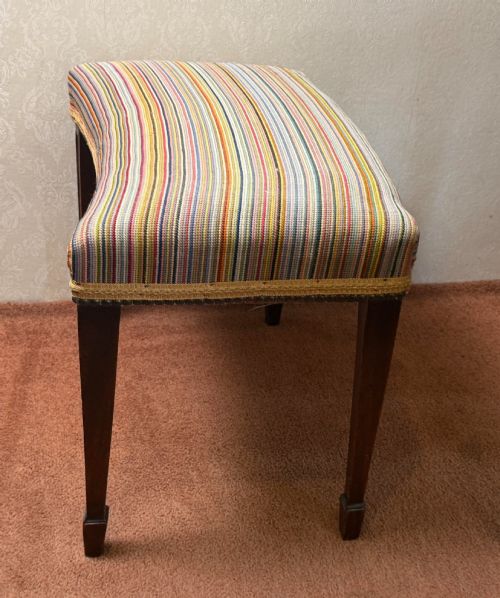
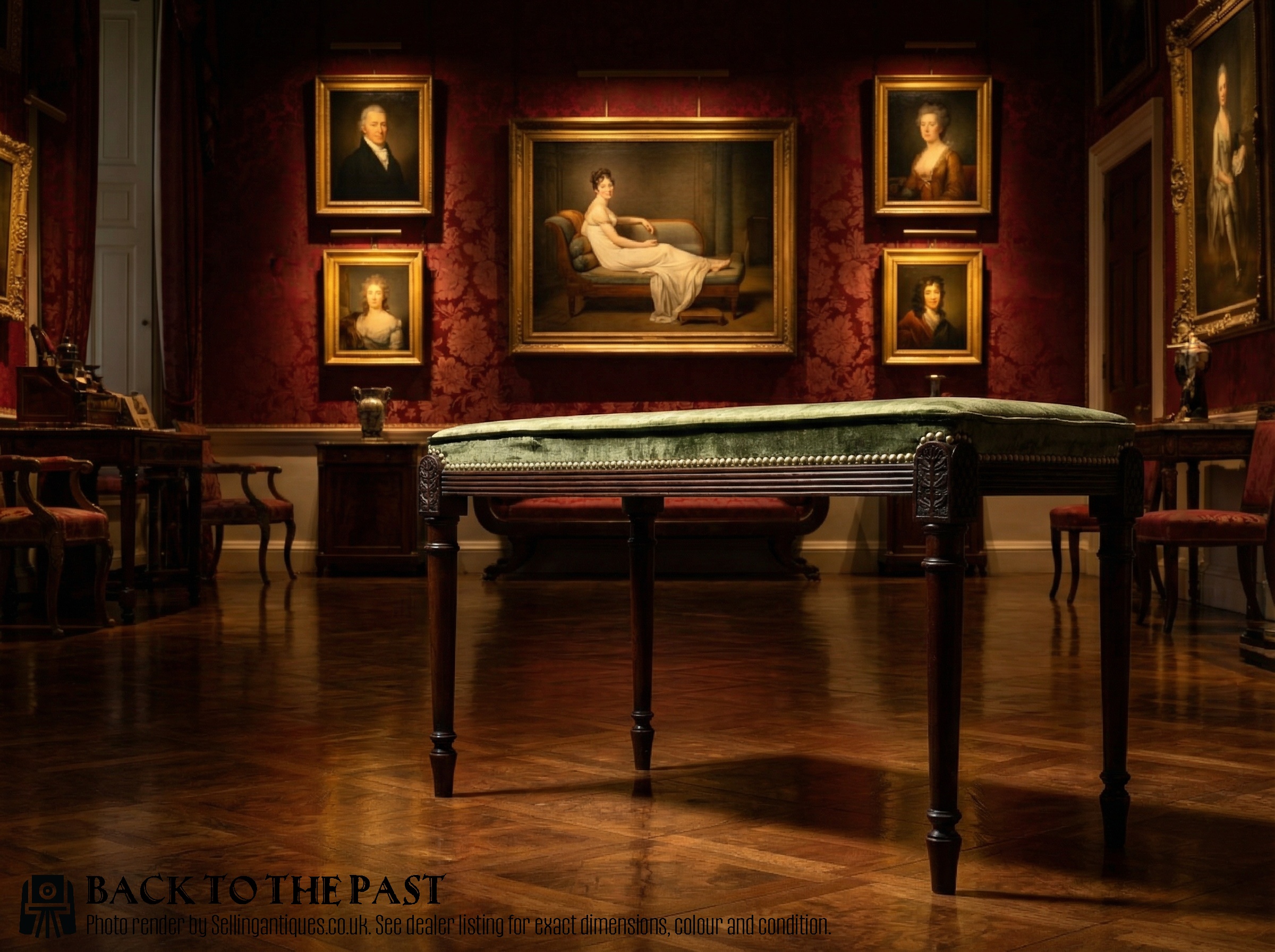
A mahogany bench seat combines the architectural presence of a hall bench with the comfortable seating of a window seat or long stool. These pieces appear across the 18th century, Regency, William IV, Victorian, and Edwardian periods, taking forms that range from simple slatted stools to grand window seats with roll ends.
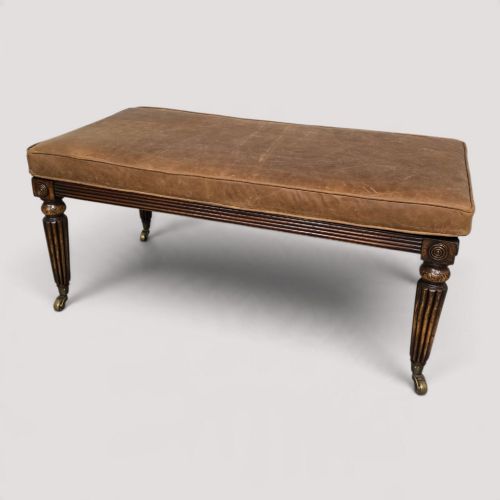
The objects listed under this description frequently encompass long stools, window seats, and hall benches intended for communal spaces or specific resting places in the home. Many examples exhibit influences from classical revivals, including Regency and Edwardian interpretations of earlier cabinetmaking traditions.
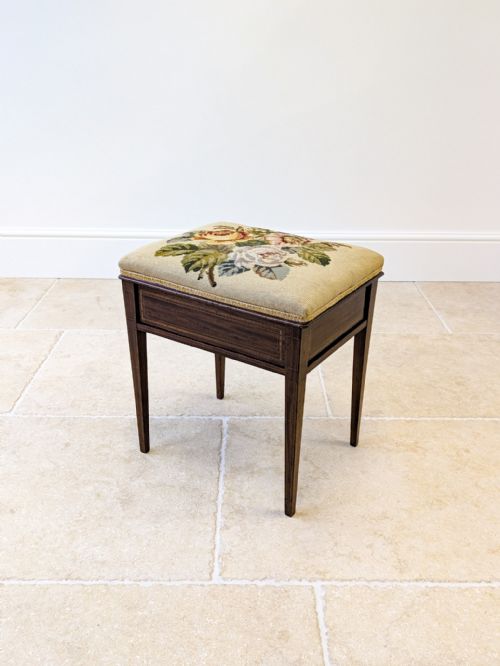
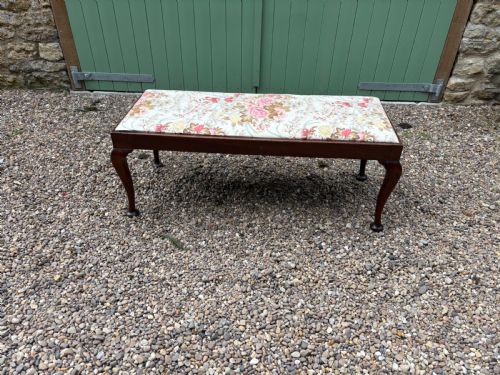
Buyers meet variations ranging from compact dressing table stools to expansive six-foot window seats designed for long hallways or deep window recesses. The inclusion of upholstered elements, needlework, and specific timber frames anchors these items firmly in traditional British furniture history.
How they were made
Makers utilised solid mahogany timbers, occasionally selecting Cuban mahogany for its rich grain and density, alongside decorative veneers like satinwood. Frames were constructed using traditional joinery methods, supporting structural elements such as cross stretchers, cabriole legs, or square tapering supports.
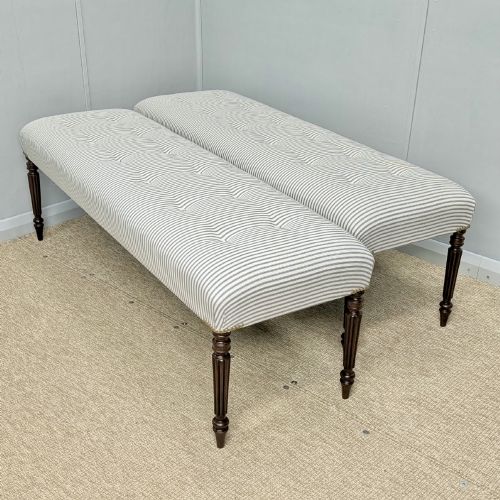
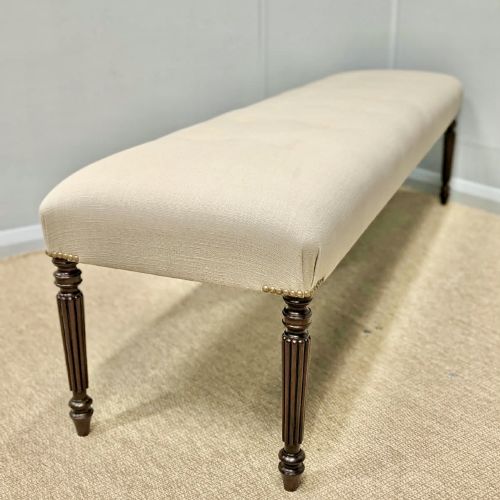
Upholstery formed a central part of construction, utilising fabric, velvet, wool, and textile coverings over buttoned or plain pads. Brass mounts, ormolu details, and intricate carved elements such as Chippendale-style backs or Gothic motifs were added to elevate the visual weight of the frame.
Mahogany Bench Seat Retail Price Guide 2026
Typical asking prices for mahogany bench seat among the pieces listed under this phrase on Sellingantiques today, from the lower quarter to the upper quarter. They describe what is for sale here now, not the wider market.
Several long benches were built to accommodate up to six guests, ensuring no one misses out on the best view from the window.
What varies in quality
The distinction between standard examples and the finest pieces rests upon the crispness of timber carving, the selection of figured mahogany veneers, and the architectural ambition of the frame. Pieces featuring sculptural elements like cylindrical roll ends, elaborate X-frames, or well-executed stylistic revivals command greater attention.
Proportion and scale dictate the success of the design, with longer window seats and balanced hall benches showing superior harmony between timber frame and upholstered seat. The integrity of the original joinery and the survival of period upholstery materials or appropriate textiles also determine the standing of an individual piece.
James Shoolbred and Co·Marsh and Tatham
The Mahogany Bench Seat Glossary
- Cuban mahogany
- A dense, dark timber prized for its rich grain and heavy weight in high-status furniture. It offers distinct optical depth compared to later mahogany species.
- Roll-end support
- A scrolled or cylindrical terminal at either end of a bench or window seat. This architectural feature provides a defined boundary to the upholstered surface.
- X-frame
- A structural base formed by intersecting diagonal timbers creating an X shape. This form derives from classical antiquity and adds geometric strength to stools and seats.
- Cross stretcher
- A system of horizontal timber braces connecting the legs beneath a seat to increase stability. They often intersect at the centre for added reinforcement.
- Satinwood
- A pale, lustrous exotic timber utilised for contrasting inlay work on Edwardian and Georgian frames. It creates striking visual borders against darker mahogany.
Mahogany Bench Seat: Frequently Asked Questions
How do I distinguish a Regency window seat from a Victorian one?
Regency window seats typically lean heavily on classical antiquity, displaying clean architectural lines, cylindrical roll ends, or sculptural X-frame supports. Their proportions remain refined, reflecting neoclassical tastes popular in the early part of the 19th century.
Victorian examples often introduce heavier proportions, more elaborate carved decoration, and varied leg styles including cabriole supports. Later 19th-century pieces may also show revival influences, blending earlier Georgian forms with Victorian manufacturing techniques.
What is the difference between a hall bench and a window seat?
Hall benches generally feature rigid wooden seats or simple cushions, designed primarily for brief seating in entryways and passageways. Their construction prioritises durability and architectural presence against a wall.
Window seats are usually upholstered for extended comfort, often featuring shaped ends or arm supports designed to fit specific architectural window recesses. They emphasise soft furnishings alongside the exposed mahogany frame.
How should I care for antique mahogany and upholstery?
Maintaining mahogany frames requires avoiding direct sunlight and excessive temperature fluctuations that can dry out the timber and veneer. Gentle cleaning with appropriate wood care products preserves the natural finish without damaging the surface.
Upholstered sections benefit from regular, careful vacuuming using a low-suction attachment to protect fragile textiles, wools, or velvets. Professional conservation is recommended for antique needlework or delicate period fabric surfaces to maintain their integrity.