


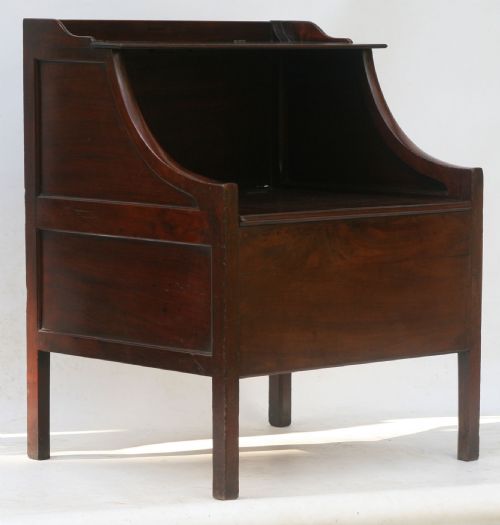
George III Stool
A george iii stool offers sturdy proportions and classic timber framing, suiting both period interiors and modern rooms.
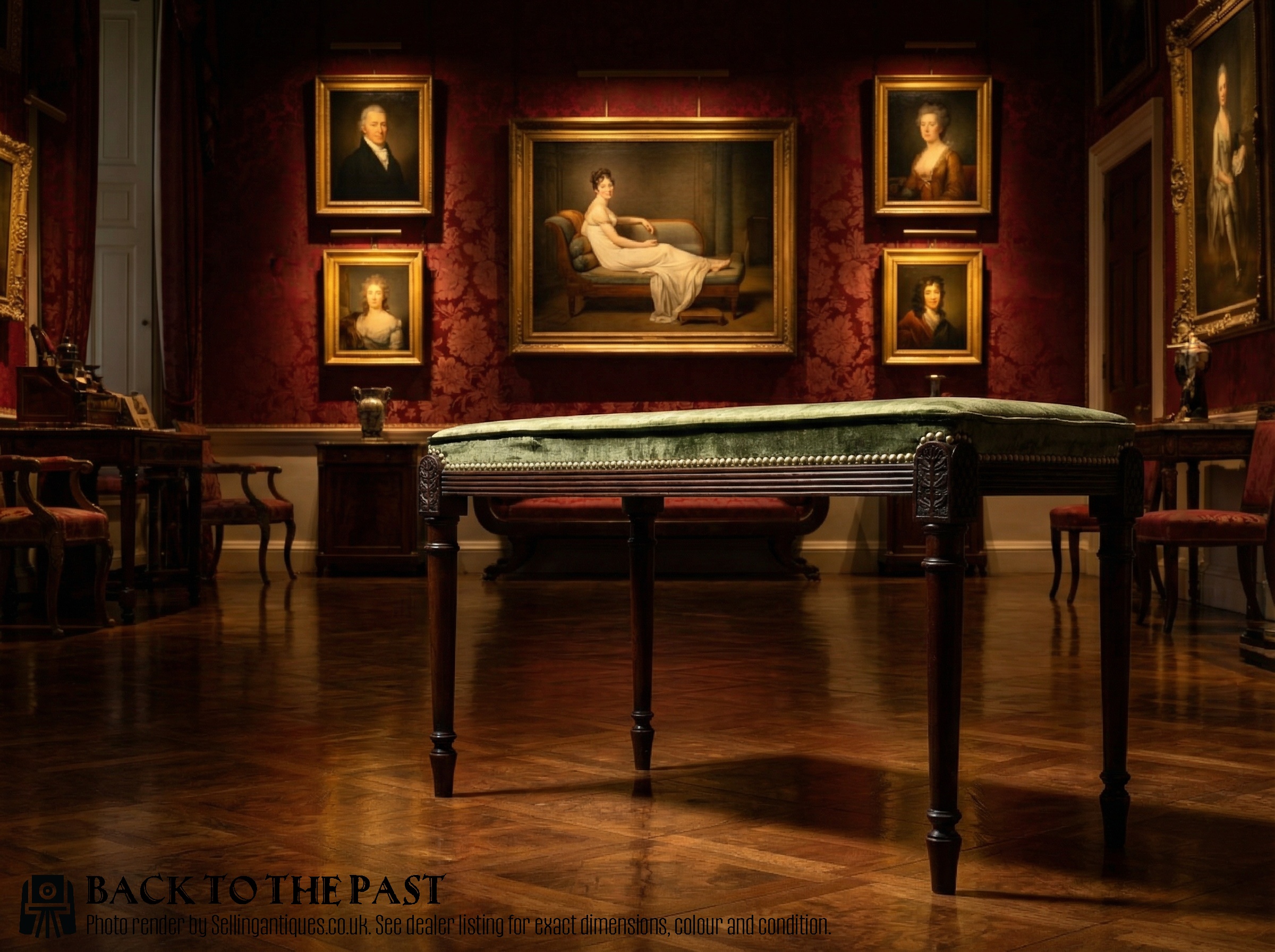
George III Stool
When searching for a george iii stool, buyers encounter seating and steps dating from the eighteenth century and the Georgian era alongside later nineteenth-century revivals. The selection ranges from plain oak joint stools and country oak forms to formal mahogany dressing stools and library steps.
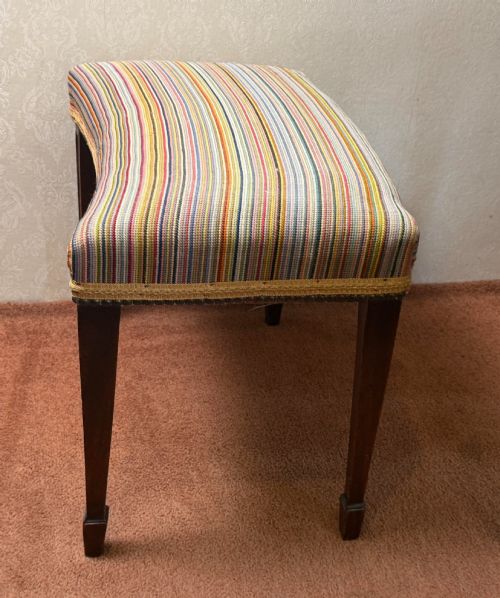
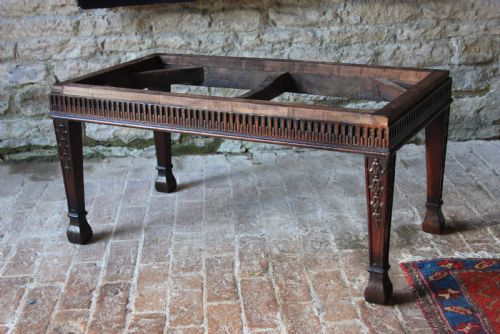
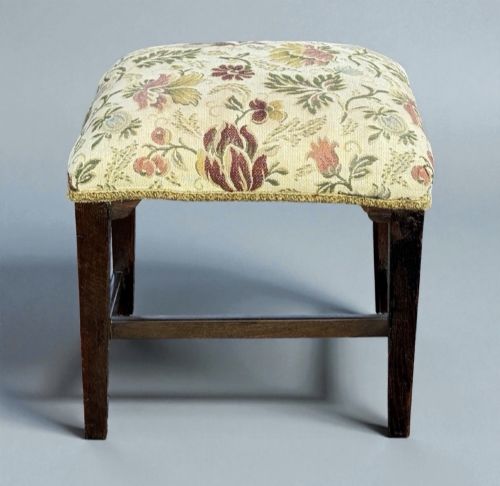
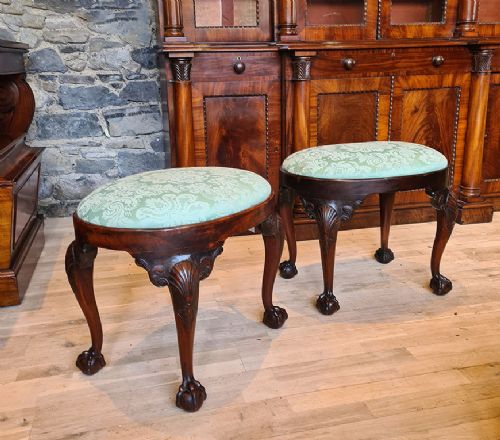
Mahogany and oak dominate the surviving examples, often fitted with upholstered tops in leather, tapestry or fabric. Forms vary from simple circular and rectangular seats to long window benches, oval pairs, and metamorphic pieces incorporating steps.
Judging quality in eighteenth-century seating
Quality rests upon the crispness of carved detail, the choice of timber grain, and the elegance of the overall proportions. Well-drawn frames with balanced legs demonstrate superior craftsmanship compared to stiffer, heavier work.
The integrity of the timber, the subtlety of leg tapering or cabriole curves, and the harmony between the frame and its upholstery dictate the standing of an individual piece within the range.
The archive reveals a diverse range of forms, including spider stools, X-framed stools, and metamorphic library steps.
Gillows of Lancaster·Benjamin Crook
The George III Stool Glossary
- Joint stool
- A sturdy wooden seat constructed with mortise and tenon joints pegged together rather than glued. These early forms often feature oak construction and straightforward rectangular proportions.
- Metamorphic
- Describing furniture designed to transform into another object, such as library steps folding into a table or stool. These multi-functional items display ingenious eighteenth-century mechanical engineering.
- Cabriole leg
- A furniture leg that curves outward in a convex arc before tapering inward in a concave sweep, often ending in a ball and claw foot. This form derives from animal limbs and gained popularity during the Georgian period.
- Close stool
- A cabinet or seat enclosing a chamber pot, functioning as an indoor commode. These pieces often mimic standard stools or small chests to conceal their domestic purpose.
George III Stool: Frequently Asked Questions
What defines a george iii stool?
A george iii stool dates from the reign of George III, spanning the second half of the eighteenth century and the opening years of the nineteenth century. These pieces display the characteristic styles of the Georgian period, utilising timbers like mahogany and oak.
Craftsmen built them in various forms, from simple joint stools to elegant upholstered dressing furniture and library steps. Their design reflects the changing neoclassical and vernacular tastes of the era.
How were these stools used originally?
Owners used these stools primarily for seating in bedrooms, dressing rooms, and libraries, or as foot rests before larger chairs. Some specialised examples incorporated steps for reaching high bookshelves or served as enclosed commodes.
Longer forms functioned as window seats in grand drawing rooms, while sturdy joint stools provided everyday seating around the home.
Are later revival pieces considered authentic?
Pieces marked as George III style date from later periods, often the nineteenth century, when makers deliberately copied eighteenth-century proportions and joinery methods. While not made during the monarch's reign, they remain collectible antiques in their own right.
Checking timber age, wear patterns, and construction techniques helps distinguish original eighteenth-century items from later Victorian interpretations.
How do I care for antique upholstery and timber?
Keep wooden frames away from direct heat sources and sudden humidity changes to prevent the timber from splitting or warping. Regular dusting with a soft cloth maintains the finish without needing harsh chemical polishes.
Protect fabric and leather surfaces from strong sunlight to avoid fading, and handle upholstered edges with care when moving the piece.