
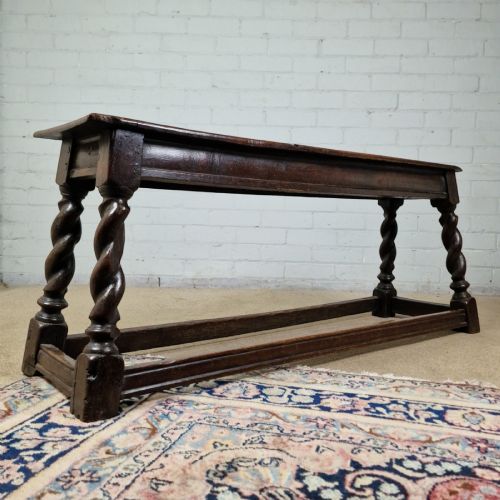
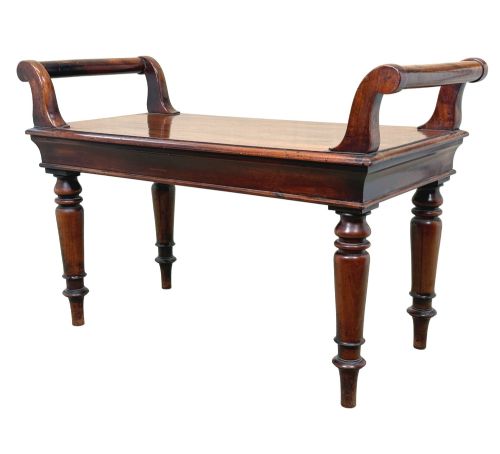

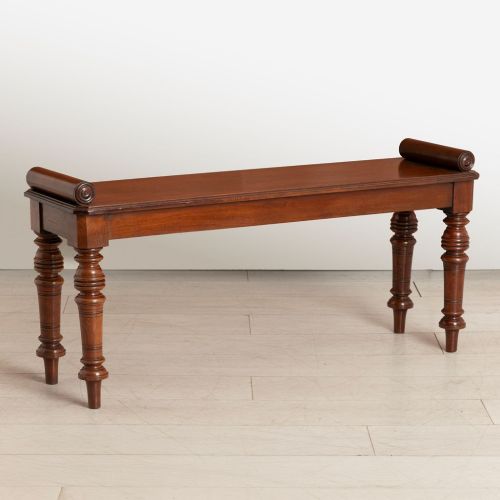
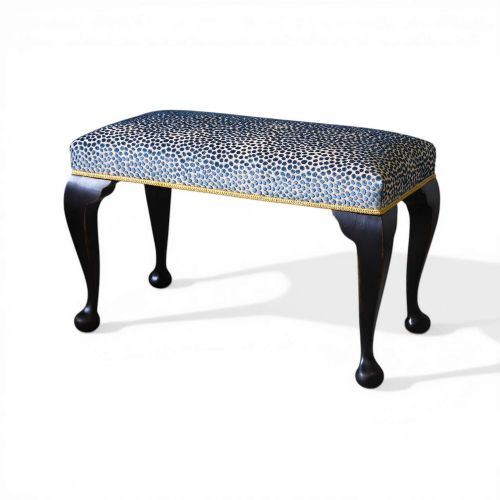
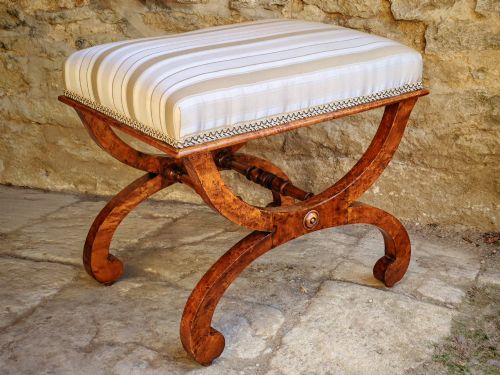
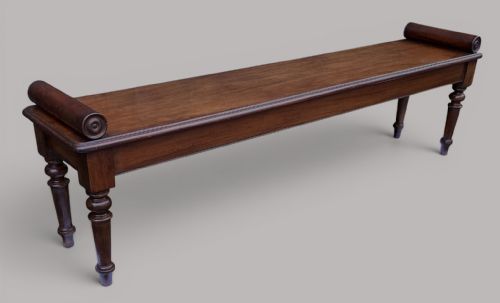
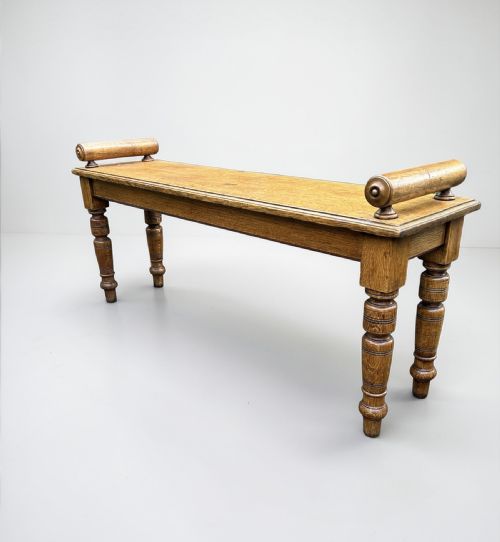


Turned Leg Window Seat
A turned leg window seat offers a narrow, low profile built to sit beneath a sill, combining sturdy timber frames with upholstered or cane seating.
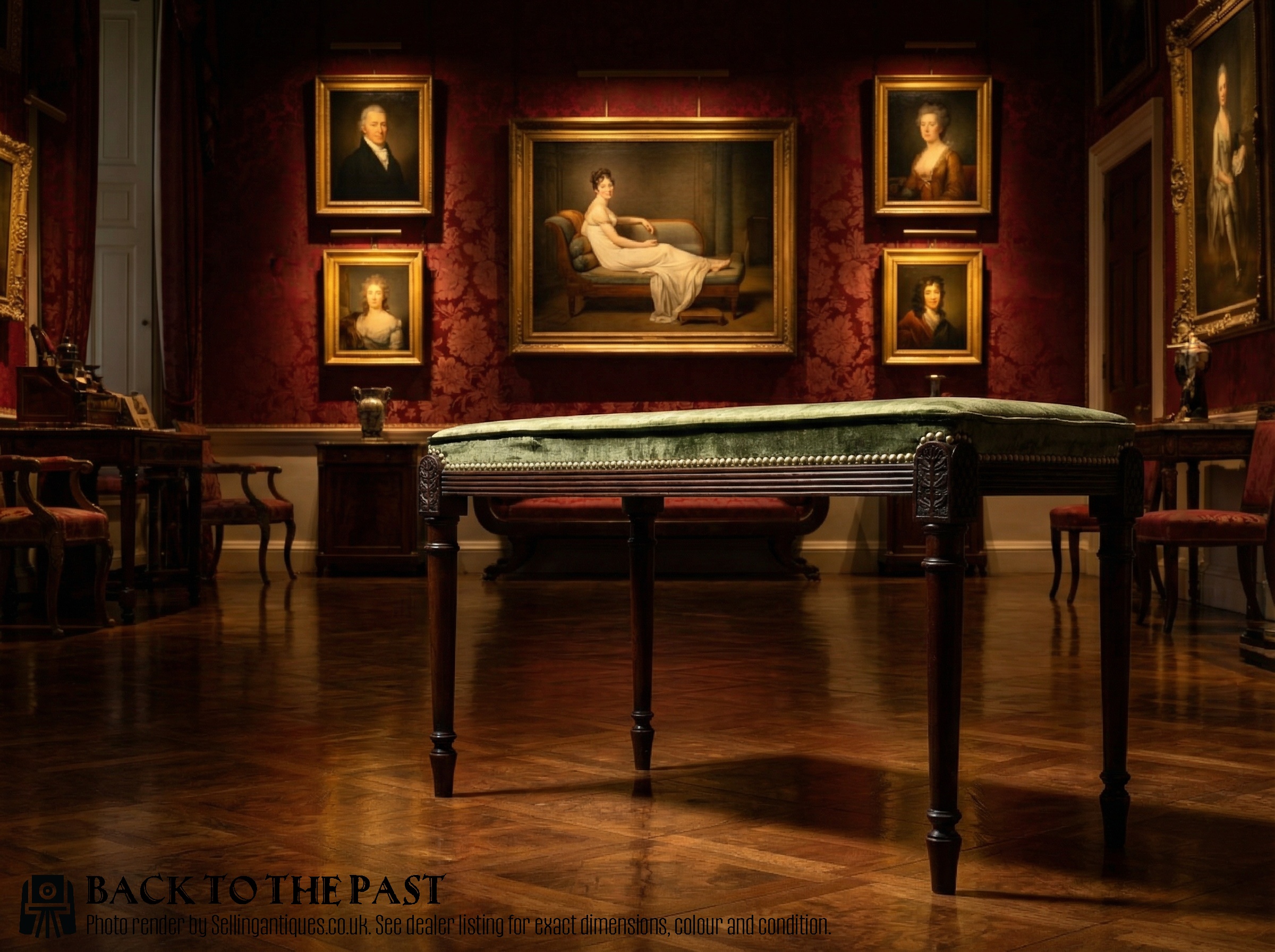
Turned Leg Window Seat
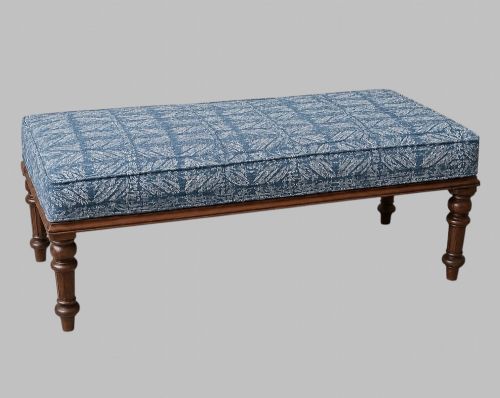
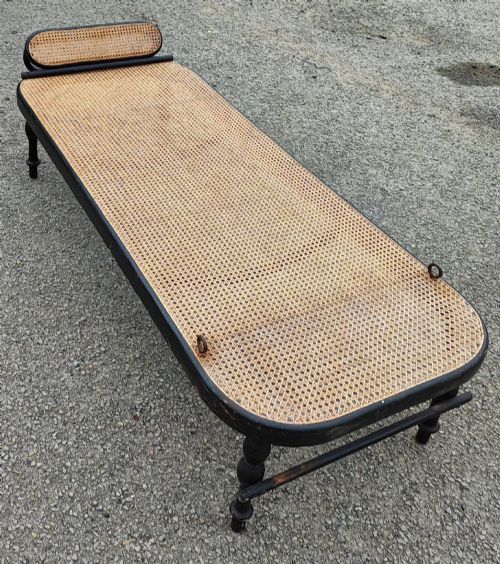
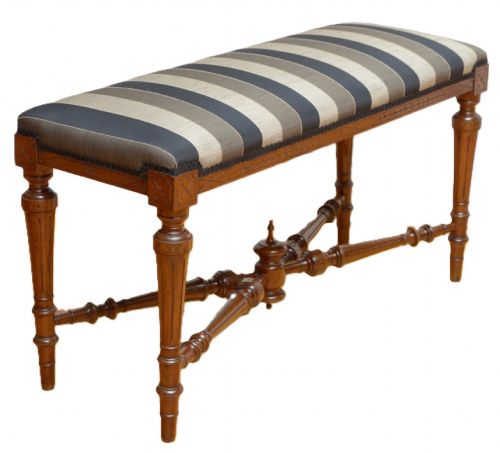
A turned leg window seat brings together long seating forms and characteristic lathe-turned supports, appearing frequently across the nineteenth century alongside earlier eighteenth-century examples. These pieces serve double duty as hall benches, long stools, and dressing furniture, shaped from hardwoods and fitted with fabric, textile, or cane tops.
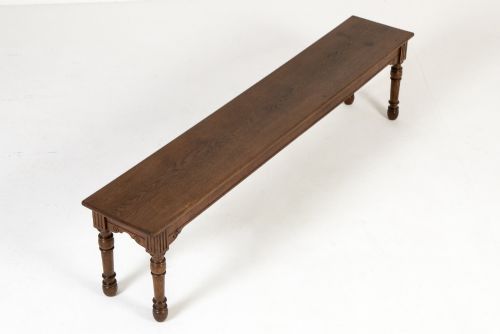
The varieties on this page span from Regency and Victorian mahogany designs to oak and walnut country house pieces, often stretching up to six feet in width. Buyers encounter substantial lengths designed for corridors as well as compact Edwardian ebonised stools and duet seats.
Makers utilised resilient timbers such as mahogany, oak, and walnut, frequently updating the upholstery in linen or patterned textiles like Robert Kime. The combination of structural turned timber and accessible seating makes these items practical additions to deep sills and long hallways.
Materials and construction
Frames rely on solid hardwoods including mahogany, oak, and walnut, shaped on a lathe to form the characteristic turned legs seen on these benches. Selected pieces incorporate ebonised wood or burr maple for alternative surface finishes and grain patterns.
Seating areas utilise woven cane or solid timber panels, while upholstered versions depend on fabric, textile, or specific coverings such as beige linen and kilim. Brass details occasionally appear as structural or decorative fixings upon the timber frames.
Several pieces stretch up to six feet wide, proving that past generations took window lounging very seriously indeed.
Distinctions in quality
Quality rests upon the proportion and drawing of the frame, where well-balanced turnings and elegant lines separate superior seating from simpler utility forms. Timber selection also dictates grade, with finely figured mahogany or burr maple commanding greater visual presence than standard oak.
The integrity of the construction, from stable joinery in long rails to tightly woven cane and professional upholstery work, marks the distinction between standard workshop pieces and finer domestic seating.
The Turned Leg Window Seat Glossary
- Turned leg
- A support shaped on a lathe to create cylindrical, swelling, or linear profiles. This method produces the characteristic vertical legs supporting these window seats.
- Window seat
- A long, narrow bench designed specifically to fit the recess of a domestic window. These forms double as hall benches and long footstools.
- Ebonised wood
- Timber treated with a dark stain or finish to imitate ebony. This technique creates a dense, black surface seen on various Victorian and Edwardian examples.
- Cane
- Woven rattan material used to form resilient, open-patterned seats. It provides a lightweight yet durable surface on nineteenth-century frames.
Turned Leg Window Seat: Frequently Asked Questions
Where should I place a window seat?
These long benches suit narrow spaces such as hallways, long corridors, and the base of a bedroom bed. Their shallow depth allows them to sit neatly beneath window sills without obstructing room flow.
They also function effectively as dressing stools or supplementary seating in living rooms, bridging the gap between a bench and a low stool.
How do I identify a Regency window seat?
Regency pieces often display classical proportions in mahogany, sometimes featuring specific scrolling ends or bold turned supports influenced by classical architecture. Look for clean structural lines that reflect the early nineteenth-century taste.
They frequently measure longer than standard stools, serving as substantial hall benches or formal window furniture.
Are these seats comfortable for daily sitting?
Many examples feature deep upholstery covered in fabrics, linen, or kilim, providing a soft surface suited for regular use. Variants with cane seats offer a firm, springy support.
Upholstered versions can be recovered in contemporary textiles to match modern interiors while retaining the antique timber frame.
What is the difference between a window seat and a hall bench?
Window seats and hall benches share similar long, narrow proportions and turned leg supports, often appearing interchangeably in period homes. Hall benches generally sit in entrance spaces for putting on boots or waiting.
Window seats typically align with the height and length of low window recesses, though their robust timber frames allow them to move easily between rooms.