


Georgian Footstool Bench
A georgian footstool bench brings compact timber and traditional upholstery together to anchor a fireside or window seat.
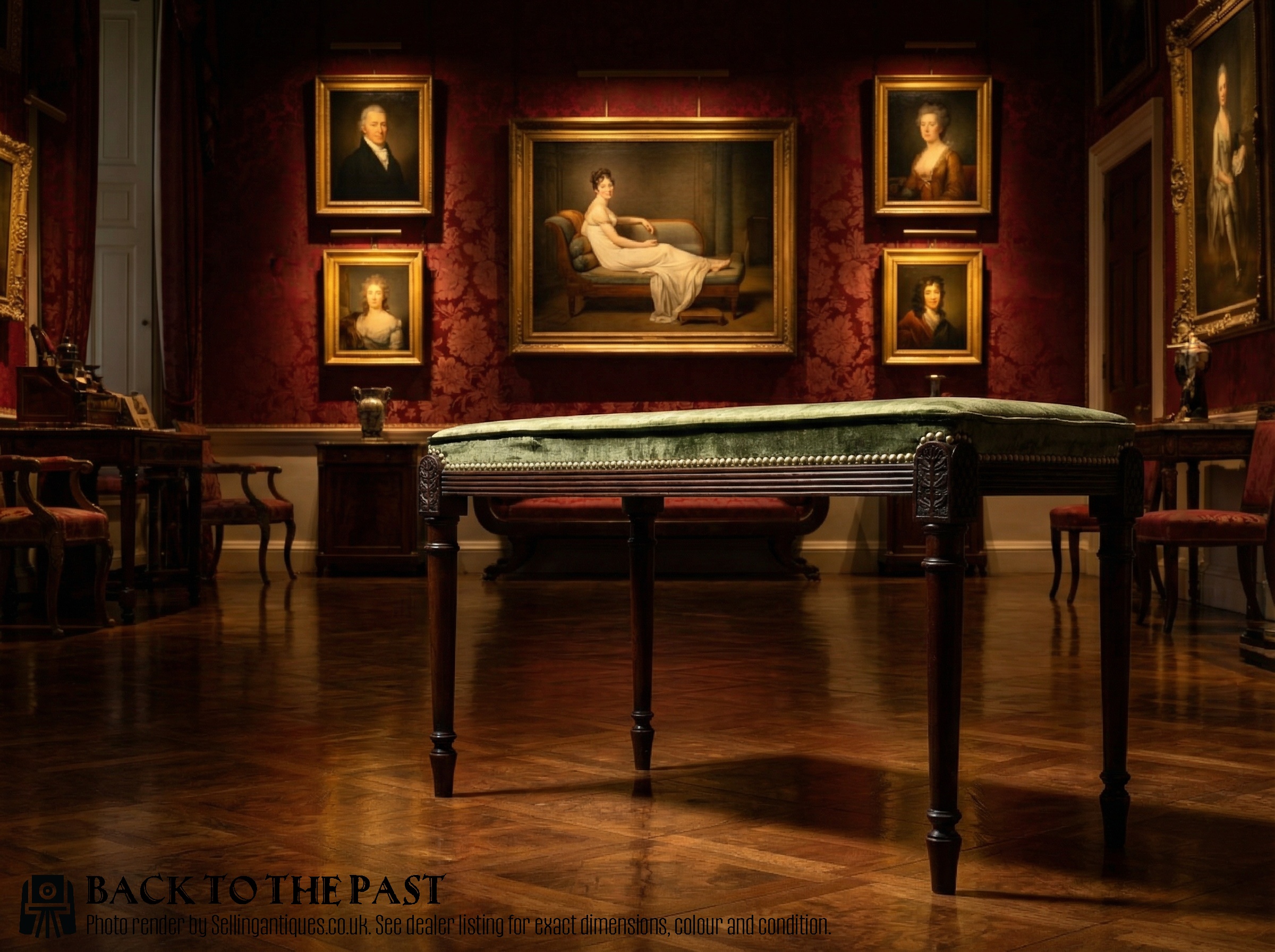
Georgian Footstool Bench
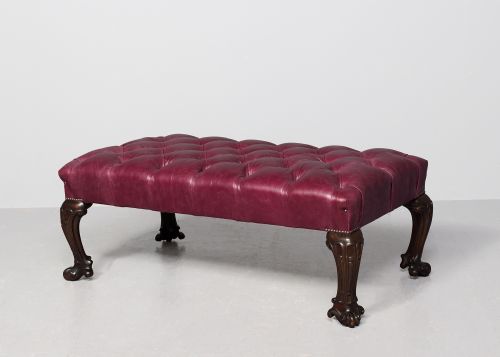
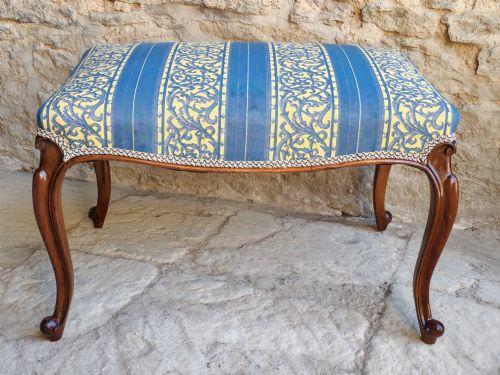
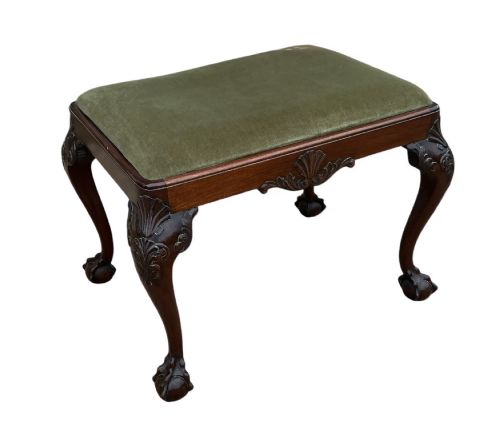
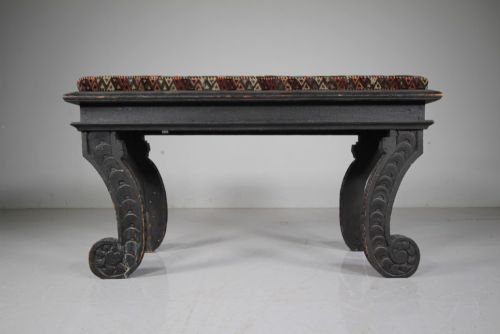
A georgian footstool bench provides low-level seating or foot support, drawing from eighteenth-century forms alongside later revivals. Buyers encounter everything from simple vernacular seats to long mahogany forms and window benches.
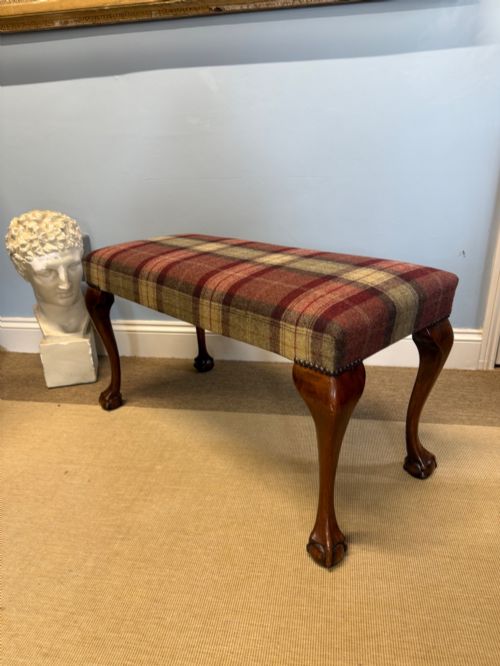
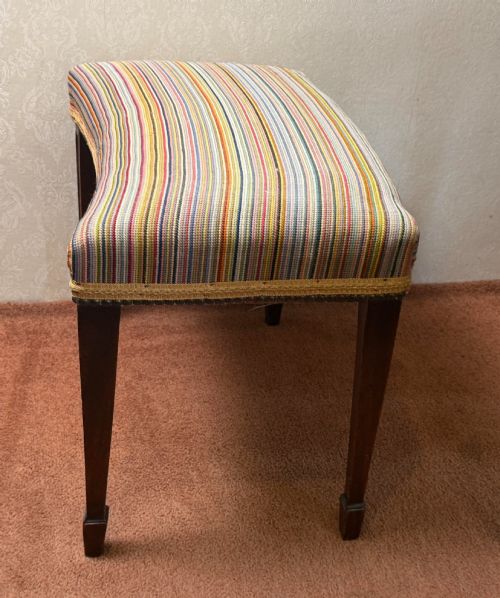
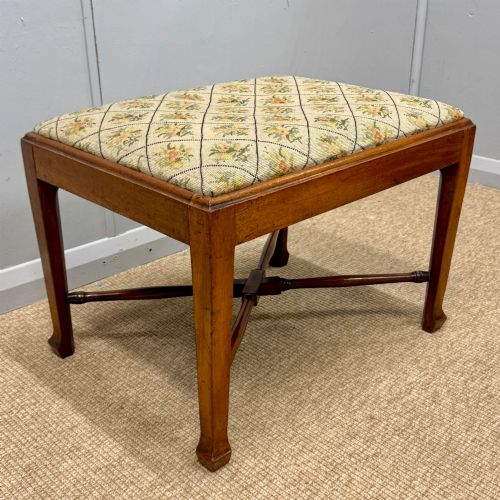
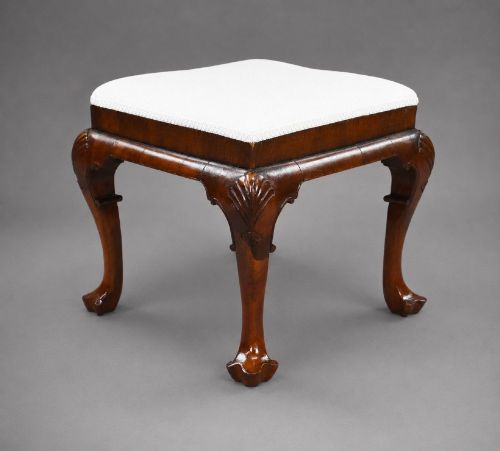
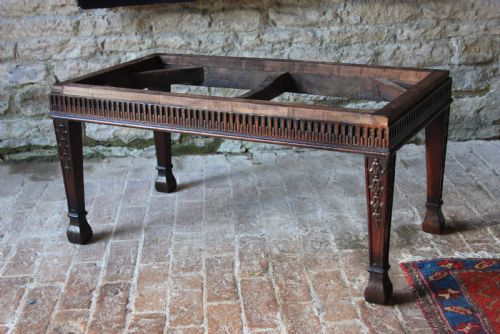
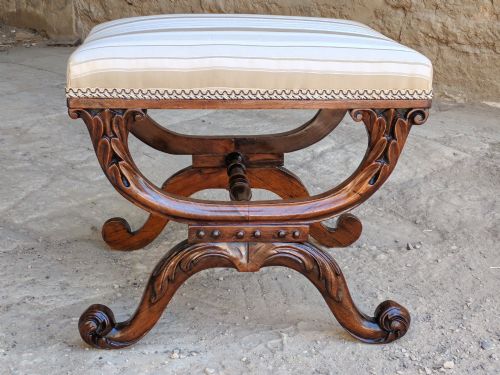
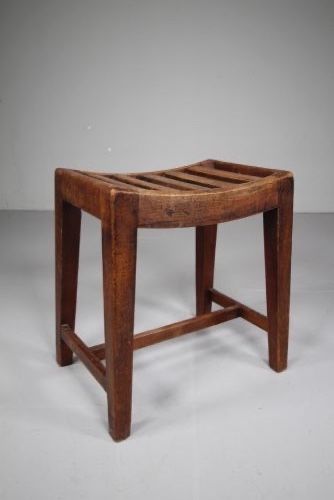
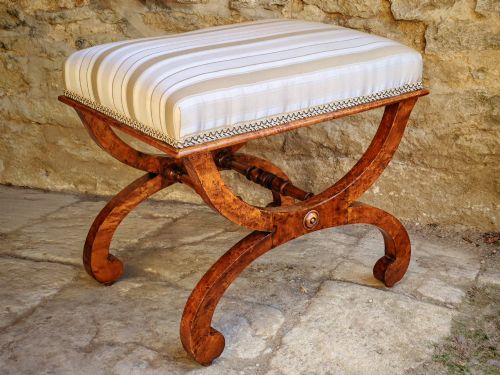
The pieces on this page span the eighteenth and nineteenth centuries, with later revival interpretations appearing regularly. Frames adopt square tapering legs, cabriole supports or X-frame structures depending on the specific period and regional workshop.
Materials and construction
Carpenters utilised dense hardwoods such as mahogany, walnut, rosewood and painted pine to build rigid structural frames. Timber selection dictated the weight and carved detail of each individual support.
Upholstery relies on traditional textiles including wool, velvet, tapestry, tweed, fabric and hide, often secured with brass studs. Frames frequently incorporate structural stretchers to add stability beneath the padded seat.
Carriage stools provided travellers with a portable piece of domestic comfort during bumpy eighteenth-century road journeys.
Assessing quality and proportion
Quality rests in the drawing of the frame and the integrity of the timber joints. Well proportioned pieces display balanced lines in the legs and stretchers without heaviness.
The sophistication of the timber carving and the harmony of the upholstery materials elevate a piece from a utilitarian seat to a refined example of period craftsmanship.
Miles & Edwards
The Georgian Footstool Bench Glossary
- Cabriole leg
- A furniture leg that curves outward at the knee and tapers inward to an ankle, often finishing in a foot. This form appeared widely on eighteenth-century seating.
- Stretcher
- A horizontal timber connecting the legs of a piece of furniture to provide structural rigidity. These can be plain, turned or configured in a cross pattern.
- X-frame
- A structural form utilising crossed members to support the seat, creating a curule or X-shaped profile. It appears on formal stools and window seats.
- Window seat
- A long, narrow form designed specifically to sit within a window recess. These pieces frequently feature upholstered tops and supportive end rails.
Georgian Footstool Bench: Frequently Asked Questions
What is a georgian footstool bench used for?
These pieces serve as low seating by a fireside, foot supports before armchairs, or narrow benches placed beneath windows.
Their compact scale allows them to move easily between rooms according to daily needs.
How do I date a wooden stool?
Dating relies on timber species, joinery methods, leg profiles and overall design proportions. Eighteenth-century examples often display hand-cut joinery and specific regional carving details.
Later revival pieces replicate these traits while showing manufacturing consistency typical of their actual production period.
Where should I place a window seat?
A window seat fits naturally into recessed window bays, narrow hallways or at the foot of a bed. Their slender profiles make them useful in spaces where deep chairs would obstruct movement.
They provide a perch for reading while utilising otherwise empty architectural spaces.
Are these benches comfortable for sitting?
Upholstered top versions offer padded seating supported by traditional webbing and stuffing beneath the final textile cover. Firmness varies depending on whether the piece retains its original upholstery structure or received later padding.
Longer forms easily accommodate multiple people for short periods.