

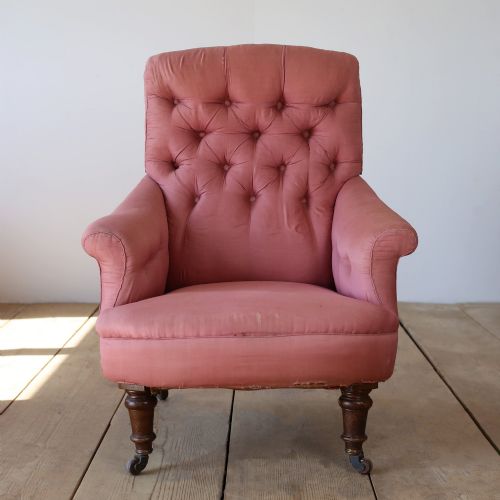
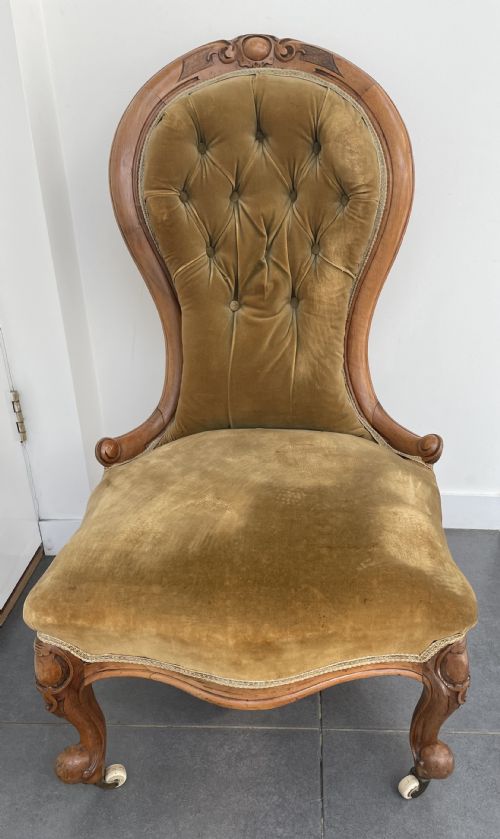
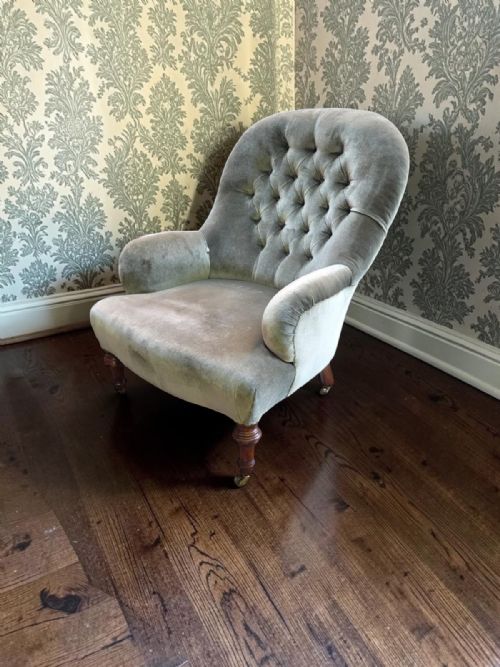
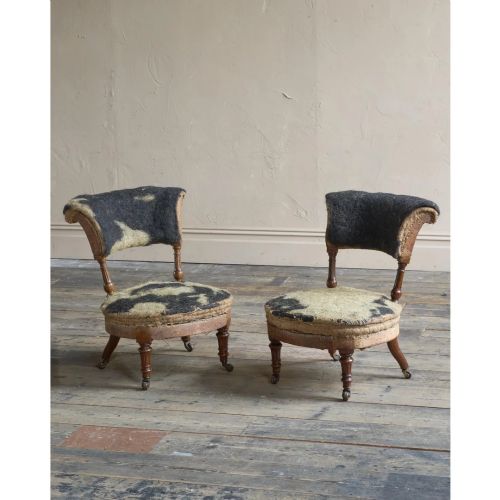
Low Seated Nursing Chair
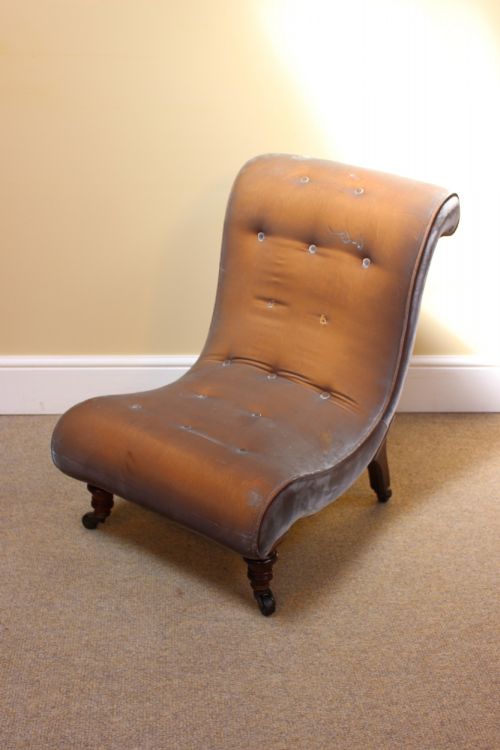
A low seated nursing chair offers a low frame designed for comfort near the hearth, appearing frequently in Victorian and Edwardian iterations.
Low Seated Nursing Chair
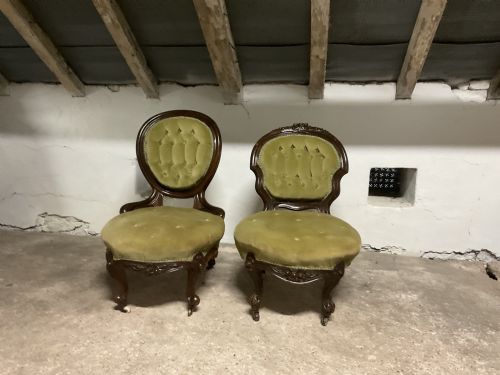
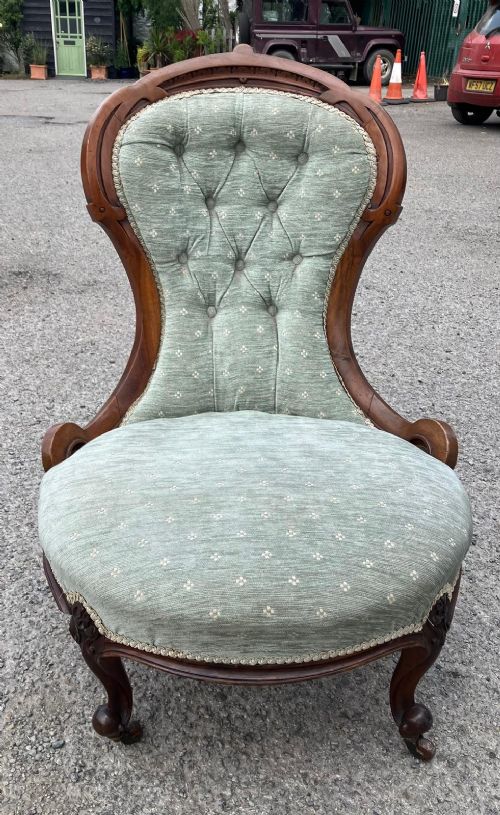
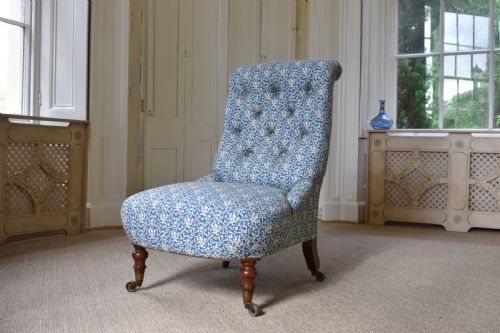
A low seated nursing chair brings a low centre of gravity to bedroom and drawing room settings, often categorized alongside slipper chairs, occasional chairs, and salon chairs. You encounter these primarily from the nineteenth century, including Victorian and Edwardian periods, featuring compact proportions suited for private chambers.
The form spans straightforward wooden frames and elaborate button-backed designs, sometimes identified as prayer chairs or ladies chairs. Makers built these low seats to allow comfortable tending to infants or fireside resting, employing rich timber frames beneath varied upholstery.
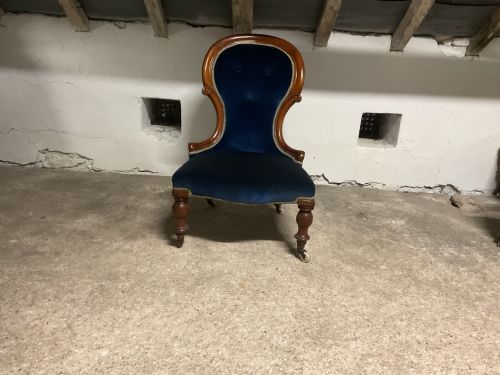
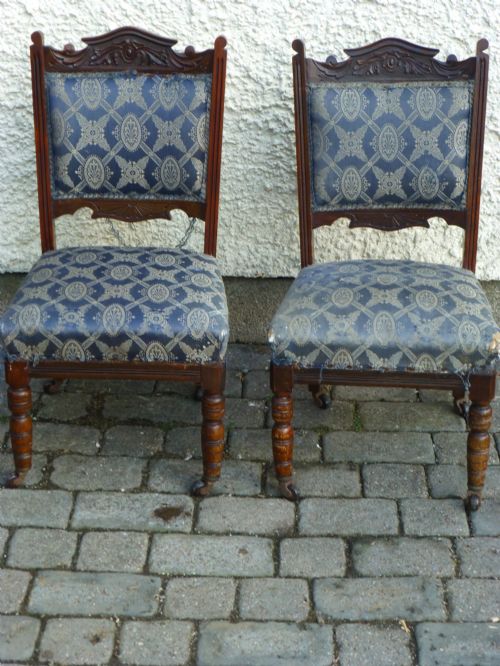
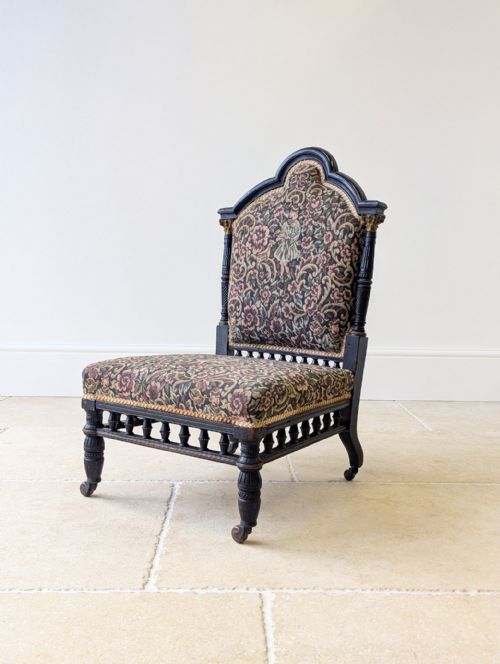
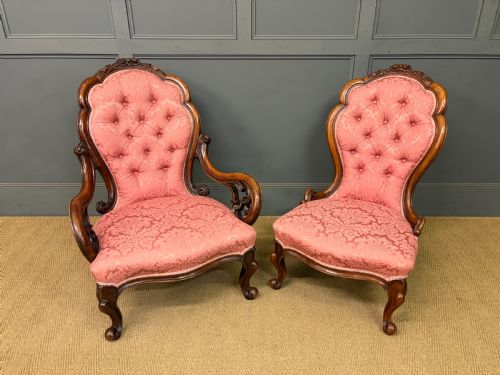
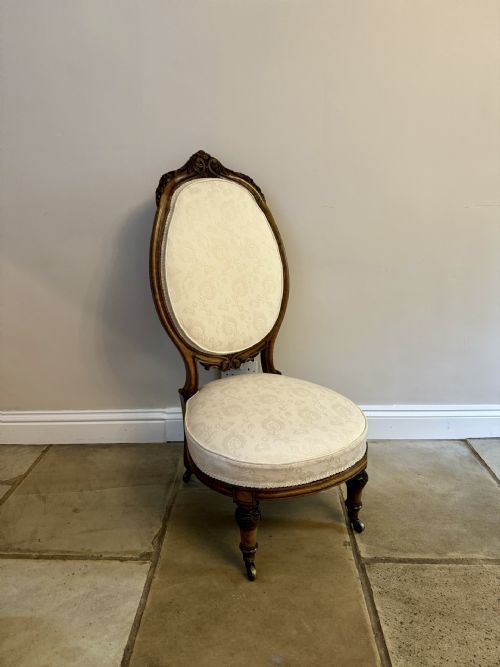
Most examples on this page date from the 1850s through to 1910, showing the evolution from early Victorian rosewood and mahogany frames to later ebonised and gilt finishes. They appear singly or in pairs, frequently presenting round seats or spoon backs.
How they were made
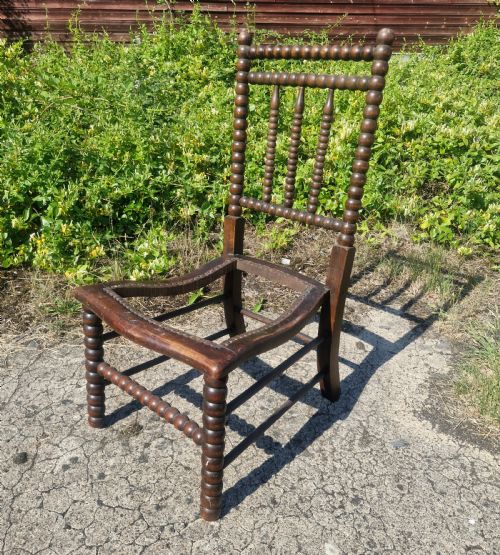
Frames rely upon traditional hardwoods such as walnut, mahogany, rosewood, and occasional ebonised wood, shaped with carved details or bobbin turnings. Joinery is concealed beneath upholstery, while exposed legs sometimes feature brass castors or ceramic components.
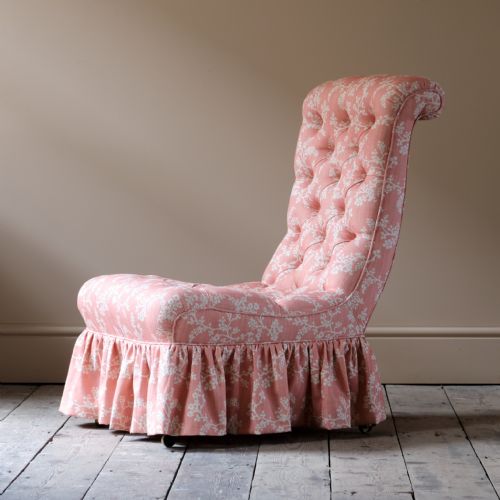
Upholstery techniques involve deep buttoning, springing, and the application of fabrics including velvet, leather, and modern re-upholstery textiles. Decorative touches incorporate fringe trim and gilt highlights on carved wooden elements.
Low Seated Nursing Chair Retail Price Guide 2026
Typical asking prices for low seated nursing chair among the pieces listed under this phrase on Sellingantiques today, from the lower quarter to the upper quarter. They describe what is for sale here now, not the wider market.
Some chairs feature delicate gilt legs that seem almost too dainty to hold the weight of a Victorian day.
What varies in quality
The distinction between ordinary and superior pieces lies in the crispness of the timber carving and the integrity of the frame construction. Better examples display carefully shaped walnut or mahogany frames with refined proportions rather than heavy, plain timber.
Original upholstery details, such as traditional buttoning and high-grade velvet or leather, elevate a piece, whereas items needing complete re-upholstery require a focus entirely on the underlying woodwork.
Howard and Sons·Gillows·Hindley and Sons
The Low Seated Nursing Chair Glossary
- Slipper chair
- A low-framed upholstered chair originally designed for bedrooms, allowing a lady to sit comfortably while putting on footwear. These share close similarities with nursing chairs.
- Button back
- An upholstery method where tufts of fabric are pulled deep into the padding and secured with buttons in a geometric diamond pattern. This technique provides firm support and distinct visual texture.
- Spoon back
- A padded chair back shaped like the bowl of a spoon, curving deeply to cradle the sitter's spine. This style is characteristic of mid-nineteenth-century seating.
- Bobbin framing
- Turned woodwork featuring rounded, spool-like shapes arranged in a repeating sequence along the legs or arms. It reflects nineteenth-century decorative trends.
- Bergere
- A traditional upholstered armchair with enclosed cane work sides and back panels. These appear in lighter occasional seating formats.
Low Seated Nursing Chair: Frequently Asked Questions
What is a low seated nursing chair?
A low seated nursing chair is a nineteenth-century bedroom or drawing room chair built with a low profile for domestic comfort. These pieces often feature button backs and turned wooden legs.
They serve as decorative occasional seating today, retaining the compact dimensions required for smaller Victorian and Edwardian rooms.
How do I date a nursing chair?
Dating relies on observing the timber choice, frame style, and upholstery methods visible in the piece. Early examples utilise rosewood or mahogany with simple curves, while later Victorian versions favour walnut, ebonised finishes, or bobbin turnings.
Edwardian pieces introduce lighter frames and alternative proportions while maintaining the low seat characteristic of the form.
Are slipper chairs and nursing chairs different?
Slipper chairs and nursing chairs share very similar low-slung proportions and historical domestic functions. Makers often used the terms interchangeably in the nineteenth century to describe low bedroom seating.
Distinctions usually come down to minor regional naming conventions rather than structural differences in the frame.
Can I use these chairs in a modern room?
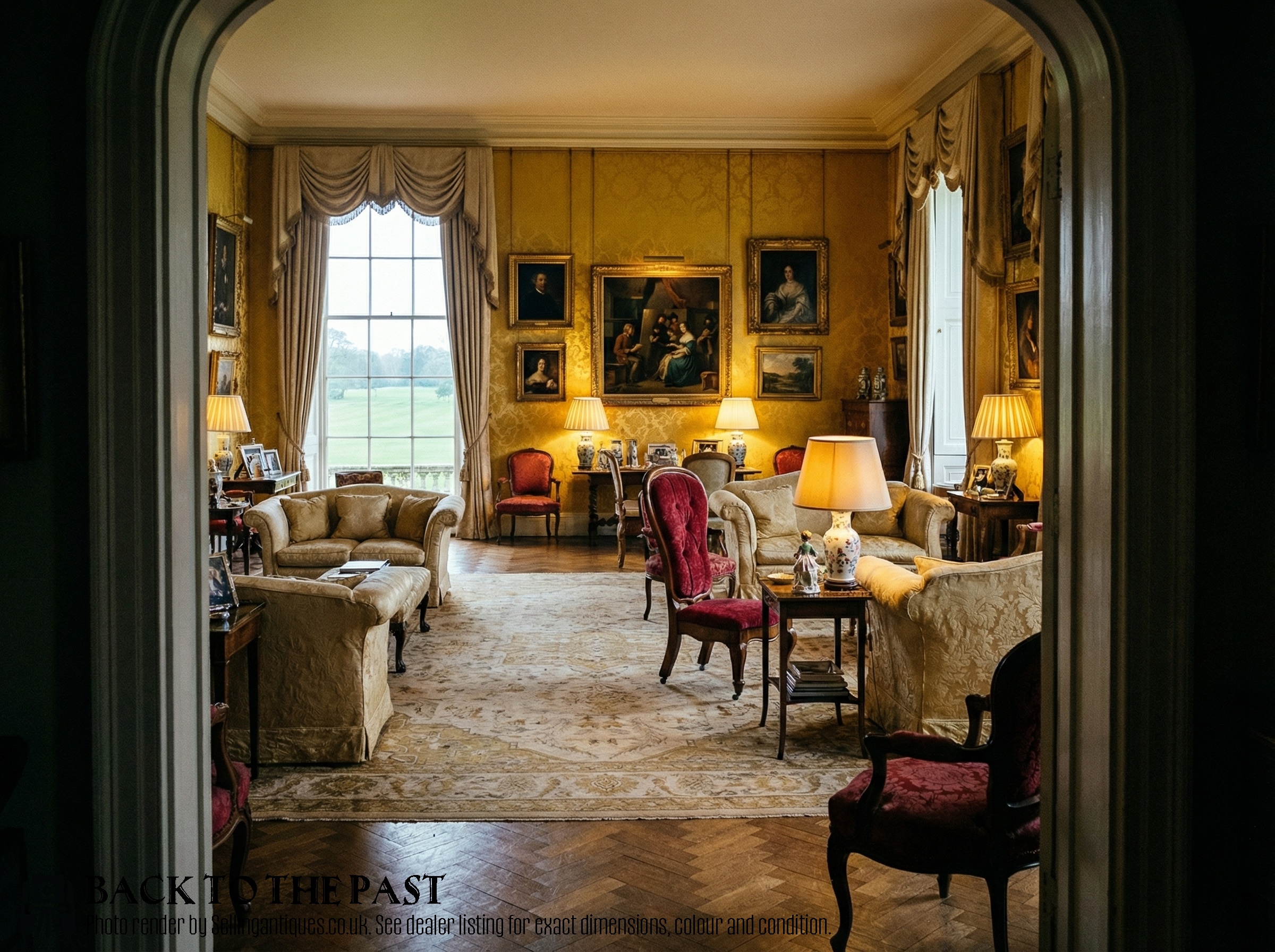
These compact chairs integrate easily into modern living spaces due to their modest scale and low height. They function well as accent seating in bedrooms, hallways, or sitting rooms.
Many survive needing re-upholstery, allowing you to match the fabric directly to contemporary interior colour schemes.