

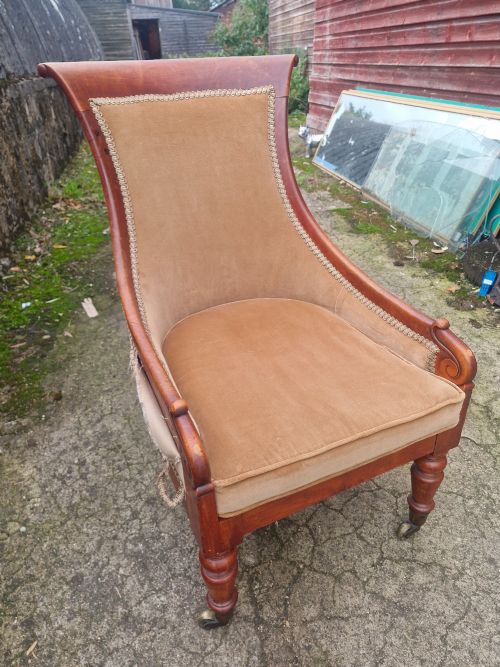
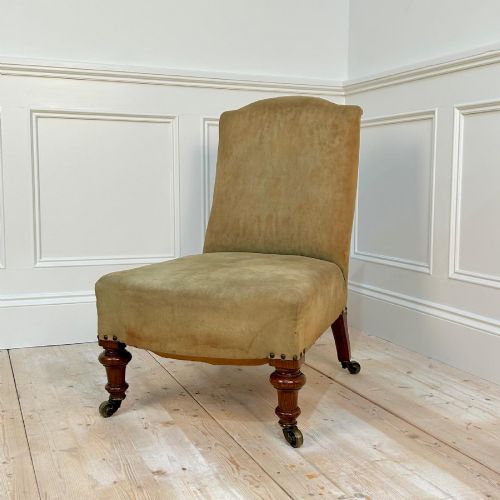
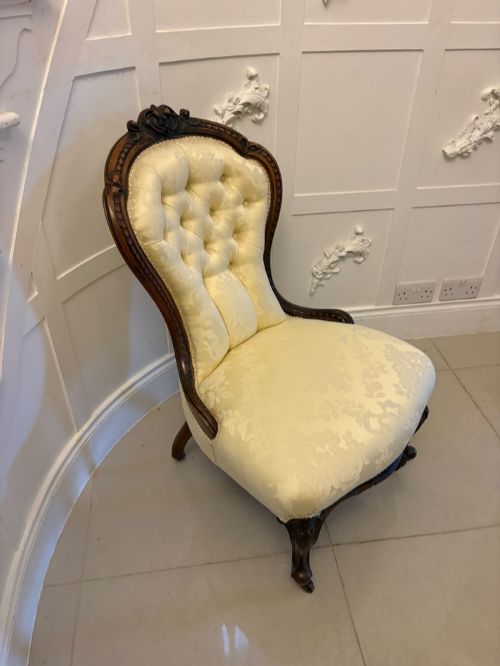
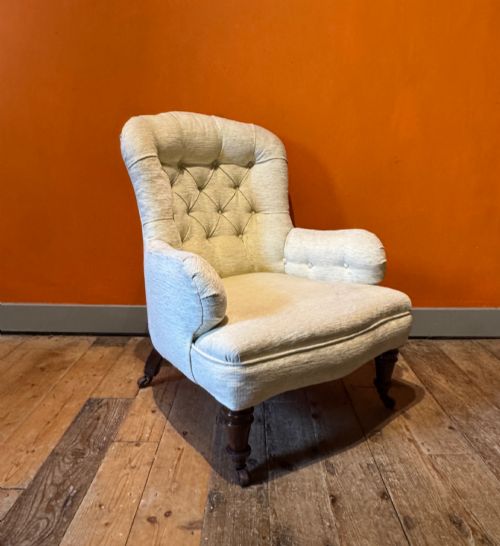

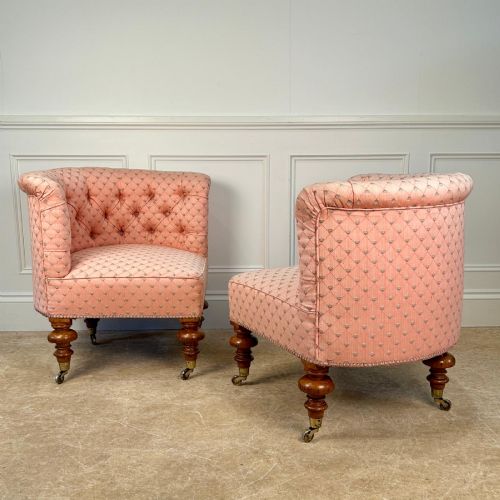
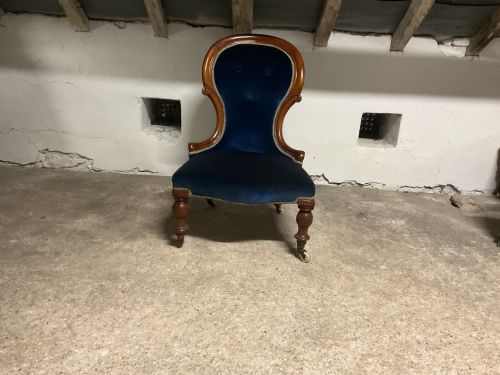
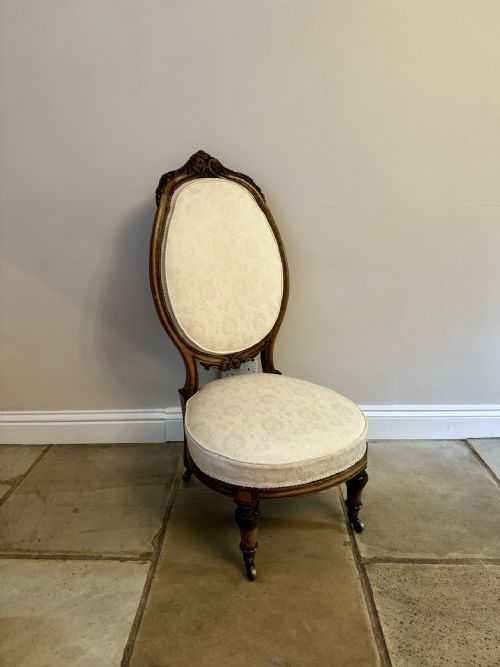
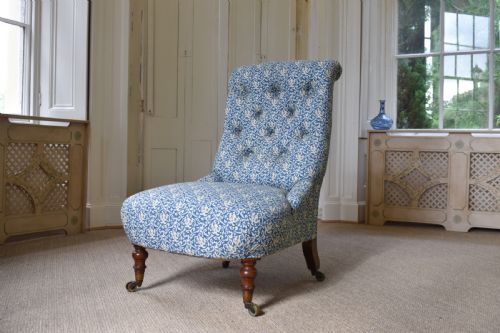
Low Seat Bedroom Armchair
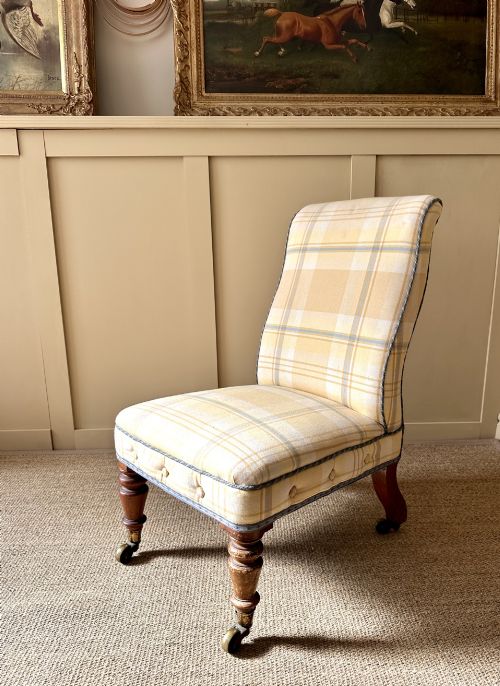
A low seat bedroom armchair offers a compact, fireside scale designed for dressing rooms and intimate parlours.
Low Seat Bedroom Armchair
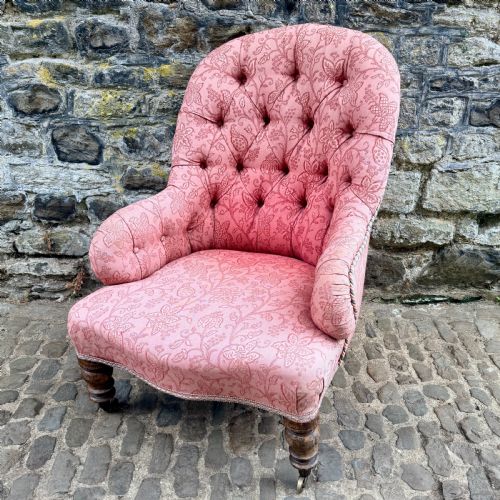
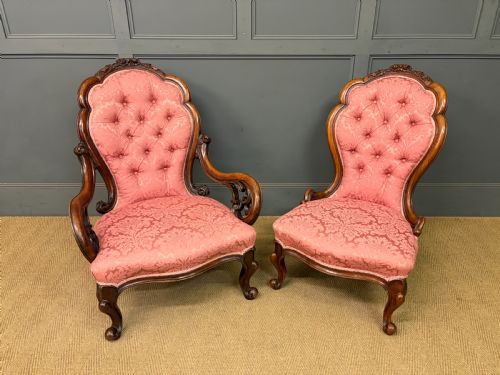
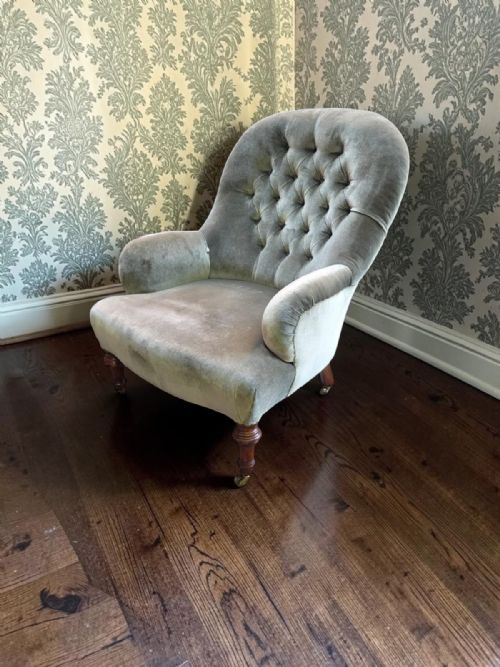
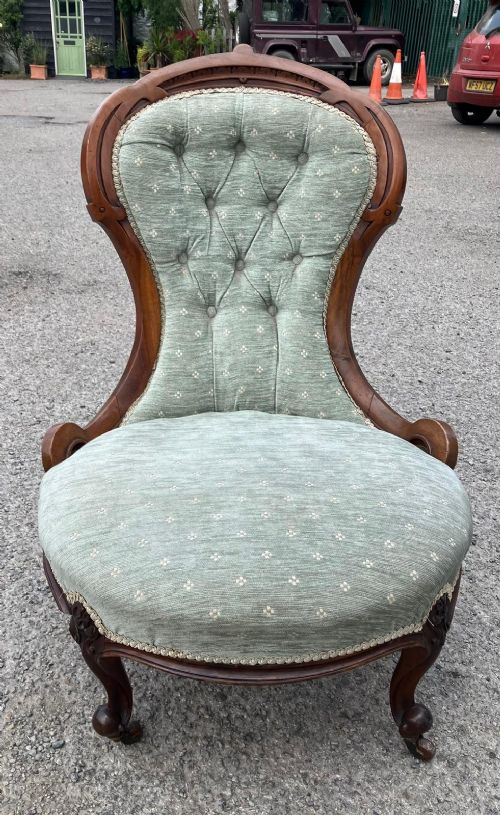
A low seat bedroom armchair encompasses a variety of compact seating forms intended for private chambers, most frequently appearing as Victorian nursing chairs, slipper chairs, and occasional chairs. These pieces date predominantly from the nineteenth century, spanning Regency, Victorian, and Edwardian periods.
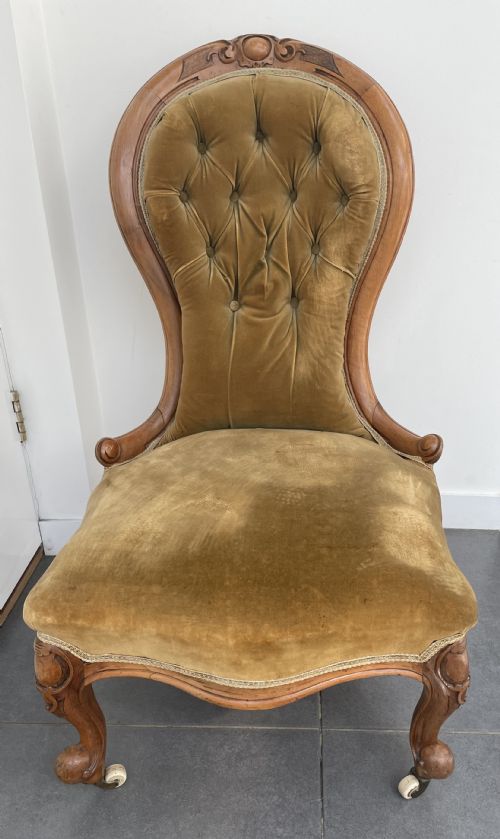
The physical form relies on a low-set seat and a supportive, often buttoned back, designed originally to facilitate dressing. Walnut and mahogany frames dominate the selection, frequently accompanied by upholstered finishes in velvet, textile, and leather.
Makers and designers of the period, including notable firms, produced these low-slung seats with specific spatial economy in mind, suiting smaller rooms where standard armchairs prove too bulky. French mid-nineteenth century and Napoleon III examples also emerge alongside English Victorian variants.
Construction and Materials
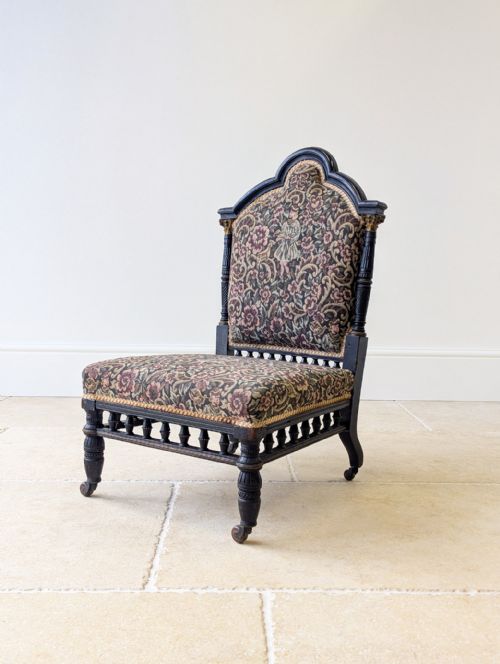
Frames rely heavily on traditional timbers such as walnut, mahogany, oak, and rosewood, carved or turned to support upholstered bodies. Ebonised and gilt finishes appear on specific Aesthetic Movement and salon pieces, adding decorative contrast to the timber base.
Upholstery techniques involve deep buttoning, sprung interiors, and traditional stuffing secured with textiles, velvet, leather, and occasional brass detailing. Frames frequently feature exposed woodwork around spoon backs and balloon backs, displaying period cabinet-making skills.
Low Seat Bedroom Armchair Retail Price Guide 2026
Typical asking prices for low seat bedroom armchair among the pieces listed under this phrase on Sellingantiques today, from the lower quarter to the upper quarter. They describe what is for sale here now, not the wider market.
Listings for low seat bedroom armchairs feature nineteenth-century periods, with walnut and mahogany framing the predominant timber choices.
Assessing Quality and Craftsmanship
Quality rests primarily in the timber selection and the precision of the frame carving, where dense walnut or figured mahogany indicates superior material choice. Finer examples display crisp moulding around spoon backs and robust joinery that maintains structural integrity without excessive reinforcement.
Upholstery execution separates standard production from exceptional pieces, evident in the symmetry of buttoning, the tautness of the textile finish, and the harmonious proportion of the low seat to the backrest. Maker stamps or labels further elevate a piece by documenting its origin.
Charles Hindley and Sons·Howard and Sons
The Low Seat Bedroom Armchair Glossary
- Spoon back
- A padded chair back shaped like the bowl of a spoon, designed to cradle the human spine comfortably. This profile appears frequently on Victorian walnut chairs.
- Button back
- An upholstery style where depressions are formed in the padding by stitches pulled tight and secured with fabric buttons. This technique provides firm support and a tailored appearance.
- Nursing chair
- A low-seated chair traditionally used by women for nursing infants, characterised by a short distance between the seat and the floor. These pieces often feature sprung seats and upholstered frames.
- Bergere
- An enclosed armchair with wooden framing and woven cane panels on the back and sides. This French style offers a lighter visual weight in a bedroom setting.
- Aesthetic movement
- A late nineteenth-century design style emphasising decorative arts for their own beauty rather than narrative or moral function. Pieces from this movement often feature ebonised wood surfaces.
Low Seat Bedroom Armchair: Frequently Asked Questions
What is a low seat bedroom armchair used for?
These compact seats served originally in private bedchambers and dressing rooms for tasks such as putting on footwear or nursing infants. Their reduced height made them convenient for personal dressing routines.
Today, they function well as accent seating in living spaces, bedrooms, or reading corners where standard-sized armchairs overwhelm the available floor area.
How do I identify a Victorian bedroom chair?
Victorian examples typically feature turned wooden legs, exposed walnut or mahogany frames, and upholstered sprung seats. Common backrest shapes include the spoon back and the buttoned balloon back.
Construction details like hand-carved details and traditional joinery help distinguish these nineteenth-century pieces from later reproductions.
What is the difference between a slipper chair and a nursing chair?
Slipper chairs traditionally sit low to the ground without arms, designed originally to allow ladies to put on slippers and stockings with ease. Nursing chairs share the low seat height but frequently include arms and a more supportive backrest.
Both forms belong to the broader category of low bedroom seating from the nineteenth century.
Can these chairs be easily reupholstered?
Many nineteenth-century frames are built with sturdy hardwood that accommodates modern webbing and traditional stuffing methods. Some pieces appear specifically ready for recovering.
Working with a professional restorer ensures that original frame integrity and buttoning patterns are preserved during the reupholstery process.