




Victorian Damask Slipper Chair
A victorian damask slipper chair brings low-slung seating and rich textile upholstery into modern rooms, offering a compact silhouette designed originally for nineteenth-century bedrooms and dressing rooms.
Victorian Damask Slipper Chair
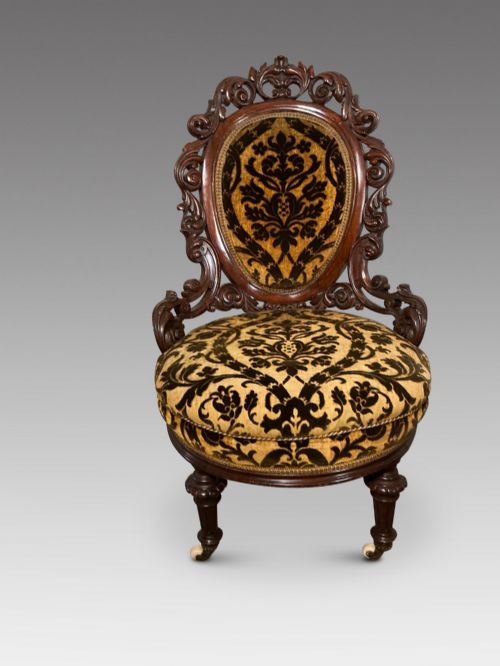
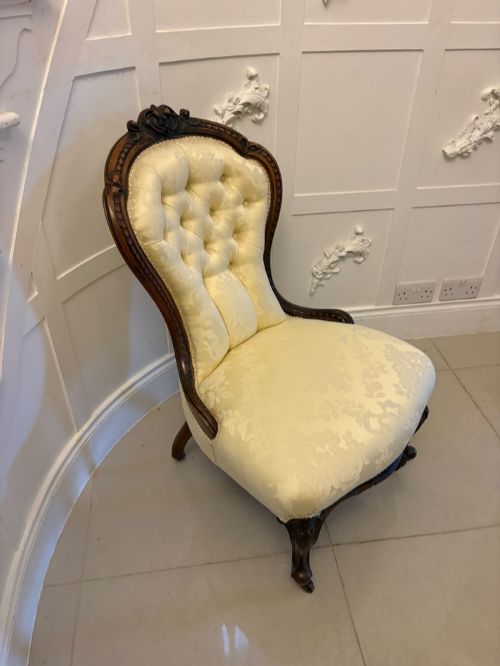
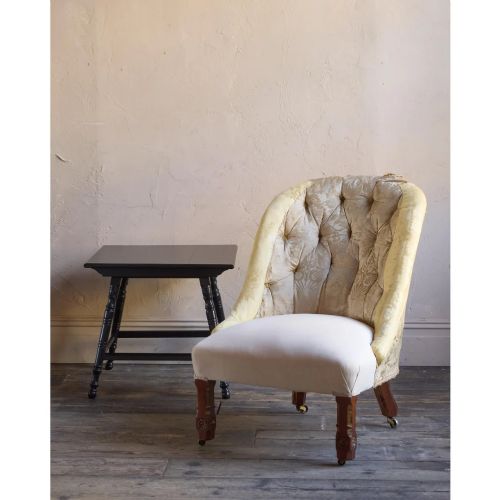
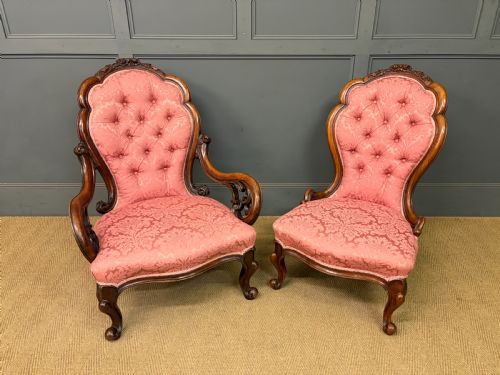
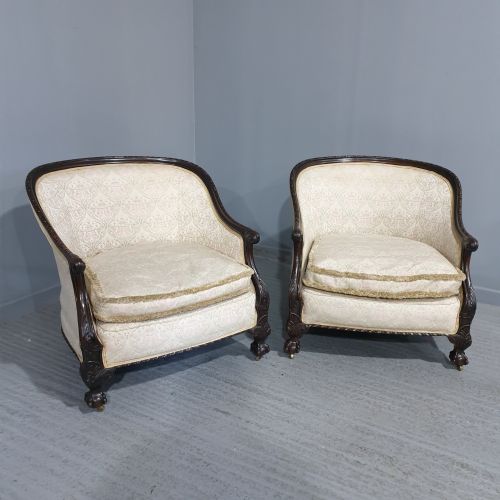
A victorian damask slipper chair is characterised by its low seat and absence of arms, built to make dressing and putting on shoes straightforward in nineteenth-century domestic spaces. The listings on this page span the broader family of low-slung seating, including nursing chairs, bedroom chairs, and occasional chairs from the Victorian period, nineteenth century, Regency, and William IV eras.
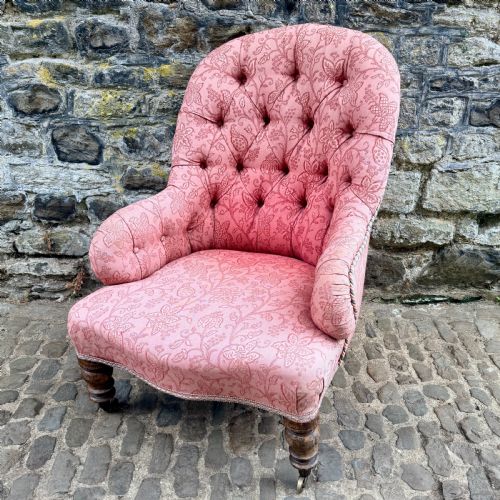
Most examples found here utilise traditional timber frames such as walnut, mahogany, and rosewood, often paired with contemporary or period fabric upholstery including damask. The forms vary from spoon backs and hoop backs to button-upholstered drawing room seats and low-profile bedroom chairs.
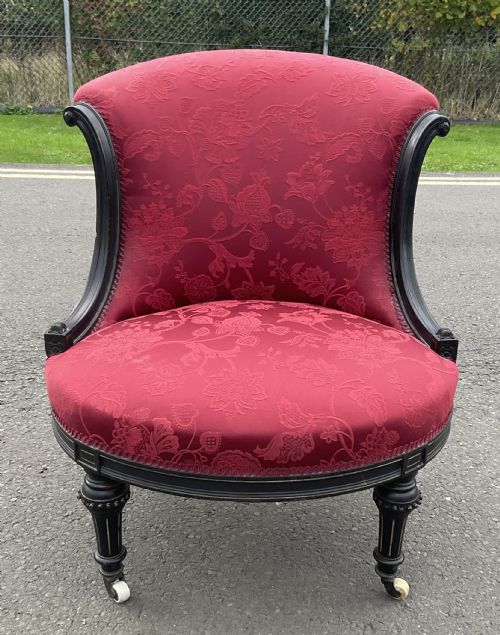
Origin and styling stretch from English Victorian workshops to French mid-nineteenth century, Napoleon III, and Victorian Aesthetic Movement designs. Buyers will encounter both fully upholstered pieces ready for the room and frames offered for re-upholstery.
Materials and construction
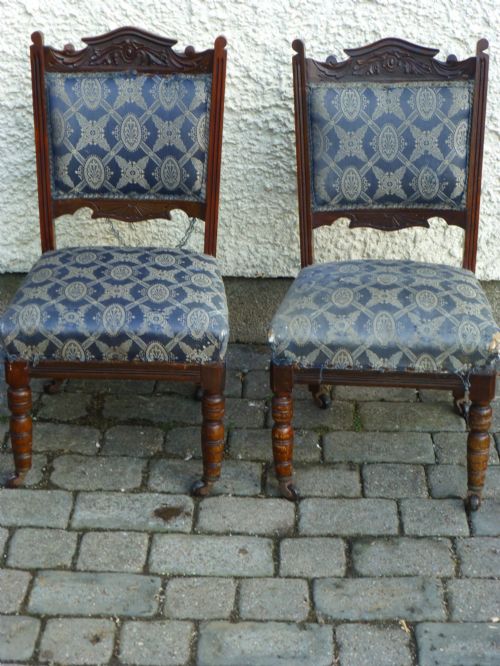
Makers of these low seats relied on dense hardwoods like walnut, mahogany, and rosewood for the structural frames, carving crest rails and cabriole legs to suit prevailing tastes. Brass castors and ceramic components often finished the feet, allowing the compact chairs to move easily across bedroom carpets.
Upholstery techniques involved traditional stuffing and buttoning over resilient internal webs, later finished with heavy textiles such as damask fabric. Frames such as ebonised wood or carved rosewood provided the rigid skeleton required to support deep upholstery and frequent daily use.
Victorian Damask Slipper Chair Retail Price Guide 2026
Typical asking prices for victorian damask slipper chair among the pieces listed under this phrase on Sellingantiques today, from the lower quarter to the upper quarter. They describe what is for sale here now, not the wider market.
Listings feature timbers including walnut, mahogany, and rosewood, alongside iron and brass components.
Assessing quality
The distinction between ordinary and superior pieces rests in the crispness of the timber carving and the architectural balance of the low frame. Walnut and rosewood frames with deeply moulded spoon backs or elaborate structural details demonstrate greater workshop ambition than plain mahogany or generic iron-backed alternatives.
Originality of the timber frame and the integrity of the joinery dictate longevity, especially given the stresses placed on low-slung seating. Chairs retaining their original castors, sound structural webbing, and well-proportioned sprung foundations sit at the upper end of the range.
The Victorian Damask Slipper Chair Glossary
- Damask
- A reversible figured fabric traditionally woven on a jacquard loom, featuring patterns formed by contrasting warp and weft satin weaves. It provides the lustrous surface seen on formal nineteenth-century upholstery.
- Spoon back
- A padded chair back shaped in a concave, oval contour resembling the bowl of a spoon. This ergonomic form became popular in mid-nineteenth-century seating to support the sitter's spine.
- Nursing chair
- A low-seated armchair designed without restrictive arms to allow women to nurse infants comfortably in nineteenth-century bedrooms. They share the compact proportions typical of slipper chairs.
- Prie-dieu chair
- A devotional chair featuring a low seat and an elevated, padded top rail designed for kneeling and prayer. These pieces emerged from the Gothic Revival movement within Victorian interiors.
- Aesthetic Movement
- A late nineteenth-century design ethos prioritising art for art's sake over heavy Victorian ornamentation. Pieces from this movement often employ ebonised finishes and simpler, linear forms.
Victorian Damask Slipper Chair: Frequently Asked Questions
What is a slipper chair used for?
These low-slung seats were originally placed in bedrooms and dressing rooms to let Victorian ladies sit comfortably while putting on shoes or garments.
Today, their compact proportions make them versatile accent pieces in sitting rooms, hallways, and modern bedrooms where space is at a premium.
How do I tell a nursing chair from a slipper chair?
Nursing chairs typically feature low seats and lack armrests to accommodate bulky nineteenth-century dresses, functioning much like slipper chairs.
While the terms often overlap in trade, nursing chairs sometimes incorporate higher backs or specific devotional variants like the prie-dieu.
Are these chairs suitable for daily seating?
Most nineteenth-century examples provide sturdy timber frames made from walnut, mahogany, or rosewood that easily withstand regular sitting.
Buyers should inspect the internal webbing and upholstery support, as many antique frames benefit from professional re-webbing before heavy use.