
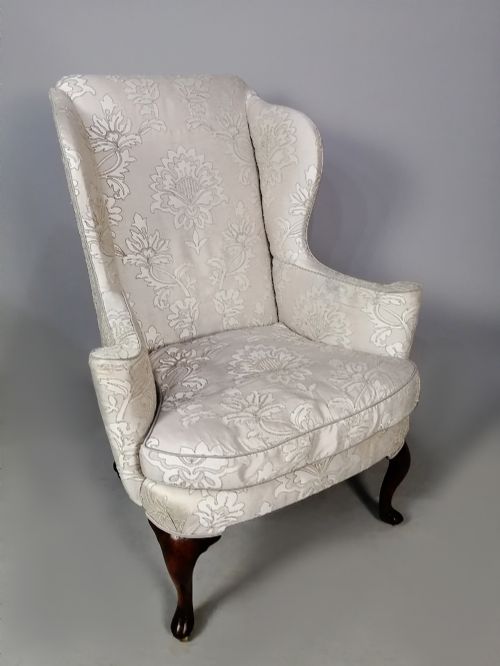
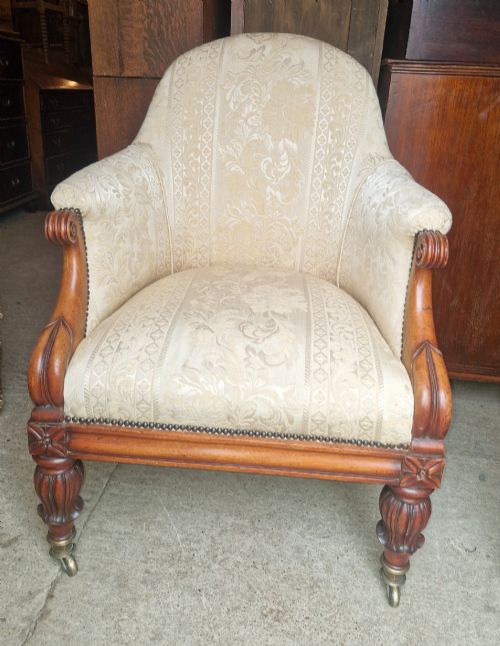
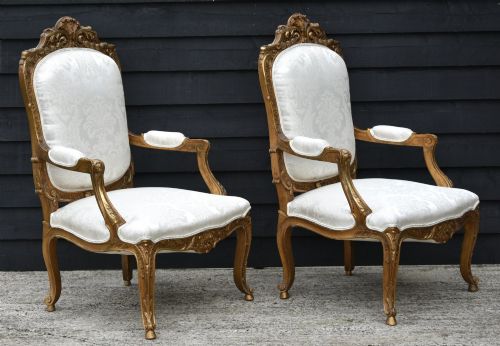
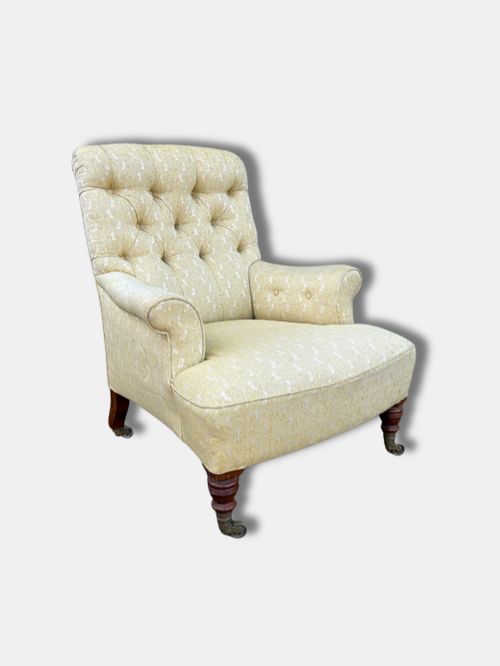


Cream Damask Chair
A cream damask chair combines classical timber framing with woven silk or cotton upholstery, offering enduring elegance and refined comfort for a traditional interior.
Cream Damask Chair
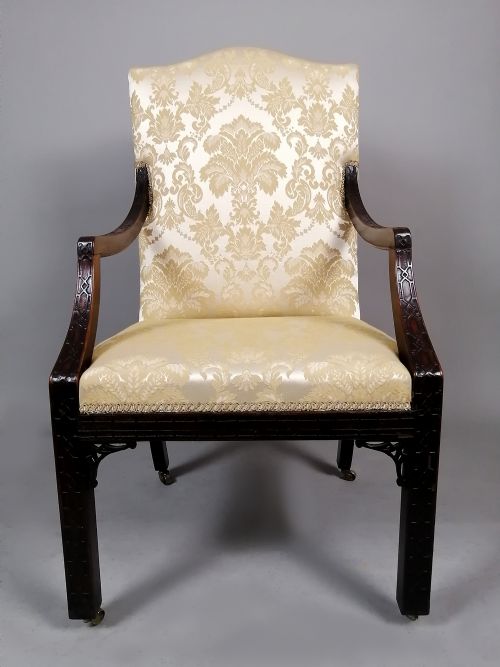
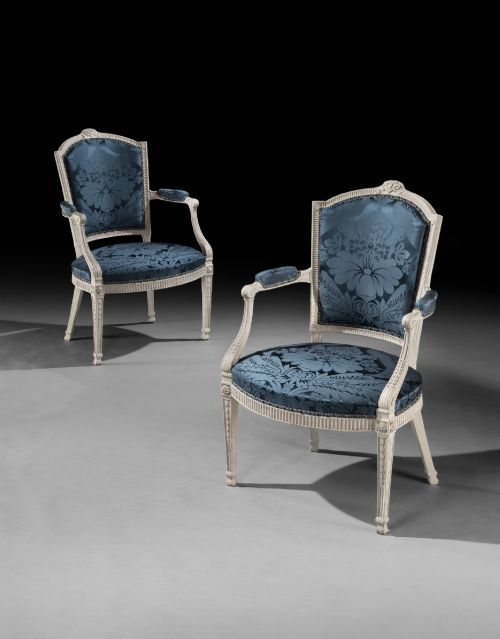
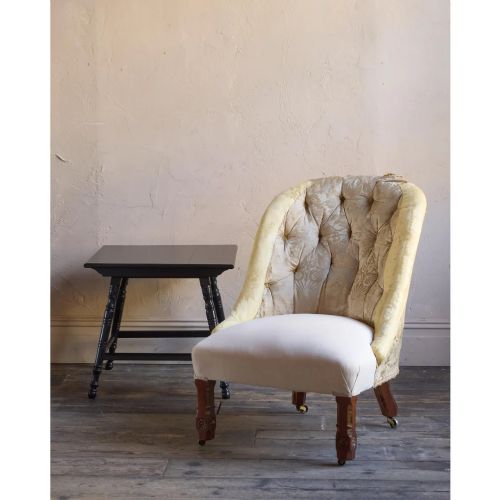
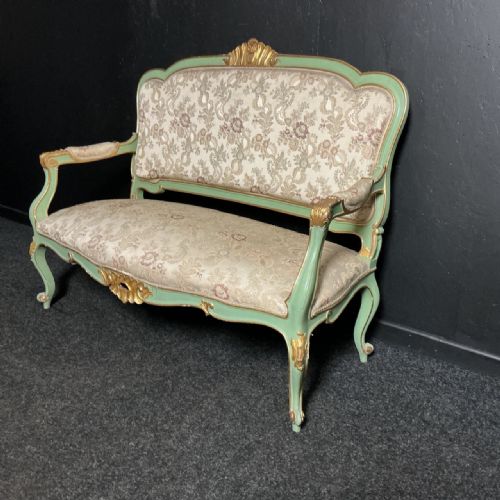
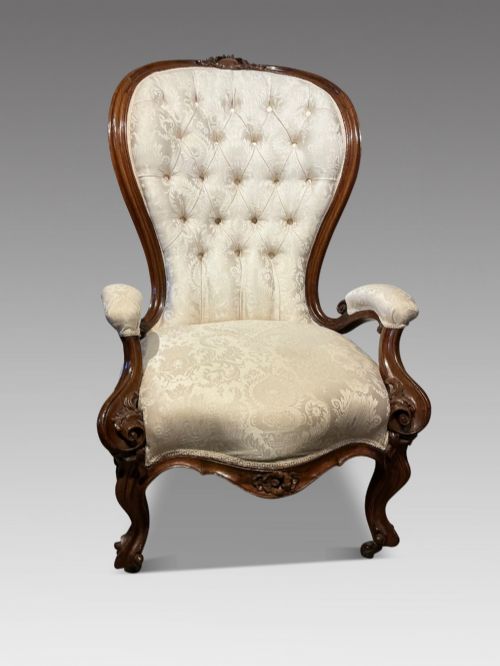
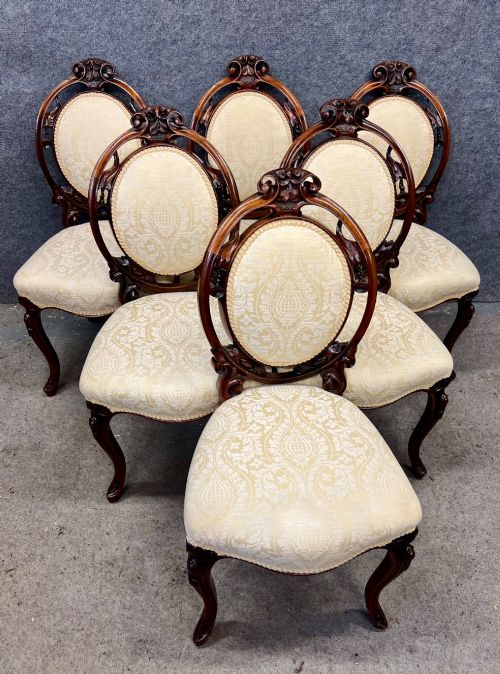
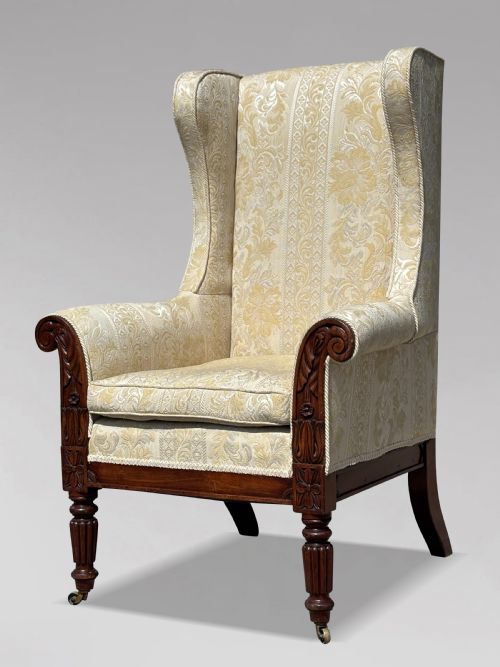
A cream damask chair brings together structured wooden seating forms and intricate patterned fabric upholstery. Buyers searching for a cream damask chair encounter historic seating spanning the eighteenth, nineteenth, and early twentieth centuries, reflecting diverse aesthetics from Regency simplicity to ornate French revival designs.
The selections on this page predominantly showcase Victorian and nineteenth-century armchairs, library chairs, and boudoir seating. Frames constructed from mahogany, walnut, oak, and giltwood provide the structural foundation for the characteristic damask textile covers.
How they were made
Craftsmen utilised dense hardwoods such as mahogany and walnut for the structural frames, often employing hand-carved details or giltwood finishes. Joinery relied on traditional mortise and tenon techniques to ensure long-term stability.
Upholstery involved mounting woven damask fabric over supportive interior stuffing, securing the material with careful tension. Frames ranged from exposed carved timber to fully upholstered open armchairs.
What varies in quality
The standard of timber carving and the crispness of the wood grain determine the initial tier of craftsmanship. Superior frames display deeply sculpted contours, balanced proportions, and tight structural joinery.
The quality of the damask textile and the precision of its application distinguish exceptional examples. Richness in the woven pattern and appropriate tension across the upholstered surfaces separate masterwork seating from standard production.
Howard and Sons·Harrods, London
The Cream Damask Chair Glossary
- Damask
- A reversible figured fabric with patterns formed by contrasting warps and wefts. This textile provides the characteristic textured surface seen on period upholstery.
- Giltwood
- Timber coated with a thin layer of gold leaf or gilt powder. This finish appears frequently on ornate nineteenth-century French and revival frames.
- Carolean Revival
- A nineteenth-century design movement emulating late seventeenth-century English furniture. Pieces in this style feature elaborate scrolling carvings and turned wooden components.
- Library Chair
- A sturdy, comfortable armchair designed for reading rooms and studies. These forms often incorporate generous proportions and supportive padded armrests.
Cream Damask Chair: Frequently Asked Questions
How do I date a cream damask chair?
Dating relies on identifying the underlying wood, the carving style, and structural joinery techniques. Cabinetmakers altered frame profiles across the eighteenth and nineteenth centuries.
Examining the upholstery webbing and interior stuffing also helps establish whether the piece retains its original period foundation or received later updates.
Where should I place a cream damask chair?
These seating pieces suit drawing rooms, studies, and bedrooms where traditional decor prevails. Their neutral cream tones integrate easily beside contrasting timber tables and antique cabinets.
Positioning them away from direct sunlight preserves the woven damask fabric from premature fading and textile degradation.
Are these chairs comfortable for daily use?
Library armchairs and easy chairs provide generous proportions designed for extended periods of sitting. Their upholstered backrests and padded arms offer substantial physical support.
Boudoir chairs and side chairs serve better as occasional seating due to their smaller frames and upright structural designs.
What wood types are most common?
Mahogany and walnut dominate nineteenth-century English and Victorian framing materials. Craftsmen favoured these dense hardwoods for their durability and capacity to hold intricate carved details.
Occasional pieces also utilise giltwood, painted finishes, and oak depending on the regional style and period.