
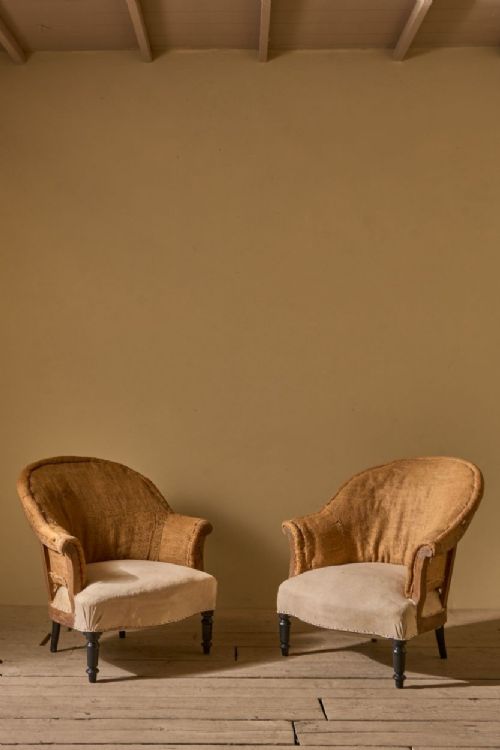
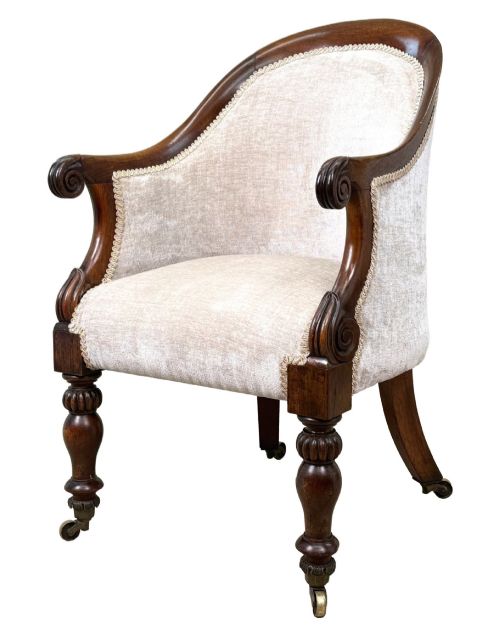
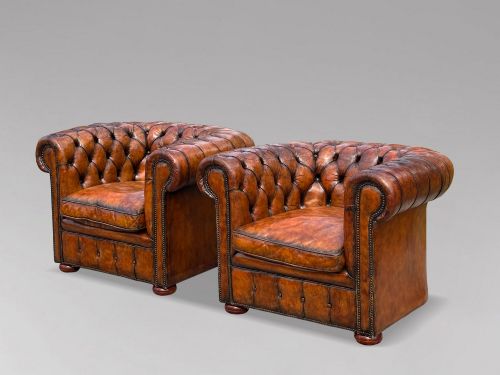
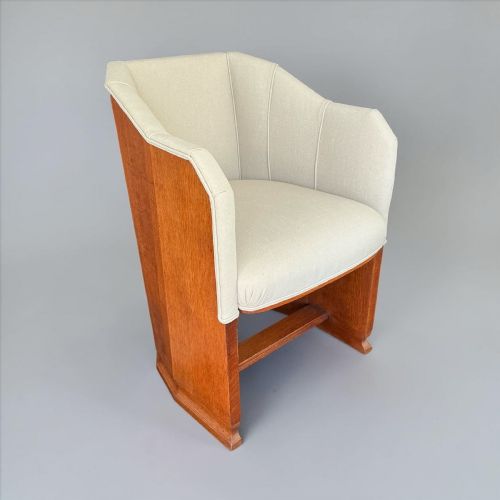

Vintage Barrel Armchair
A vintage barrel armchair wraps you in a curved embrace, offering deep seating shaped by decades of comfort and tailored design.
Vintage Barrel Armchair
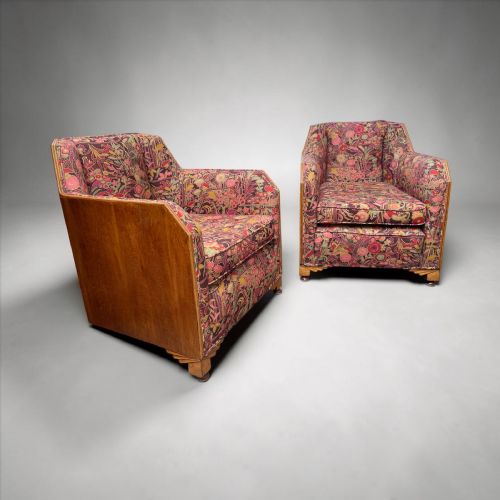
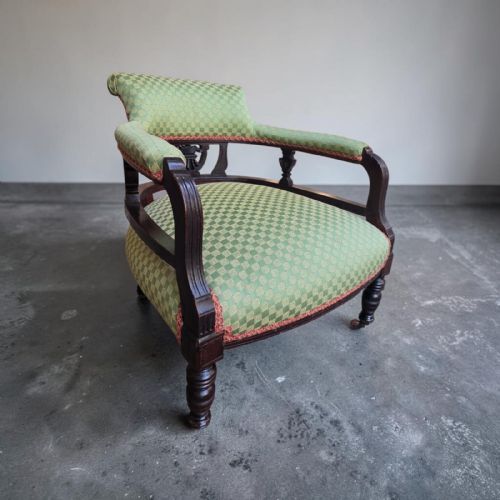
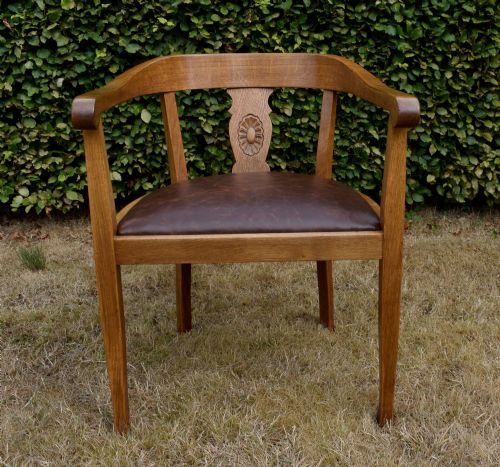
A vintage barrel armchair is a seating form defined by its semicircular backrest, which flows seamlessly into supportive arms. The pieces gathered under this phrase span periods from the nineteenth century through the Art Deco era of nineteen-thirty, encompassing Edwardian, Victorian, and Regency examples.
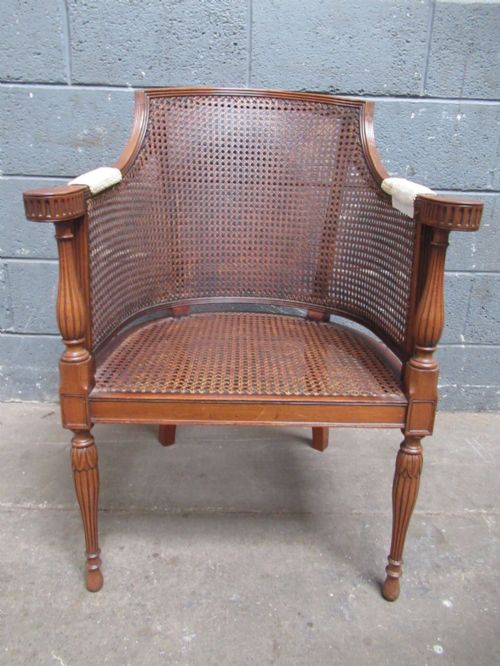
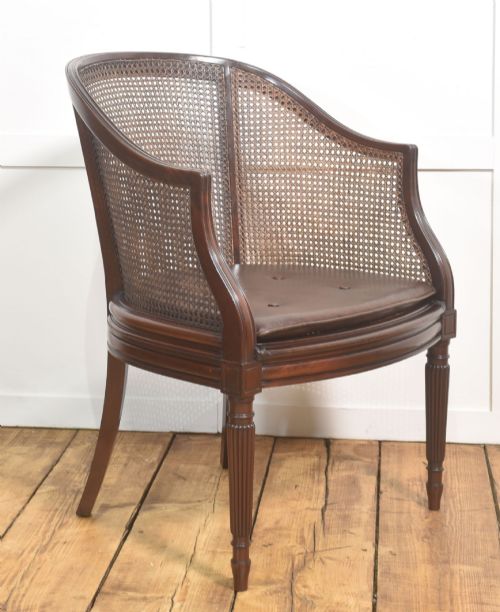
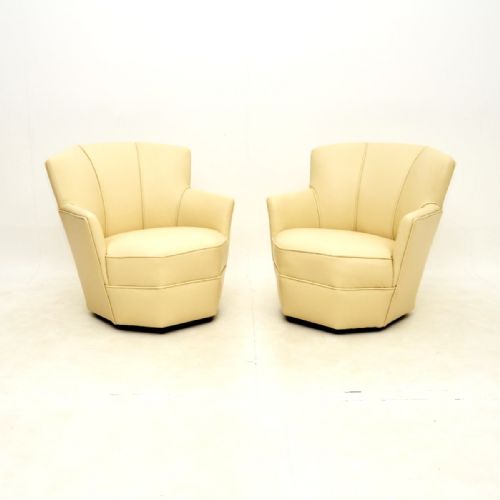
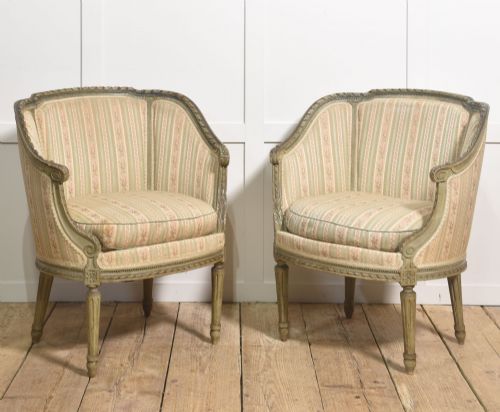
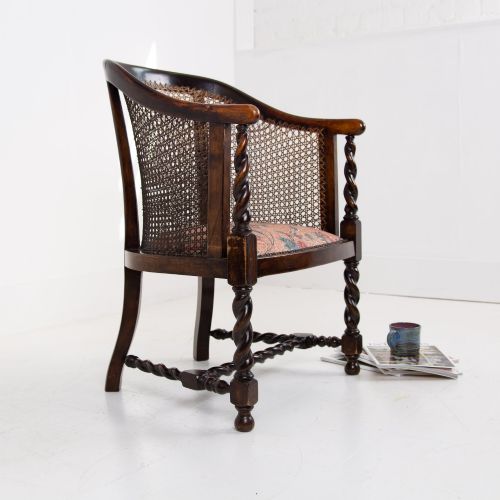
Buyers meet diverse iterations on this page, ranging from mahogany and cane tub chairs to robust leather club chairs and French painted frames. Formats include single library chairs, matched pairs, and occasional seats suited to desks or corners.
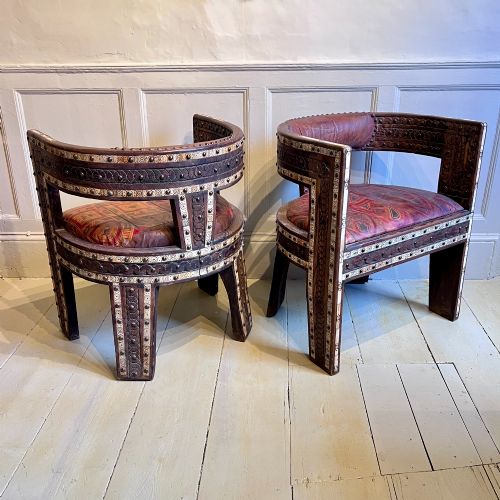
Origins vary across English workshops, French ateliers, and Anglo-Indian production, bringing distinct regional interpretations to the classic barrel silhouette. Woodwork ranges from rich rosewood and polished oak to painted finishes and exotic hardwoods.
What varies in quality
The integrity of the structural joinery and the purity of the timber dictate the upper tier of these armchairs. Superior pieces retain original polished surfaces, tight cane work without breaks, and well-executed hand-carved details that reflect the maker's proficiency.
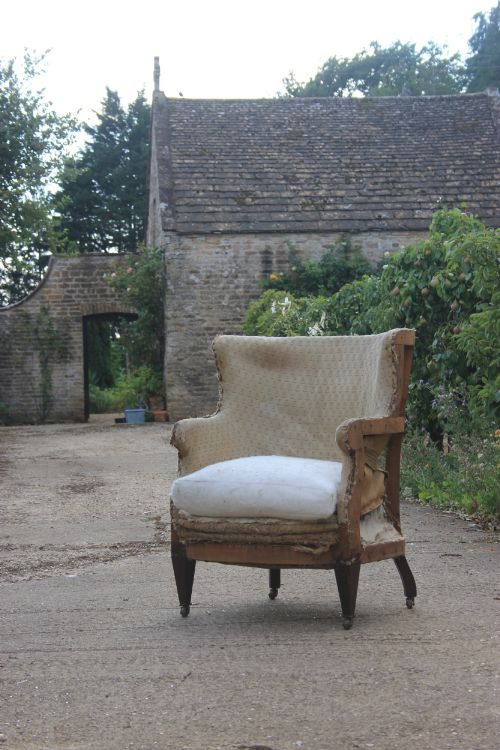
Upholstery choices and material pairing also separate the standard examples from the exceptional. Fine hides, correctly tensioned springs, and historically sympathetic textile choices elevate a piece far above simpler utility seating.
The listings span multiple decades, incorporating nineteenth-century Regency pieces alongside Art Deco designs from nineteen-thirty.
Hille·Hary and Lou Epstein·Harrods, London
The Vintage Barrel Armchair Glossary
- Barrel back
- A seating design featuring a continuous semicircular backrest that curves around to form the armrests. This enclosing shape provides a sense of enclosure and support.
- Tub chair
- An upholstered armchair with a rounded, tub-like back and sides. It shares many characteristics with the barrel back form.
- Bergère
- An enclosed armchair with wooden framing and a cane back and sides. These pieces often feature drop-in upholstered seat cushions.
- Club chair
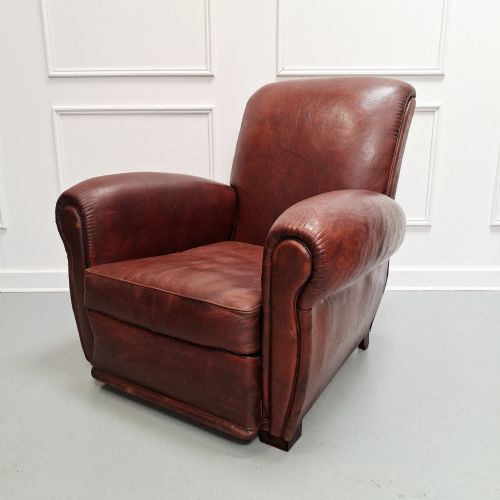
- A deep, comfortable armchair traditionally upholstered in leather. The style originated in French and English clubs during the nineteenth and twentieth centuries.
- Caning
- A method of weaving rattan or reed material to create panels for seat backs and frames. It requires skilled manual labour and offers flexible durability.
Vintage Barrel Armchair: Frequently Asked Questions
How do I style a vintage barrel armchair?
These armchairs work well as reading seats in studies, paired with low tables in sitting rooms, or as occasional desk chairs. Their curved profiles allow them to sit comfortably in corners or float within open spaces.
Matching pairs provide symmetry when placed opposite a fireplace or sofa, while single statement chairs anchor smaller reading nooks effectively.
What is the difference between a tub chair and a barrel armchair?
While the terms are often used interchangeably, a true barrel back traditionally emphasises the smooth, continuous sweep from back to arms. Tub chairs can sometimes feature slightly more upright or segmented upholstery.
Both forms prioritize an enclosing shape designed to shelter the sitter from drafts and encourage relaxed posture.
Are leather club chairs comfortable for daily use?
Leather club chairs from the early twentieth century and Victorian periods are built for deep relaxation. Their substantial padding and sprung bases accommodate long periods of sitting.
Over decades, the leather softens and conforms to the user, enhancing the tactile experience of the furniture.
How do I identify an Edwardian barrel armchair?
Edwardian examples often showcase lighter timbers like mahogany, frequently paired with delicate cane panels or satinwood stringing. They tend to feel less heavy than their Victorian predecessors.
Proportions are typically refined, reflecting the domestic interior trends of the early twentieth century.