
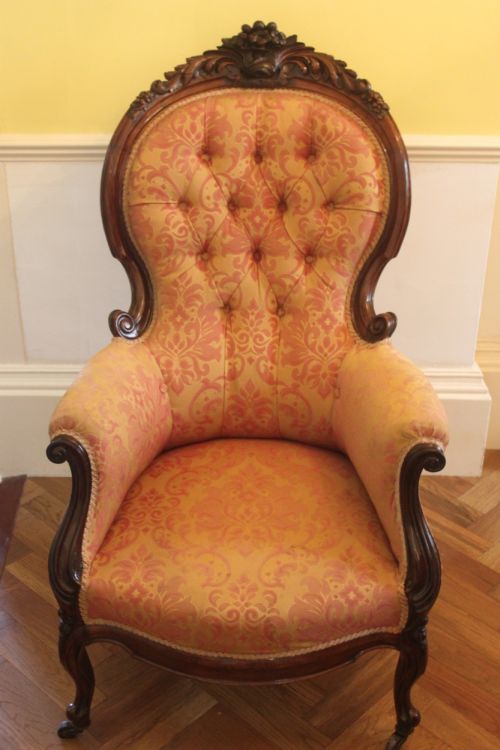
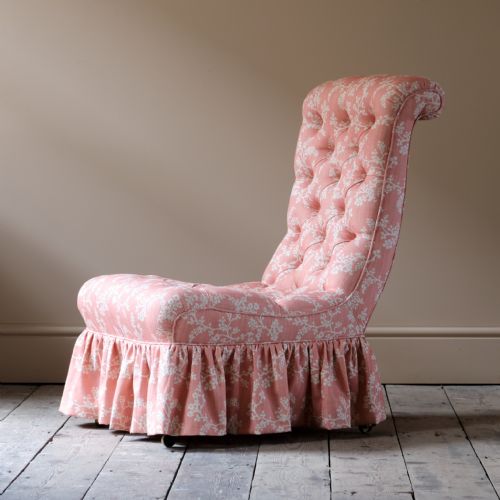
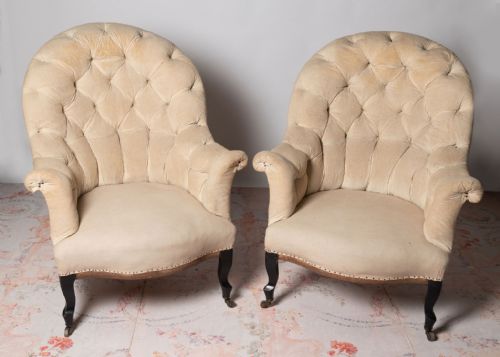


Tufted Spoon Back Chair
A tufted spoon back chair brings nineteenth-century drawing-room comfort into a modern home through deep upholstery and curvaceous timber framing.
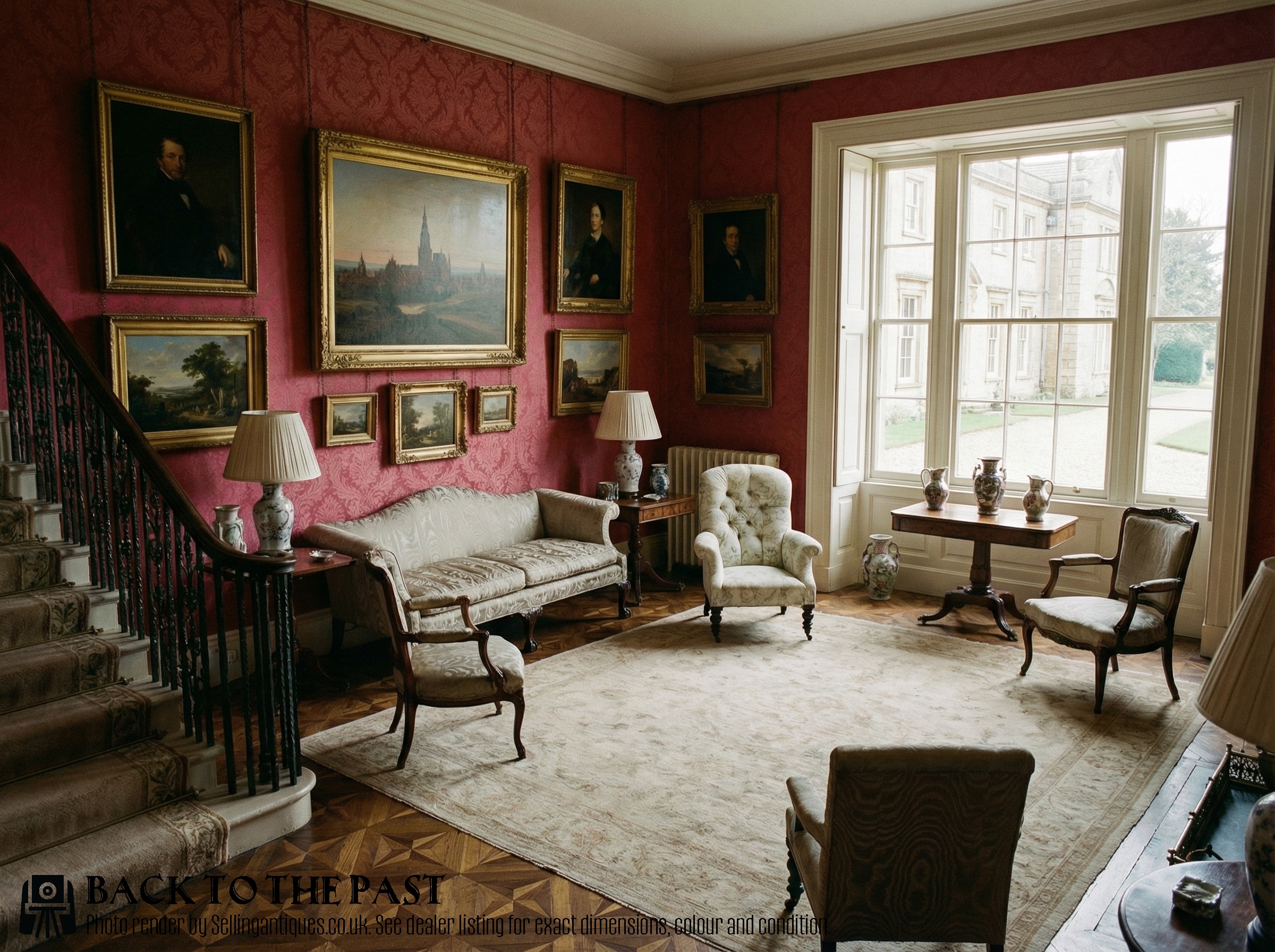
Tufted Spoon Back Chair
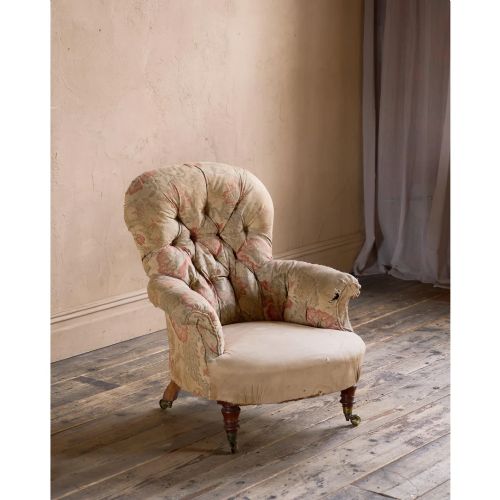
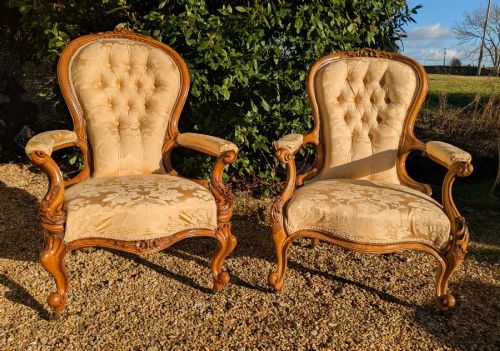
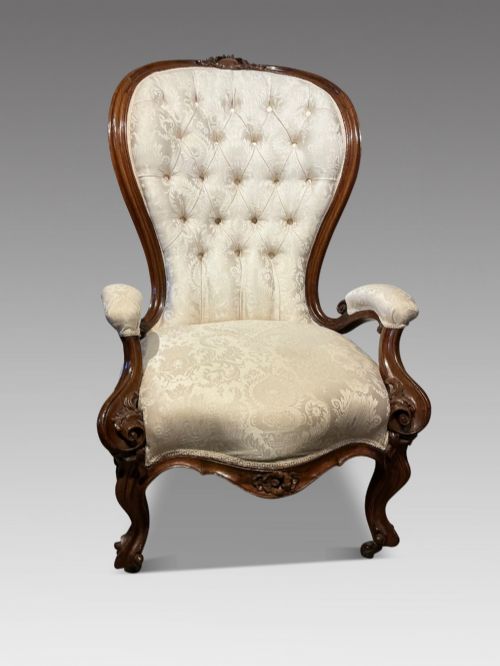
A tufted spoon back chair is an upholstered seating form defined by a concave, oval backrest resembling the bowl of a spoon. These pieces emerge predominantly across the Victorian period, including early Victorian and later nineteenth-century iterations, alongside Victorian Revival interpretations from the twentieth century.
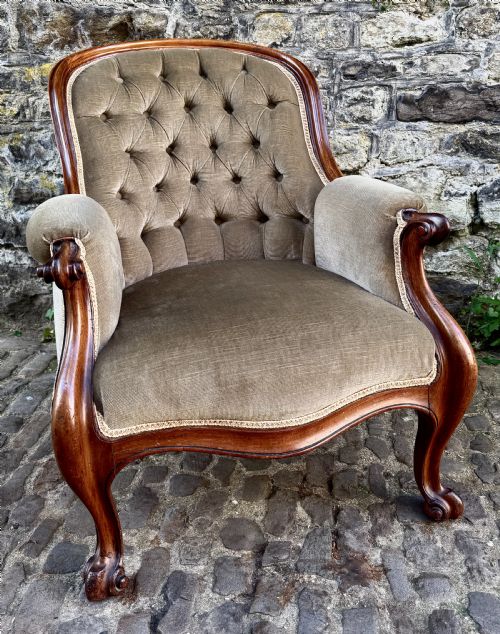
The evidence shows these forms appearing as gentleman's armchairs, ladies chairs, nursing chairs, slipper chairs, and open armchairs. Walnut and mahogany provide the primary timber framing, frequently paired with buttoned textile upholstery such as velvet, damask, and fabric.
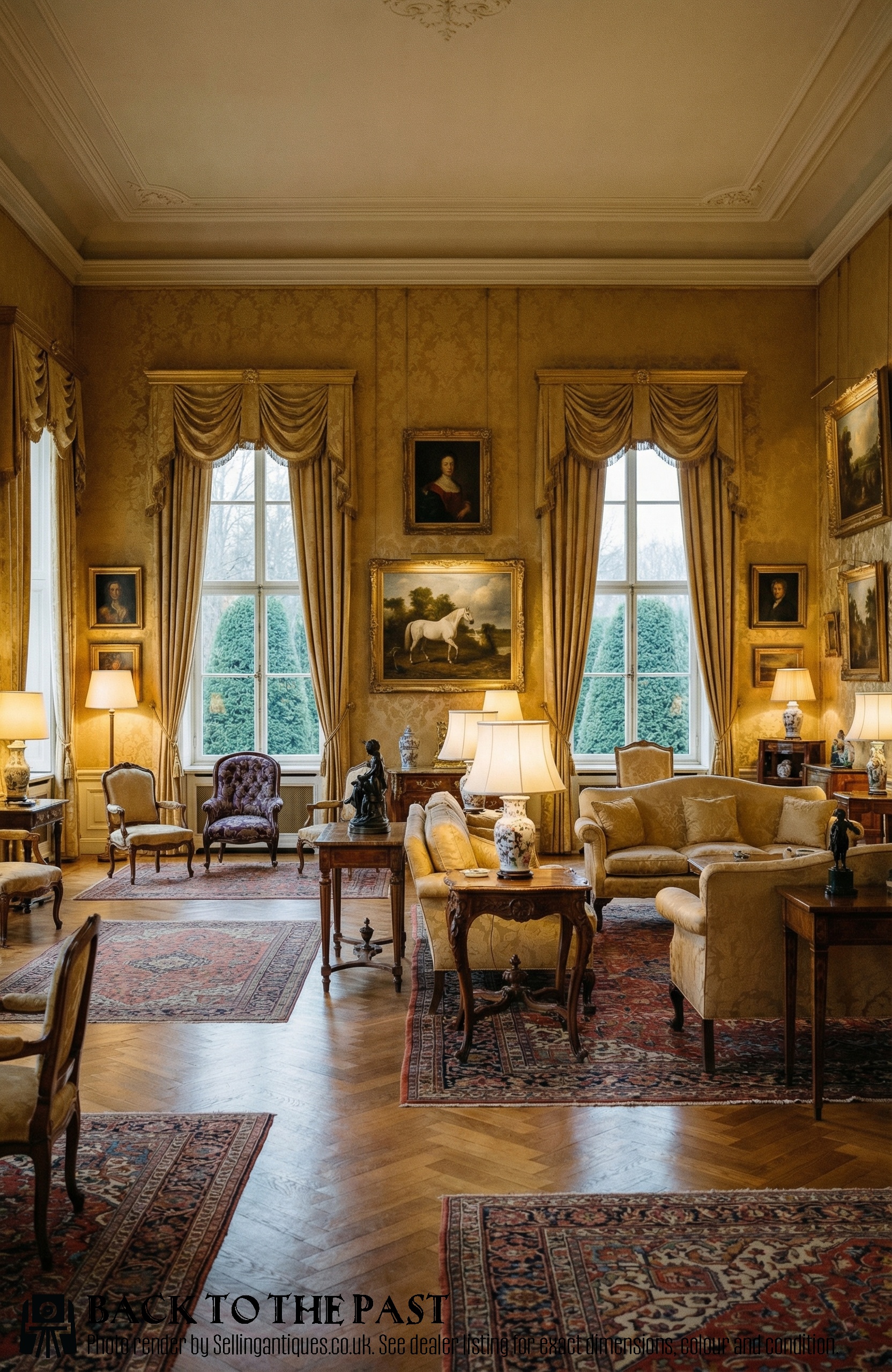
How they were made
Cabinetmakers shape the timber frames of these chairs from solid walnut and mahogany, employing carved details, cabriole legs, and occasionally barley twist turnings or painted finishes with silver gilt. Structural support often incorporates iron or brass elements within the internal framework.
Upholsterers secure the padding and textile coverings using techniques like buttoning, creating the characteristic dimpled tufted surface. Materials such as velvet, damask, calico, leather, and fabric are tightly stretched over the curved wooden backs.
Every tufted button holds a small pocket of nineteenth-century posture inside its velvet dimple.
What varies in quality
The refinement of the carved woodwork dictates the initial tier of execution, where fluid lines on walnut or mahogany frames surpass simpler turnings. Maker attribution, such as work originating from established cabinet makers, elevates the standing of a piece.
The sophistication of the upholstery work, from precise buttoning to the selection of textiles like velvet and damask, separates standard seating from superior library and salon chairs.
Holland & Sons·Gillows·C. Hindley & Sons
The Tufted Spoon Back Chair Glossary
- Spoon back
- A padded chair back shaped with a concave oval recess that mirrors the bowl of a spoon. This contour supports the sitter's spine.
- Buttoning
- An upholstery method where deep ties or buttons are pulled through the padding at regular intervals to create a tufted pattern. It secures the internal stuffing.
- Cabriole leg
- A furniture leg that curves outward at the knee and tapers inward toward the foot. It draws inspiration from animal limbs.
- Barley twist
- A spiral turning carved into wooden furniture legs or supports. This decorative device resembles a twisted strand of barley.
- Damask
- A reversible figured fabric woven on a loom with patterns visible on both sides. It frequently covers formal nineteenth-century seating.
Tufted Spoon Back Chair: Frequently Asked Questions
What is a spoon back chair?
A spoon back chair is a nineteenth-century seat featuring an oval, concave backrest designed to cradle the human spine. The wooden frame curves inward to match the posture of the sitter.
These pieces typically appear in walnut or mahogany, paired with buttoned upholstery in materials like velvet and damask. They were produced in various forms including nursing chairs, gentleman's chairs, and slipper seats.
How do I identify a Victorian armchair?
Victorian armchairs are identified by their distinct timber frames, heavy use of walnut and mahogany, and specific revival styles such as Rococo Revival. They often feature carved cabriole legs, barley twist turnings, or exposed wooden crests.
The upholstery frequently employs buttoning over springs and stuffing, using traditional textiles like damask, velvet, and leather. Dates generally span the nineteenth century, from early Victorian examples onward.
Where were these chairs used?
These chairs served primarily in nineteenth-century domestic settings such as drawing rooms, libraries, and bedrooms. Gentleman's chairs and fireside armchairs offered comfortable seating near hearths and reading spaces.
Smaller forms like nursing chairs and slipper chairs were designed for specific domestic tasks in private chambers. Their decorative carved frames and upholstered finishes suited formal reception areas.
How do I live with antique chairs?
Living with antique chairs involves placing them in spaces where their timber frames and upholstered surfaces receive gentle daily use. Pairing them with contemporary or traditional decor highlights their nineteenth-century craftsmanship.
Regular care for the wood and textile coverings preserves the buttoned upholstery and carved walnut or mahogany frames. They function well as accent seating in living rooms and studies.