



Low Armless Accent Chair
A low armless accent chair brings compact, low-slung seating into a room, offering Victorian and Edwardian low forms built for comfort.
Low Armless Accent Chair
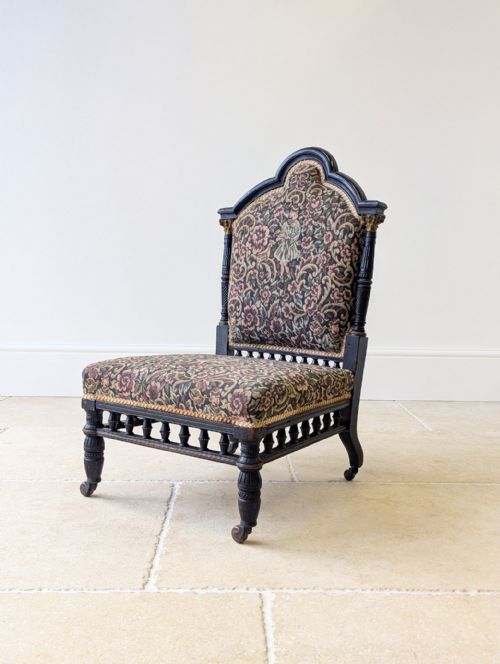
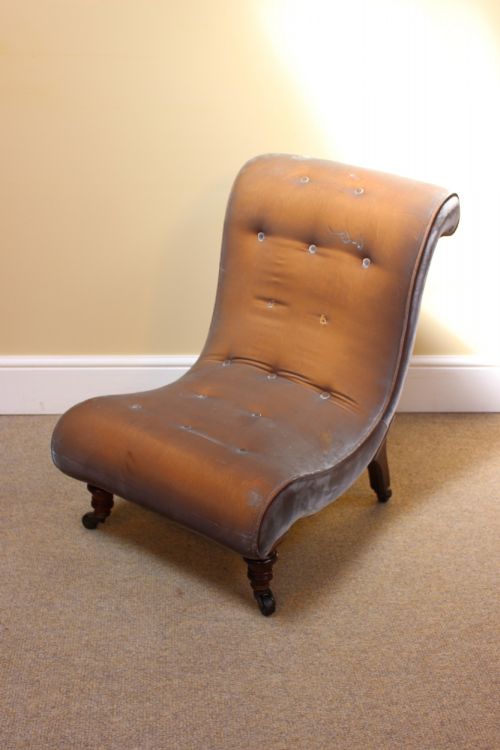
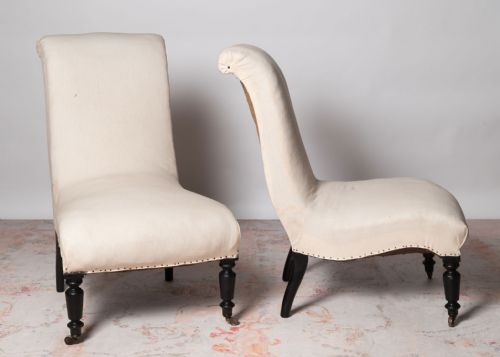
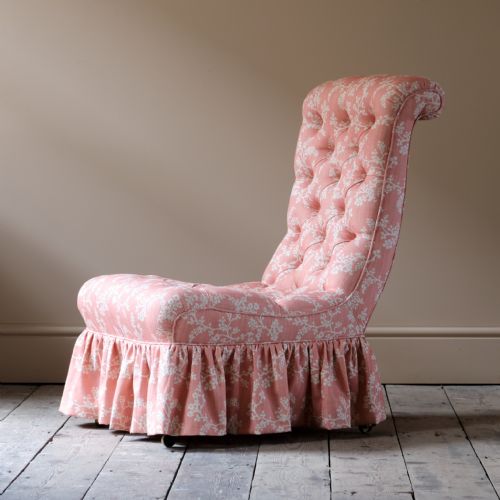
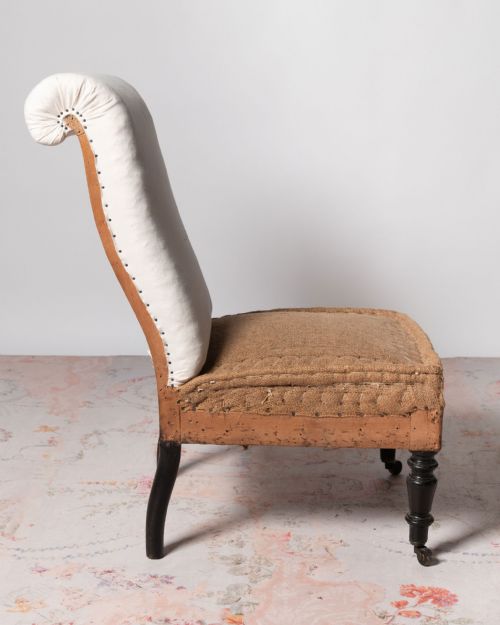
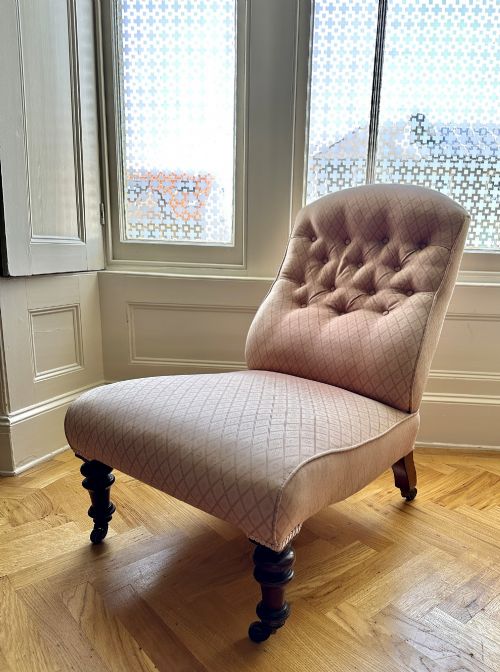
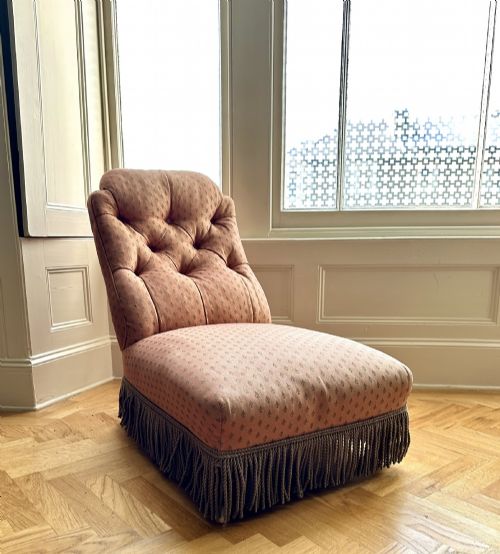
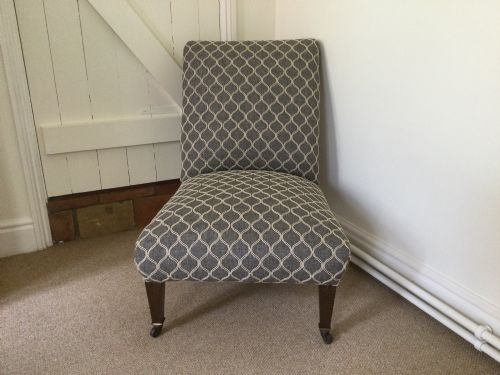
A low armless accent chair encompasses forms designed for intimate spaces, frequently encountered as slipper chairs, nursing chairs, and bedroom chairs across this page. These pieces date predominantly from the nineteenth century, spanning Victorian, Edwardian, and French Napoleon III styles.
The profile relies on low seating heights originally intended for nineteenth-century domestic routines, combined with compact proportions that suit modern living spaces. Walnut, mahogany, and ebonised wood frame forms upholstered in velvet, fabric, and carpet materials.
Materials and construction
Timber frames in walnut, mahogany, rosewood, and ebonised wood provide structural support, shaped with turned, bobbin, or cabriole legs. Metal components like brass castors appear on specific frames to aid mobility across flooring.
Upholstery relies on traditional stuffing secured with deep buttoning or finished with decorative fringe trim. Frames are frequently constructed with low backs and scroll backs designed to support upright or relaxed postures.
Listings span the nineteenth and early twentieth centuries, featuring Victorian, Edwardian, and Aesthetic Movement designs in walnut, mahogany, and ebonised wood.
Judging construction and condition
Frame integrity separates standard examples from finer pieces, particularly where carved details on walnut or mahogany remain crisp and uncompromised. The tightness of joinery and the original stability of the low chassis dictate the structural merit of each chair.
Upholstery execution alters the character of a piece, whether retaining period fabric or requiring new textile application. Frames listed specifically for upholstery demand careful inspection of the underlying webbing and springs.
Gillows·Hindley and Sons·Howard and Sons
The Low Armless Accent Chair Glossary
- Slipper chair
- A low-seated upholstered chair originally designed for bedrooms to allow comfortable dressing. These pieces lack arms to accommodate bulky nineteenth-century garments.
- Nursing chair
- A low chair traditionally utilised by mothers with infants, sharing the low centre of gravity found in slipper chairs. They often display button-backed upholstery and padded frames.
- Ebonised wood
- Timber treated with a dark finish to imitate ebony, popular during the Victorian and Aesthetic Movement periods. This treatment creates a strong contrast against brightly coloured upholstery velvet.
- Cabriole leg
- A furniture leg that curves outward and then tapers inward, mimicking animal legs. This stylistic element appears frequently on walnut and rosewood frames from the nineteenth century.
Low Armless Accent Chair: Frequently Asked Questions
Where should I place a low armless accent chair?
These compact seats fit easily into bedrooms, dressing rooms, and smaller corners where standard armchairs overwhelm the floor space. Their low profile ensures they do not block sightlines across a room.
They also serve well as occasional seating in living rooms, pairing easily with larger sofas without cluttering the arrangement.
How do I care for antique upholstery?
Vacuum velvet and fabric surfaces gently with a soft brush attachment to lift dust from the pile and crevices. Avoid placing these chairs in direct sunlight to prevent the textile colours from fading over time.
Professional cleaning is recommended for delicate nineteenth-century fabrics to protect the underlying stuffing and traditional stitching.
What is the difference between a slipper chair and a nursing chair?
Slipper chairs and nursing chairs share a low-slung, armless silhouette intended for domestic comfort. Historically, nursing chairs often featured slightly higher backs to support a person holding an infant.
Both terms describe similar nineteenth-century forms, and makers frequently used the designations interchangeably based on regional preferences.
Can I use these chairs for everyday seating?
Most pieces possess sturdy wooden frames of walnut, mahogany, or oak that withstand regular daily use. Checking the stability of the joints ensures the frame remains secure under standard weight.
Older springs and webbing may benefit from professional reinforcement if you plan to sit in them for extended periods.