

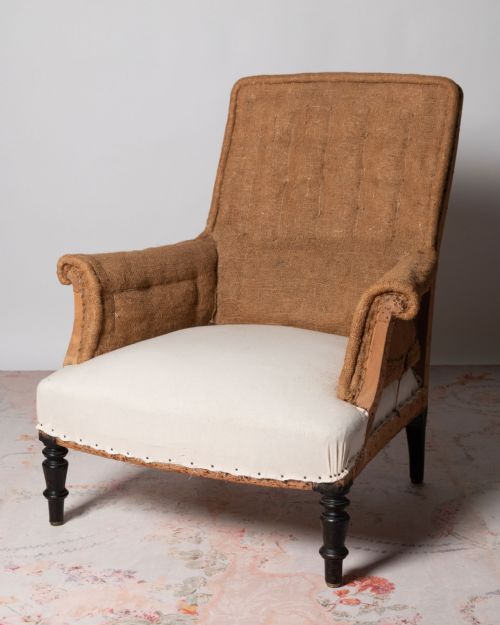
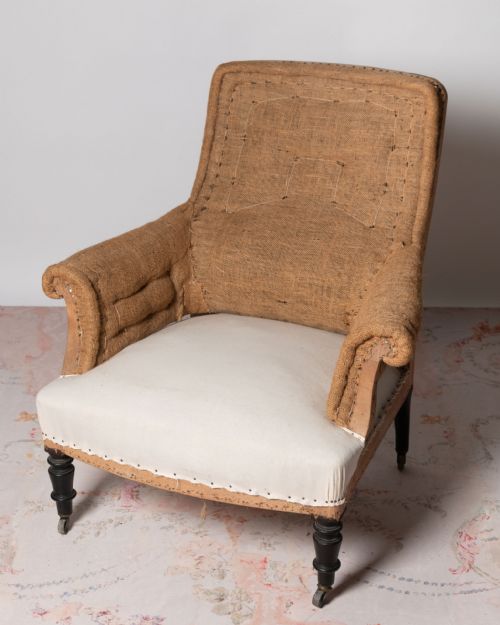


Ebonised Leg Accent Chair
An ebonised leg accent chair brings dark timber polish and nineteenth-century lines into a modern room, offering compact seating with distinct period character.
Ebonised Leg Accent Chair
When you search for an ebonised leg accent chair, you encounter a selection spanning the Regency, Victorian, and Napoleon III periods, where dark wood supports contrast with various upholstery styles. These occasional seats appear as low-slung nursing chairs, slipper chairs, open armchairs, and compact side or desk chairs.
The nineteenth century dominates the offerings here, with French Napoleon III designs and English Victorian models forming the core of the inventory. Makers of the era utilised blackened finishes to mimic expensive ebony, creating striking seating intended for drawing rooms, bedrooms, and boudoirs.
Materials and construction
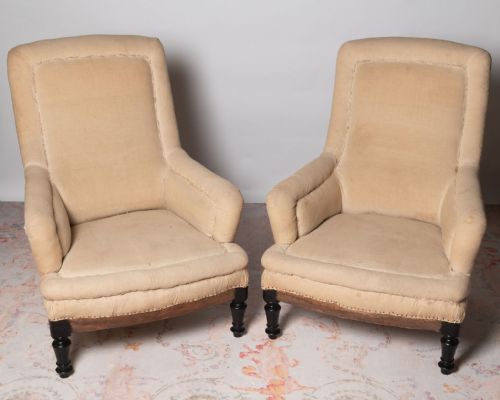
The framework typically relies on beech or hardwood, which artisans stained, painted, or chemically treated to achieve a dense, black ebonised finish. Some examples incorporate gilt highlights alongside the dark wood to accentuate carved details and turnings.
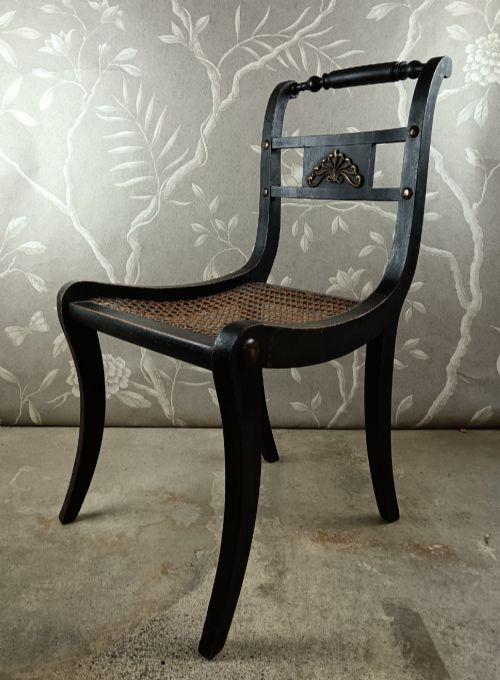
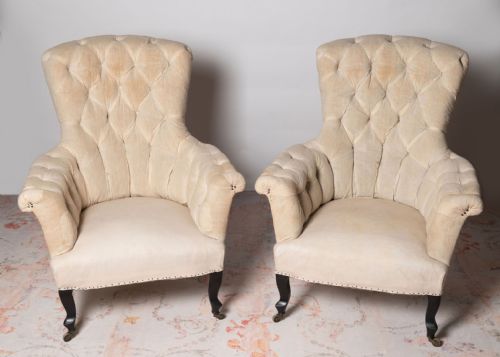
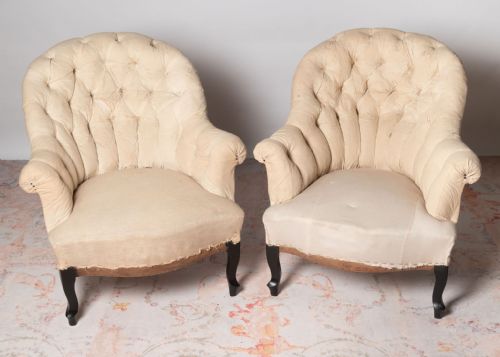
Original upholstery methods involved stuffing with materials like hessian and calico, often finished in button tufting or left bare for re-covering. Certain Regency pieces combine this dark timber frame with original cane seats or brass sabre leg mounts.
Current listings feature nineteenth-century pieces spanning the Regency, Victorian, and Napoleon III periods, constructed from beech and hardwood with fabric and cane upholstery.
Distinguishing quality
Quality rests in the crispness of the timber turnings, the integrity of the ebonised surface, and the structural firmness of the frame. Pieces that retain original gilding, intact cane work, or substantial button-upholstered sprung backs stand apart from simpler iterations.
The refinement of the silhouette dictates the tier of the piece, moving from straightforward bedroom chairs to intricately carved Victorian Aesthetic Movement or French Napoleon III armchairs.
The Ebonised Leg Accent Chair Glossary
- Ebonised wood
- Timber treated with stain, paint, or chemical processes to imitate the dark, dense appearance of natural ebony. This finish gained popularity during the nineteenth century for furniture requiring a dramatic, uniform dark tone.
- Napoleon III
- A French design style spanning the mid to late nineteenth century, characterised by eclectic revivals, deep buttoning, and ornate frames. It frequently incorporates ebonised surfaces and gilt details.
- Nursing chair
- A low-seated Victorian chair originally designed to allow women to nurse infants comfortably near a fireplace. These pieces often feature sprung backs and low profiles suited for intimate seating.
- Slipper chair
- An upholstered bedroom chair characterised by its low seat and absence of arms, historically used while putting on shoes. They appear frequently in nineteenth-century French variants.
- Sabre leg
- A curving, outward-flaring furniture leg shaped like a cavalry sword, commonly found on Regency seating. This form adds dynamic line and structural support to side and armchairs.
Ebonised Leg Accent Chair: Frequently Asked Questions
Where should I place an ebonised leg accent chair?
These compact seats fit easily into bedrooms, reading corners, or drawing rooms where a dark timber accent provides visual contrast. Their modest proportions allow them to function as occasional seating without dominating a room.
Because forms range from low slipper chairs to upright desk chairs, each type suits a different domestic niche. Bedroom and nursing variants work well in private spaces, while armchairs anchor larger living areas.
What is the difference between a nursing chair and a slipper chair?
A nursing chair sits low to the ground and traditionally includes an upholstered back, sometimes with arms, designed for comfort during childcare. A slipper chair shares the low seat height but lacks arms entirely, originating as a bedroom seat for dressing.
Both types serve as versatile accent seating in modern interiors, though the nursing chair offers more enclosure through its curved or buttoned back.
Are ebonised finishes original to these chairs?
Nineteenth-century makers frequently applied ebonising to beech and other hardwoods to emulate costly exotic timbers like ebony. Many pieces retain these original blackened surfaces, sometimes enhanced with gold leaf.
Over decades of use, some frames undergo careful restoration while preserving the underlying nineteenth-century timber construction and structural integrity.