


Victorian Boudoir Chair
These victorian boudoir chair examples are low-slung, intimate seats designed for the bedroom, offering collectors a compact yet decorative touch of nineteenth-century comfort.
Victorian Boudoir Chair
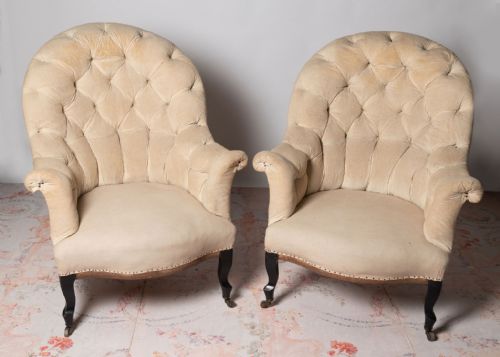
A victorian boudoir chair encompasses a variety of low bedroom seats, slipper chairs, and small armchairs originating primarily from the nineteenth century. These pieces include French scroll back designs, gilt-leg bedroom chairs, and low-slung seating intended for dressing rooms and private chambers.
The selection ranges from Victorian English examples to French Napoleon III and Edwardian interpretations. Forms vary from simple upholstered slipper chairs to curvaceous chaise longues and revolving easy chairs.
How they were made
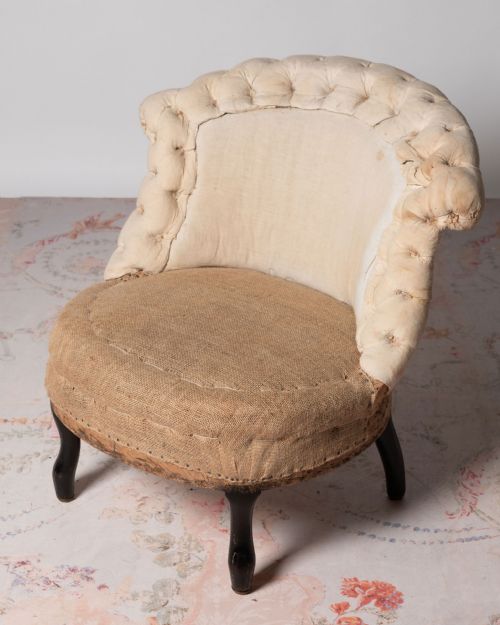
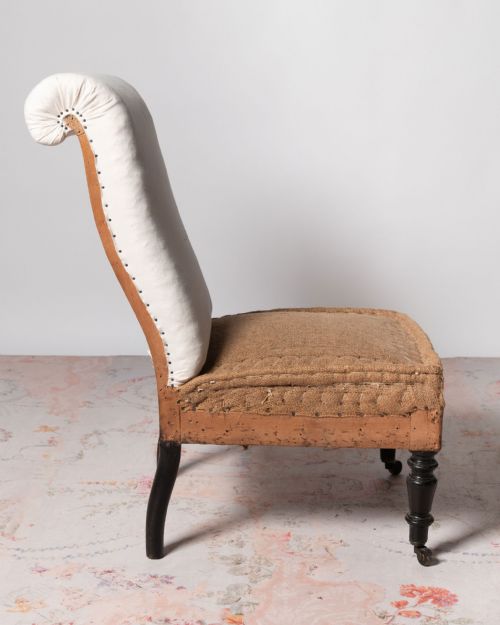
Makers built the frames using timber, mahogany, and ebonised wood, often incorporating brass details or gilt finishes. Supporting structures relied on robust wood frames beneath traditional upholstery foundations.
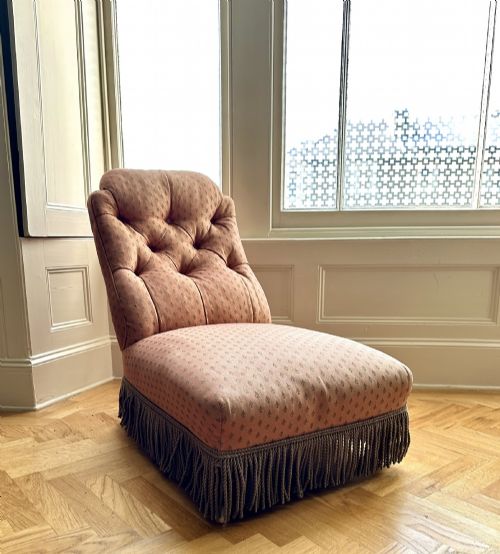
Upholstery materials seen across the pieces include calico, hessian, fabric, and velvet, sometimes finished with fringe or exposed carved frames. French examples often utilised giltwood and intricate scroll work.
Some nineteenth-century bedroom chairs were built with five legs instead of four, presumably to handle the enthusiastic bustle of Victorian morning routines.
What varies in quality
The distinction between standard bedroom seating and finer examples lies in the elegance of the frame carving and the pedigree of the maker. Pieces bearing stamps from established workshops command greater attention from collectors.
Frame integrity, the retention of original gilt or ebonised surfaces, and the sophistication of the proportions dictate the overall character of each chair.
Howard and Sons·Hindley and Sons
The Victorian Boudoir Chair Glossary
- Slipper Chair
- A low-seated upholstered chair originally designed for a lady's dressing room or bedroom. These seats sit close to the floor for ease of dressing.
- Boudoir Chair
- An intimate, small-scale armchair or bedroom seat intended for private chambers. They prioritise comfort and decorative presence.
- Napoleon III
- A nineteenth-century French revival style incorporating ornate details, gilt surfaces, and voluptuous curves. It draws influence from earlier Rococo aesthetics.
- Ebonised Wood
- Timber treated with a dark finish to imitate expensive ebony. This technique was popular in nineteenth-century furniture manufacturing.
- Giltwood
- Wood coated with gold leaf or a gold-coloured finish. It adds a decorative sheen to the frames of formal bedroom seats.
Victorian Boudoir Chair: Frequently Asked Questions
What is a boudoir chair?
A boudoir chair is a small, low-seated upholstered chair designed for nineteenth-century bedrooms and dressing rooms. They provide comfortable, intimate seating on a compact scale.
These chairs often feature decorative woodwork, gilt legs, or fringe, reflecting the stylistic preferences of the Victorian and Edwardian periods.
How do I identify a Victorian chair?
Victorian chairs show distinct period characteristics through their timber frames, upholstery materials, and revival styles such as Rococo. Examining the wood and construction methods helps determine the age.
Makers from this era utilised mahogany, ebonised wood, and brass, while nineteenth-century pieces often carry specific regional design traits.
Were these chairs used in bedrooms?
Yes, these seating forms were primarily intended for private chambers, dressing rooms, and bedrooms. Their low height made them suitable for dressing and relaxing away from formal public rooms.
They served as functional furniture that doubled as decorative accents within private domestic spaces.
What materials were used?
Makers constructed the frames using timber, mahogany, and ebonised wood, sometimes accented with brass. Upholstery foundation materials included hessian and calico beneath top fabrics like velvet.
Decorative variations include giltwood frames and fringe trimmings, particularly on French Napoleon III examples.