





Vintage Low Bedroom Seating
Vintage low bedroom seating brings intimate scale and period charm to private rooms, taking the form of low-slung chairs and dressing stools.
How they were made
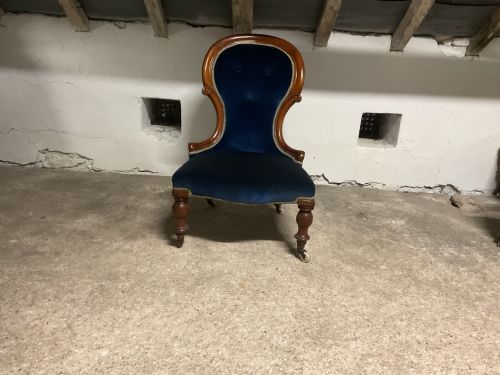
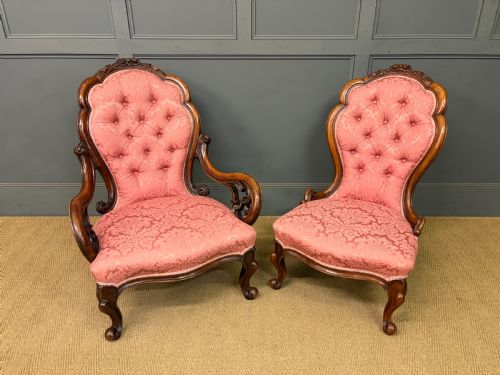
Frames rely upon traditional hardwoods such as mahogany, walnut, oak, and rosewood, shaped with carved details or ebonised and gilt finishes. Joinery methods support structural longevity, while exposed wood frames often feature decorative carving or inlay work.
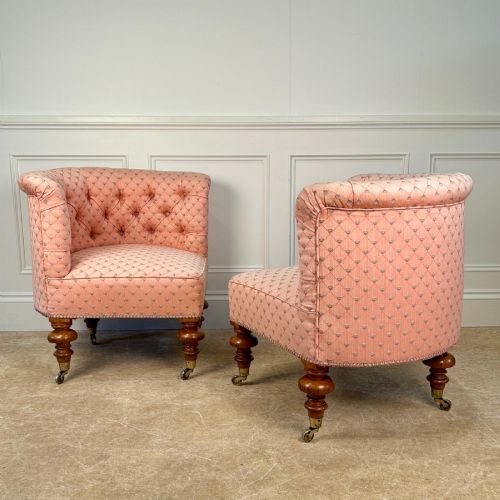
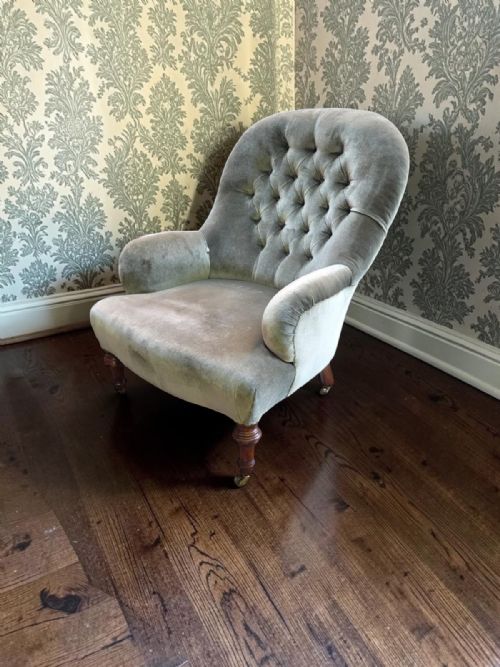
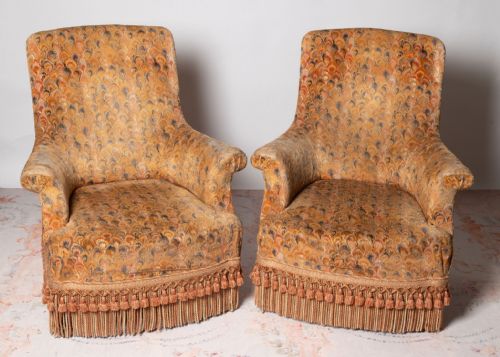
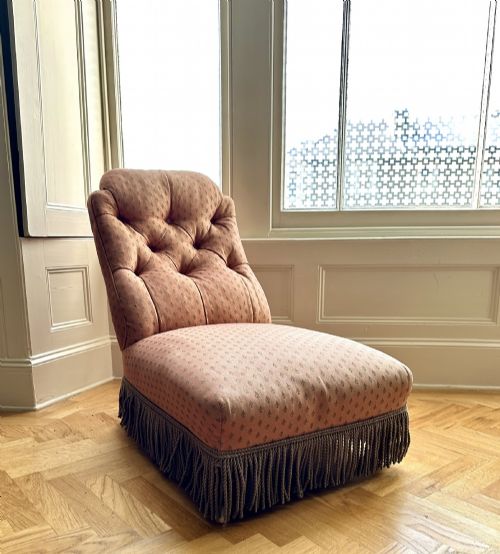
Upholstery techniques involve traditional stuffing and springing finished in fabric, velvet, tapestry, needlepoint, leather, or linen. Details like button backs, decorative fringe, and brass accents complete the construction of these bedroom seats.
What varies in quality
The standard of carving and timber selection dictates the distinction between ordinary pieces and exceptional examples, particularly in walnut and mahogany frames. Carved walnut ladies chairs and pieces bearing attribution to makers display superior hand-craftsmanship in their woodwork.
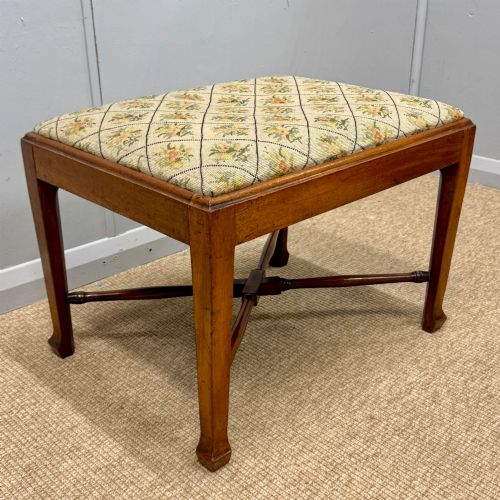
The integrity of the frame construction and the preservation of original or period-appropriate upholstery materials significantly influence overall merit. Pieces retaining detailed needlepoint, tapestry, or structured button backs demonstrate finer period execution.
A gossiping chair awaits someone ready to lean in close for a chat.
Harry And Lou Epstein·Wheeler Of Arncroach·Gillows
The Vintage Low Bedroom Seating Glossary
- Nursing chair
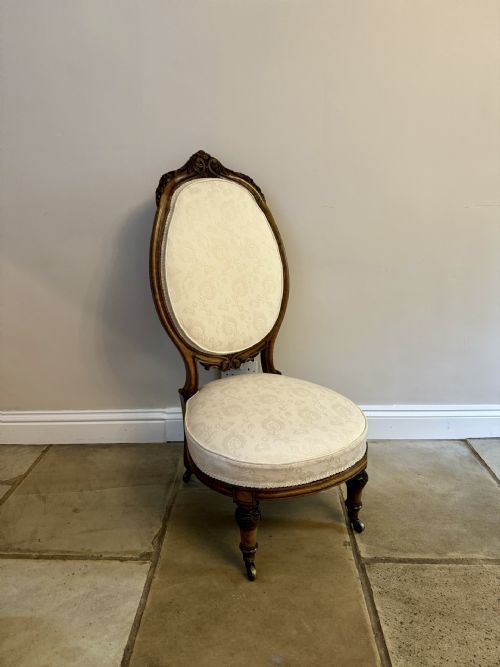
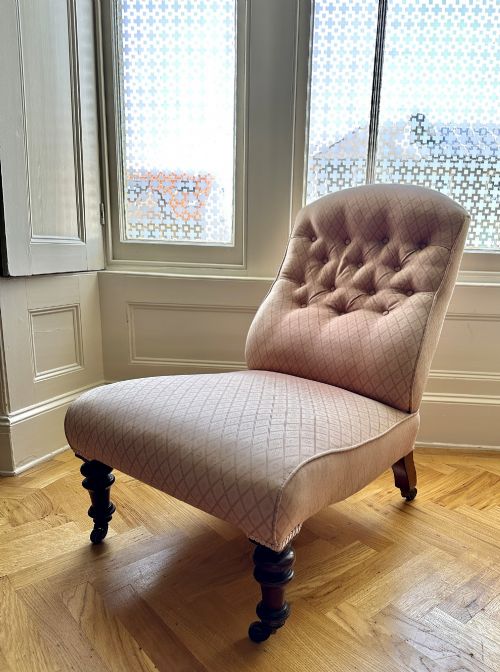
- A low-seated chair traditionally used by women in the Victorian era for nursing infants or sitting at a dressing table. These chairs feature shortened legs and supportive upholstered backs.
- Slipper chair
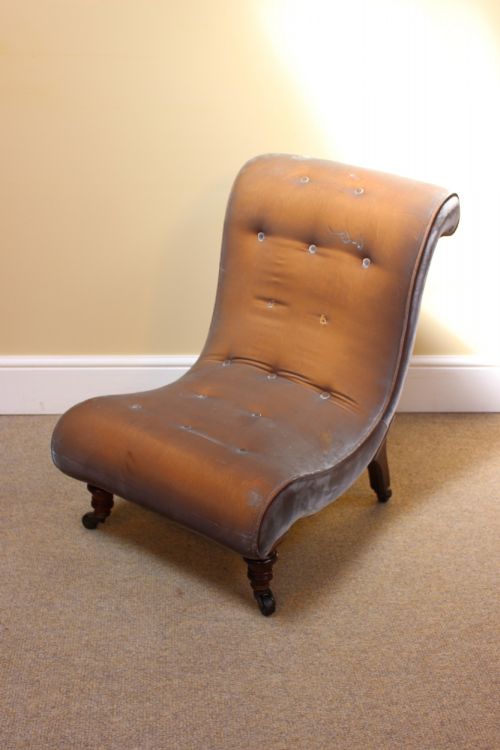
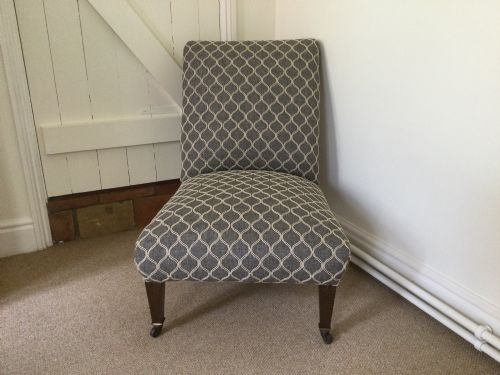
- An upholstered chair with very short legs designed to sit close to the floor for ease when changing shoes or dressing. They typically lack arms to accommodate voluminous historical garments.
- Dressing table stool
- A compact seat placed before a dressing table or vanity, often rectangular or square with four legs and an upholstered top. Cross stretchers are frequently added for extra stability.
- Button back
- An upholstery technique where buttons are pulled deep into the padding in a geometric pattern to create tufted indentations. This method provides both structural support and decorative texture.
- Cross stretcher
- Wooden bracing members connecting the lower legs of a chair or stool in an X-shape to reinforce the frame. They appear on various dressing stools and occasional chairs.
Vintage Low Bedroom Seating: Frequently Asked Questions
What is a nursing chair used for?
Nursing chairs were originally designed with low seats to allow women to sit comfortably while tending to infants or dressing. Their compact height also made them practical for private bedrooms and fireside use.
Today, buyers utilise them as accent chairs in bedrooms or small living spaces where standard furniture would overwhelm the room. Their low profile preserves sightlines and adds distinct period character.
How do I identify a Victorian slipper chair?
Victorian slipper chairs are characterised by their very low seats and absence of arms, which made dressing and putting on footwear easier in the nineteenth century. They frequently feature button-backed upholstery and turned wooden legs.
Many examples survive in walnut or mahogany frames, often paired with traditional textiles such as velvet, tapestry, or linen. Their compact proportions distinguish them from standard parlour armchairs.
Where should I place a dressing table stool?
Dressing table stools fit naturally in bedrooms, dressing rooms, or beneath console tables where a small, tuck-away seat is required. Their low height and compact footprints allow them to slide neatly out of the way when not in use.
They also serve effectively as window seats or decorative accent pieces in hallways. Pieces featuring needlepoint tops or cross stretchers offer both utility and visual interest.
Are French boudoir chairs different from English ones?
French boudoir chairs from the nineteenth century often exhibit lighter, more decorative frames with gilt finishes or elaborate carving styles such as Régence and Napoleon III. They prioritise ornamental elegance for intimate reception spaces.
English equivalents from the Victorian and Edwardian periods tend to focus on sturdy walnut and mahogany construction with functional button backs and upholstered comfort. Both traditions offer distinct aesthetic qualities for period interiors.