
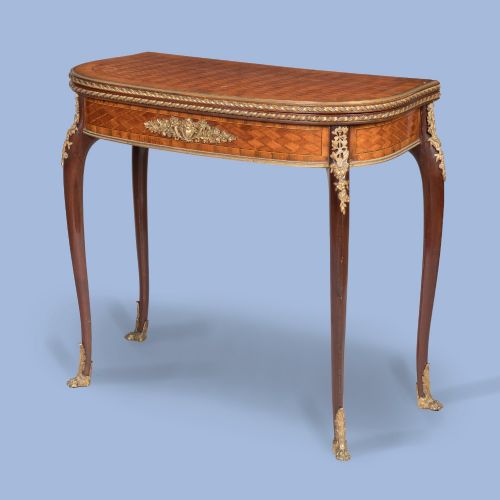


Louis XVI Revival Table
A louis xvi revival table brings neoclassical symmetry and gilt mountings into a room, offering functional elegance rooted in nineteenth-century French design.
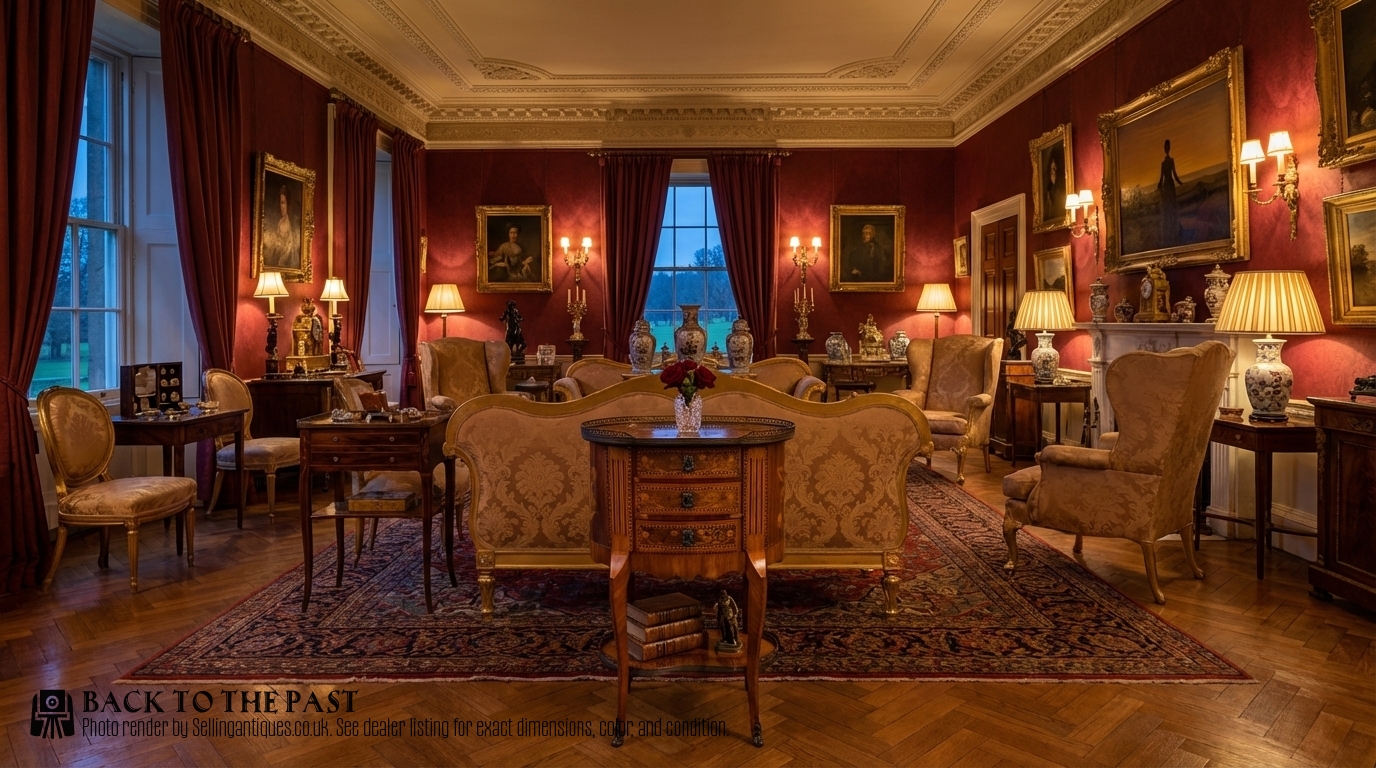
Louis XVI Revival Table
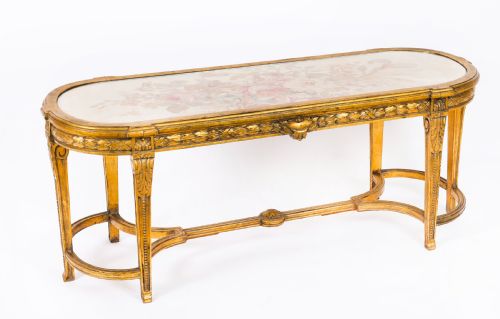
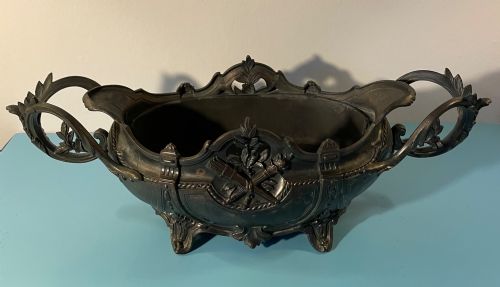
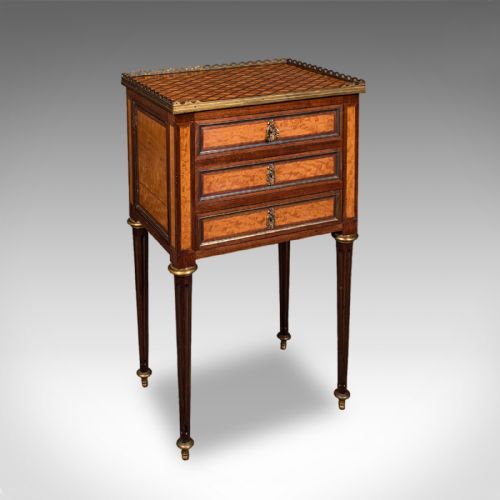
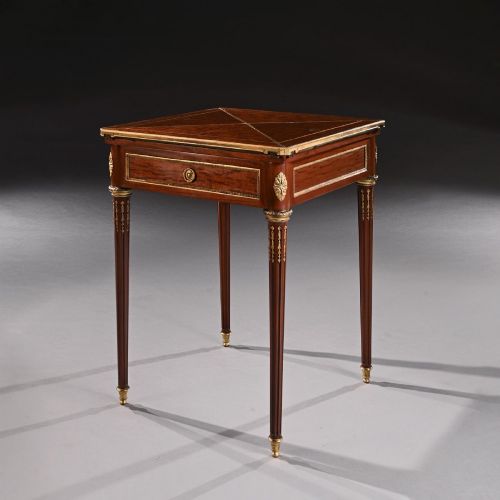
A louis xvi revival table encompasses various forms designed during the nineteenth and early twentieth centuries, drawing upon neoclassical French aesthetics from earlier periods. The selections available here frequently include side tables, card tables, occasional tables, centre tables, bedside tables, and console tables.
Makers and workshops from the Victorian era onward adapted these classical silhouettes using rich timbers and decorative mounts. Buyers encounter pieces spanning from the mid-nineteenth century through to the 1930s, reflecting enduring Parisian taste.
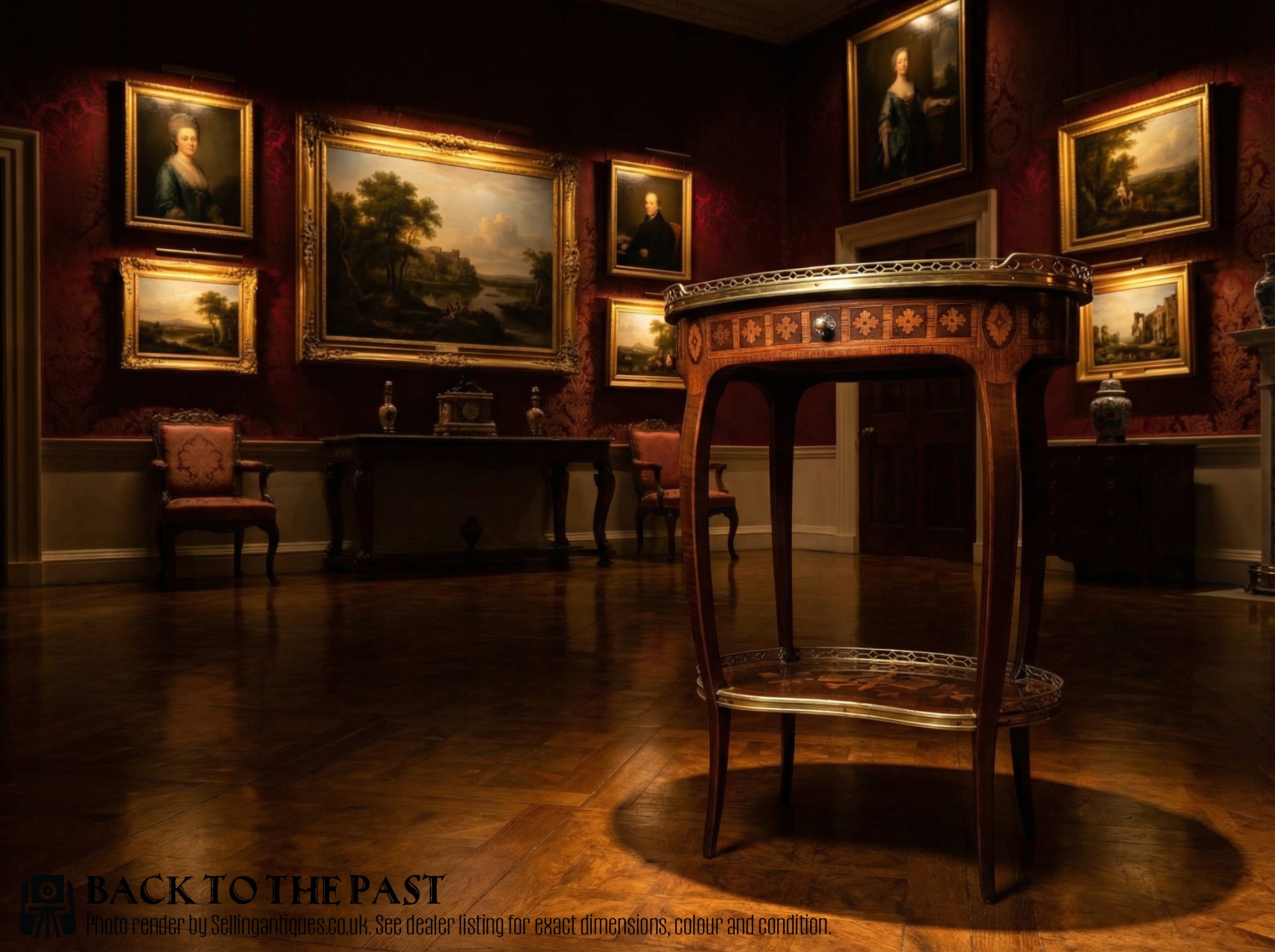
Materials and construction
Craftsmen utilised fine hardwoods such as mahogany, walnut, kingwood, and satinwood, frequently embellishing surfaces with intricate marquetry and parquetry patterns. These wooden structures were often supported or accented by cast ormolu, brass, and gilt bronze mounts.
Many designs incorporate inset marble tops or porcelain plaques, requiring precise joinery and metalworking techniques to unite disparate materials. Workshops relied on skilled cabinetmakers and gilders to achieve the refined finishes seen across these pieces.
Louis XVI Revival Table Retail Price Guide 2026
Typical asking prices for louis xvi revival table among the pieces listed under this phrase on Sellingantiques today, from the lower quarter to the upper quarter. They describe what is for sale here now, not the wider market.
The selection spans from the mid-nineteenth century through the art deco period of the 1930s.
Distinctions in execution
The sophistication of the bronze casting and the crispness of the gilt ormolu mounts separate standard examples from finer works produced by notable Parisian ateliers. Superior pieces display hand-chased metal details and tightly executed wood veneers that remain flush and stable over time.
Subtleties in the marquetry designs and the integration of porcelain plaques or marble slabs indicate the level of craftsmanship invested by the maker. The weight and proportion of the brass and gilt mounts further distinguish workshop standards.
Antoine Lampre·François Linke·Henry Dasson·Alphonse Tahan·H & L Epstein
The Louis XVI Revival Table Glossary
- Ormolu
- Gilt bronze mounted onto furniture or clocks, created through a process of applying finely ground gold mercury amalgam to bronze. This technique imparts a rich golden sheen characteristic of neoclassical decoration.
- Marquetry
- The art of applying pieces of veneer to a structure to form decorative patterns and pictures. Craftsmen cut various coloured woods to fit together precisely.
- Parquetry
- Geometric mosaic woodwork arranged in repeating patterns such as cubes or chevrons. It differs from marquetry by relying on regular geometric tiling rather than pictorial motifs.
- Console table
- A table designed to stand against a wall, frequently secured to it with brackets. These often feature decorative legs and marble tops.
- Gueridon
- A small circular table supported by a central column or multiple legs. Originating in the seventeenth century, revival versions appeared frequently in the nineteenth century.
Louis XVI Revival Table: Frequently Asked Questions
How do I identify a louis xvi revival table?
Look for straight tapered legs, neoclassical symmetry, and classical motifs such as fluting, acanthus leaves, and ribbon twists. These characteristics distinguish the revival style from more curved rococo forms.
Materials like mahogany, ormolu mounts, and marble tops further indicate this specific French aesthetic. Construction techniques and hardware generally point to nineteenth-century or early twentieth-century manufacturing.
Where were these tables originally used?
These tables served various domestic functions in grand drawing rooms, boudoirs, and halls. Card tables accommodated evening entertainment, while console tables stood against parlor walls beneath mirrors.
Smaller occasional and bedside tables offered movable surfaces for lamps or personal items. Their versatile forms allowed them to fit into both formal reception spaces and private chambers.
How should I care for marble and ormolu?
Clean marble tops with a damp cloth and mild soap, avoiding acidic substances that can etch the polished stone surface. Use coasters to prevent staining from liquids.
Dust ormolu mounts gently with a soft dry cloth, avoiding abrasive polishes that might wear away the thin gold layer. Preserving the original finish maintains the integrity of the metalwork.
Are these tables suitable for modern interiors?
The refined proportions and neutral tones of walnut, mahogany, and marble allow these pieces to integrate easily into contemporary rooms. They function effectively as accent pieces alongside modern furnishings.
Their varied forms, from compact bedside chests to console tables, provide practical surface area without dominating a room. Placing them thoughtfully adds historical texture to a modern layout.