
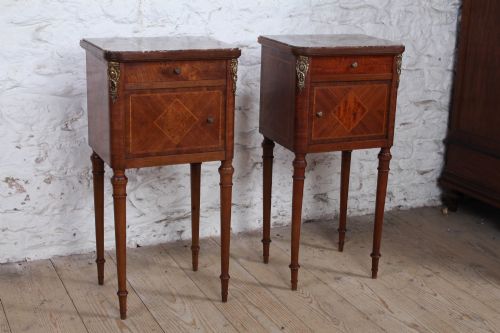


Louis XVI Bedside Cabinets
Louis xvi bedside cabinets bring neoclassical restraint to the bedroom, offering neat storage in mahogany, walnut and marble.
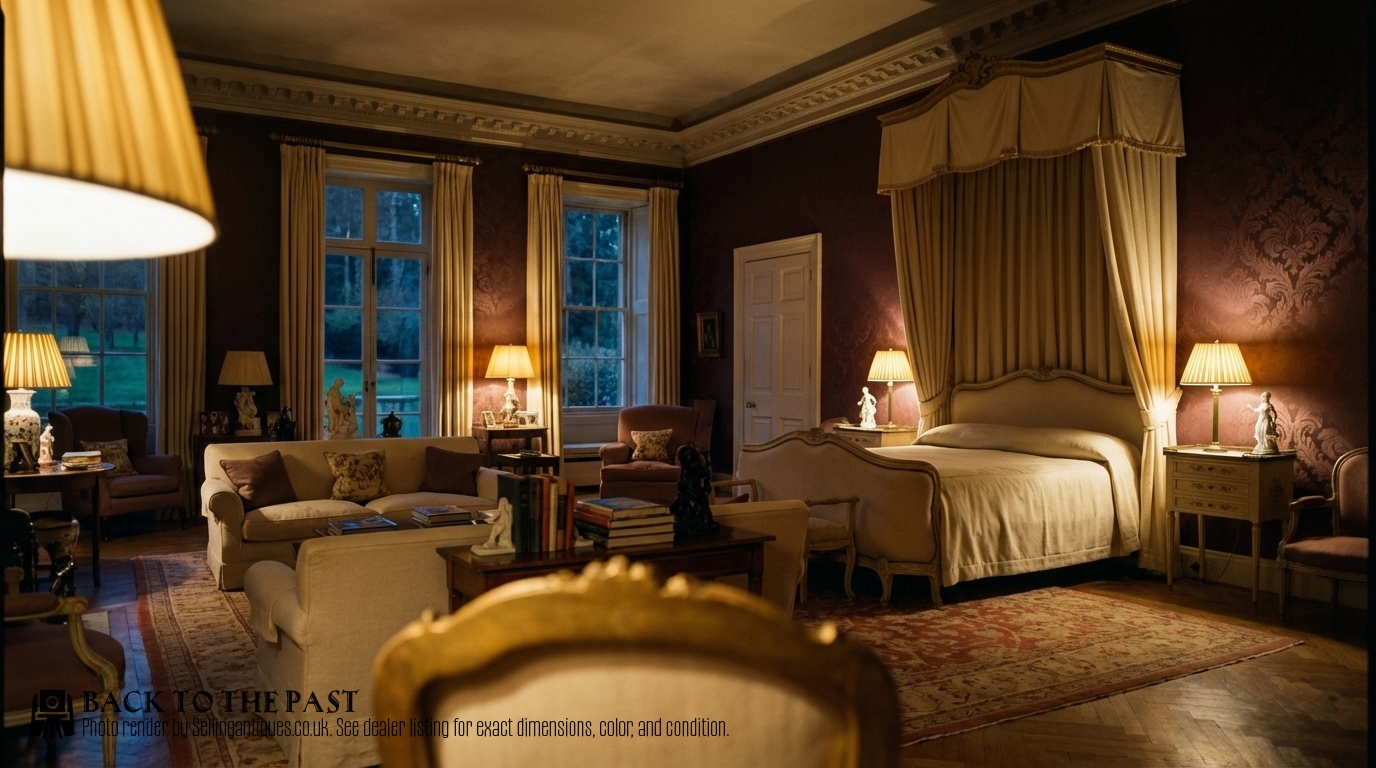
Louis XVI Bedside Cabinets
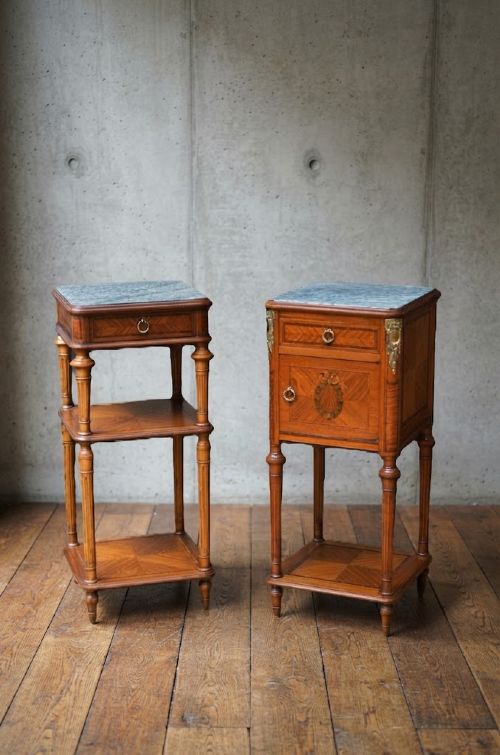
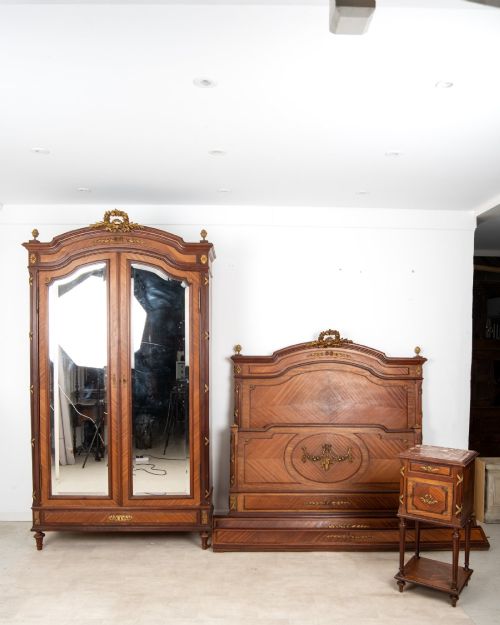
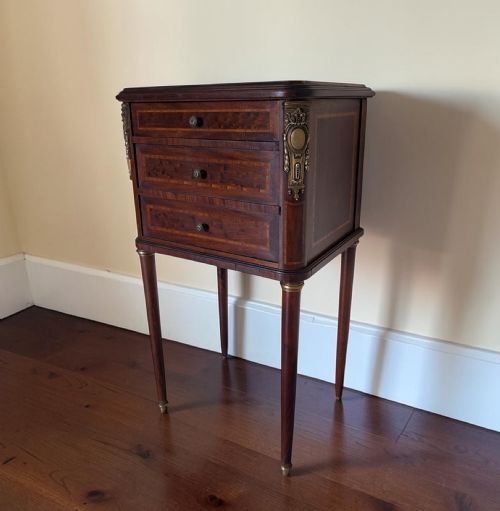
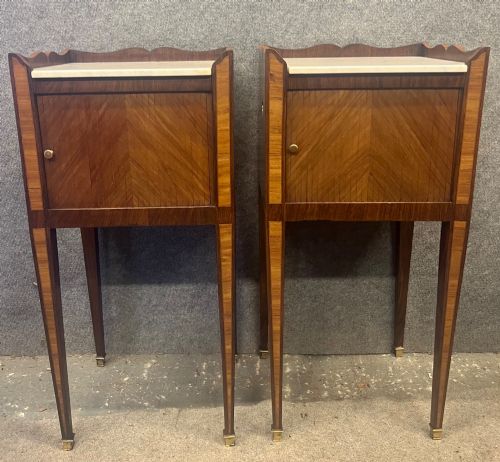
Louis xvi bedside cabinets are small functional pieces designed for the bedroom, predominantly appearing in revival styles during the nineteenth and early twentieth centuries. These tables and cupboards provide compact storage via drawers and small doors, frequently finished with a stone top.
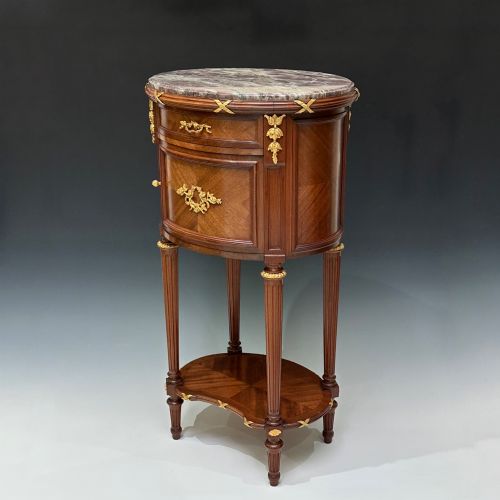
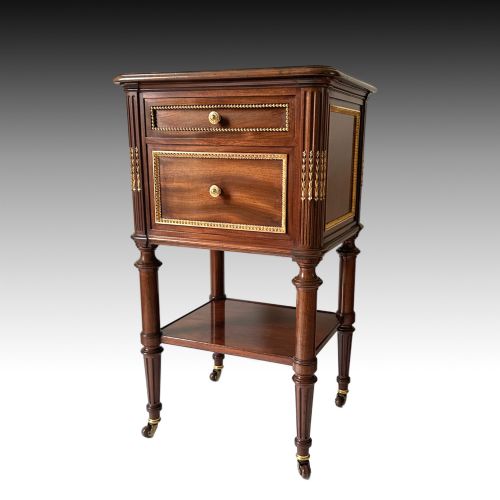
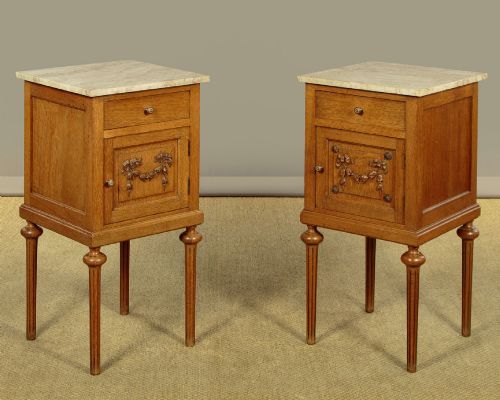
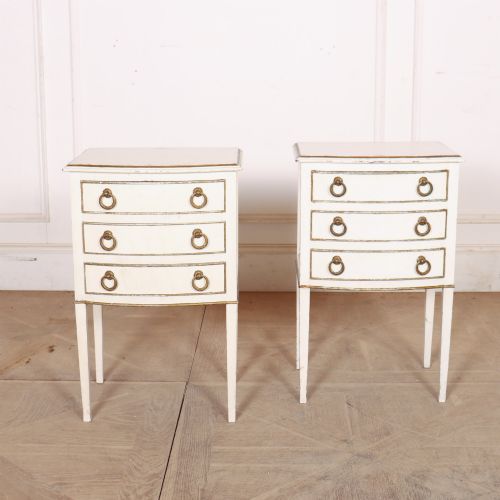
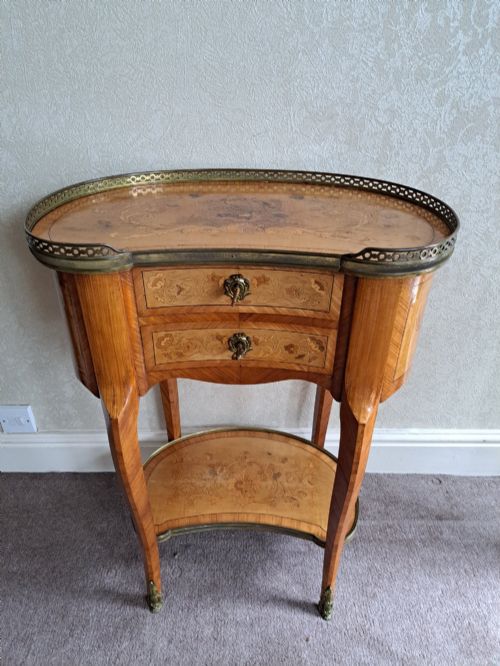
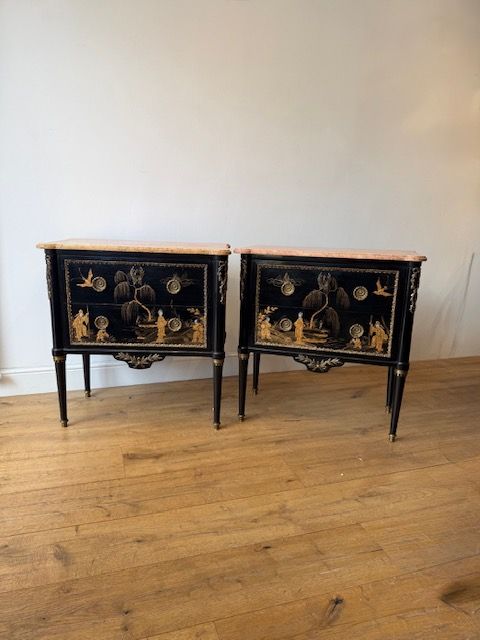
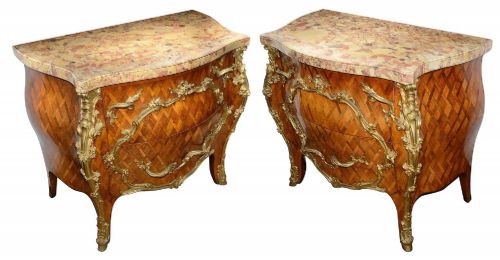
The selection ranges from simple mahogany and oak examples to elaborate pairs veneered in kingwood and tulipwood with marquetry. Many examples arrive as matched pairs, reflecting the later periods of manufacture from the eighteen-eighties through to nineteen-twenty.
How they were made
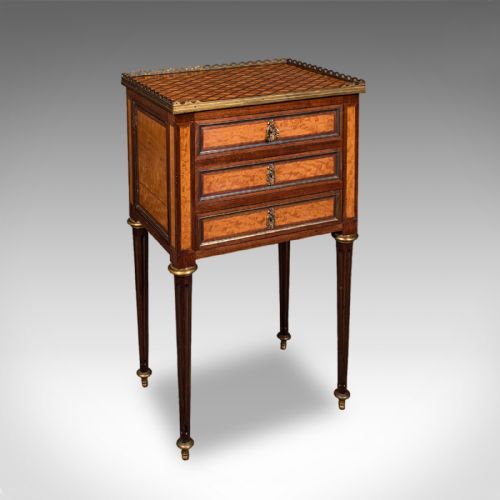
Cabinetmakers utilised hardwoods such as mahogany, walnut and satinwood as foundations for intricate veneers like kingwood, tulipwood and burr fruitwood. These timbers are often arranged in geometric parquetry patterns or floral marquetry across the carcase.
Mounts in ormolu, brass and gilt metal accentuate the rectilinear lines typical of the neoclassical taste, while inset tops of marble provide a durable and cool surface. Painted wood finishes and occasional lacquer work also appear across the selection.
Some nineteenth-century French makers thoughtfully constructed mirrored pairs, meaning the wood grain and door hinges reverse symmetrically across the bed.
What varies in quality
Quality rests in the precision of the timber matching and the crispness of the gilt metal mounts applied to the carcase. Finer pieces display seamless veneer work and heavier, well-cast ormolu rather than simple stamped brass details.
The integration of the marble top and the smooth operation of the drawers distinguish higher grade workshop production from standard commercial output. Consistency between paired pieces remains a primary marker of superior craftsmanship.
François Linke
The Louis XVI Bedside Cabinets Glossary
- Ormolu
- Gilt bronze mounts used for decorative enrichment on furniture. The technique involves applying a mercury and gold amalgam to cast bronze.
- Marquetry
- Decorative veneer work forming pictures or patterns using various coloured woods. Craftsmen cut thin sheets of timber to fit exact puzzle-like recesses.
- Parquetry
- Geometric wood mosaic work used for floors and cabinet surfaces. Squares, triangles and diamonds create repeating patterns across the top or sides.
- Serpentine
- A furniture front or top curving outward in the centre and inward at the sides. This shape demands high skill from the cabinetmaker.
- Kingwood
- A dense Brazilian timber with dark violet-brown and golden stripes utilised in fine eighteenth and nineteenth-century veneering. It commands attention for its rich natural contrast.
Louis XVI Bedside Cabinets: Frequently Asked Questions
Are louis xvi bedside cabinets always sold in pairs?
Many examples on the market are matched pairs originating from the nineteenth-century revival periods. Single pieces also appear frequently.
Buyers often select pairs to balance a bed setup, though single cabinets serve well as isolated lamp tables.
What is a marble top used for?
Marble provides a heat-resistant and easily cleaned surface for bedside items such as water jugs and candlesticks. It adds weight and stability to the small carcase.
Most marble tops fit loosely into a rebated wooden frame on the cabinet surface.
How do I spot a revival piece?
Revival pieces from the nineteenth and early twentieth centuries utilise machine-cut veneers and secondary timbers typical of later industrial workshops. Construction methods and wood ageing provide clear clues to the decade of manufacture.
Stylistic cues mimic eighteenth-century neoclassical designs while retaining the hardware and interior construction of the Victorian or Edwardian eras.