
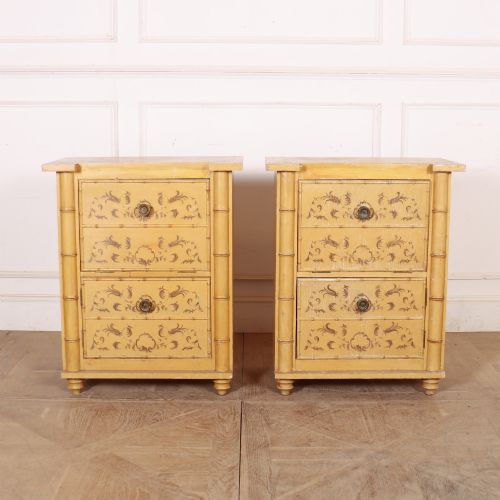


Painted French Nightstands
Painted french nightstands bring continental character to a bedroom, offering surface space and concealed storage with decorative painted finishes.
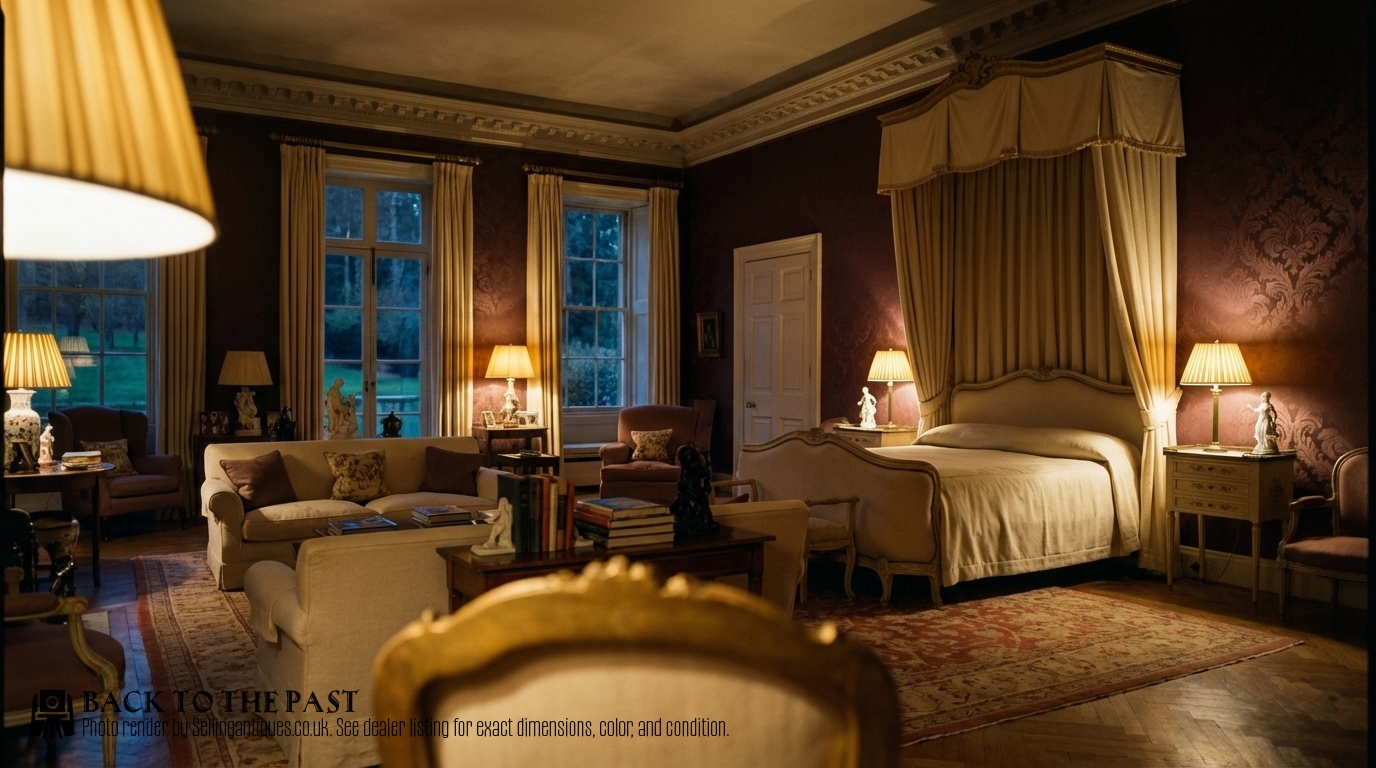
Painted French Nightstands
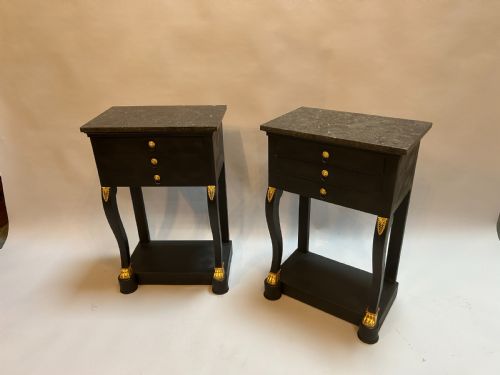
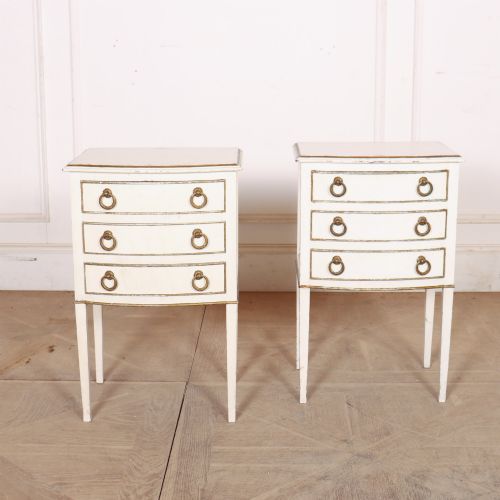
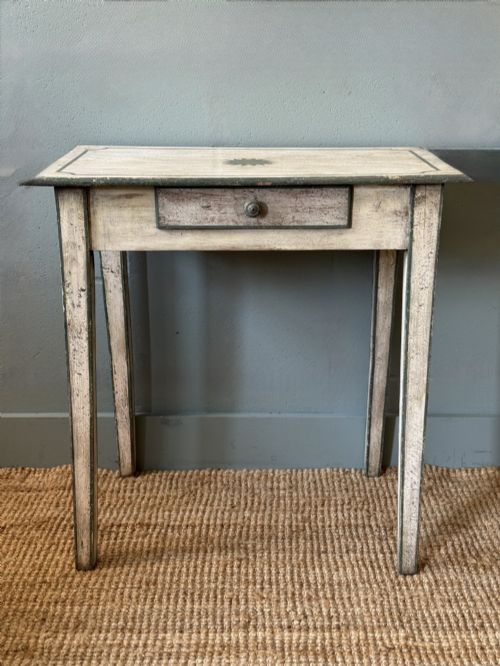
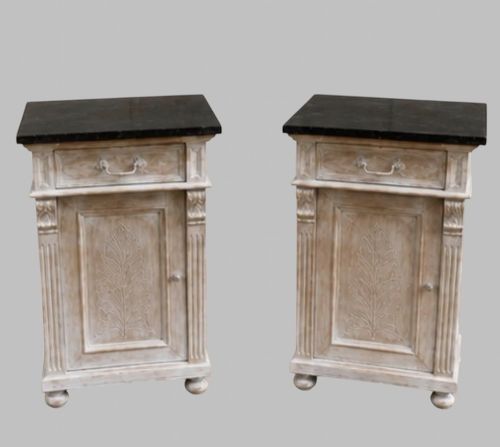
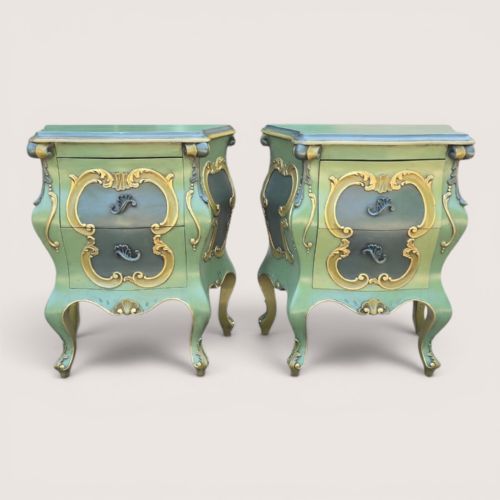
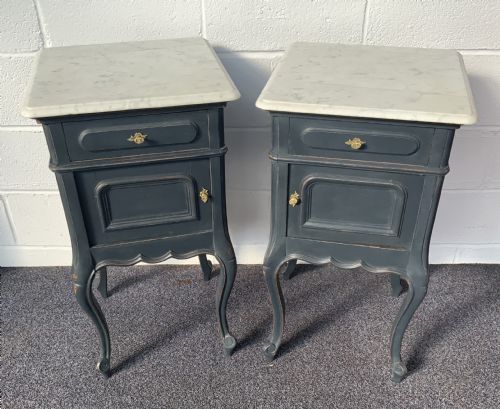
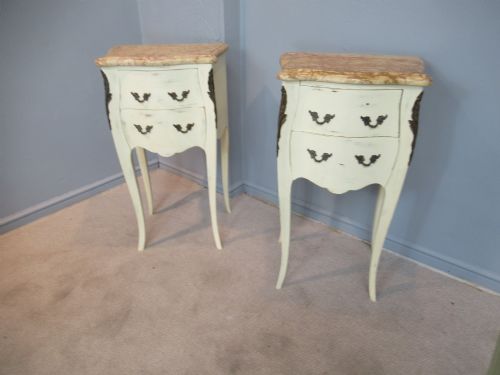
When you search for painted french nightstands, you encounter a range of bedside furniture designed for practical use beside a bed. The selection includes compact chests of drawers, bedside cabinets with single doors, and open lamp tables.
The pieces span various periods, from the eighteenth century through the nineteenth century and into the early twentieth century. Many items appear as matched pairs, dating predominantly around nineteen twenty, alongside nineteenth-century examples and eighteenth-century pine cupboards.
Stylistic influences include Louis XVI style, Louis XV revival, French provincial, and French Empire. Forms also incorporate faux bamboo elements, Chinoiserie lacquer, and decorative painted finishes.
Materials and construction
The construction relies primarily on timber such as pine and fruitwood, shaped into bedside chests, cupboards, and tables. Craftspeople applied paint finishes directly to the wood, sometimes layering gilding or specific colours over the surface.
Hardware and decorative details incorporate brass accents and metal fittings. Certain pieces integrate natural stone or faux marble tops, combining solid wooden frames with contrasting surfaces.
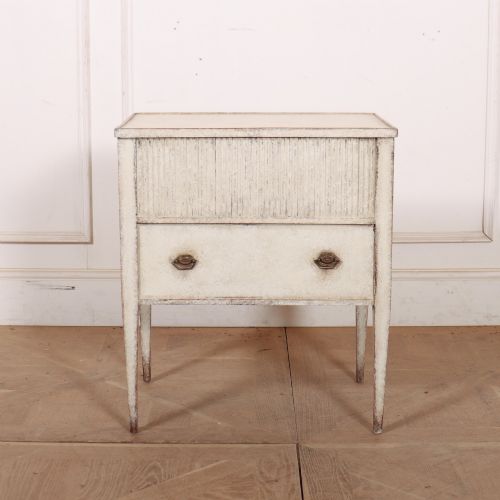
A solitary Canterbury cupboard stands ready to hold your bedtime reading.
Distinctions in quality
The standard of a piece rests on the execution of the painted finish and the integrity of the timber framework. Hand-applied decorative painting and original surface patination distinguish finer examples from standard production.
Proportion and structural coherence define the better pieces, whether dealing with eighteenth-century pine cupboards or twentieth-century cabinets. The alignment of drawers, the fitting of doors, and the preservation of period details determine the overall standard.
Melissa White
The Painted French Nightstands Glossary
- Louis XVI Style
- A neoclassical design movement characterised by straight lines, symmetry, and classical ornamentation. It frequently appears in bedside tables and chests from the nineteenth and early twentieth centuries.
- Fruitwood
- A dense timber derived from fruit-bearing trees such as pear or cherry, utilised for furniture making. It provides a smooth grain suitable for polishing and painting.
- Chinoiserie
- European decorative style inspired by Chinese artistic traditions, featuring lacquered surfaces and painted motifs. It occurs on occasional tables and cabinets from the nineteenth century.
- Pine
- A softwood commonly utilised in the construction of carcases and cupboards. Eighteenth-century examples frequently employ solid pine beneath painted surfaces.
- Faux Bamboo
- Wood turned and carved to imitate the segmented stalks of bamboo. This decorative technique appears on nineteenth-century bedside cabinets.
Painted French Nightstands: Frequently Asked Questions
What periods do these nightstands come from?
The pieces span from the eighteenth century up to the early twentieth century. Many examples date from the nineteenth century and the nineteen twenties.
Earlier items include eighteenth-century pine cupboards, while later pieces reflect Louis XV and Louis XVI revival styles.
Are these bedside tables sold in pairs?
A significant portion of the selection consists of matched pairs. These include pairs of bedside chests, cabinets, and lamp tables.
Single items also appear, such as individual bedside tables, side tables, and single-door cupboards.
What materials are used in their construction?
Construction materials primarily involve wood, specifically pine and fruitwood, finished with paint or lacquer. Metal and brass elements provide hardware and structural support.
Some designs incorporate marble or faux marble tops, alongside cane details or gilded accents.
What styles influence these painted nightstands?
The designs draw on traditional French aesthetics, including French Provincial, French Chateau, and French Empire. Louis XV and Louis XVI styles are particularly prominent.
Additional influences include Chinoiserie lacquerwork and faux bamboo turning from the nineteenth century.