

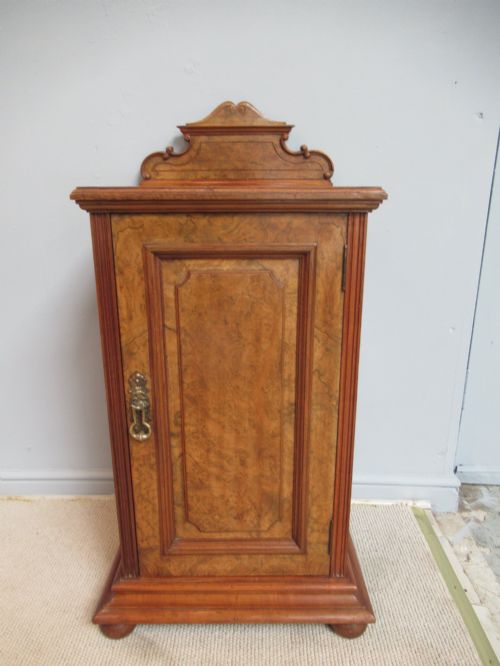

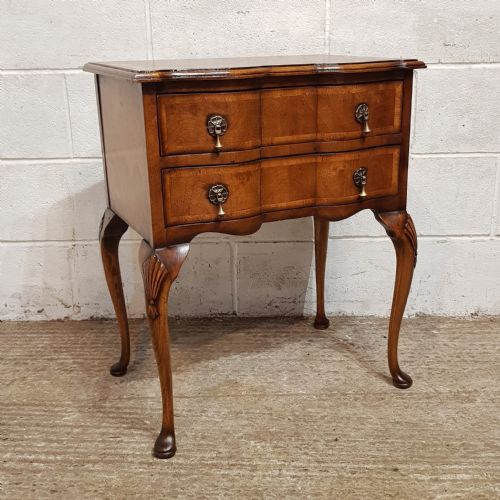
Carved Walnut Bedside Tables
Carved walnut bedside tables bring warmth and distinct texture to a bedroom, combining practical bedside storage with traditional cabinet-making.
Carved Walnut Bedside Tables
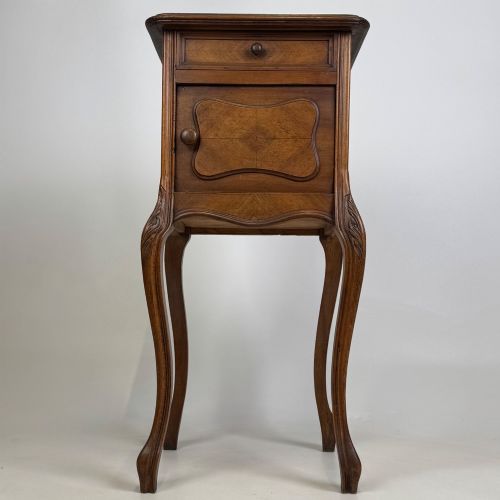
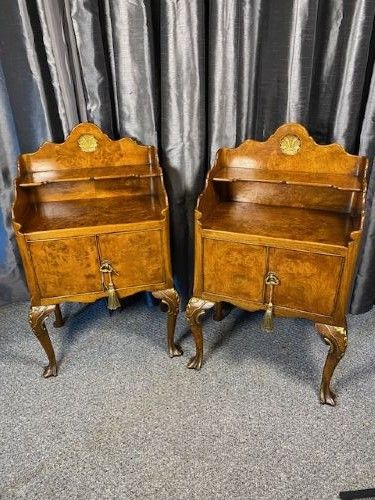
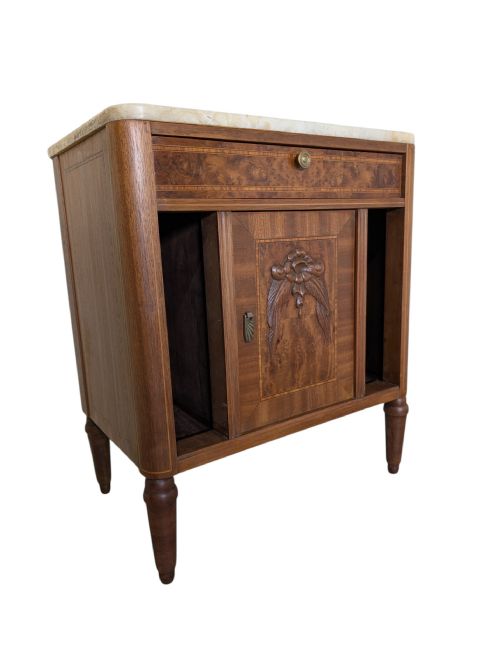
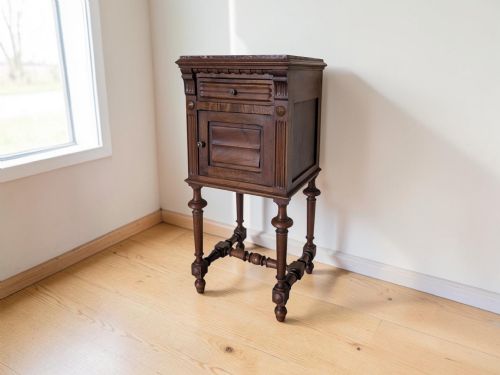
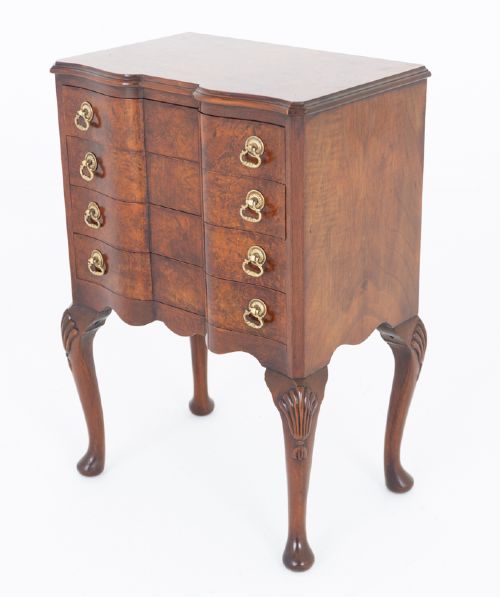
Carved walnut bedside tables span from the nineteenth century into the twentieth century, encompassing Victorian, Edwardian and revival styles. A buyer searching this phrase encounters French provincial designs, Queen Anne style chests and Italian marble-topped cabinets.
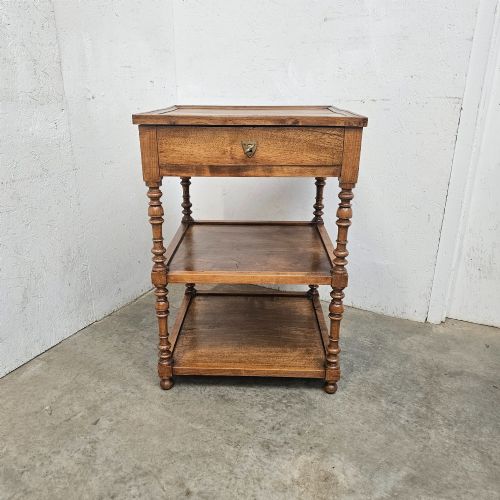
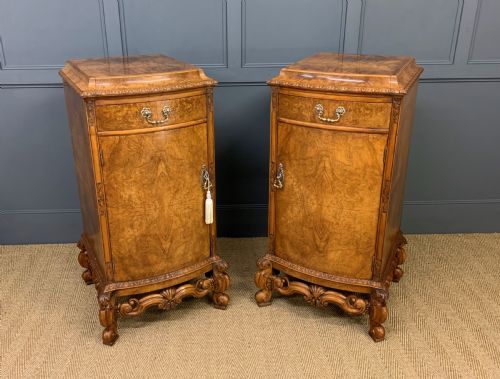
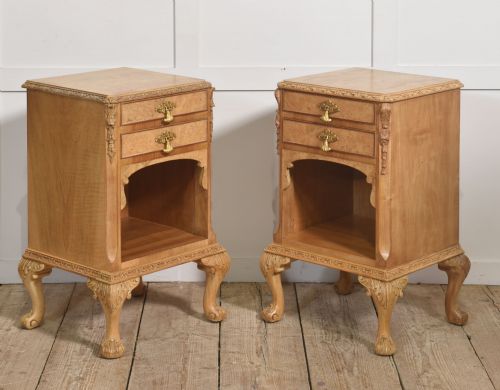
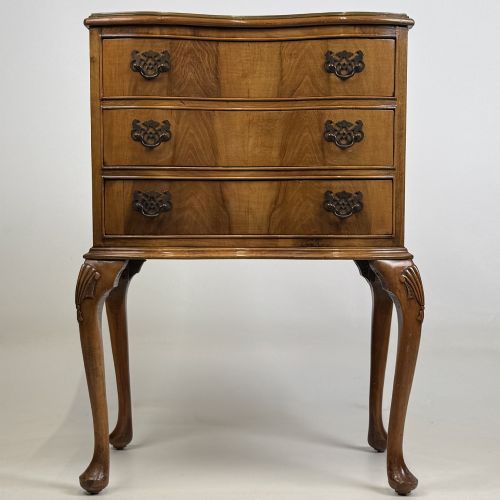
The selections on this page range from enclosed pedestal cupboards and bedside cabinets to open side tables and smaller chests of drawers. Many pieces emerge as matched pairs, particularly within French and Edwardian groupings.
Origins stretch across British, French and Italian workshops, reflecting diverse regional tastes in domestic bedroom furniture from the late eighteen-hundreds onward.
Materials and construction
Makers utilised solid walnut and burr walnut veneer over secondary timbers, exploiting the rich grain patterns of the wood for visual depth. Many surfaces incorporate matched veneer panels on drawer fronts and cabinet doors.
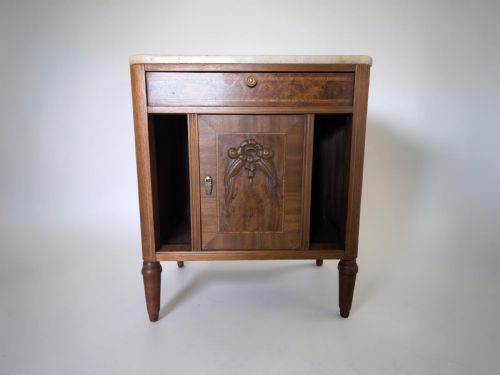
Contrasting materials frequently accompany the timber, with Belgian Sainte-Anne and other marble slabs fitted to the tops of French and Italian nightstands. Brass hardware, metal mounts and occasional satinwood stringing complete the detailing.
The listings feature walnut, burr walnut veneer, brass, and marble across Victorian and Edwardian periods.
Craftsmanship and distinction
The calibre of a piece rests upon the selection of the burr walnut veneer and the precision of the cabinet joinery, such as dovetailed drawer construction. Superior examples maintain crispness in their carved wooden ornamentation without softening of detail.
Proportion and the integrity of integrated stone tops dictate distinction, where fitted marble slabs match the exact perimeter of the walnut carcase without overhang or mismatch.
Waring & Gillows
The Carved Walnut Bedside Tables Glossary
- Burr walnut
- A figured wood veneer harvested from the excrescences or burls of walnut trees, prized for its swirling, organic grain patterns. It provides highly decorative surfaces on cabinet doors and drawer fronts.
- Marble top
- A stone slab fitted to the upper surface of a bedside cabinet to provide a durable, heat-resistant shelf. This feature appears frequently on continental European nightstands.
- Pedestal cupboard
- A vertical bedside cabinet featuring a single door enclosing interior shelving or storage space. These upright units lift visual weight off the floor.
- Serpentine front
- A furniture facade characterised by a curved outline that swells outward centrally and recesses at the sides. This shape requires skilled shaping of the timber and veneer.
- Demi-lune
- A half-moon or semicircular shape utilised in the design of tabletops and cabinet footprints. Such tables fit flush against bedroom walls while occupying minimal floor space.
Carved Walnut Bedside Tables: Frequently Asked Questions
Are marble top bedside tables practical?
The stone surfaces offer a hard-wearing and heat-resistant landing space for bedside lamps, glasses and small items. They wipe clean easily and protect the underlying walnut timber from liquid spills.
These removable or fitted slabs add considerable weight to the furniture piece, making them heavier to move during room reorganisation.
How do I identify Edwardian walnut bedside tables?
Edwardian pieces generally date from the period spanning the late Victorian era up to the First World War. They frequently exhibit lighter wood tones, simpler classical revivals, and restrained carving compared to heavier mid-Victorian designs.
Construction methods during this era often combined machine assistance with traditional hand finishing, yielding consistent interior drawer linings and neat brass hardware.
Do carved walnut bedside tables come in pairs?
Many listings offer matched pairs, which were originally manufactured together to flank a double bed in period bedrooms. Finding symmetrical pairs becomes more challenging with older nineteenth-century items.
Matching pairs command distinct interest from collectors seeking balance on both sides of a bed frame.