


French Walnut Chevets
French walnut chevets are compact bedside storage pieces offering practical bedside utility and decorative warmth for a bedroom interior.
French Walnut Chevets
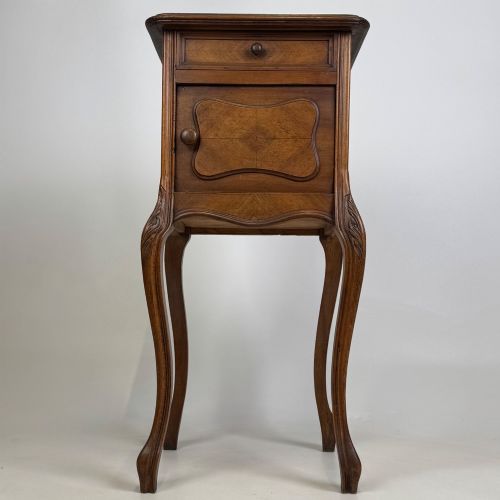
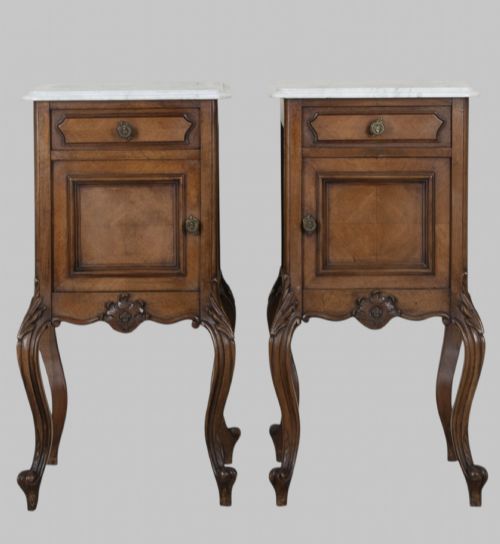
French walnut chevets are bedside cabinets and nightstands designed to sit beside a bed, providing concealed storage through cupboards and drawers alongside a surface top. When exploring French walnut chevets, a buyer frequently encounters pairs dating from the late nineteenth century through to the 1930s.
The form appears in various stylistic expressions ranging from restrained provincial models to ornate revival designs. These pieces function as functional bedside tables while displaying the distinctive grain and rich colour of walnut timber.
Materials and Construction
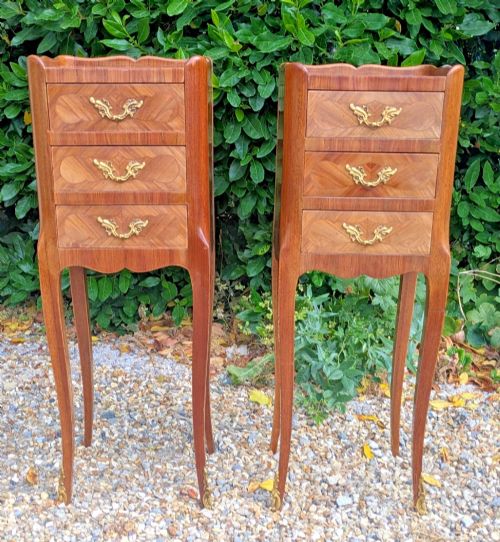
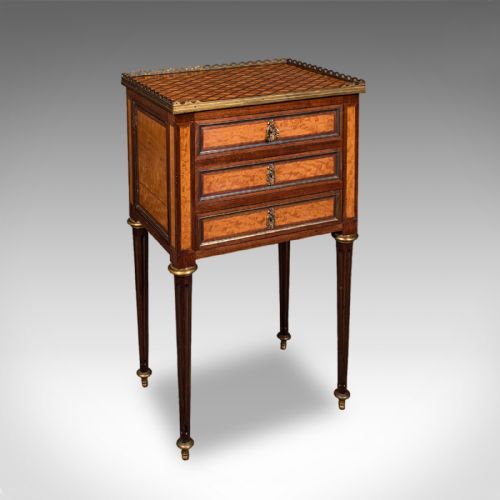
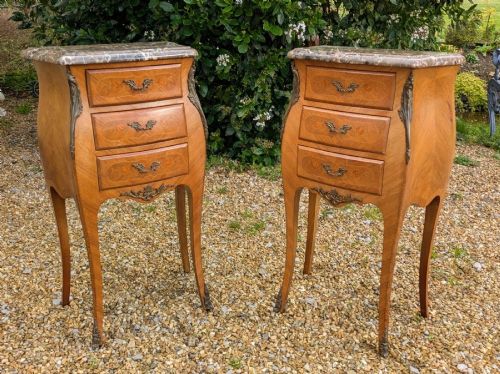
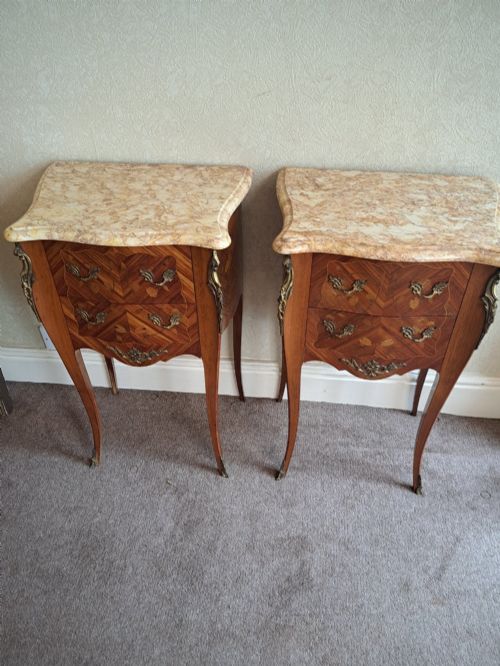
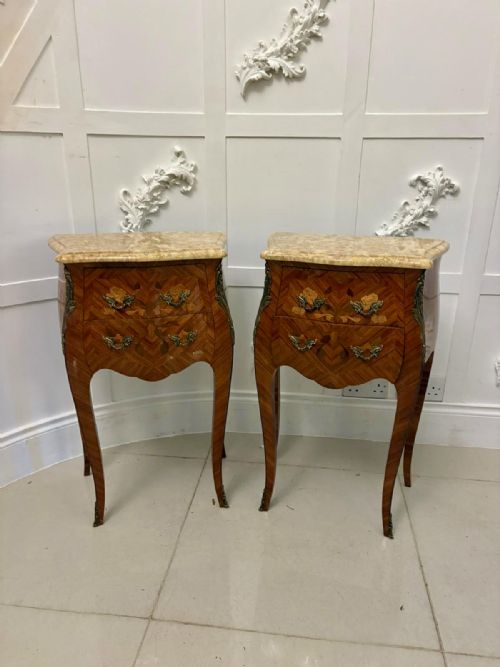
Cabinet makers utilised walnut solids and intricate veneers applied over secondary timbers to construct the carcase of each chevet. Marquetry and parquetry patterns frequently decorate the drawer fronts and cabinet doors, combining contrasting woods.
Many examples incorporate fitted marble slabs to the upper surface, often secured with a moulded edge, alongside cast brass or ormolu mounts and handles that accent the corners and key escutcheons.
Listings feature walnut, marble, brass, and kingwood across Victorian, Edwardian, and 1930s periods.
Quality and Distinction
The refinement of the marquetry work and the crispness of the carved walnut details separate standard items from superior examples. Better pieces display precise wood selection where grain patterns mirror symmetrically across panels and drawers.
The choice of upper surface material also dictates distinction, with thick slabs of figured marble or Belgian Sainte-Anne marble marking higher grade production. Substantial cast bronze or ormolu mounts rather than stamped brass indicate a finer standard of manufacture.
The French Walnut Chevets Glossary
- Chevet
- A French bedside table or small cabinet designed to stand next to a bed. These pieces typically incorporate a combination of drawers, cupboards, or open compartments.
- Marquetry
- The art of applying decorative veneer pieces in various wood types to form geometric patterns or pictorial designs. It creates intricate surface decoration across cabinet doors and tabletops.
- Parquetry
- A geometric mosaic of wood pieces used for decorative floors and cabinet surfaces. The technique arranges small veneer blocks into repeating patterns like cubes or chevrons.
- Ormolu
- Gilded bronze used for decorative mounts and furniture hardware. The technique involves applying a gold amalgam to bronze, providing a bright metallic finish.
- Sainte-Anne marble
- A specific dark grey or black limestone marble quarried in Belgium, characterised by distinct white calcite veins. It frequently tops nineteenth-century continental furniture.
French Walnut Chevets: Frequently Asked Questions
What is a chevet?
A chevet is the French term for a bedside cabinet or nightstand. These small pieces provide enclosed storage next to a bed.
They generally feature a single drawer above a small cupboard door or an open shelf designed to hold nighttime essentials.
Are these cabinets sold in pairs?
Many French walnut chevets are available as matched pairs intended to flank a double or king-sized bed. Buying them together ensures matching timber grain and height.
Single pieces also appear frequently for use in smaller bedrooms or as standalone side tables in a hallway.
Did these pieces always have marble tops?
Marble tops appear frequently on nineteenth-century and early twentieth-century examples to provide a durable, water-resistant surface next to the bed. They lift off the wooden base on many models.
Other versions rely entirely on polished walnut or marquetry wood surfaces across the top tier.
How do I date a chevet?
Dating relies on stylistic clues such as revival periods, hardware construction, and timber treatment. Pieces displaying Louis XV or XVI revival details typically date from the Victorian era up to the 1930s.
Simpler proportions and cleaner lines often point towards the later Edwardian and 1930s periods of production.