

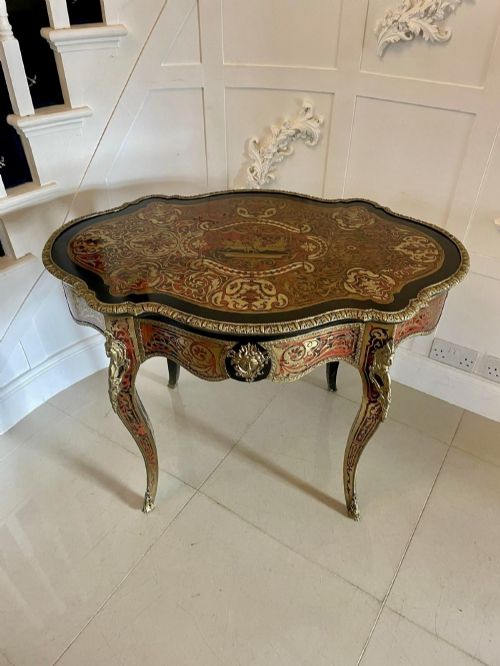
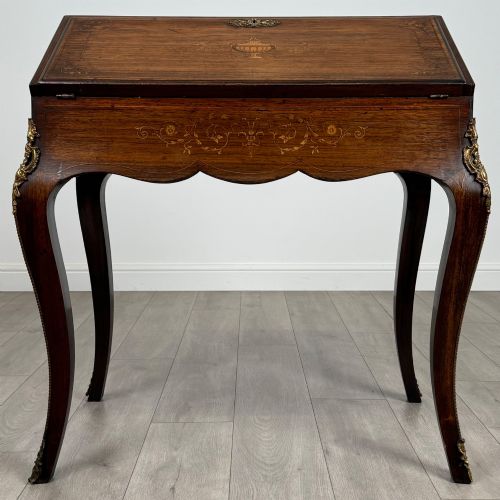

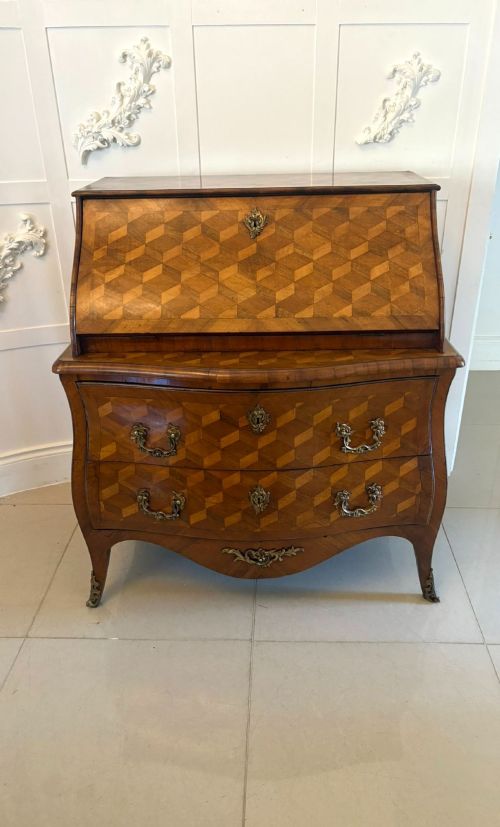
Louis XV Writing Desk
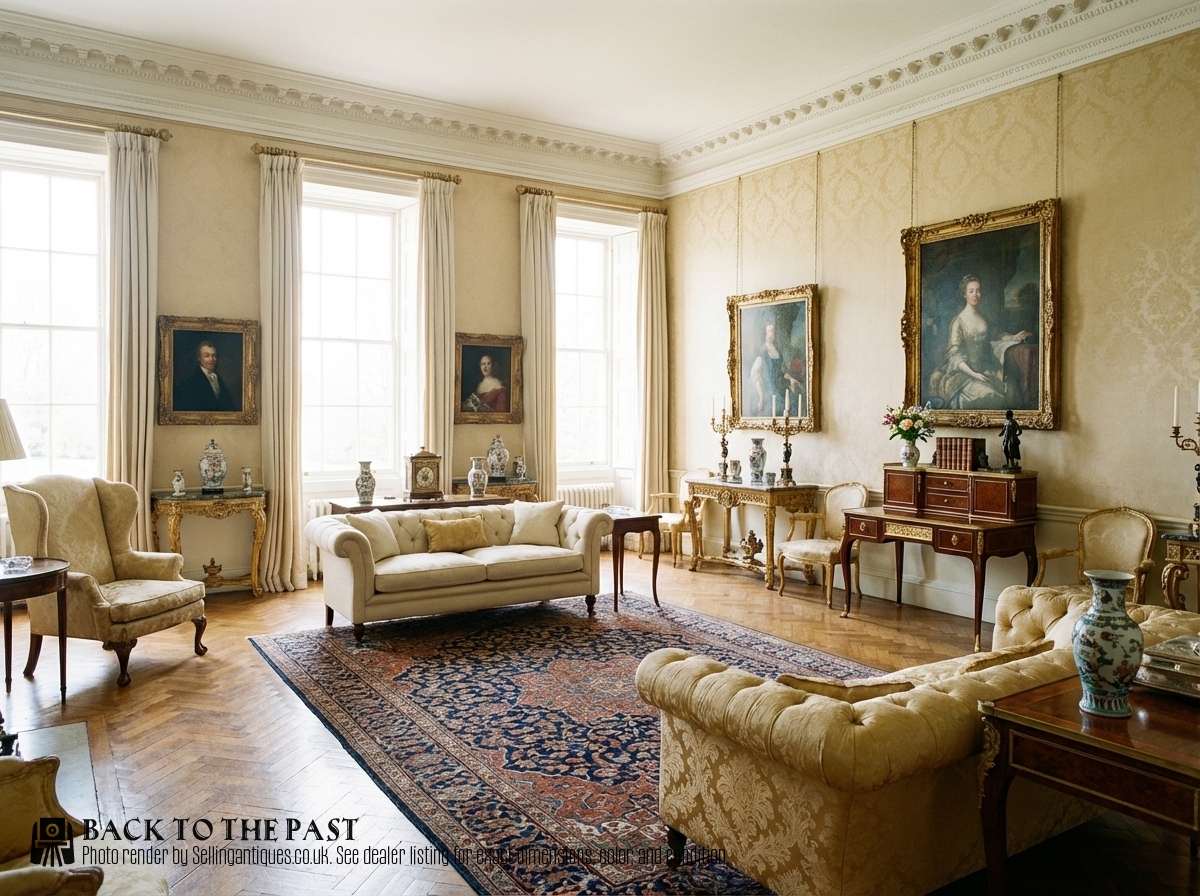
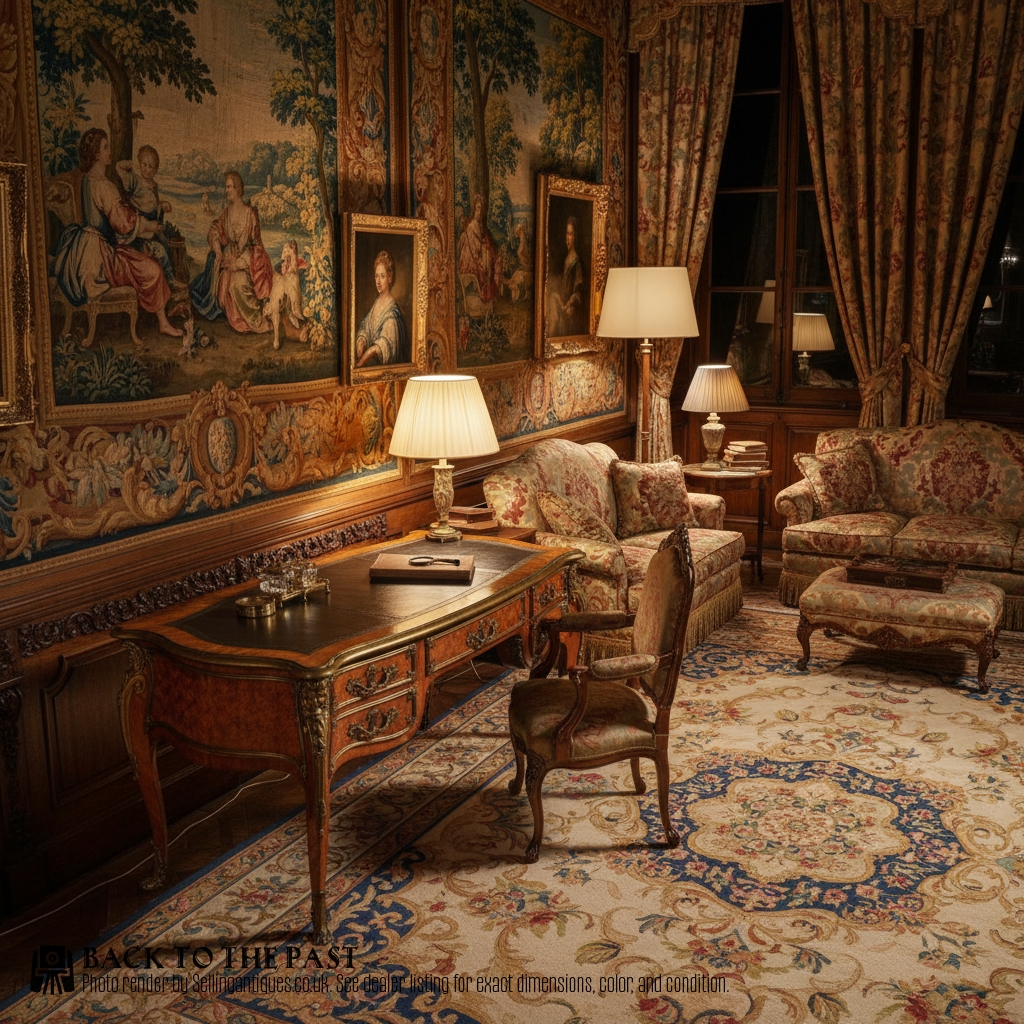
A louis xv writing desk brings the flowing curves and elaborate decorative arts of the eighteenth century into a room through pieces built largely during the nineteenth-century revival.
Louis XV Writing Desk
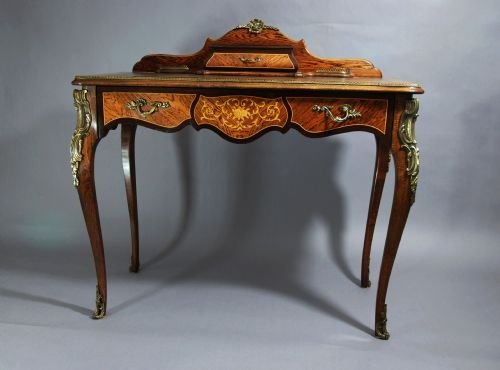
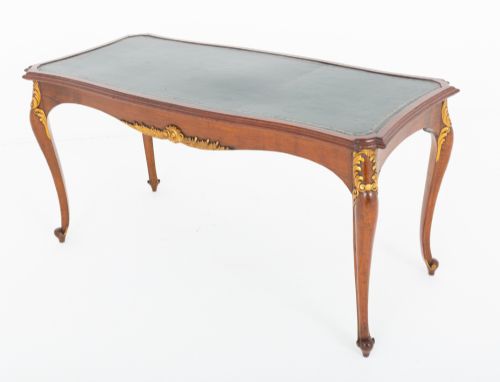
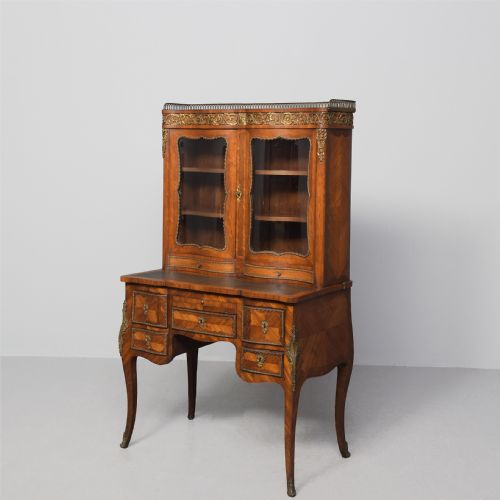
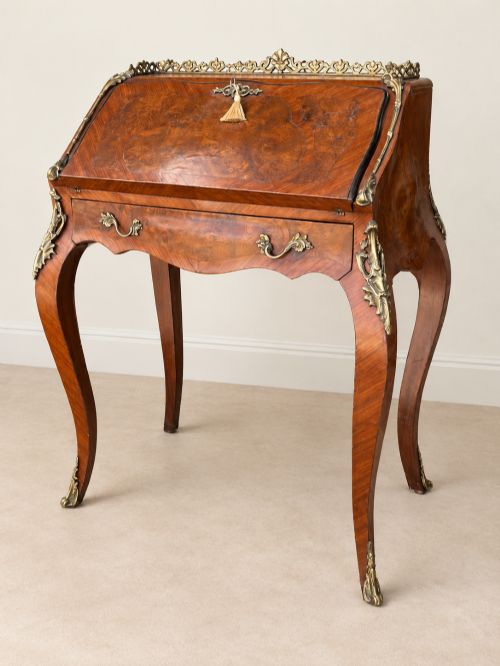
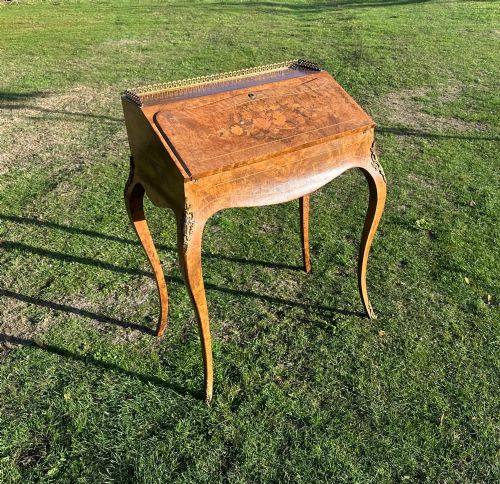
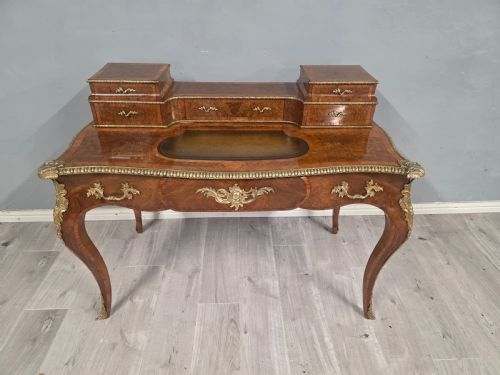
A louis xv writing desk encompasses various functional forms designed for correspondence and paperwork, ranging from sprawling bureau plats to compact bonheur du jours and slanted bureaux de dame.
The pieces appearing on this page date primarily from the nineteenth century, including strict Victorian interpretations and later revivals spanning the eighteen-sixties to the nineteen-twenties.
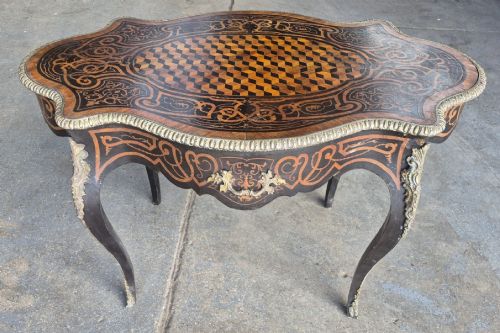
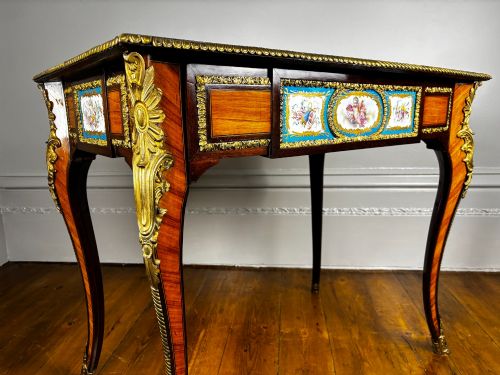
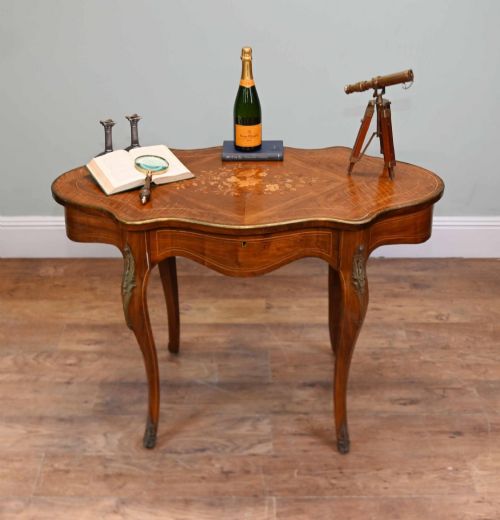
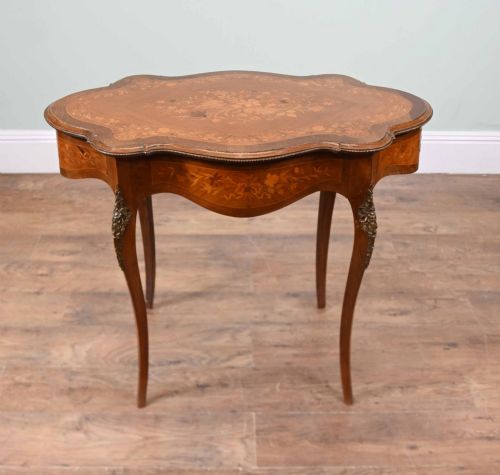
Originating largely from French workshops and cabinet makers, these desks rely on serpentine outlines, cabriole legs, and freestanding formats intended to occupy the centre of a room.
Materials and technique
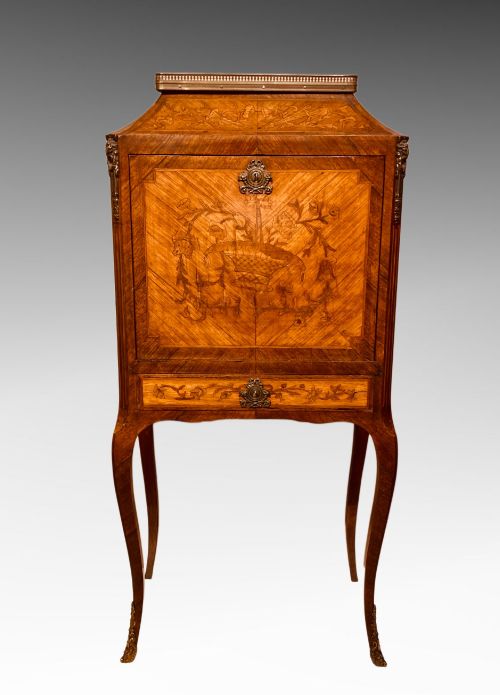
Cabinet makers constructed carcass frames from solid woods like walnut and mahogany, then applied elaborate surface veneers including kingwood, rosewood, and satinwood arranged in complex geometric parquetry or pictorial marquetry patterns.
Gilt bronze and ormolu mounts accentuate the structural curves, wrapping around corners and framing drawer fronts alongside chased brass sabots protecting the foot of each cabriole leg.
Louis XV Writing Desk Retail Price Guide 2026
Typical asking prices for louis xv writing desk among the pieces listed under this phrase on Sellingantiques today, from the lower quarter to the upper quarter. They describe what is for sale here now, not the wider market.
Many ladies writing desks hide tiny velvet-lined compartments meant for stashing secret billets-doux.
Markers of execution
The division between standard production and exceptional work rests on the precision of the cabinet work, visible in the snug alignment of drawer joints and the crispness of hand-chased ormolu mounts.
Master makers integrated structural integrity with decorative ambition, ensuring that parquetry patterns flow seamlessly across moving parts and that cast bronze mounts sit flush against curved wooden contours.
Signatures, stamps, or workshop attributions from established makers elevate a desk, reflecting the standards upheld by prominent nineteenth-century Parisian and English ateliers.
JAS Shoolbred·Francois Linke·Edwards and Roberts·Paul Sormani·CH Jeanselme and Co·Durand·J Schmitz·Alphonse Tahan
The Louis XV Writing Desk Glossary
- Bureau plat
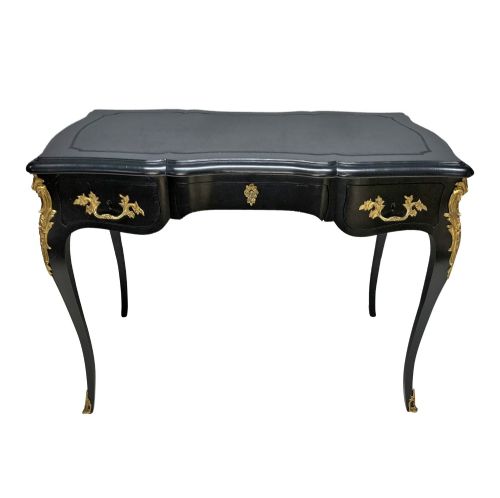
- A double-sided freestanding writing table featuring a long rectangular top inset with leather and multiple drawers along the frieze. These desks stand away from walls to display finishing on all four sides.
- Bonheur du jour
- A light ladies writing desk featuring a small superstructure of shelves, drawers, or a cabinet above the main writing surface. The form gained popularity during the reign of Louis XV.
- Ormolu
- Gilded bronze used for decorative mounts and edgings on furniture. The technique involves applying a gold amalgam to cast bronze before firing.
- Marquetry
- Decorative veneer work arranged in pictorial designs using various coloured woods. Artisans cut thin slices of timber to form floral or geometric scenes.
- Parquetry
- Geometric wood inlay forming repeating patterns such as cubes or chequers. It differs from marquetry by relying on angular shapes rather than pictorial motifs.
- Cabriole leg
- A furniture leg that curves outward at the knee and tapers inward to an ankle, mimicking animal limbs. It forms a defining feature of Rococo design.
Louis XV Writing Desk: Frequently Asked Questions
What is a bureau plat?
A bureau plat is a flat-topped writing table designed to stand in the middle of a room rather than against a wall. These desks feature a finished back and multiple drawers fitted into the frieze.
Most examples include an inset leather writing surface surrounded by veneered wood and accented with ormolu mounts along the edges and legs.
How do I identify a revival piece?
Nineteenth-century revival pieces adopt the serpentine outlines, floral marquetry, and cabriole legs of the original eighteenth-century French aesthetic. Cabinet makers of this later era utilised mechanical saws and standardised casting methods.
Examining the secondary woods inside the drawers and the construction of the dovetails helps determine whether a desk dates to the eighteen-eighties or the seventeen-fifties.
Where should I place a freestanding desk?
Freestanding centre tables and desks require placement where all sides remain visible, as cabinet makers finished the rear panels with matching veneers and mounts. Positioning them away from walls highlights the serpentine contours and parquetry.
Direct sunlight should be avoided to protect sensitive kingwood veneers and prevent the leather writing surface from drying out and fading.
What woods were used for veneers?
Cabinet makers relied on exotic imported timbers such as kingwood, rosewood, and satinwood to create contrasting geometric patterns and floral motifs. Walnut and mahogany formed the sturdy underlying structural frames.
These decorative veneers were sliced thinly and glued onto the carcass before being polished and sealed to showcase the natural grain.