


Louis Revival Mirror
When you search for a louis revival mirror, you find ornate decorative pieces channelling French court aesthetics that instantly elevate a room.
Louis Revival Mirror
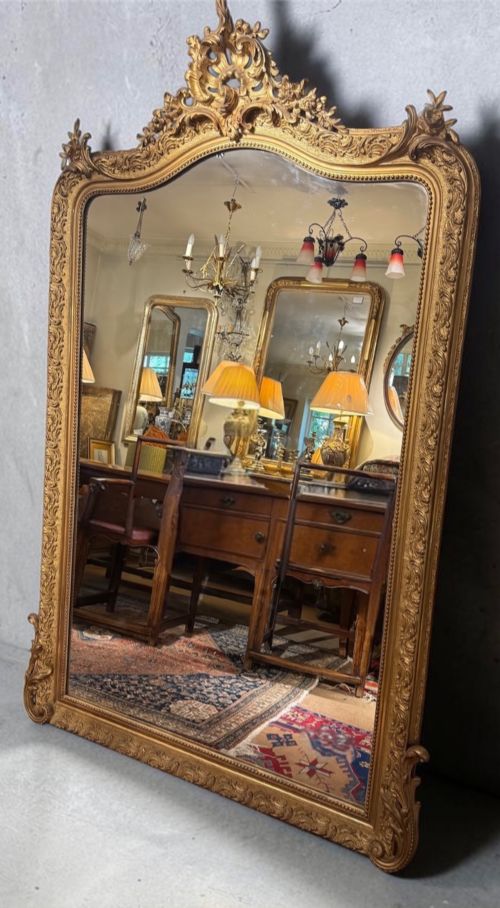
A louis revival mirror brings the opulent aesthetic of French royal courts into domestic interiors through elaborate frames and classic proportions. When looking for a louis revival mirror, you encounter forms ranging from large overmantel cushion pieces to wall mirrors and table mirrors. These objects date from the nineteenth century into the Edwardian era and early twentieth century, reflecting enduring nineteenth century interest in historic French styles.
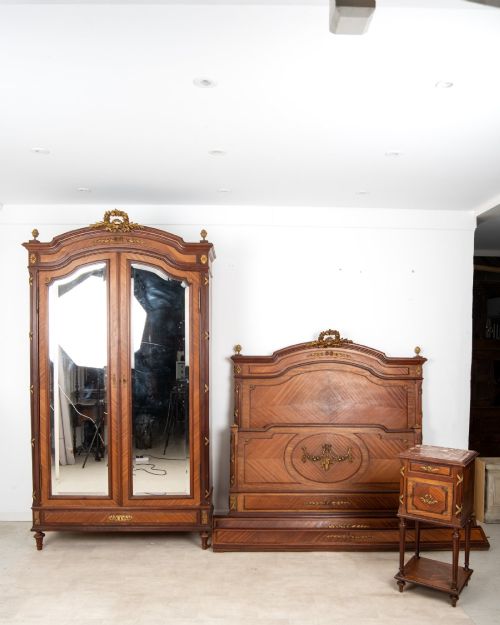
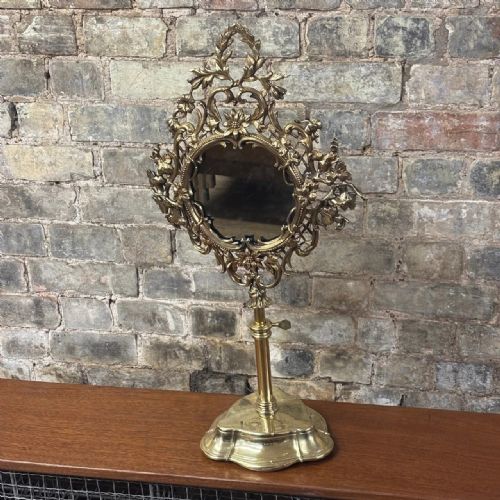
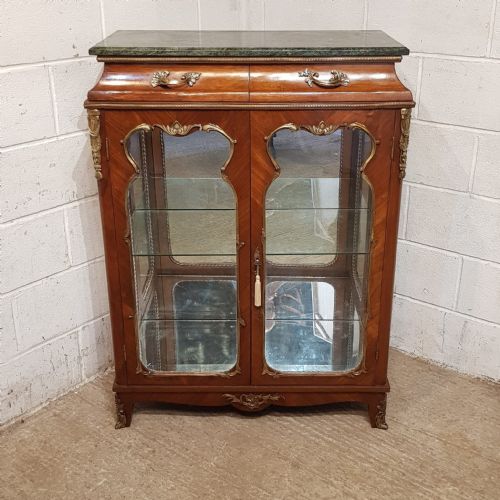
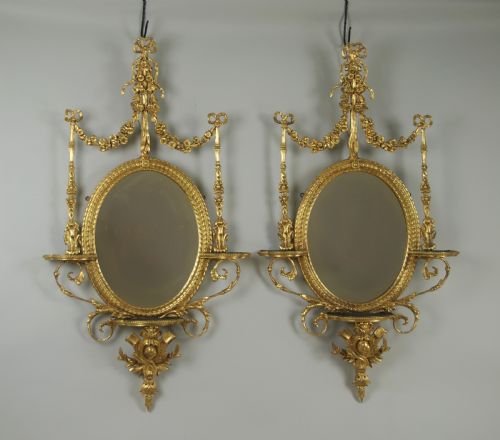
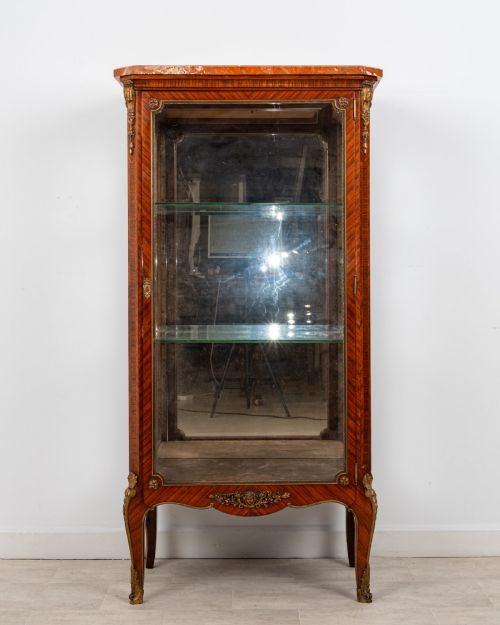
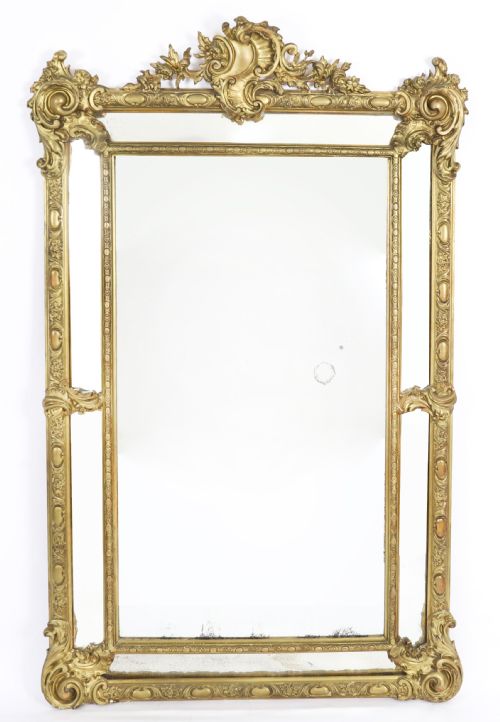
The selection here includes wall mirrors, overmantel mirrors, and table mirrors created within traditions such as Louis XV revival, Louis XVI revival, and French Rococo revival. Makers and craftsmen utilised rich materials like giltwood, gesso, and ormolu to replicate the grandeur of earlier French chateau designs. Alongside these mirrors, the evidence records related items like display cabinets, side cabinets, and desks, showing how these aesthetic revivals extended across entire room schemes.
How they were made
Makers constructed the timber frames using woods such as mahogany, walnut, oak, and kingwood, often shaping them into curves characteristic of rococo designs. Carvers applied layers of gesso to wooden bases before finishing them with gold leaf or paint to achieve the traditional giltwood appearance seen on wall and overmantel pieces.
Metal elements including ormolu, brass, and gilt metal mountings were cast and attached to embellish the frames and related furniture pieces like vitrines and side cabinets. Glass was cut to fit specific archtop, cartouche, or oval apertures, sometimes featuring bevelled edges to catch the light.
Shell motifs hide stubbornly in corners of frames, proving nineteenth-century carvers enjoyed adding small surprises for anyone looking too closely.
What varies in quality
The standard of carving and gilding sets apart standard production from exceptional pieces, particularly in how sharply defined the acanthus leaves, shells, and cartouches appear on the wood and gesso. Finer examples display meticulous hand-carving and deep, multi-layered gilding that retains its lustre over generations.
The choice of secondary woods and the integration of cast ormolu mounts also indicate superior manufacture. Pieces by notable makers show precision in assembly and harmony between the timber carcase, the mountings, and the mercury or silvered glass plates.
François Linke·G. Durand·H & L Epstein
The Louis Revival Mirror Glossary
- Giltwood
- Wood that has been coated with gold leaf or gold paint. This finish creates the bright, reflective surfaces characteristic of grand nineteenth-century mirrors.
- Gesso
- A plaster mixture applied to wooden frames as a base for gilding or painting. It allows carvers to model intricate relief details before the gold leaf is laid down.
- Ormolu
- Gilt bronze mounted on decorative objects and furniture. It provides bright metallic accents that complement gilded wooden frames.
- Overmantel mirror
- A large mirror designed to hang specifically above a fireplace mantel. These pieces frequently utilise cushion frames or cartouche shapes.
- Cartouche
- An ornamental tablet or panel shaped like a rolled-up piece of paper, often placed centrally on mirror frames and furniture pieces.
- Pier mirror
- A tall mirror designed to hang on the wall space between two windows. It often pairs with a console table beneath it.
Louis Revival Mirror: Frequently Asked Questions
How do I date a louis revival mirror?
Dating relies on examining the construction methods of the wooden frame, the composition of the gesso, and the backboards. Stylistic clues also help place pieces within the nineteenth century or the Edwardian period.
Evidence on this page shows items produced across the nineteenth century, extending into the nineteen-twenties, reflecting changing revivals of French court styles.
Where should I hang an overmantel mirror?
An overmantel mirror traditionally hangs directly above a fireplace mantelpiece to reflect light and create a sense of space in a room. Their large proportions make them a natural focal point for principal reception rooms.
When positioning one, ensure the fixings secure safely into the wall to support the substantial weight of the giltwood and glass frame.
What is the difference between Louis XV and Louis XVI styles?
Louis XV style embraces asymmetrical curves, flowing organic lines, and exuberant rococo motifs like C-scrolls and foliage. Louis XVI design shifts toward neoclassical symmetry, straight lines, rectangular proportions, and classical architectural details.
Both styles appear frequently among the nineteenth-century revival pieces recorded in the listings.
Are table mirrors authentic to the period?
Table mirrors were produced during the nineteenth and early twentieth centuries as functional accessories for dressing tables and sideboards. They utilise materials like solid brass, mahogany, and walnut.
These smaller items allowed the elegance of French revival design to be incorporated into bedrooms and smaller living spaces.