


Louis Philippe Drawers
Louis philippe drawers offer generous storage and clean architectural lines, bringing understated French elegance to a bedroom.
Louis Philippe Drawers
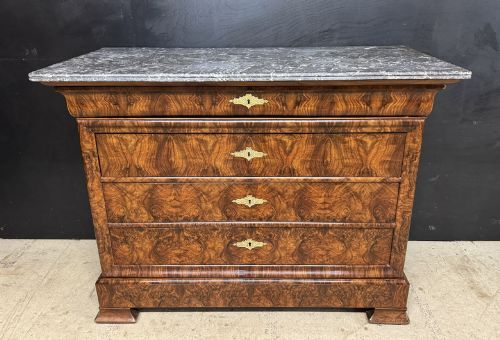
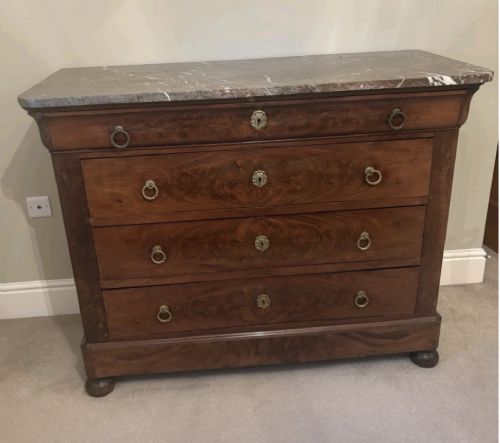
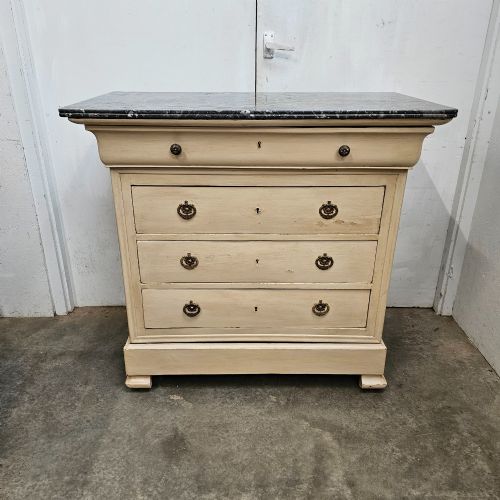
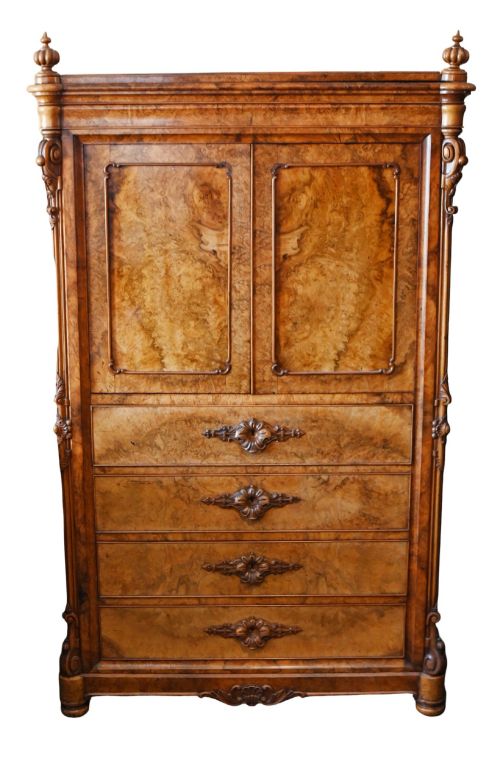
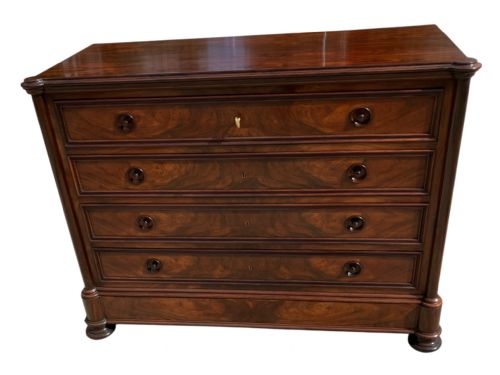
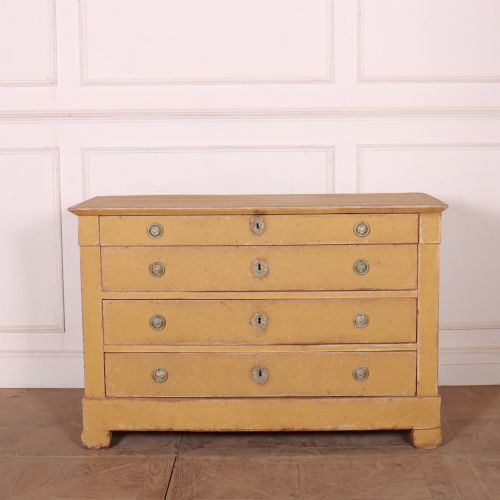
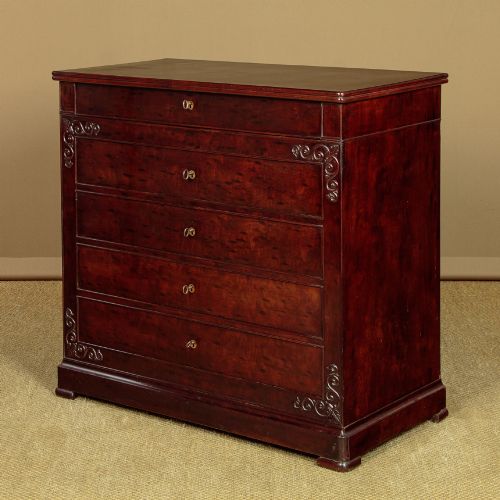
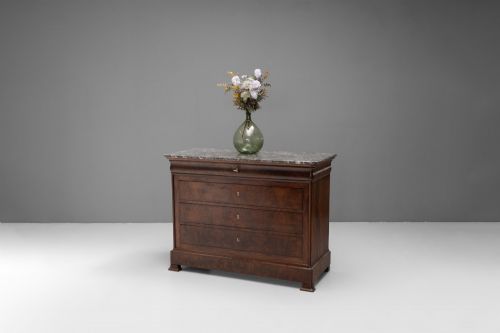
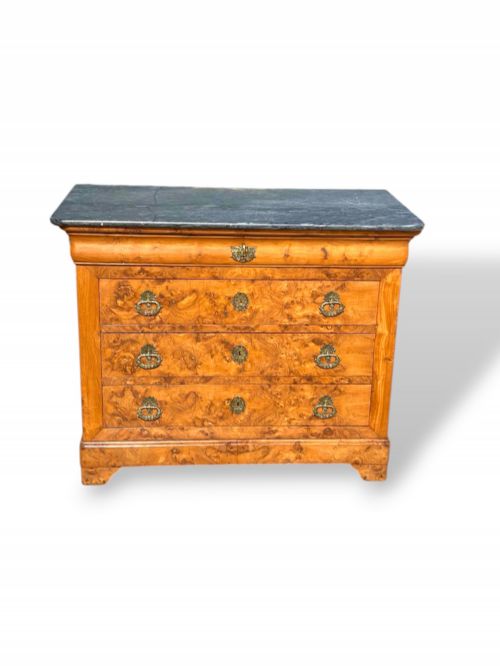
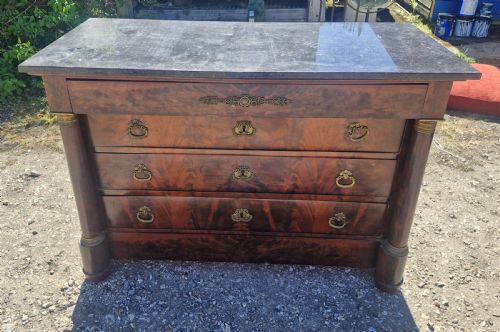
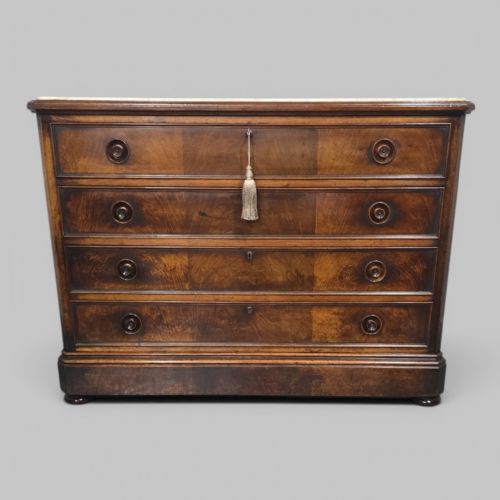
When you search for louis philippe drawers, you are looking at substantial storage furniture originating primarily from nineteenth-century France. The pieces on this page appear most frequently as chests of drawers and commodes, alongside occasional secretaire desks.
The aesthetic is characterised by restrained surfaces and dignified proportions rather than heavy ornamentation. Walnut and mahogany provide the primary chassis, often topped with contrasting slabs of marble.
Most examples date across the nineteenth century, ranging from mid-century walnut commodes to later oak iterations. Buyers meet both polished wood finishes and painted wood variations across the selection.
Assessing Quality
Quality rests in the selection of timber veneers and the precise fit of the heavy marble tops. Finer examples display carefully matched grain patterns across the bank of drawers rather than random timber cuts.
The integrity of the internal drawer construction and the smoothness of the sliding action separate standard pieces from superior examples. Original brass mounts and sound structural joints further elevate the standing of a commode.
Listings span the nineteenth century, featuring walnut and mahogany timbers alongside marble tops.
The Louis Philippe Drawers Glossary
- Commode
- A low chest of drawers or cabinet designed for domestic storage. In nineteenth-century French contexts, the term usually denotes the primary bedroom chest.
- Secretaire
- A cabinet or chest incorporating a writing drawer with a drop-front desk surface. These pieces combine concealed workspace with traditional drawer storage.
- Veneer
- A thin layer of figured wood applied over a secondary timber base. Cabinetmakers utilise burr ash and flame mahogany veneers to create decorative surface patterns.
- Semainier
- A tall, slender chest of drawers traditionally featuring seven tiers, one for each day of the week. This form provides vertical storage in compact footprints.
Louis Philippe Drawers: Frequently Asked Questions
How do I date a commode?
Dating relies upon examining timber species, construction methods, and hardware styles. Nineteenth-century pieces typically exhibit hand-cut joints and specific veneer choices characteristic of the period.
Later nineteenth-century iterations often incorporate different secondary woods and machine-sawn components. Comparing the marble thickness and edge profile also aids chronological placement.
Are marble tops original?
Original marble tops generally match the exact proportions and edge profiles of the timber carcase below. They display appropriate weight, thickness, and natural veining consistent with nineteenth-century French quarrying.
Replacement marble usually sits awkwardly or shows modern machine cutting on the underside. Inspecting the top surface for period-appropriate wear helps confirm originality.
How much weight can the drawers hold?
These nineteenth-century pieces were built for heavy domestic garments like linens and woollens. The timber drawer boxes possess sturdy dovetail construction designed to bear substantial loads.
Modern daily use should still respect the vintage runners and internal framing. Distributing weight evenly preserves the structural integrity of the drawer bases.
Can I place a lamp on the marble?
Marble provides a durable, heat-resistant surface suitable for lighting and decorative objects. The stone tolerates everyday items easily without sustaining surface damage.
Using protective pads underneath heavy metal bases prevents scratching the polished stone. Wipe spills promptly to maintain the finish of the marble.