

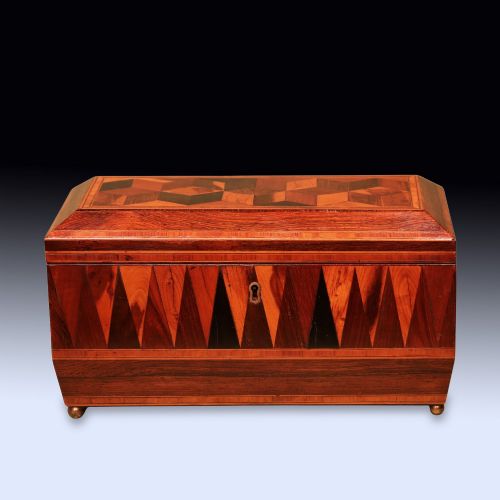
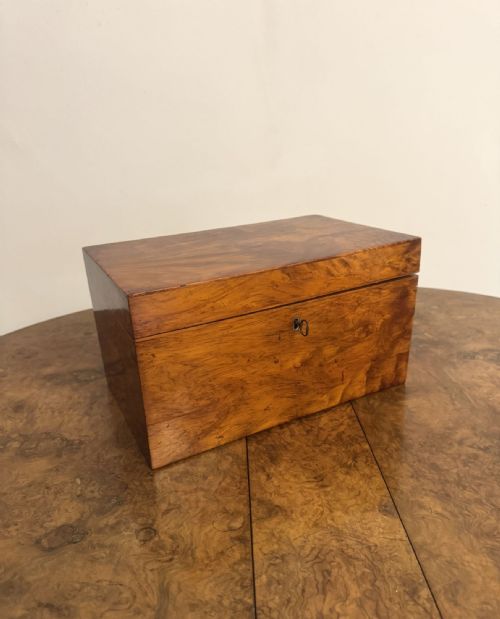


Lockable Tea Caddy
A lockable tea caddy is a secure box for storing precious leaves, combining fine 18th-century cabinet-making with the practical need to keep household stores safe.
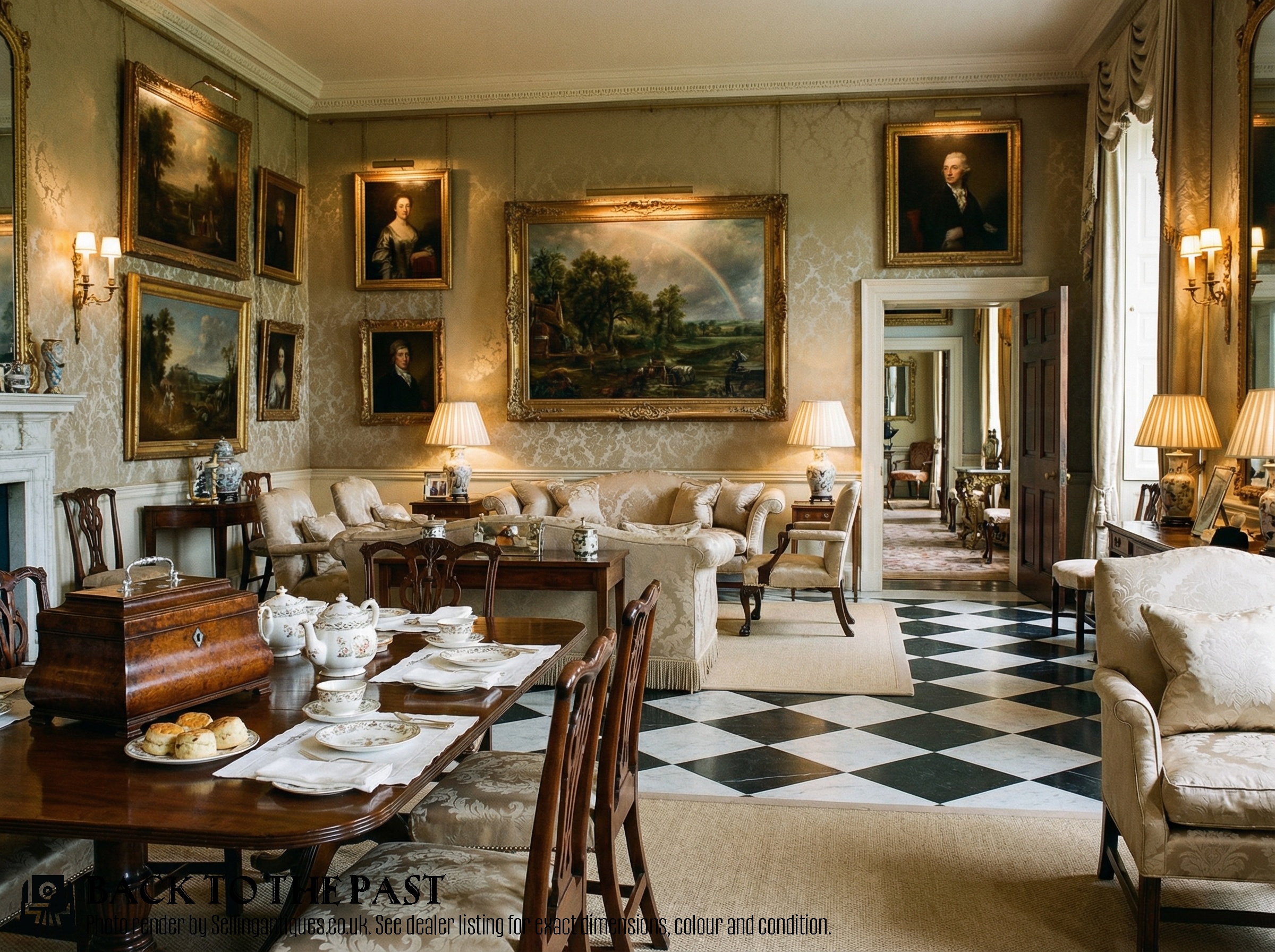
What lockable tea caddy pieces are
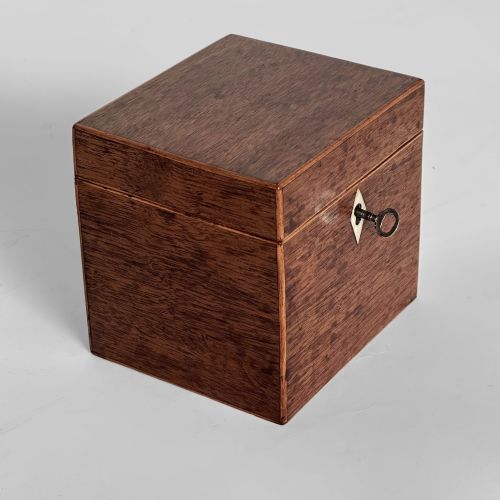
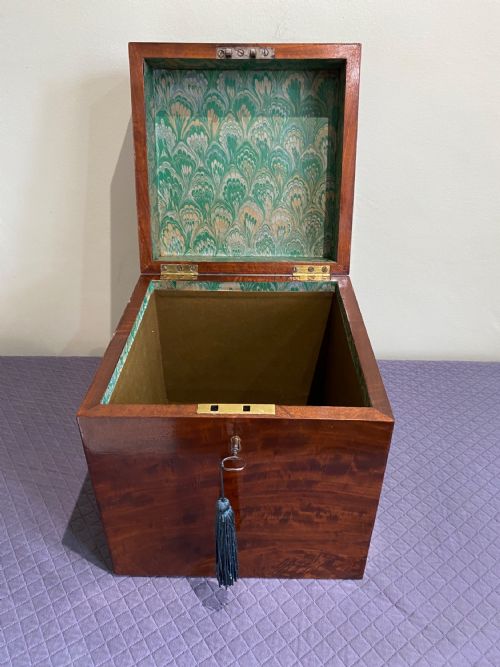
A lockable tea caddy functions as a small, secure chest designed to protect expensive leaves from domestic staff or damp air. When collectors search for a lockable tea caddy, they encounter Georgian examples shaped as ovals or straightforward boxes.
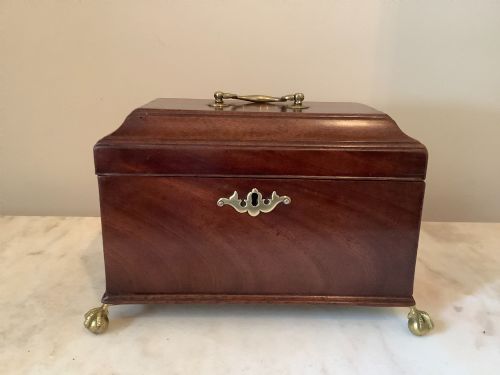
The pieces on this page stem from the 18th century, showcasing the forms typical of the Georgian period. These tea caddies rely on functional brass locks and escutcheons to secure their contents.
How they were made
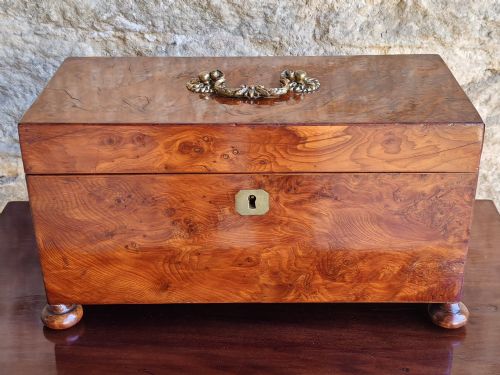
Cabinet-makers constructed these tea caddies using exotic timbers like satinwood and burr walnut, frequently accented with contrasting stringing such as ebony. The outer veneer was painstakingly laid over a sturdy secondary wood carcass to create smooth, curved or flat surfaces.
Metal hardware, including brass locks and hinges, was fitted by hand into recessed channels within the timber. Finished surfaces were polished to highlight the natural grain patterns of the wood.
What varies in quality
The distinction between standard examples and superior pieces rests on the choice of timber and the precision of the veneer work. Highly figured burr walnut or meticulously matched satinwood veneer elevates a piece significantly.
Superior execution shows in the crispness of the inlay and the flush fitting of brass escutcheons and working locks. Subtle details in the grain selection demonstrate the skill of the original Georgian maker.
The Lockable Tea Caddy Glossary
- Satinwood
- A durable timber known for its golden-yellow sheen and smooth texture, widely utilised by 18th-century cabinet-makers for fine decorative surfaces.
- Burr walnut
- A wood harvested from the abnormal growth of a walnut tree, producing swirling, intricate grain patterns prized in Georgian furniture.
- Escutcheon
- A flat plate of brass surrounding the keyhole of a lock, serving both a decorative and a protective purpose for the surrounding wood.
- Georgian
- The period spanning the reigns of the first four Georges, characterised by classical proportions and refined cabinet-making techniques.
Frequently Asked Questions
What is a lockable tea caddy?
A lockable tea caddy is a small wooden chest built with a working lock to keep valuable tea leaves secure in the home.
During the 18th century, tea was an expensive commodity, making these secure containers essential for households.
How do I date a tea caddy?
Dating relies on identifying the timber species, construction methods, and hardware styles characteristic of specific periods like the 18th century.
Examining the type of brass lock and the style of the dovetail joints offers clear clues to the manufacturing era.
What materials were used?
Maker materials typically include decorative hardwoods such as satinwood and burr walnut, often detailed with ebony stringing.
Internal hardware commonly consists of brass for locks, hinges, and escutcheons.
How were they used originally?
Households used these boxes to store black and green teas under lock and key, dispensing portions as required.
Only the mistress of the house held the key to prevent pilfering by servants.