





Burr Wood Tea Box
A burr wood tea box brings swirling, intricate grain patterns to the table, offering a tactile piece of Georgian and nineteenth-century history to hold your tea.
Burr Wood Tea Box
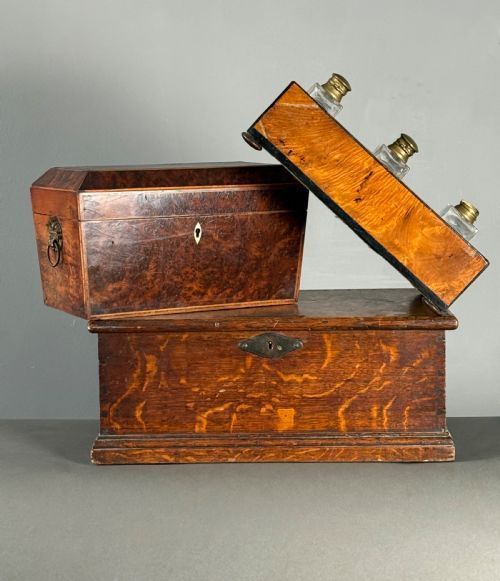
A burr wood tea box represents a specialised form of containment designed in the eighteenth and nineteenth centuries to preserve precious tea leaves under lock and key. The examples found here span the Georgian and Regency eras, alongside later nineteenth-century interpretations.
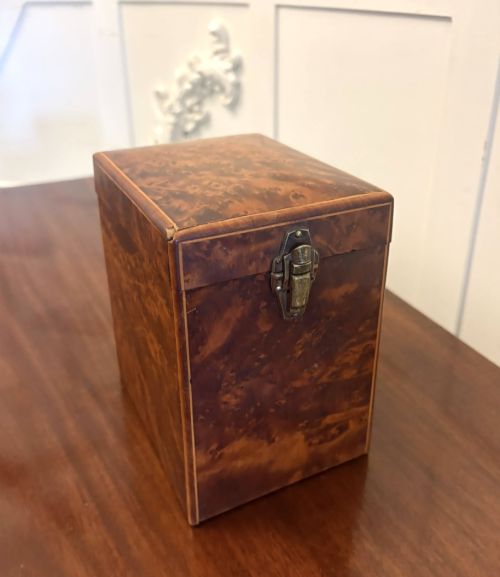
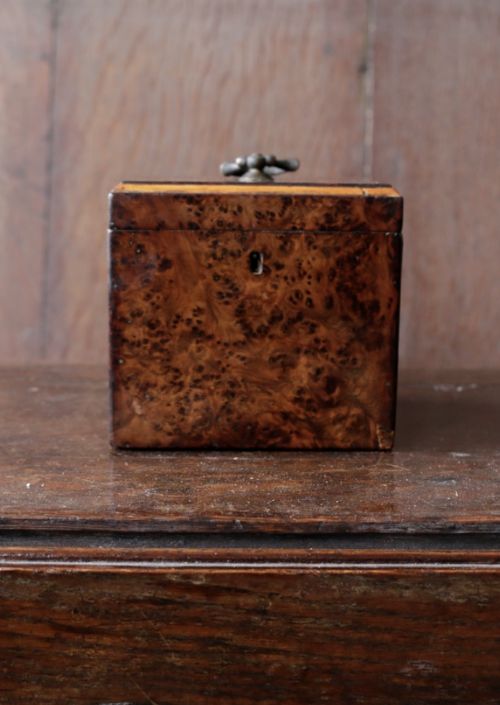
Most commonly, you will encounter the burr yew tea caddy, shaped as cubes, hexagons, or ovals, showing the characteristic knotty growth of the timber. Alongside these are larger free-standing teapoys and occasional pieces in burr maple, burr elm, and burr thorn wood.
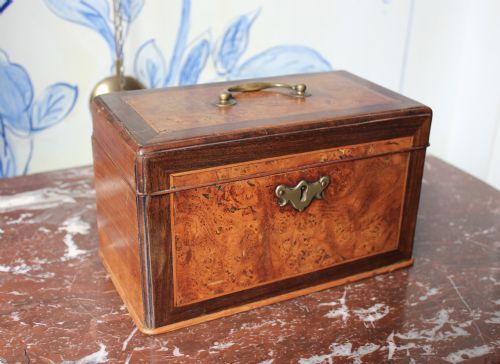
Makers of the period utilised these highly figured woods to catch the eye, often pairing the wild grain with contrasting stringing in ebony and boxwood. The results range from compact tea caddies meant for the parlour table to grander multi-purpose spirits tables and teapoys.
How they were made
Cabinet makers selected highly figured burr veneers - principally yew, maple, elm, and thorn - applied over solid wood foundations to create complex, swirling patterns across the surfaces of each tea box. These timbers demanded careful handling during cutting and laying to prevent splitting along the natural distortions of the grain.
Fine decorative details such as bone, mother-of-pearl, and stringing in contrasting woods were inlaid directly into the cabinetry. Brass hardware, including hinges, escutcheons, and internal locking mechanisms, completed the construction, ensuring the tea leaves remained secure.
Burr Wood Tea Box Retail Price Guide 2026
Typical asking prices for burr wood tea box among the pieces listed under this phrase on Sellingantiques today, from the lower quarter to the upper quarter. They describe what is for sale here now, not the wider market.
Some nineteenth-century tea caddies include secret compartments designed to hide the key from thieving household staff.
What varies in quality
Quality rests in the density and drama of the timber's grain, where a densely packed burr pattern commands greater visual interest than a plain or sparse section of wood. The skill of the cabinet maker shows in the precise alignment of the veneer across the corners and edges of the box.
The sophistication of the internal compartments and the presence of original decorative elements, such as stringing or specialised hardware, elevate the standing of a piece. Well-preserved surfaces that retain their warmth and depth without heavy restoration mark the more successful examples.
The Burr Wood Tea Box Glossary
- Burr wood
- Wood taken from a tree growth where the grain has grown in a deformed, swirling manner. This produces highly decorative patterns prized by cabinet makers.
- Teapoy
- A pedestal table or large box designed specifically for holding tea and serving equipment. They often stand on a single pillar with tripod legs or a robust plinth.
- Stringing
- Thin inlay lines of contrasting wood, such as boxwood or ebony, used to frame panels and edges on fine furniture and boxes.
- Escutcheon
- A flat plate of brass or bone surrounding the keyhole of a lock, protecting the wood from wear and adding a decorative accent.
- Marquetry
- The art of applying pieces of veneer to a structure to form decorative patterns and pictures. It differs from inlay by assembling the pattern before fixing it to the surface.
Burr Wood Tea Box: Frequently Asked Questions
How were these boxes used?
In the eighteenth and nineteenth centuries, tea was an expensive commodity kept under lock and key by the head of the household. These boxes served as secure storage containers on the dining table or sideboard.
Servants typically prepared the tea from the box in the presence of guests, using the internal caddy sections to blend different leaves to individual tastes before locking the lid again.
How do I care for a burr wood box?
Protect antique burr wood by keeping it away from direct sunlight, which can fade the rich tones of the timber, and maintain a stable room humidity to prevent the veneer from lifting. Gentle dusting with a dry, soft cloth is sufficient for daily maintenance.
Avoid using modern liquid polishes or silicone sprays, as these can build up a residue and damage the historic polish on the wood surfaces over time.
How can I tell the period of a tea box?
Dating relies on observing the overall shape, the construction methods of the internal compartments, and the specific style of the exterior woodwork. Georgian and Regency pieces often feature sharp geometric forms like octagons and cubes, complemented by delicate stringing.
Hardware styles, such as the shape of the brass hinges and the design of the key escutcheon, also provide clues to the era in which the box was constructed.