


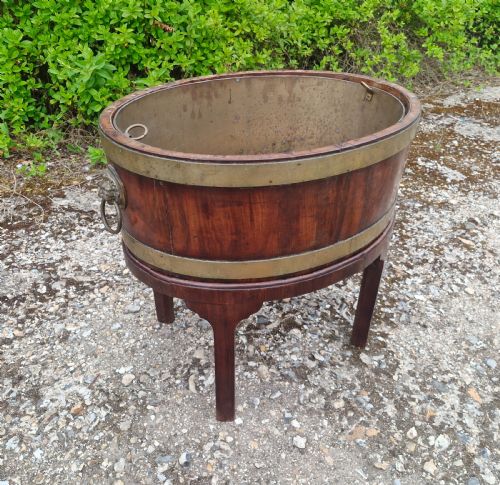
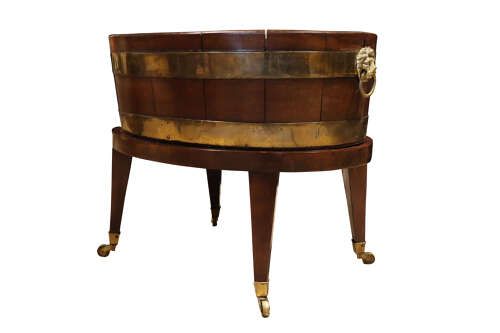


Lion Mask Planter
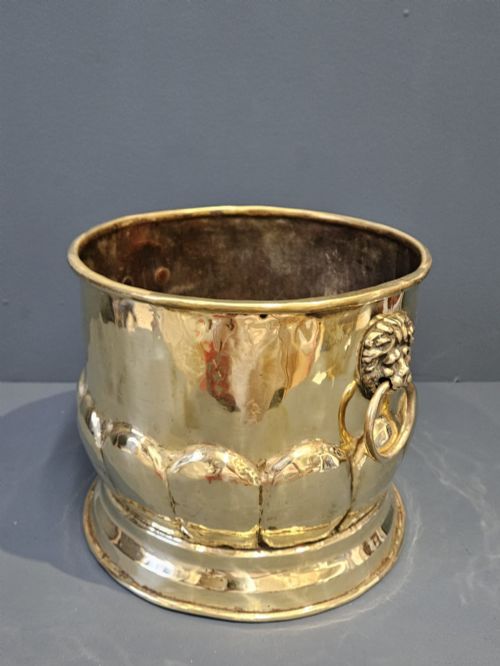
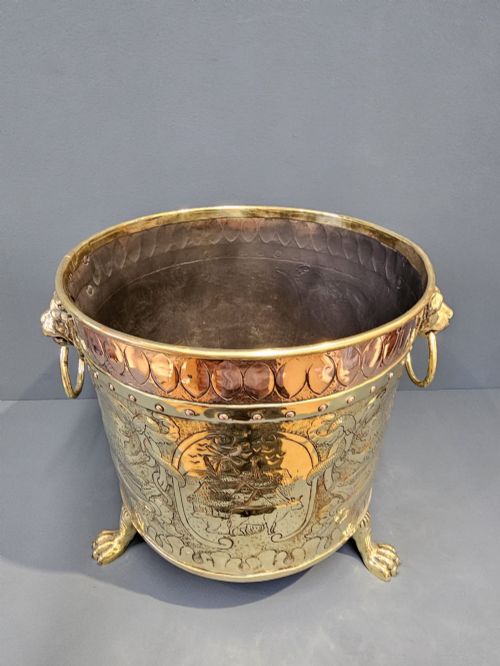
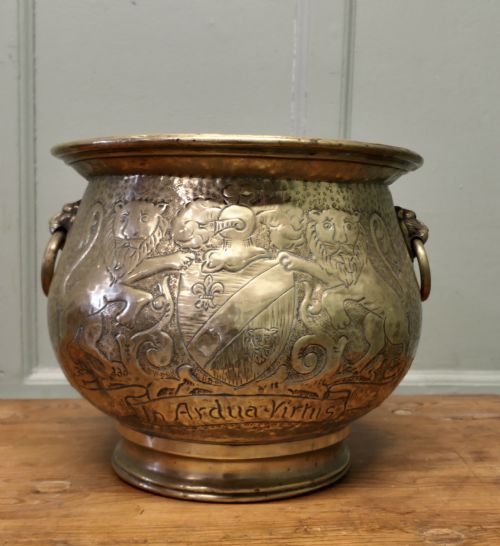
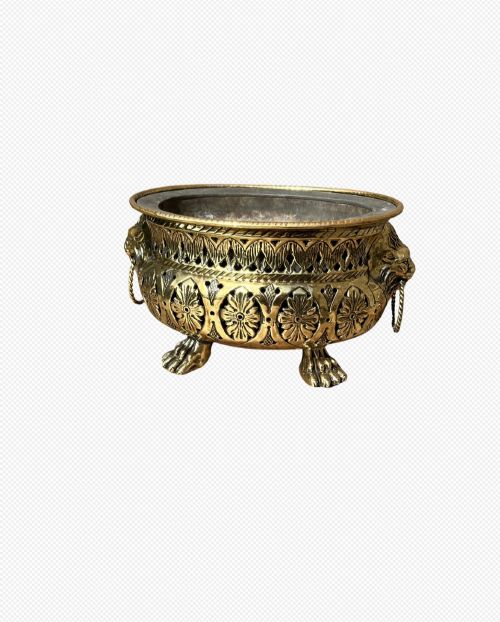
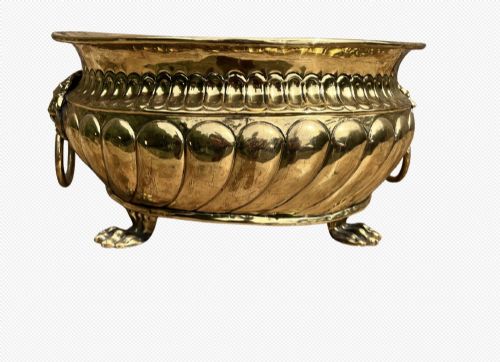
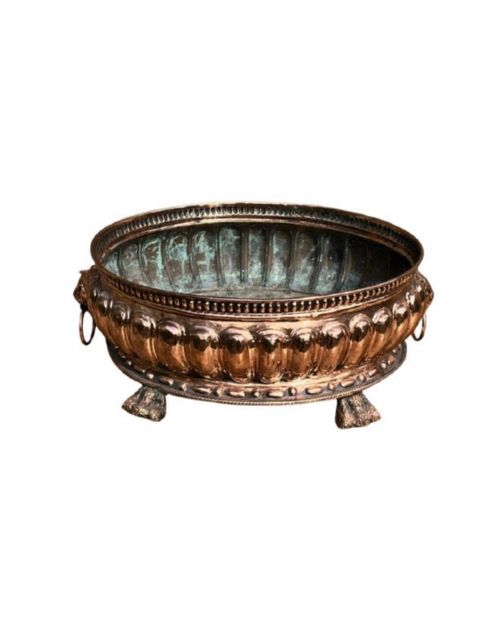
These lion mask planters bring robust sculptural relief to foliage, taking the form of brass, copper, and mahogany vessels intended to command a room.
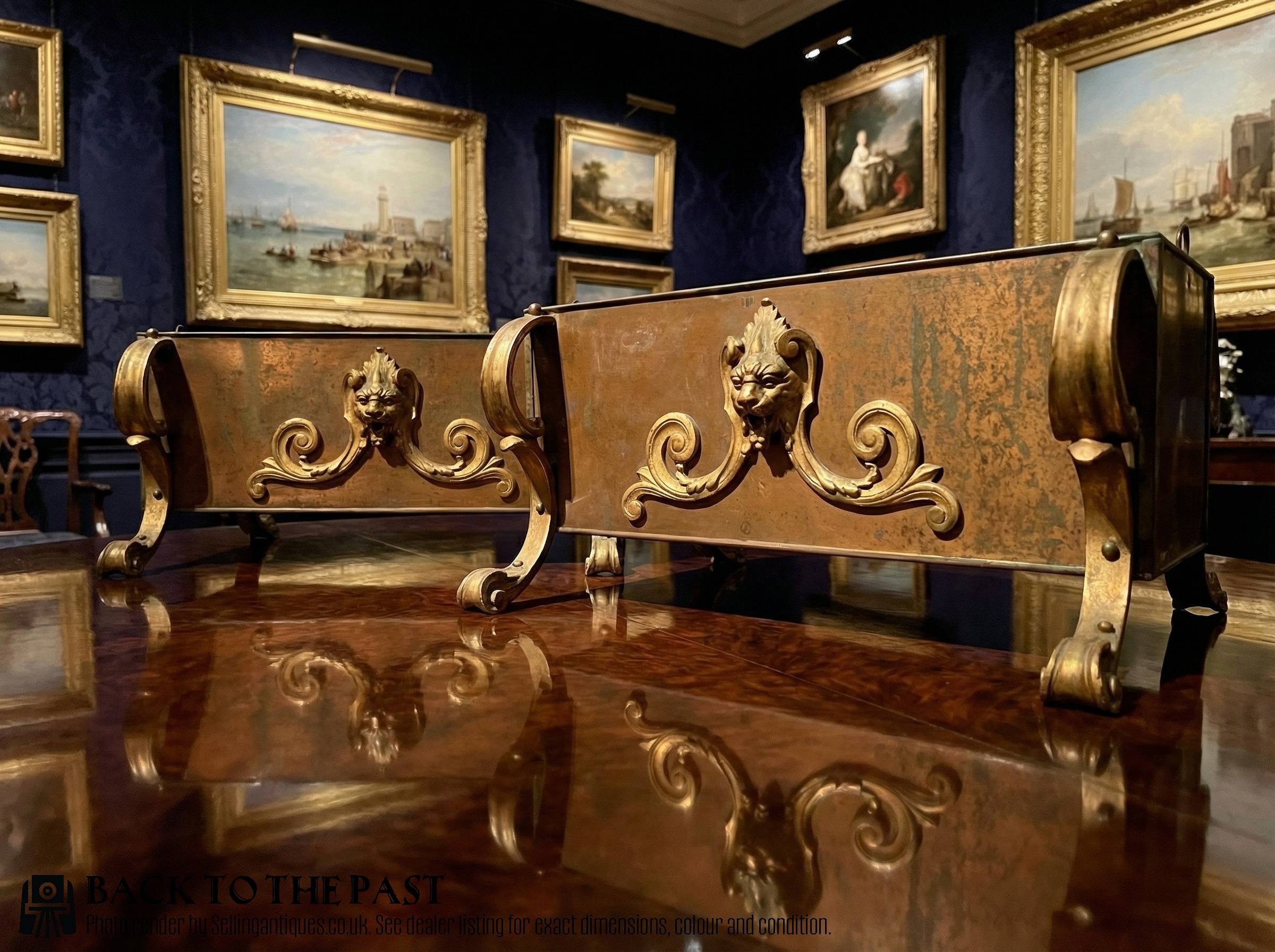
Lion Mask Planter
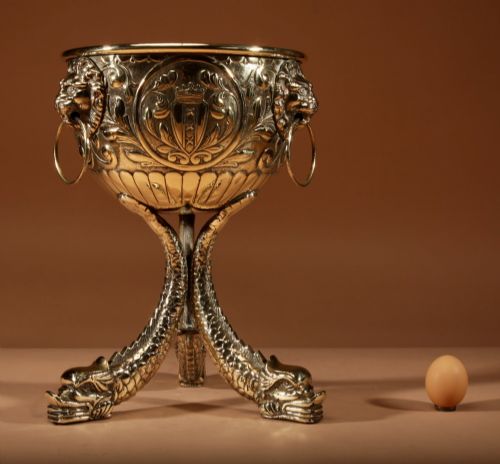
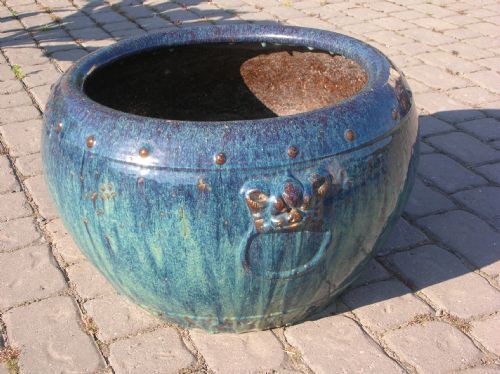
A lion mask planter takes several forms across the inventory, appearing most frequently as brass or copper jardinières, log bins, and wine coolers featuring cast animal-head mounts. Buyers seek these pieces for their ability to anchor a room with heavy metalwork or warm timber bound in brass.
The objects span multiple periods, with Victorian examples sitting alongside eighteenth-century Dutch brass vessels and Georgian mahogany wine coolers adapted for greenery. Forms vary from cylindrical vessels to handled cauldrons and pedestal-mounted urns.
Makers utilised these vessels historically for cooling wine or containing fuel before modern collectors repurposed them for indoor plants. The persistent inclusion of lion mask handles provides a distinct neoclassical or Gothic accent across diverse stylistic revivals.
Markers of quality and execution
Quality rests in the crispness of the cast metal mounts and the depth of the repoussé work on the body. Heavy-gauge brass and thick copper plate signal superior manufacture compared to thin, lightweight stamped metal.
Timber vessels demonstrate quality through tight coopered joints, substantial brass banding, and retained patination on the mahogany staves. The anatomical detail of the lion mask handles distinguishes ordinary production from finer workshop output.
The inventory records numerous variations of plant-holding vessels, including jardinières, log bins, wine coolers, cauldrons, and campana urns.
Minton
The Lion Mask Planter Glossary
- Repoussé
- A metalworking technique where the artisan hammers a design from the reverse side to create low relief on the front. This method gives brass and copper bodies their dimensional patterns.
- Jardiniere
- An ornamental pot or stand designed to hold flowers or indoor plants. These decorative vessels appear frequently in metal and ceramic.
- Coopered
- Built from wooden staves fitted together and bound with metal hoops, a traditional method used for large buckets and wine coolers.
- Campana urn
- A bell-shaped classical vessel on a footed base, often seen in stone, marble, or iron variants.
- Dinanderie
- A medieval and revival term for worked brass and bronze objects originating from the Meuse Valley region.
Lion Mask Planter: Frequently Asked Questions
What is a lion mask planter?
A lion mask planter is a decorative vessel, typically formed from brass, copper, or mahogany, featuring cast animal-head handles. These pieces range from nineteenth-century jardinières to adapted wine coolers.
Collectors prize them for the sculptural weight the metal mounts lend to botanical displays.
How were these vessels originally used?
Many metal and timber pieces began as wine coolers, ice buckets, or log bins before finding new life as plant containers. Domestic interiors of the eighteenth and nineteenth centuries adapted these sturdy receptacles for various functional needs.
The watertight nature of metal and coopered wood made them practical for holding melting ice or damp fuel.
How do I care for brass and copper?
Metal vessels require gentle dusting and occasional cleaning to preserve their surface stability without stripping historic patination. Avoid harsh chemical abrasives that can damage embossed relief work.
Using a liner inside the planter protects the interior metal from moisture and soil erosion.
How can I tell the period?
Dating relies on observing construction methods, such as hand-riveted joints, cast thickness, and timber grain. Styles like Gothic Revival, French Empire, and Arts and Crafts offer strong stylistic clues.
Secondary materials and wear patterns on the base further indicate the manufacturing era.