
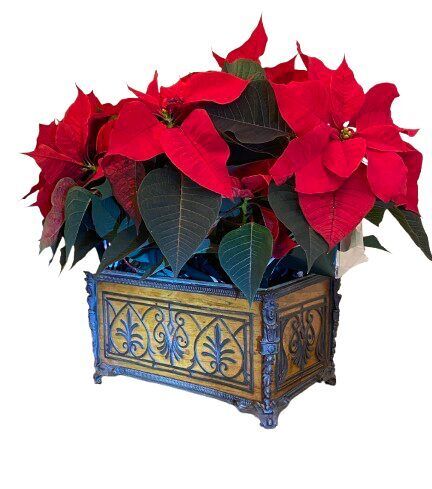


Antique Bronze Cachepot
An antique bronze cachepot brings heft and plant life together, channelling centuries of horticulture into a single vessel.
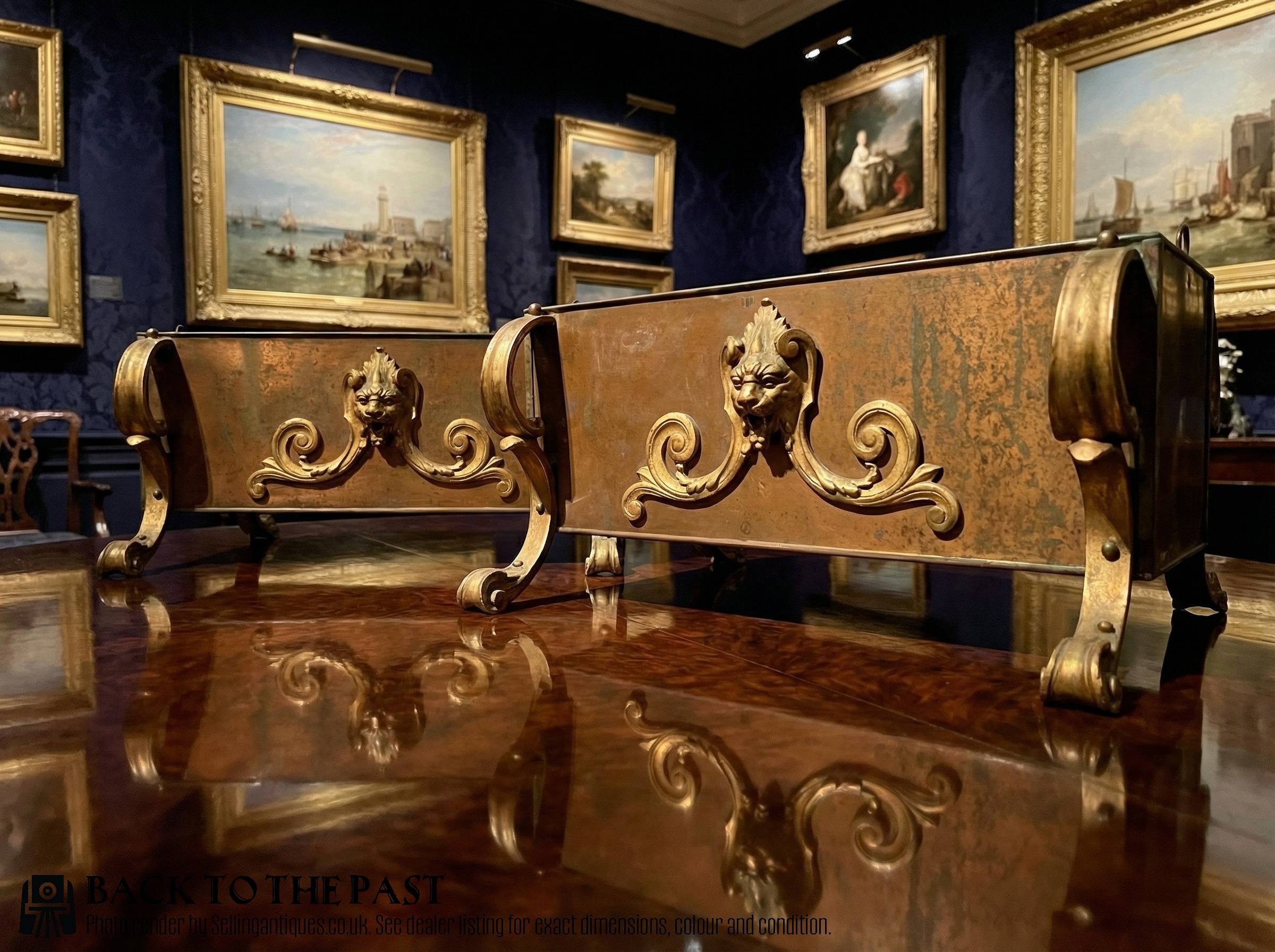
Antique Bronze Cachepot
An antique bronze cachepot functions as an ornamental container designed to house potted plants inside a room. When you search for this phrase, you encounter vessels that bridge botanical display and metalwork, often interchangeable with terms like jardinière or planter in the inventory.
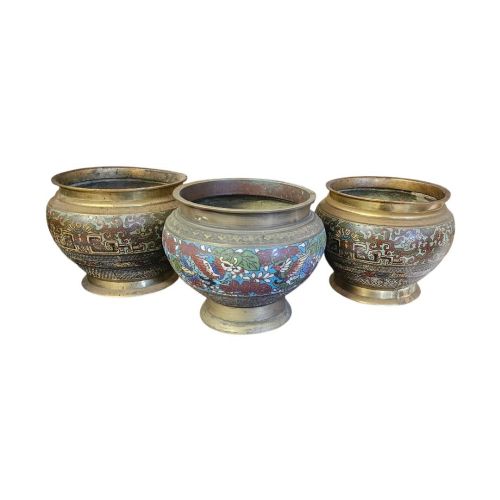
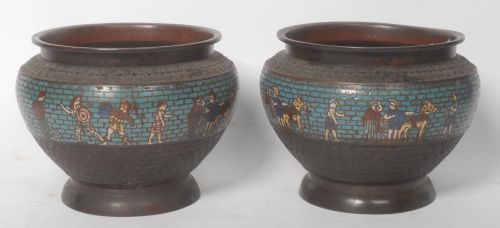
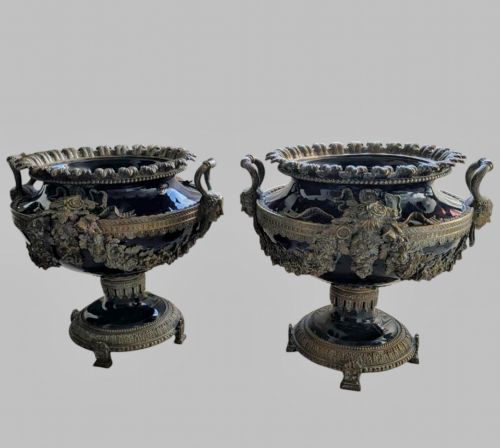
The pieces listed on this page span the nineteenth century and the early twentieth century, alongside specific periods such as the Meiji era and Georgian times. French and Oriental origins dominate, offering everything from heavy Chinese cloisonné bowls to refined French ormolu mounts.
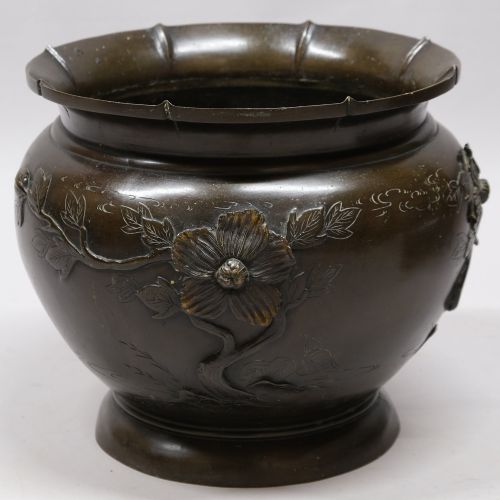
Forms vary from compact desk pots to substantial heavy bowls exceeding two kilograms. You are just as likely to find a Japanese bronze planter adorned with intricate casting as you are to meet a European revival piece utilising exotic woods and gilt bronze.
How they were made
Foundry work relied heavily on traditional casting techniques, producing thick bronze walls that often received hand-chased surface details or applied mounts. Makers frequently integrated contrasting materials, setting enamel, porcelain, or glazed ceramic directly into the metal framework.
Enamelling techniques such as champlevé and cloisonné feature prominently in Asian examples, where wire cells or hollowed troughs hold coloured pastes fired to a durable finish. European makers combined cast bronze and ormolu with olive wood, kingwood, or mahogany, joining timber and metal with precise cabinetmaking joints.
Materials range across solid bronze, brass, cloisonné enamel, porcelain, and secondary timbers like olive wood and kingwood.
What varies in quality
The distinction between ordinary and exceptional pieces lies in the crispness of the casting and the depth of the hand-finishing. Superior items display sharply defined motifs without the softness or pitting that suggests hurried production in the foundry.
Material integration also dictates merit, separating basic metal vessels from those featuring intricate cloisonné work, fire-gilded ormolu, or finely turned exotic hardwoods. Weight serves as an indicator of substance, with heavier bronze walls and substantial mounts reflecting more generous use of metal.
The Antique Bronze Cachepot Glossary
- Cachepot
- A decorative flowerpot cover designed to hide a plain inner pot. The word derives from the French meaning to hide the pot.
- Jardinière
- A large ornamental pot or stand for plants and flowers. It shares its root with the French word for gardener.
- Cloisonné
- An enamelware technique where thin metal wires form compartments on a metal base to hold coloured paste. Firing fuses the design before the surface is polished smooth.
- Ormolu
- Ground metallic gold applied to an object of bronze through a mercury amalgamation process. The term also describes high-grade brass cast in imitation of gilt bronze.
- Meiji Period
- A Japanese historical epoch spanning from eighteen sixty-eight to nineteen twelve. Work from this time often shows exceptional mastery of bronze casting.
Antique Bronze Cachepot: Frequently Asked Questions
What is a cachepot used for?
A cachepot serves to hold a potted plant inside the home while concealing the standard horticultural pot within its decorative walls.
Because these vessels lack drainage holes, they protect interior surfaces from water runoff when paired with a proper liner.
How do I care for antique bronze?
Maintenance requires only gentle dusting with a soft, dry cloth to prevent the accumulation of grit in crevices and chased details.
Harsh commercial polishes and abrasive cleaners must be avoided, as they strip the aged patina that centuries of handling have created.
Are cachepots watertight?
Many antique bronze vessels hold water naturally due to their metal construction, though older soldered seams or enamel interiors can develop microscopic leaks over time.
Placing a discreet plastic saucer inside the vessel safeguards the antique material against moisture damage and mineral deposits.
How do I identify a Meiji period piece?
Meiji period items originate from Japan between eighteen sixty-eight and nineteen twelve, a time when bronze production reached remarkable technical heights.
They typically display confident animal or floral motifs, deep patination, and heavy casting that distinguishes them from later reproductions.