
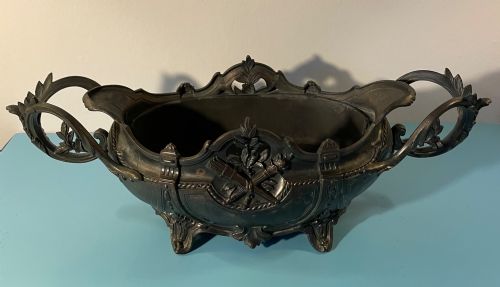
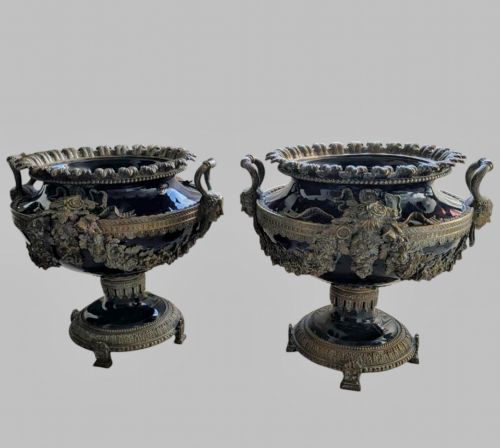


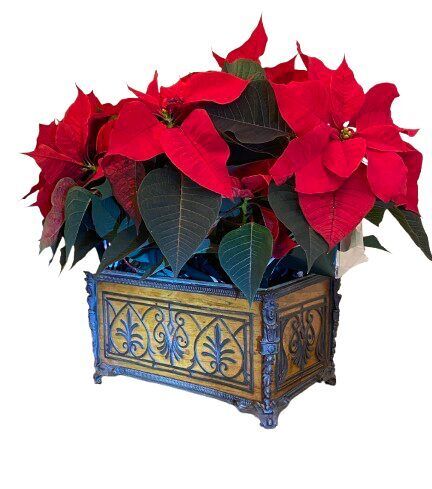


French Bronze Planter
These pieces of French bronze planter bring classical presence and botanical display together through cast metal and decorative mounts.
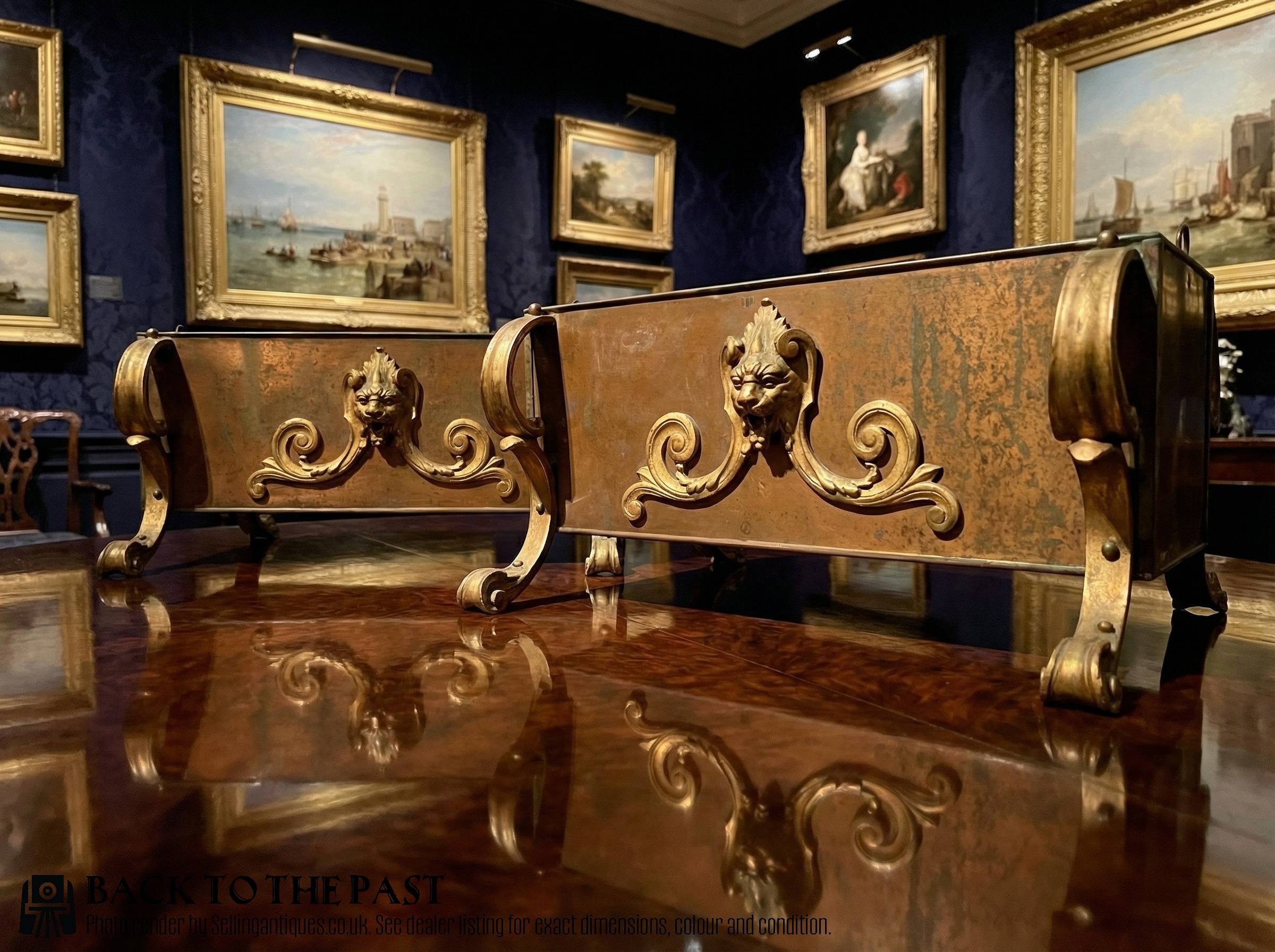
French Bronze Planter
A French bronze planter is a domestic vessel designed to hold plants or flowers, frequently encountered on this page in nineteenth-century manifestations such as jardinieres and jardiniere tables. Buyers look for these works to introduce decorative floral display into interior spaces utilising classical forms.
Makers and workshops produced these pieces in forms ranging from campana-shaped urns to marquetry-inlaid jardiniere tables. The selection balances decorative plant holders with architectural vessels that double as wine coolers.
How they were made
Craftsmen cast bronze and brass into intricate shapes, frequently applying mercury gilding to produce ormolu mounts. These metal elements combine with timber bodies including kingwood, burr walnut, satinwood, and ebonised wood.
Surfaces receive ceramic plaques, majolica porcelain, or cloisonne enamel panels inserted into the metal frameworks. Marquetry inlay and cut glass components further decorate the structures alongside zinc liners designed to hold moisture.
Listings feature nineteenth-century pieces combining bronze with materials including kingwood, burr walnut, porcelain, and cloisonne enamel.
What varies in quality
Quality rests upon the crispness of the bronze casting and the precision of the chased surface details. Superior examples exhibit fluid movement in rococo scrollwork or exact symmetry in neoclassical mounts.
The selection of secondary materials dictates overall merit, distinguishing simple timber boxes from pieces featuring intricate marquetry, porcelain plaques, or cloisonne enamel. Integrated liners and robust structural joinery separate standard production items from workshop pieces bearing attribution.
Barbedienne Paris·Samson
The French Bronze Planter Glossary
- Jardiniere
- An ornamental receptacle for holding flowers or plants. These vessels sit upon tables or floors within nineteenth-century interiors.
- Ormolu
- Gilt bronze produced by applying a finely ground high-carat gold-mercury amalgam to a bronze object. The process creates a rich golden finish characteristic of French decorative arts.
- Marquetry
- The art of applying pieces of veneer to a structure to form decorative patterns. Craftsmen utilise woods like kingwood and walnut for these geometric or floral designs.
- Campana
- A bell-shaped vessel form derived from ancient Roman pottery and metalwork. These classical urns appear frequently in nineteenth-century bronze manufacturing.
French Bronze Planter: Frequently Asked Questions
How do I care for a bronze planter?
Dust metal surfaces gently with a soft dry cloth without applying chemical polishes that strip original patination. Protect timber bodies and internal liners from standing water.
Ensure potted plants sit inside removable inner containers to prevent moisture accumulation against the bronze or wood.
Were these designed for indoor use?
Nineteenth-century workshops produced these vessels specifically for grand reception rooms, salons, and conservatories. Their refined mounts and delicate timber veneers suit sheltered domestic environments.
Placing them outdoors exposes the gilt bronze and wood marquetry to damaging humidity and temperature shifts.
What is the difference between a jardiniere and a planter?
The terms overlap significantly in nineteenth-century inventory records, though jardiniere often denotes a more decorative table-top vessel. Planters can encompass larger free-standing stands or wine coolers.
Both categories utilise bronze mounts and fitted metal liners to accommodate living greenery.
How can I identify a nineteenth-century piece?
Examine the casting quality of the bronze and the construction methods used for the timber frames and liners. Nineteenth-century examples display hand-chased metalwork and traditional joinery.
Stylistic markers like Napoleon III or Louis XV revival motifs point directly to this manufacturing era.