

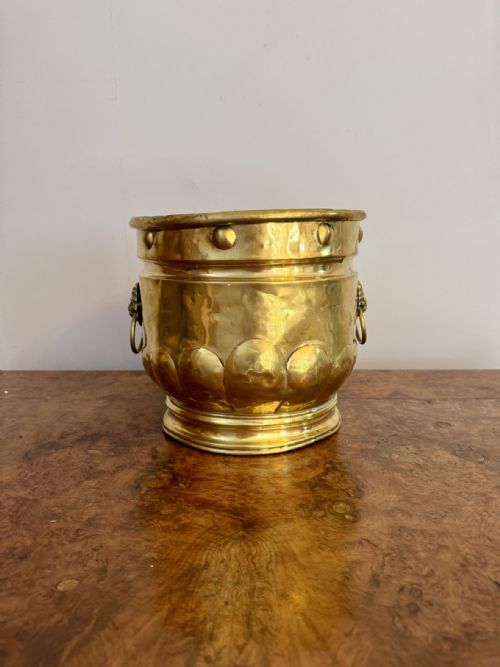


Lion Head Cachepot
These lion head cachepot vessels bring heavy metal character to interior planting, offering tactile cast handles and centuries of decorative tradition.
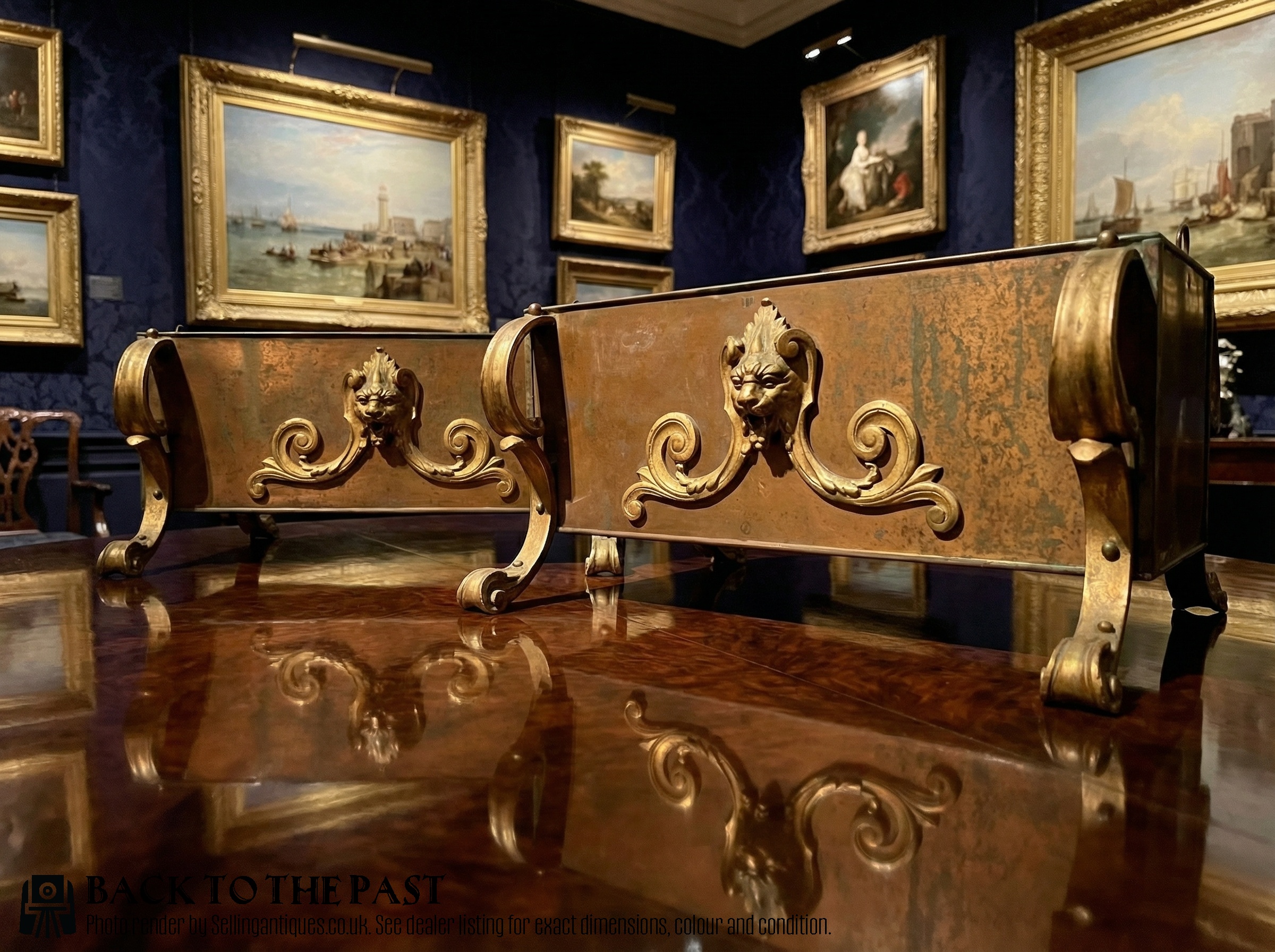
Lion Head Cachepot
The search phrase lion head cachepot covers plant vessels and jardinieres distinguished by prominent feline mask handles. These pieces range from eighteenth-century Dutch vessels to late-nineteenth-century Victorian and Edwardian examples in various metals and ceramics.
Most entries on this page take the form of heavy brass, bronze, or copper planters designed to hold potted plants indoors. Styles stretch across Gothic Revival, Arts and Crafts, and French Baroque idioms, all united by cast animal masks serving as structural mounts or decorative pulls.
Materials and construction methods
Makers utilised heavy sheet metals like brass and copper, shaping the bodies through hand-hammered repoussé work to create textured relief patterns. Cast bronze and ormolu components provide the robust lion masks and paw feet found on French and English models.
Ceramic versions appear in glazed earthenware, notably majolica, where moulded details receive rich coloured glazes before firing. Metal seams are typically joined with traditional soldering or riveting, while handles are secured firmly to bear the weight of damp soil.
Lion Head Cachepot Retail Price Guide 2026
Typical asking prices for lion head cachepot among the pieces listed under this phrase on Sellingantiques today, from the lower quarter to the upper quarter. They describe what is for sale here now, not the wider market.
Every single lion mask handle watches the room with silent, ferocious dignity while quietly holding a potted fern.
Judging quality and craftsmanship
The integrity of construction separates standard production pieces from superior examples, visible in the weight of the metal and the secure attachment of handles. Superior ceramic models display smooth, even glaze application across intricate moulded reliefs without pooling or running.
Minton
The Lion Head Cachepot Glossary
- Cachepot
- An ornamental container designed to hold an ordinary flowerpot and catch drainage water. These vessels sit directly on furniture without saucers.
- Repoussé
- A metalworking technique where the artisan hammers the design from the reverse side to form raised relief on the front. This method creates tactile surface decoration on brass and copper bodies.
- Ormolu
- Finely ground high-carat gold mercury-gilded onto a bronze object, common in French decorative arts. This finish provides a warm, lasting metallic lustre.
- Majolica
- A type of earthenware glazed with tin-enamelled lead glaze, painted with metallic oxide colours. It yields vibrant greens, blues, and browns on Victorian planters.
- Jardiniere
- A large ornamental pot or stand for plants and flowers. These stand as the primary vessel category sharing space with cachepots.
Lion Head Cachepot: Frequently Asked Questions
What is a lion head cachepot used for?
These vessels serve primarily to house potted indoor plants, hiding standard nursery pots inside decorative metal or ceramic containers.
They function as table centerpieces or floor planters, adding sculptural weight to domestic plant displays.
How do I date a brass planter?
Dating relies on manufacturing marks, construction techniques like hand-hammering versus machine rolling, and stylistic cues from periods such as Arts and Crafts or Gothic Revival.
Material composition and wear patterns also help establish the approximate decade of manufacture.
Can I plant directly inside them?
Planting directly into antique metal or ceramic vessels risks moisture damage and corrosion over time. Placing a separate plastic liner inside protects the interior from damp soil and standing water.
How do I clean antique brass and copper?
Dusting with a dry cloth preserves the aged patina that collectors value on older metalwork. Aggressive metal polishes remove historical surface darkening and diminish the visual depth of the piece.