
Lion Mask Handles
Lion mask handles add architectural weight to sideboards, tea caddies, and planters through cast metal ornamentation.
Lion Mask Handles
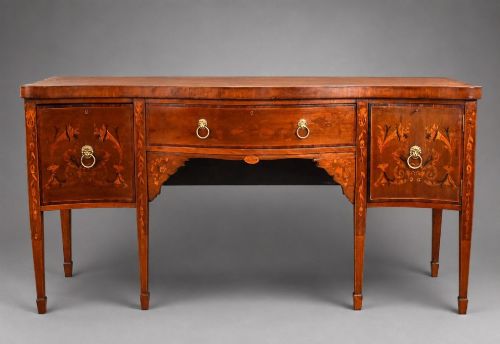
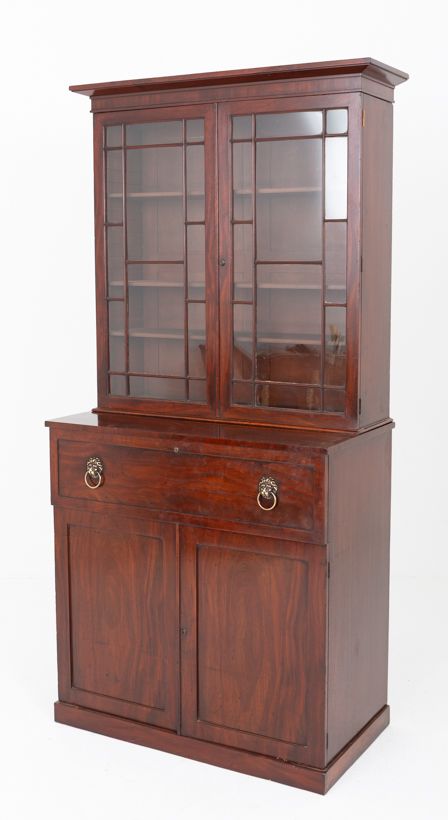
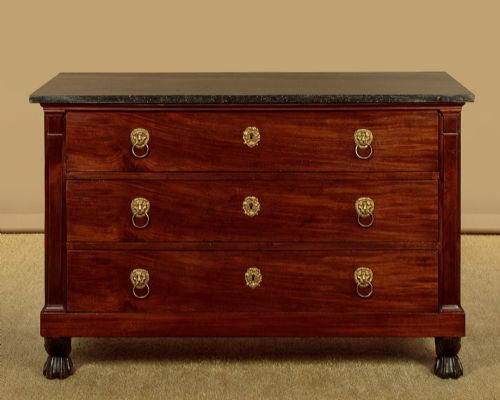
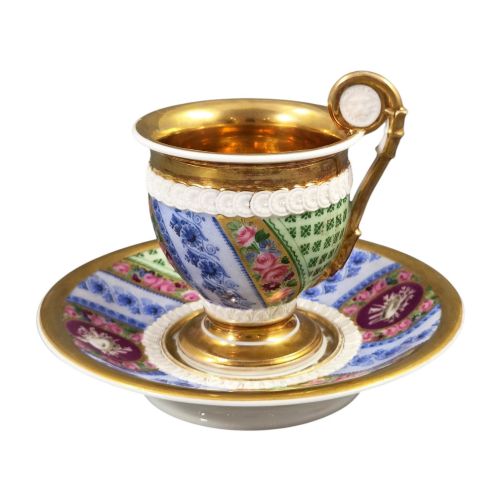
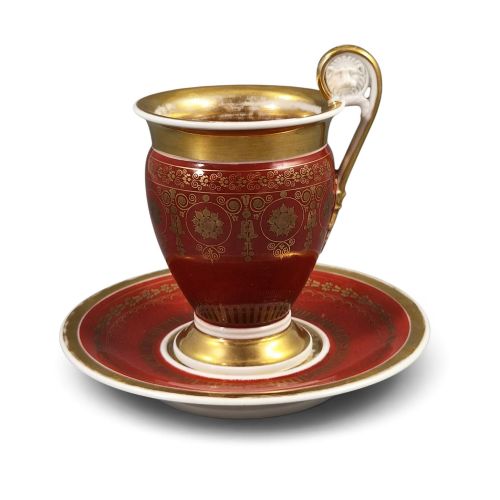
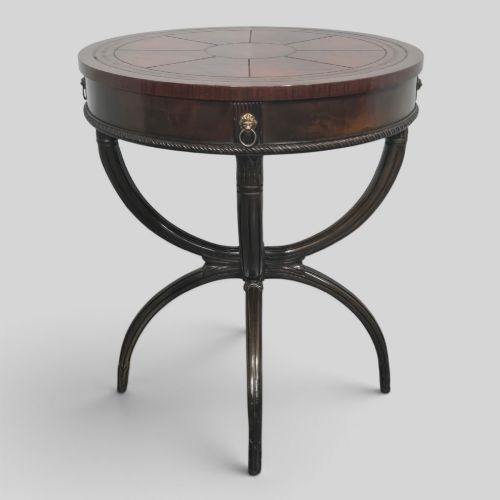
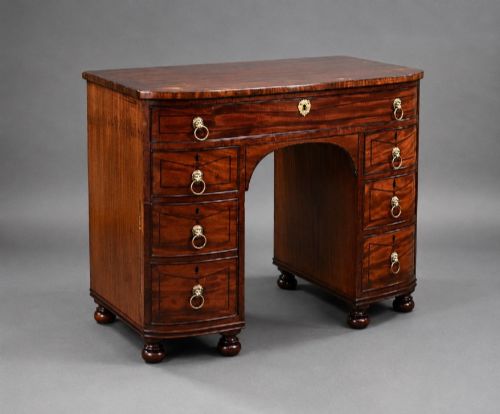
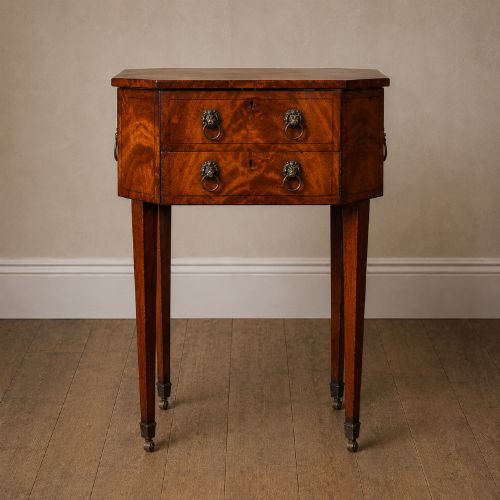
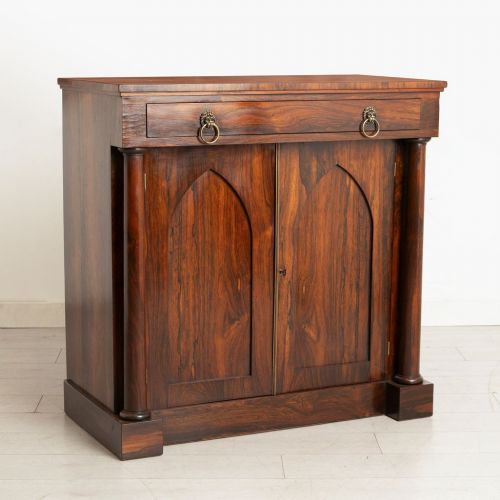
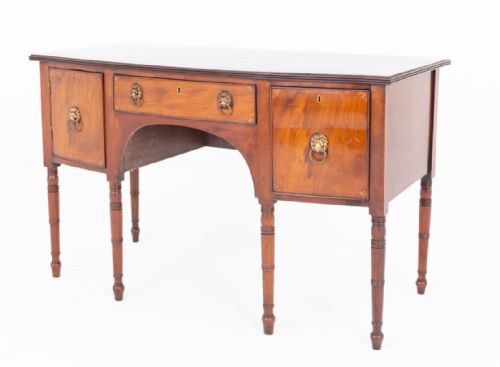
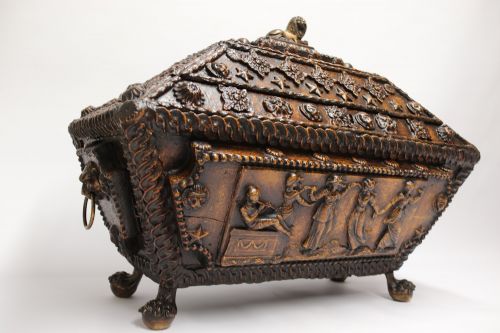
When you search for lion mask handles, you encounter functional mounts cast or stamped in the shape of a lion's face, frequently holding a drop ring in its jaws. These ornamental fixtures appear predominantly on case furniture and metalware from the Georgian, Regency, and Victorian periods.
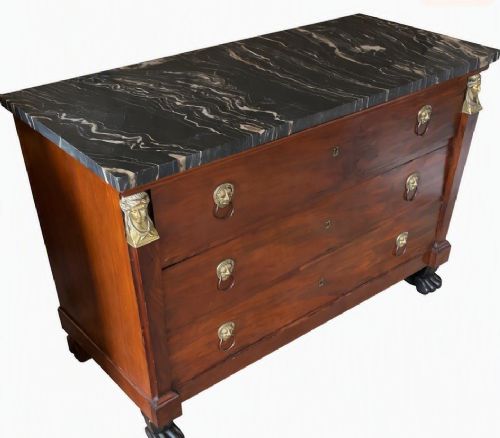
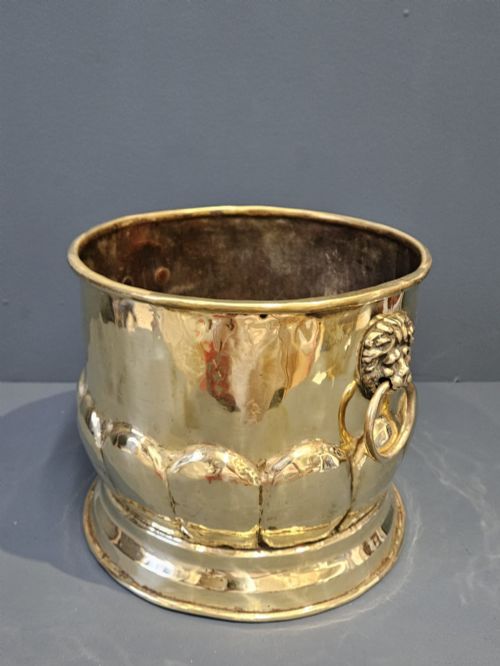
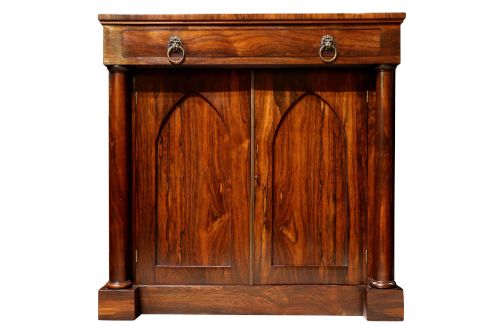
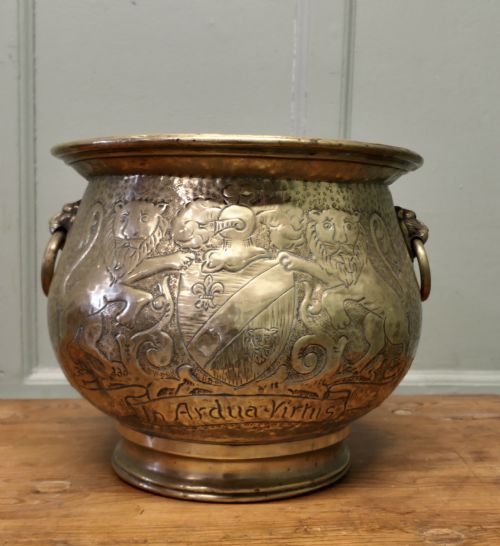
On this page, you meet these masks most often attached to large mahogany sideboards, rosewood tea caddies, and heavy brass or copper jardinieres and log bins. The forms span dining room storage, small desk boxes, and fireside vessels intended to hold fuel or plants.
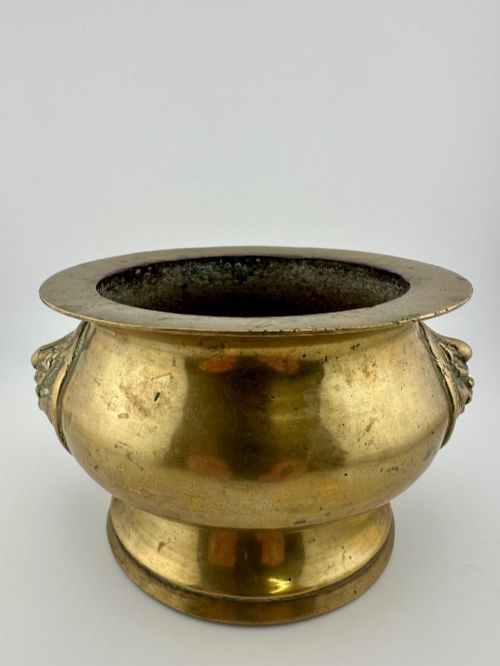
The objects originate from British and French workshops, with occasional examples extending into Chinese bronze censers. Their presence alters the character of a piece, transforming plain cabinetry or utilitarian metal buckets into neoclassical statements.
Materials and Construction
The evidence shows handles cast chiefly in brass, bronze, and copper, alongside silver and silver plate on smaller vessels like caddies and cream jugs. These metals are fixed to timber carcases built from mahogany, rosewood, satinwood, and oak.
Cabinet makers secured the metal mounts through the wood with threaded posts and internal nuts, ensuring the heavy drop rings could bear the weight of pulling open deep drawers or lifting wine coolers. Metalware pieces rely on soldered or riveted construction to attach the masks directly to the vessel walls.
Even a silver cream jug wears a lion mask.
Judging Quality
Originality defines the upper tier of pieces, particularly when the handles retain their period fixings on furniture like Regency chests of drawers and sideboards. Secondary woods, clean interior drawer linings, and precise cabinet proportions separate standard production from superior work.
The Lion Mask Handles Glossary
- Lion mask handle
- A decorative mount shaped like a lion's face, often gripping a movable metal ring used to pull a drawer or lift a vessel. These appear across furniture and metalware.
- Jardinerie
- An ornamental pot or stand designed to hold growing plants or flowers. In the evidence, these frequently incorporate copper or brass bodies with ring handles.
- Tea caddy
- A small box constructed to store loose tea leaves, often fitted with a lock and internal compartments. Examples in rosewood and mahogany regularly utilise mask mounts.
- Chiffonier
- A compact sideboard or tall chest of drawers developed during the Regency period. They frequently feature panelled doors and decorative metal hardware.
- Cellarette
- A lockable container used to hold bottles of wine near the dining table. They are often bound in brass or built into the form of a low chest of drawers.
Lion Mask Handles: Frequently Asked Questions
What are lion mask handles made from?
The handles themselves are formed from cast brass, bronze, copper, or silver, depending on the nature of the object they adorn.
They appear mounted onto furniture built from dense hardwoods like mahogany and rosewood, or attached directly to metal vessels such as copper log bins and brass planters.
Which furniture pieces have lion mask handles?
These mounts are most commonly found on large dining room sideboards, serving tables, and breakfront cabinets from the Georgian and Regency eras.
They also appear on smaller items including tea caddies, jewellery boxes, games tables, and heavy fireside containers like coal buckets and wine coolers.
How do I care for brass handles on wood?
Maintenance involves dusting the metal gently with a dry cloth to prevent the accumulation of dirt in the recessed details of the casting.
Harsh metal polishes should be avoided on antique furniture to protect the surrounding timber and preserve the natural patination built up over centuries.
Are lion mask handles period-specific?
While they appear across multiple eras, they are particularly characteristic of neoclassical design movements spanning the Georgian, Regency, and early Victorian periods.
Later revival pieces from the late nineteenth century also utilise the motif, drawing directly on these earlier neoclassical and Gothic revival styles.