
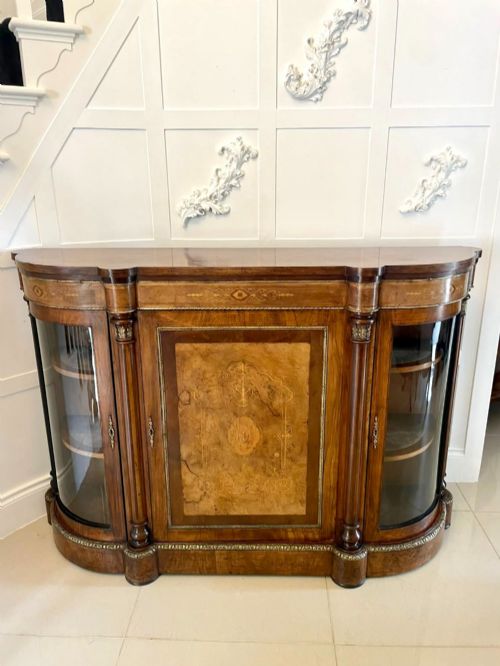
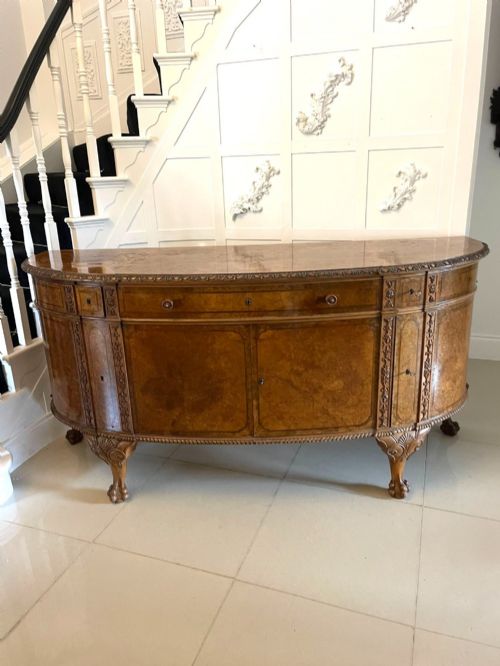
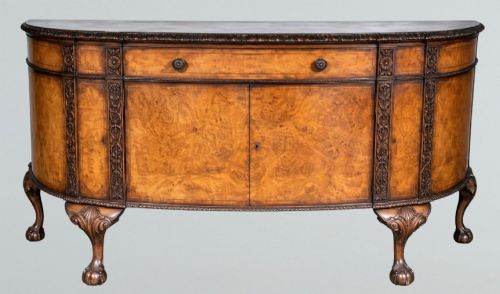
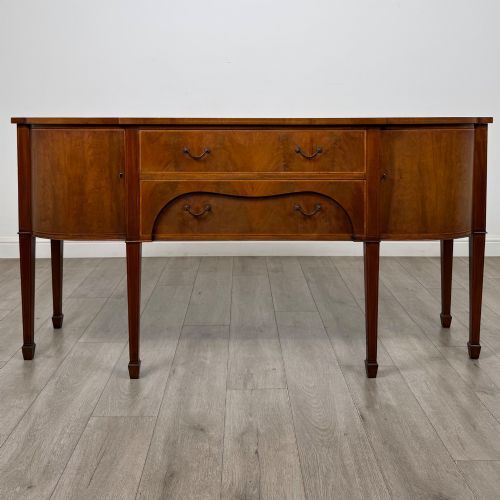
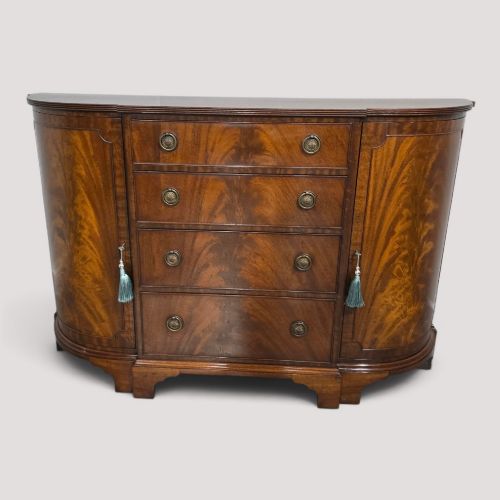
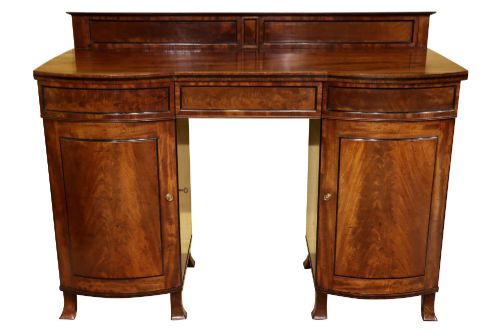
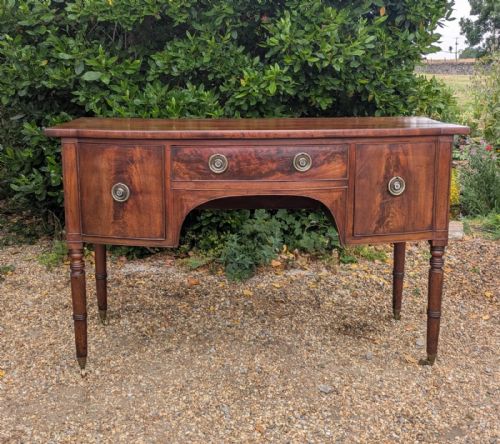
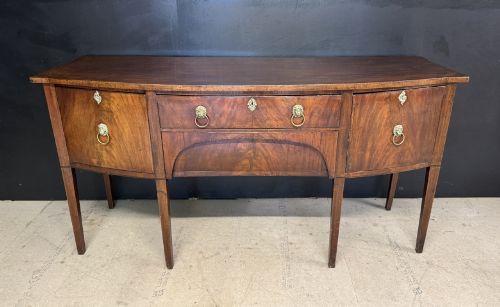
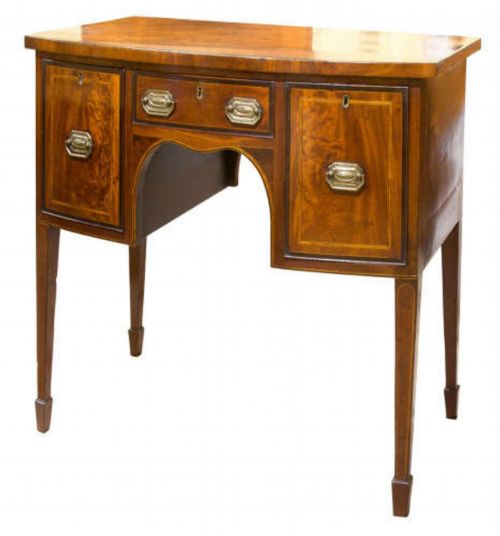
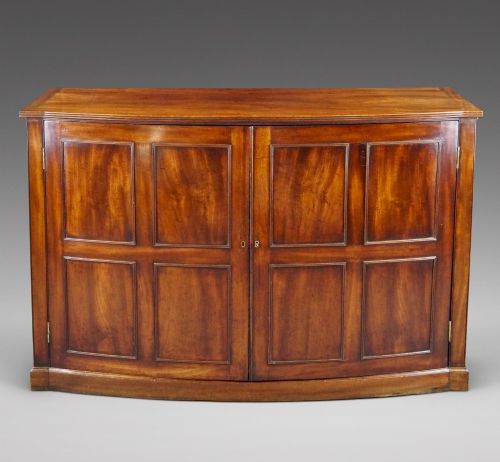
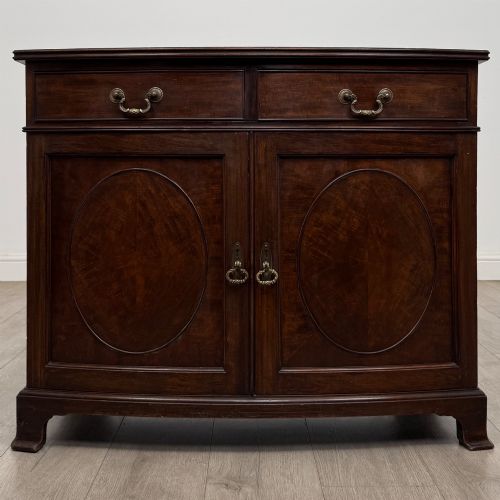
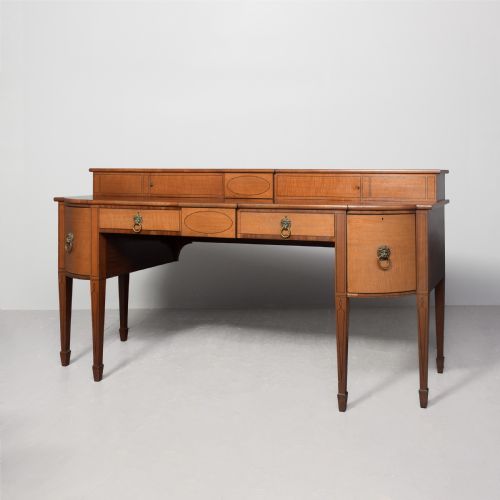
Bowed Front Sideboard
A bowed front sideboard brings curved elegance to a dining room, offering ample storage behind a sweeping silhouette that catches the eye.
Bowed Front Sideboard
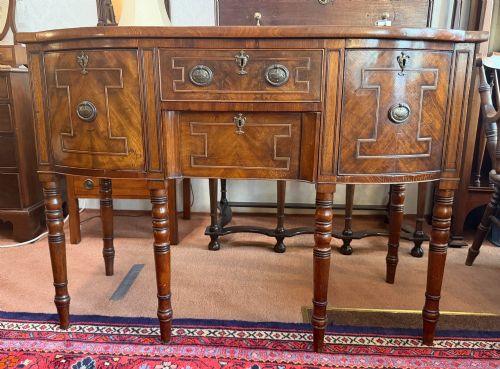
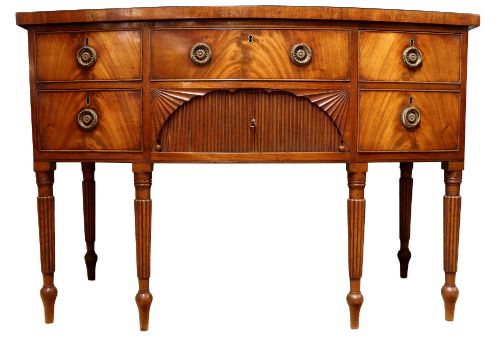
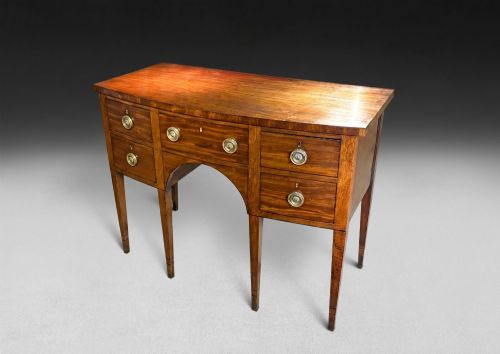
A bowed front sideboard is a substantial dining room furnishing designed for serving and storage, defined by a gently curving convex facade. When searching for a bowed front sideboard, buyers encounter numerous examples spanning the Georgian, Regency, Victorian and Edwardian eras.
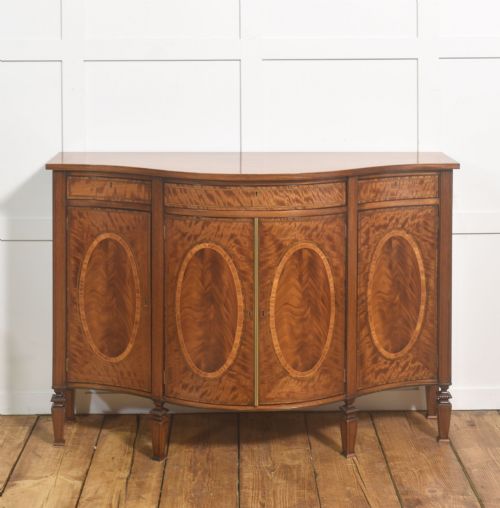
The pieces on this page range from grand 18th-century George III mahogany servers to compact early 20th-century Edwardian cupboards and satinwood side cabinets. While many retain their original utilitarian purpose for cutlery and linens, others appear as smaller side tables or decorative sideboards.
Makers and cabinetmakers across these periods utilised the curved profile to soften the long rectangular lines of a traditional dining room. Mahogany remains the dominant timber across the selection, accompanied by rich burr walnut and lighter satinwood.
Materials and construction methods
Cabinetmakers constructed these sideboards primarily using solid mahogany and mahogany veneers over secondary timbers, often accentuating the curved facade with contrasting stringing and banding in boxwood or purpleheart. Timber selection was paramount for the bowed front, as the wood needed to be manipulated or expertly cut to hold the convex curve without warping over decades of use.
Surface decoration frequently involved intricate marquetry inlay, particularly in Edwardian and Sheraton Revival pieces where satinwood panels provide a bright contrast to darker framing woods. Brass handles, escutcheons and occasional ormolu mounts complete the hardware, while glass appears in related cabinets and sideboards designed for display.
Some narrow 18th-century server variations come accompanied by solid silver mounts for housing delicate cutlery.
Judging the quality of execution
Quality in a bowed front sideboard rests upon the crispness of the joinery and the harmonious grain selection across the curved drawer fronts and doors. Superior examples display continuous, matched veneer sweeping seamlessly across multiple drawers rather than mismatched offcuts.
The handling of secondary woods inside the drawers, the weight and original patination of the brass hardware, and the subtlety of inlaid stringing distinguish standard workshop production from master cabinet work. Proportions also dictate standing, with smaller or narrower proportions often commanding greater craftsmanship due to the difficulty of curving timber tightly.
The Bowed Front Sideboard Glossary
- Banded
- A narrow strip of contrasting timber inlaid around the perimeter of a drawer front or tabletop. This technique creates a neat border that defines the curved facade.
- Stringing
- Very thin lines of inlay used to outline panels and drawers. It adds delicate linear detail to mahogany and satinwood surfaces.
- Pedestal sideboard
- A form featuring distinct side cabinets or pedestals flanking a central section. These configurations often date from the Regency and late Georgian periods.
- Stage-back
- A raised tier or superstructure at the rear of a sideboard top. It provides extra display space or shelving for plates and serving dishes.
- Marquetry
- Elaborate decorative patterns formed by fitting together small pieces of veneer. It appears frequently on Edwardian and Sheraton Revival pieces.
- Patina
- The soft sheen and mellow appearance developed on timber surfaces over centuries of handling and polishing. It signals age and regular care.
Bowed Front Sideboard: Frequently Asked Questions
What is a bowed front sideboard?
A bowed front sideboard is a large dining room cabinet featuring a convex, curved front designed for storage and serving.
These pieces emerged strongly in the 18th century and continued through the Georgian and Victorian periods with varied timber finishes.
How were these sideboards used originally?
They served as central furniture pieces in dining rooms for holding cutlery, serving dishes, and linens during meals.
Cabinets and cupboards within the design provided enclosed storage while the top surface held food dishes before serving.
How do I identify a Georgian piece?
Georgian sideboards typically feature solid mahogany construction with understated brass handles and tapered legs.
Earlier examples from the 18th century often display precise crossbanding and superior timber patination without heavy ornamentation.
What is the difference between Georgian and Edwardian styles?
Georgian sideboards rely on architectural dignity, rich mahogany grains, and simple stringing for their visual appeal.
Edwardian interpretations often draw on Sheraton Revival influences, incorporating lighter satinwood, delicate marquetry, and painted details.
Where should I place a sideboard at home?
They suit dining rooms or large hallways where their curved profile softens straight architectural lines.
Their shallow depth relative to standard tables allows them to sit comfortably against walls without blocking walkways.