
Antique Small Credenza
An antique small credenza brings compact storage and rich timber figure into a room without dominating the floor space.
Antique Small Credenza
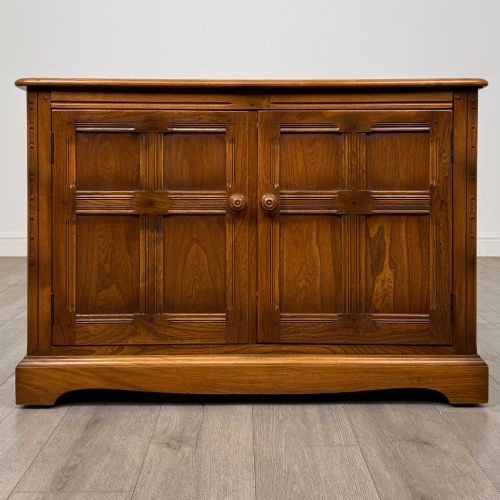
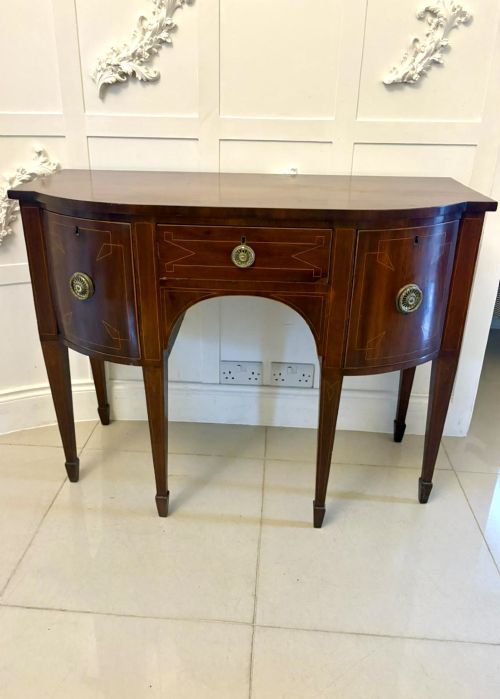
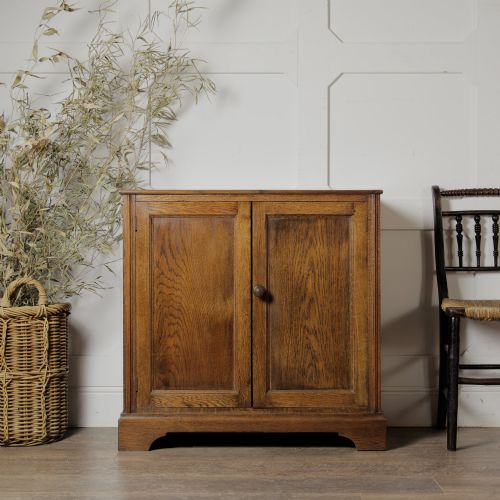
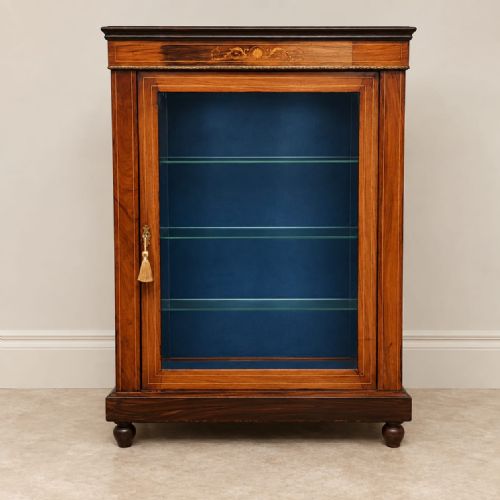
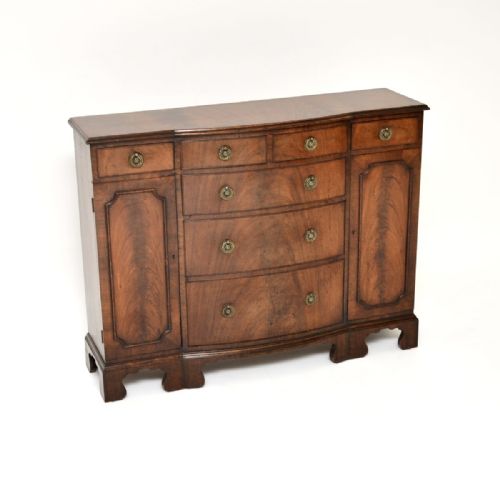
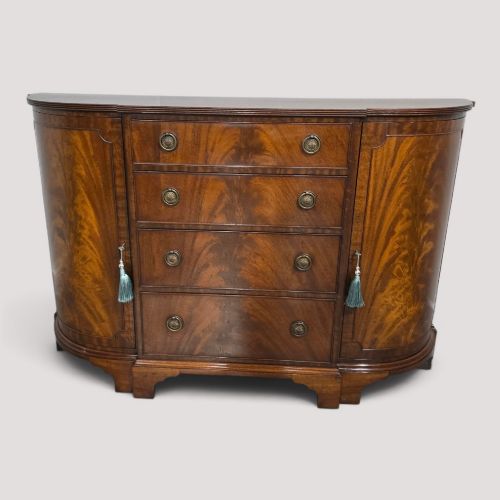
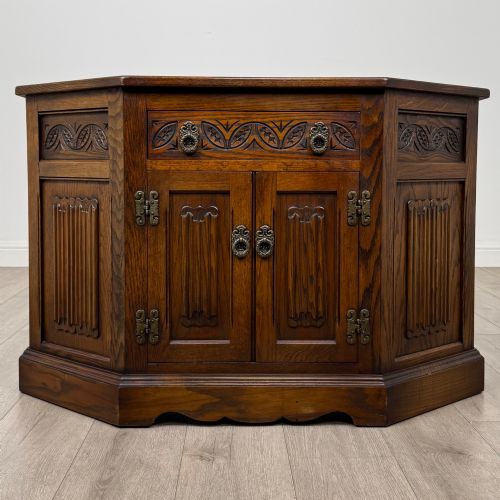
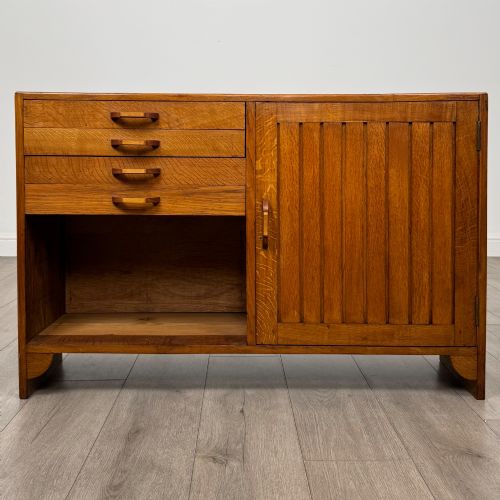
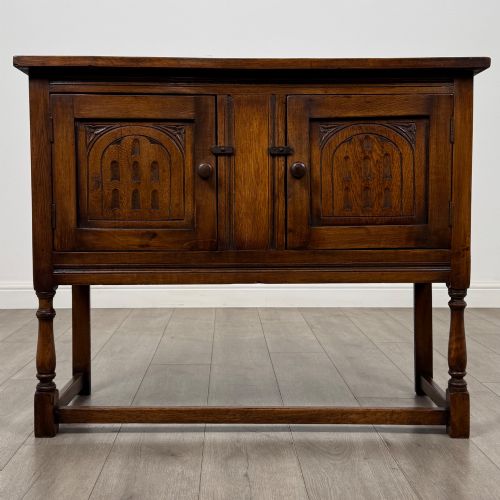
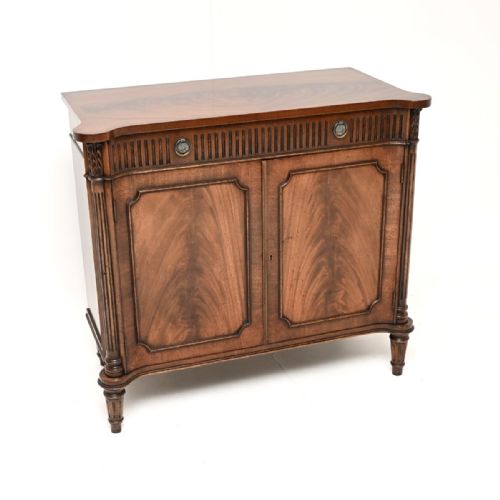
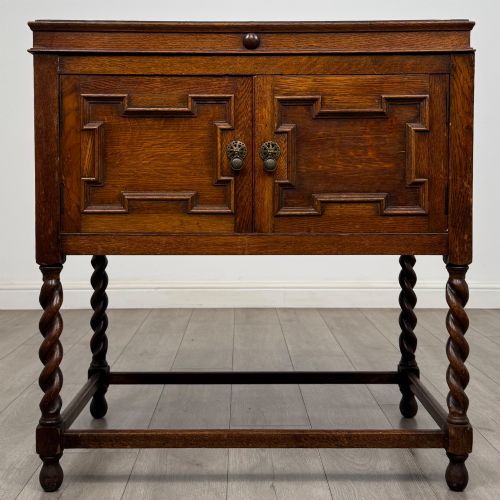
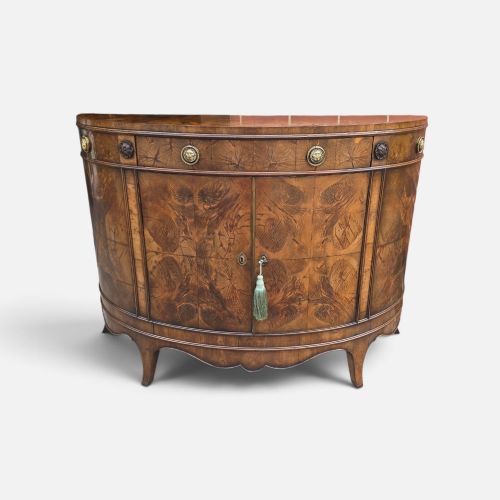
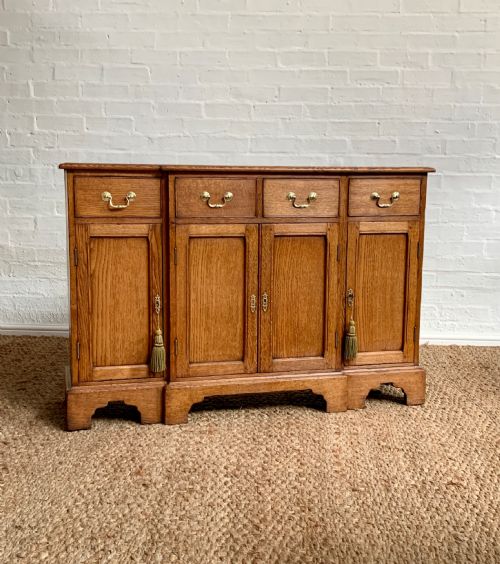
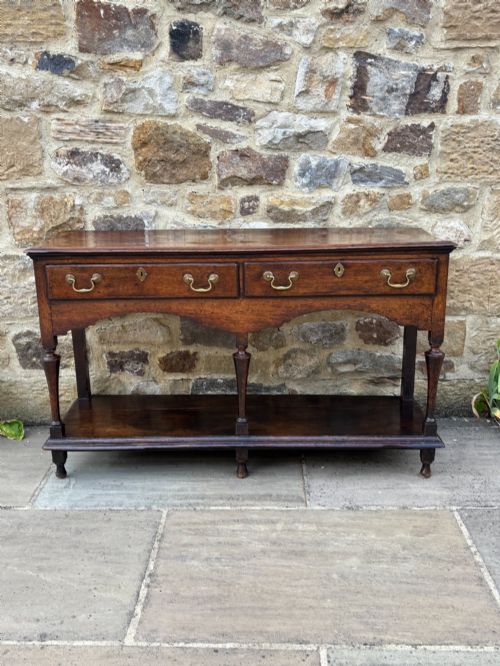
When you search for an antique small credenza, you encounter compact statement furniture that spans periods from Georgian to Victorian and Edwardian. These low-profile pieces double as sideboards, chiffoniers, and display cabinets, designed to hold dining ware or display prized possessions in smaller drawing rooms.
Buyers look for these low cabinets to anchor a dining area or hallway where full-sized sideboards prove too cumbersome. The scale remains inherently domestic, offering practical surface space alongside enclosed shelving or drawers.
How they were made
Cabinetmakers constructed these pieces using solid timbers like oak and mahogany for structural integrity, applying burr walnut, rosewood, and satinwood veneers to prominent surfaces. Brass hardware, ormolu mounts, and delicate boxwood stringing provided decorative contrast against the dark wood grains.
Joinery techniques relied on traditional dovetailed drawer boxes and mortise-and-tenon frames that allowed timber to breathe naturally over centuries. Glass panels in display cabinets were hand-blown or early cast, secured neatly within timber or brass framing bars.
Listings feature woods spanning mahogany, oak, rosewood, walnut, boxwood, and burr walnut across periods from the 17th century to Art Deco.
What varies in quality
The degree of ambition in the timber selection defines the upper tier of these pieces, particularly when makers utilised highly figured burr walnut, purpleheart banding, or matched mahogany flames. Superior examples exhibit seamless veneer work that wraps symmetrically across curved bow-fronts and serpentine doors.
Construction crispness separates standard workshop output from finer commissions, visible in the hand-cut precision of dovetails and the fluidity of inlaid stringing. Original brass mounts, sound cabinet doors, and untouched patination elevate a piece far above utilitarian alternatives.
Heals of London·Maple and Co
The Antique Small Credenza Glossary
- Credenza
- A low cabinet or sideboard, historically used for serving food or displaying plate. Victorian examples often feature glass doors and elaborate ormolu mounts.
- Chiffonier
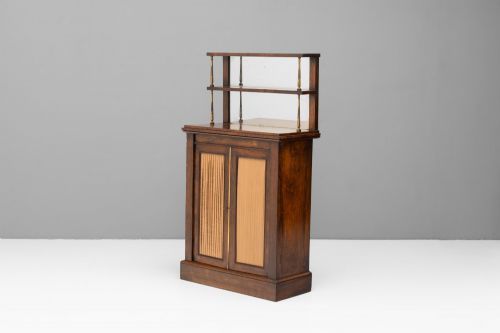
- A compact sideboard equipped with a raised shelf or small cupboard superstructure on top. They became popular during the Regency and Victorian eras for parlour storage.
- Bow-front
- A convex, outwardly curved cabinet front that requires skilled joinery to shape timber smoothly. This profile maximises internal storage while softening room angles.
- Ormolu
- Gilded bronze ornamentation applied to furniture mounts, popular in mid-19th century revival pieces. It adds metallic lustre against dark walnut and rosewood surfaces.
- Inlay
- The technique of embedding contrasting woods, brass, or shell into a solid wood surface to form geometric or floral patterns. Boxwood and ebony are frequently utilised for this detail.
Antique Small Credenza: Frequently Asked Questions
Where should I place a small credenza?
These compact cabinets suit narrow hallways, dining rooms, or living spaces where standard sideboards overwhelm the floor plan. Their low height also makes them ideal surfaces for table lamps or decorative objects beneath a wall mirror.
Ensure you measure the clearance for opening doors or drawers, particularly in tight alcoves. Their shallow profile allows them to sit comfortably behind seating arrangements or along transitional corridors.
How do I care for antique wood surfaces?
Maintain the finish by dusting regularly with a soft, dry cloth and avoiding modern silicone-based polishes. Occasional application of traditional beeswax helps nourish old timber without building up sticky residues.
Keep these cabinets away from direct sunlight and strong heat sources to prevent timber shrinkage and veneer lifting. Maintaining a stable room humidity preserves both the wood and the delicate stringing.
What is the difference between a credenza and a chiffonier?
A credenza typically presents a low, uniform profile with cupboards or glass doors spanning the entire width. They evolved to display fine objects and store dining accessories within formal reception rooms.
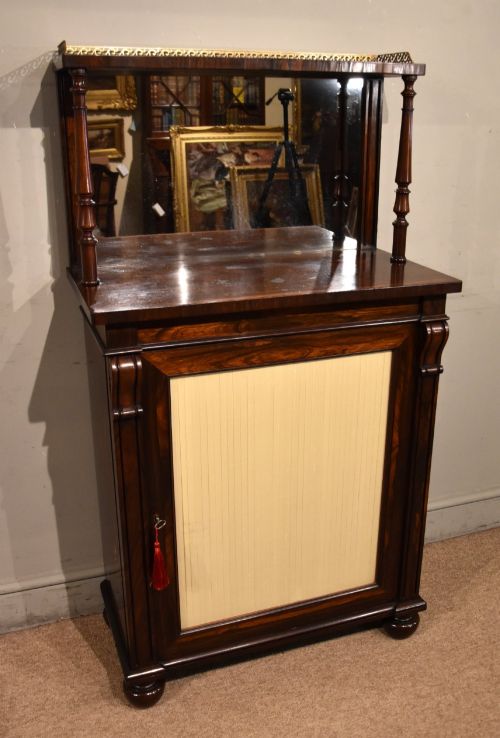
A chiffonier usually includes a small raised gallery shelf or mirrored superstructure upon the top surface. This added height provides an extra tier for ornamental display while maintaining a compact footprint.
How can I tell Georgian pieces from Victorian ones?
Georgian cabinets often display restrained classical proportions, featuring straight-grained mahogany, subtle bracket feet, and minimal ornamentation. The focus rested squarely on architectural balance and clean timber figures.
Victorian pieces frequently embrace bolder revivals, incorporating burr walnut veneers, elaborate ormolu mounts, and darker turned walnut or maple. Their hardware tends to be heavier and more decorative.