
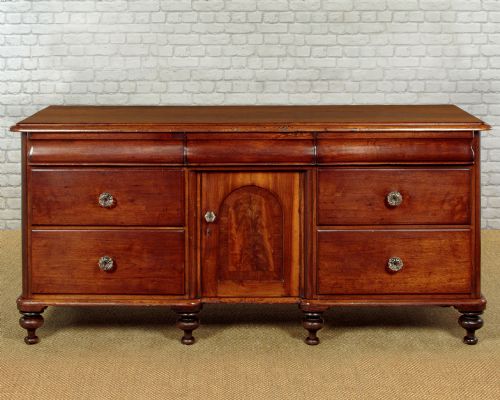
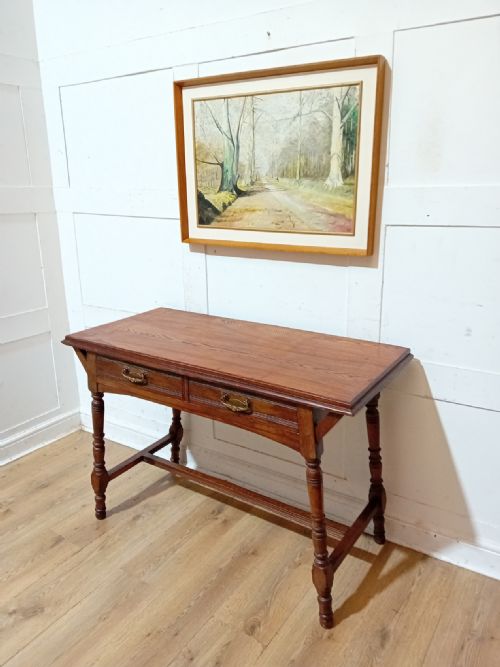
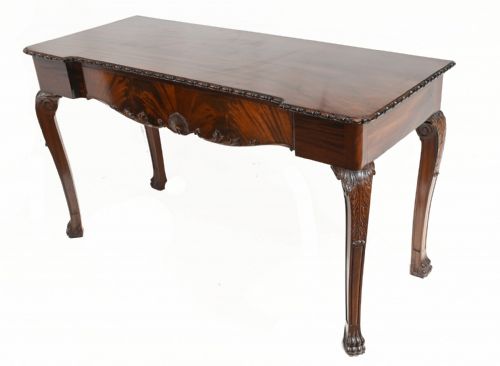


Late Victorian Server Table
These late victorian server table examples offer practical dining room storage and surface space, forged from solid timbers during the late nineteenth century.
Late Victorian Server Table
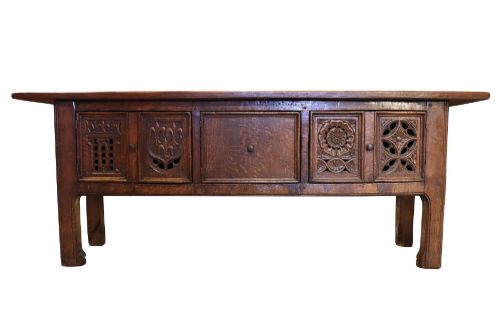
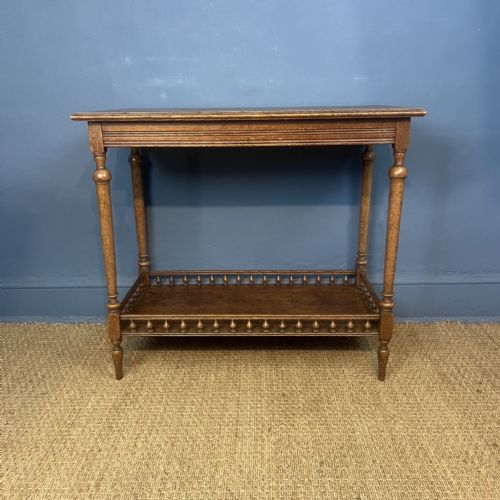
A late victorian server table comprises substantial timber furniture designed for dining and serving utility during the late nineteenth century. The selection ranges from narrow Gothic Revival dresser bases in carved oak to Aesthetic Movement two-tier tables and walnut serving pieces.
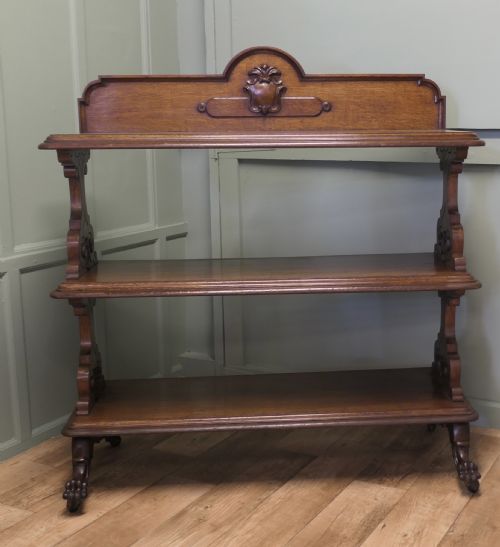
Most items meeting this search on the page date from the 1880s and 1890s, utilising solid woods like oak, walnut, mahogany and pine. Forms vary widely from sideboards and dumb waiters to console tables and kitchen dressers.
Makers and workshops of the period utilised regional vernacular styles alongside high-end cabinet making traditions, including Georgian Revival and Arts and Crafts influences. Buyers encounter everything from large carved oak buffets to pitch pine centre serving tables.
How they were made
Cabinet makers utilised native and imported hardwoods including solid oak, walnut, mahogany and pitch pine. Construction methods relied upon traditional joinery, sturdy framing and hand carving to support heavy daily domestic use.
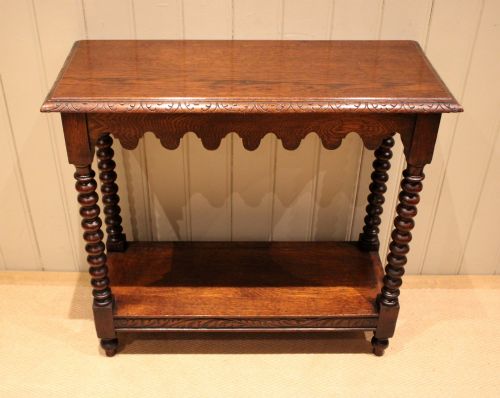
Decorative detailing on these pieces involves relief carving, applied mouldings, turned supports and brass or sterling silver hardware. Surfaces are finished to display the natural grain of the timber, sometimes enhanced with rouge marble inserts.
Listings feature oak, walnut, mahogany, pitch pine and standard pine timbers, alongside brass and sterling silver components.
What varies in quality
The distinction between standard utility furniture and superior cabinet work rests upon the selection of timber and the execution of the joinery. Dense burr walnut veneers, intricate hand carving and substantial gauge brass fittings elevate a piece above straightforward pine or oak production.
Proportion and structural integrity define the higher tiers of these serving tables, where balanced design and untouched original timber patination survive intact. Lower grades show simpler construction, heavier restoration or more utilitarian workshop origins.
LIBERTY ASH·Gillows·Horace Woodward & CO LTD·Holland and Sons
The Late Victorian Server Table Glossary
- Dresser base
- A lower storage cabinet featuring drawers or cupboards beneath a wide serving surface. These pieces formed the foundation of domestic dining room organisation.
- Aesthetic Movement
- A late nineteenth century design style emphasising simplicity of form, Japanese influence and artistic expression over heavy historic revivalism.
- Dumb waiter
- A tiered serving stand or small sideboard used for holding dishes and utensils near the dining table without requiring servant attendance.
- Pitch pine
- A resinous, durable pine variety commonly used for sturdy nineteenth century furniture construction, noted for its strong grain pattern.
Late Victorian Server Table: Frequently Asked Questions
What is a late victorian server table used for?
These tables provide surface space for food presentation and storage within dining rooms or hallways. They accommodate serving dishes, tableware and everyday household items.
The sturdy construction allows them to function effectively as sideboards, buffets or console tables in contemporary homes.
How do I identify a piece from this period?
Dating relies upon timber selection, hardware styles and characteristic revival motifs such as Gothic or Aesthetic Movement details. Most items date from the 1880s to the 1890s.
Examination of the underlying construction timber, such as pitch pine or oak, helps confirm the nineteenth century origin.
Where should I place a server table?
Dining rooms remain the traditional location for serving tables, providing convenient access during meals. Narrower console variants also suit hallways and reception spaces.
Their substantial timber surfaces handle daily use well when placed in high-traffic domestic areas.
What woods are typical for these tables?
Oak, walnut and mahogany dominate the better cabinet pieces, showcasing rich grain and hand-carved ornamentation. Pine and pitch pine appear frequently in utility and kitchen furniture.
Selected items incorporate decorative marble inserts or brass hardware to enhance the primary timber frame.