

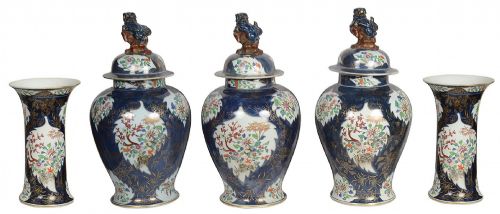


Lidded Temple Jar Vase
These lidded temple jar vase examples bring together porcelain, earthenware, and intricate enamel work from various Asian and European traditions.
Lidded Temple Jar Vase
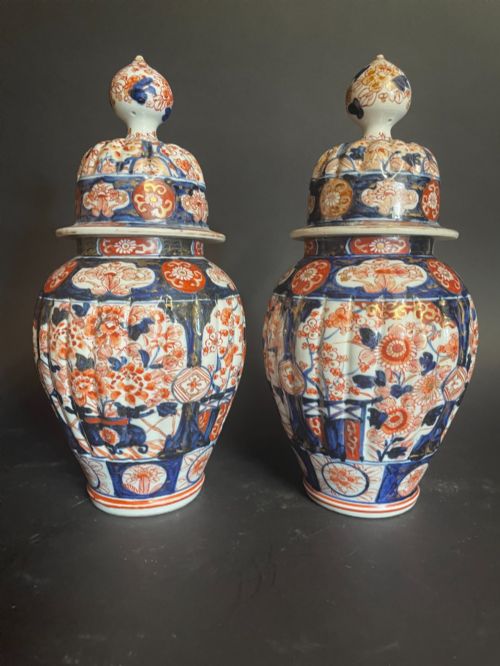
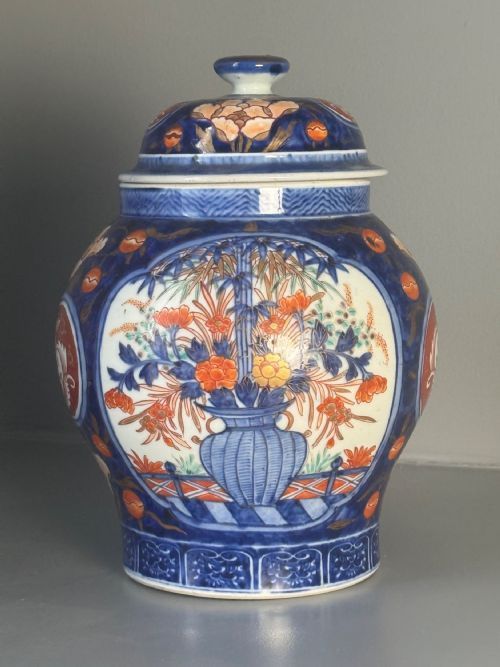
A lidded temple jar vase search typically reveals large covered vessels originating from Japanese and Chinese kilns, alongside select European interpretations. The most common iteration encountered here is the Japanese Imari porcelain vase and cover, frequently dating from the nineteenth century.
Makers utilised various forms including baluster shapes, ginger jars, and octagonal profiles designed with matching lids. These decorative vessels appear in pairs or as single display pieces spanning several centuries of ceramic production.
Craftsmanship and Detail
Quality rests in the precision of the hand-painted brushwork, the depth and vibrancy of the enamel colours, and the crispness of the gilt detailing. Superior pieces display harmonious composition across both the vessel body and the corresponding lid.
The weight of the porcelain, the regularity of the form, and the finesse of the metalwork in cloisonne examples distinguish finer outputs from standard production wares.
Materials represented across the inventory include porcelain, earthenware, copper, enamel, and gold leaf.
The Lidded Temple Jar Vase Glossary
- Imari
- A style of Japanese export porcelain decorated in underglaze blue, iron red, and gold. It originated in Arita and became widely popular in Europe during the Edo period.
- Cloisonne
- A decorative metalwork technique where enamel paste is applied within compartments created by soldered flat wires. These pieces are then fired and polished to a smooth finish.
- Satsuma
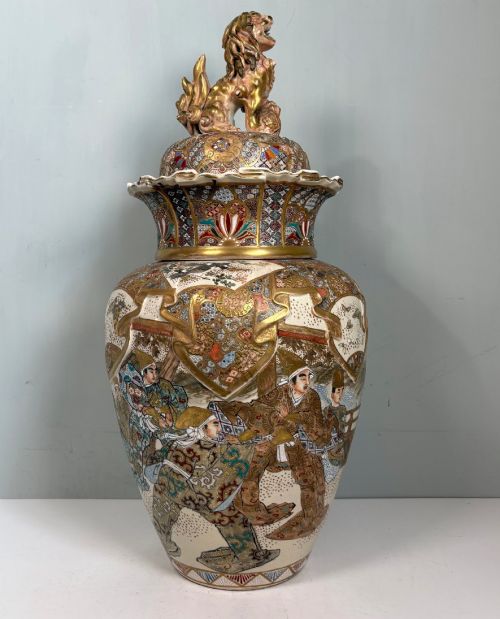
- A type of earthenware from Japan featuring a crackle glaze and ornate polychrome or gilt decoration. It gained significant traction during the Meiji period for export markets.
- Famille rose
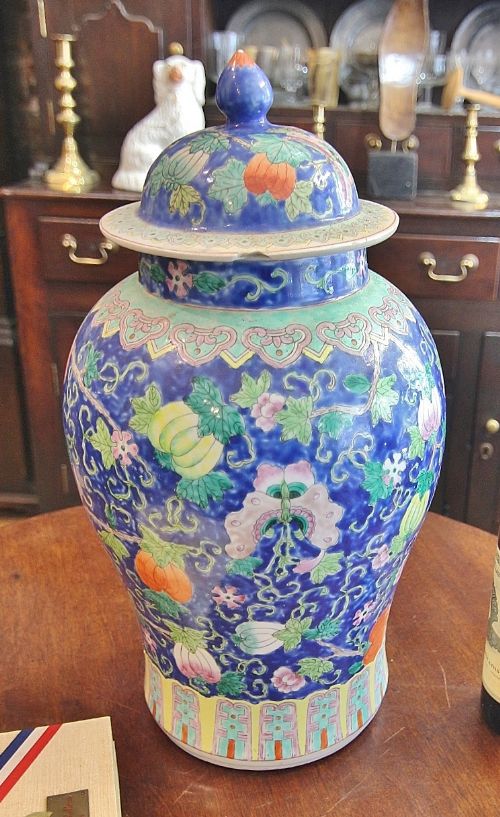
- A Chinese ceramic palette characterised by opaque pink or rose enamel colours introduced during the Qing dynasty. This palette permits a greater range of shading than earlier styles.
- Baluster
- A vase shape with a rounded lower body that tapers towards the neck, often topped by a domed cover. This silhouette provides stability and ample surface area for intricate painting.
Lidded Temple Jar Vase: Frequently Asked Questions
What is a lidded temple jar vase used for?
These lidded vessels served primarily as decorative display items in domestic interiors and ceremonial spaces. Their substantial presence and intricate ornamentation made them focal points on mantelpieces, sideboards, and tables.
Over time, collectors utilised them to enhance traditional room schemes or as standalone artistic statements. The matching lids completed the sculptural silhouette of the jar.
How do I identify Japanese Imari porcelain?
Japanese Imari porcelain is typically recognised by its distinct palette combining underglaze cobalt blue with iron red and supplementary gilding. The designs often incorporate floral, architectural, and brocade motifs arranged in symmetrical panels.
These pieces were predominantly produced in the Arita area and exported in large quantities during the Edo period and the nineteenth century.
What distinguishes Satsuma ware from standard porcelain?
Satsuma ware is constructed from an earthenware body rather than hard-paste porcelain, featuring a characteristic creamy, crackled glaze. The surface decoration relies heavily on dense polychrome enamels and extensive gold leaf.
This ware originated in the Satsuma province and evolved significantly to satisfy international tastes during the Meiji period.
How should I display these lidded vessels at home?
These large decorative jars suit prominent placement on sturdy furniture such as sideboards, cabinets, or pedestals where their scale can be appreciated. Pairs look effective arranged symmetrically, while single monumental pieces function well independently.
Ensure the location offers adequate stability and protection from accidental knocks, given the height and weight of nineteenth century ceramic examples.