
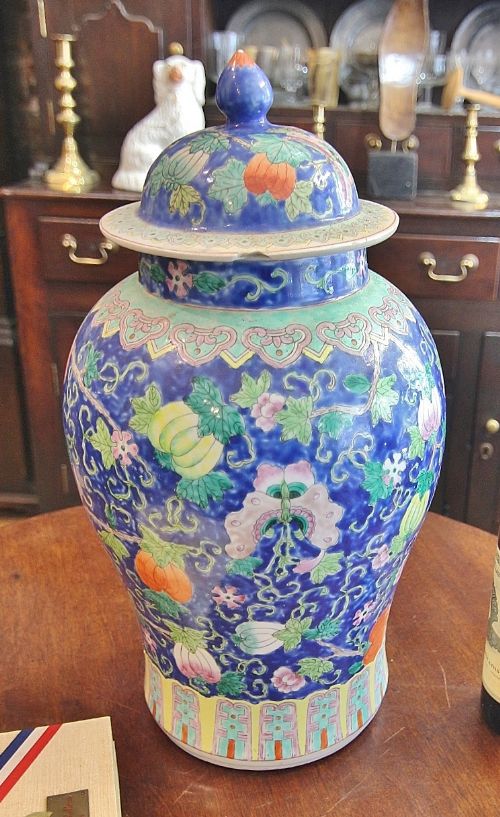


20th Century Chinese Vase
These 20th century chinese vase examples bring vibrant colour and texture to a room, offering distinct regional craftsmanship from across the hundred-year span.
20th Century Chinese Vase
A 20th century chinese vase spans several decades of production, incorporating styles such as Chinese Republic Period, Chinoiserie, and Chinese Export. These vessels range from large floor-standing decorative items to smaller display pieces and converted lamps.
The objects seen on this page include porcelain, brass, copper, and glass bodies, alongside carved plant stands used for display. Buyers frequently encounter monochrome glazes, enamelled surfaces, and cloisonne work dating from the Edwardian era through the nineteen-forties.
Forms vary from bottle vases and lobed vessels to lidded urns and jars. Many of these pieces reflect traditional decorative arts adapted for both domestic display and export markets during the turbulent political shifts of the period.
Materials and construction
Ceramic pieces rely on fired porcelain bodies finished with intricate enamel work, monochrome glazes, or cobalt painting. Artisans shaped these vessels by hand or on the wheel before applying detailed floral and stylised motifs.
Metalwork examples utilise brass and copper foundations decorated through cloisonne and champleve techniques. Craftsmen soldered wire compartments onto the metal base before filling the resulting cells with coloured enamel pastes and firing the piece.
Feathers and still-life studies occasionally share the spotlight with the hardware.
Assessing quality and execution
The precision of the enamel application and the crispness of incised carving determine the visual strength of a ceramic or metal vessel. Smoother enamel surfaces and neatly balanced wirework separate superior cloisonne pieces from simpler commercial output.
Proportion and glaze depth dictate the overall presence of monochrome and blue and white porcelain. Well-fired glazes show even coverage and deep colour saturation without pooling or excessive surface pitting.
The 20th Century Chinese Vase Glossary
- Cloisonne
- A metalwork technique where fine wires are soldered to a brass or copper body to create compartments filled with enamel paste. These cells hold the coloured design in place before firing and polishing.
- Famille Rose
- A palette of opaque enamels dominated by pink or rose colours, introduced to Chinese porcelain decoration. Artisans applied these pigments over the glaze to render intricate floral and figurative scenes.
- Monochrome
- A single uniform glaze colour applied across the entire ceramic surface. This technique relies entirely on the purity of the form and the depth of the glaze to create visual interest.
- Champleve
- An enamelling method where troughs or depressions are carved directly into the metal surface to hold the enamel colour. This differs from cloisonne by removing the need for applied surface wires.
- Jardiniere
- A large ornamental pot or stand designed to hold live plants or floral arrangements. In these listings, they frequently appear paired with vases or ginger jars.
20th Century Chinese Vase: Frequently Asked Questions
Can I use these vases for fresh flowers?
Many older vessels, particularly those with delicate interior glazes or metal bodies, suit dry display better than holding water. Moisture can seep into hairline fractures or corrode internal brass and copper elements over time.
Consider placing a small glass or plastic liner inside if you intend to use water. This protects the historic fabric of the vessel from mineral deposits.
How do I date an Edwardian piece?
Dating relies on the recorded period, stylistic traits, and material handling consistent with early production years. Items marked with Edwardian or nineteen-hundreds markers often show specific manufacturing traits distinct from later decades.
Compare the weight, base finish, and enamel vibrancy against known examples from the same era. Documentation or dealer provenance further solidifies the production window.
Are converted lamp fittings original?
Lamp conversions often happened later in the twentieth century to adapt decorative vessels for modern domestic lighting. These alterations rarely date from the original manufacture of the vase itself.
Examine how the wiring and mounts attach to the body to determine if the conversion preserves the ceramic or metal structure. Professional fitting ensures safety while maintaining the visual integrity of the piece.