


Leather Upholstered Stool
A leather upholstered stool brings tactile warmth and period character to a room, offering versatile seating or a resting place for feet.
Leather Upholstered Stool
A leather upholstered stool spans centuries of domestic seating, from compact piano stools to expansive library window benches and ottomans. Buyers seeking this phrase encounter a rich variety of regional and revival forms that reflect shifting interior fashions.
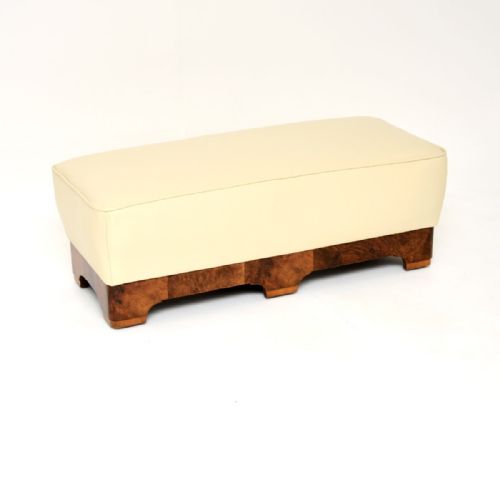
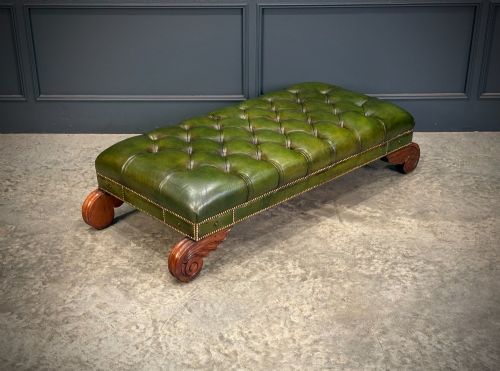
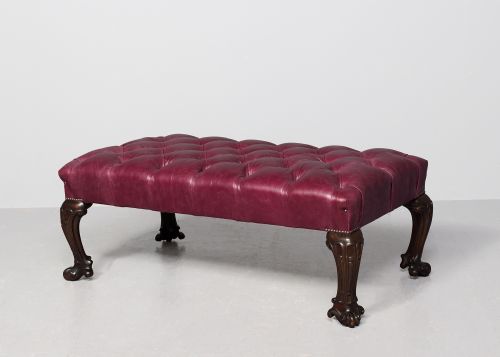
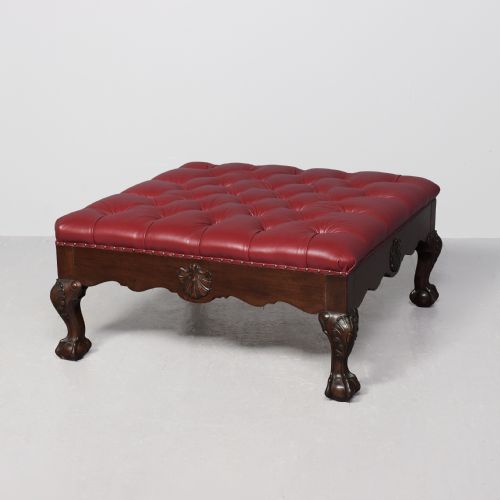
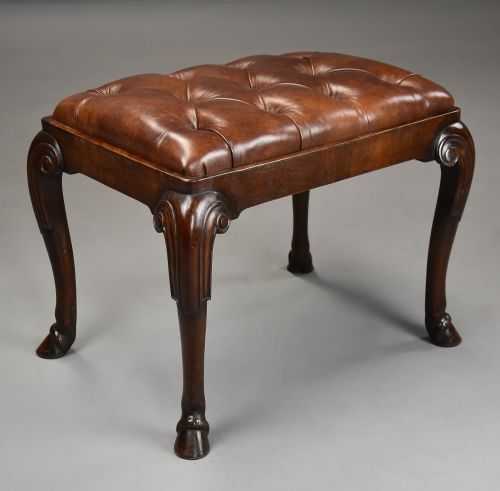
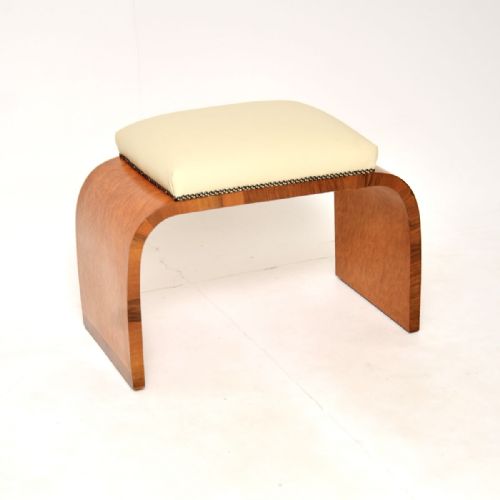
The pieces appearing here range from formal Regency and Georgian designs to Victorian buttoned footstools and streamlined Art Deco walnut examples. Mahogany, rosewood, and walnut frames dominate, often paired with buttoned or plain hides.
Lower formats function as footstools or gout stools, while taller variants serve as dressing table seats, piano stools, or long window benches. Each form provides a tangible link to historical seating habits and cabinet-making traditions.
Materials and Construction
Makers built the structural frames of these stools primarily from hardwoods such as mahogany, walnut, oak, and rosewood, employing traditional joinery and carved details. Wood selection dictated the formality of the piece, with richly figured burr walnut and rosewood reserved for prominent reception rooms.
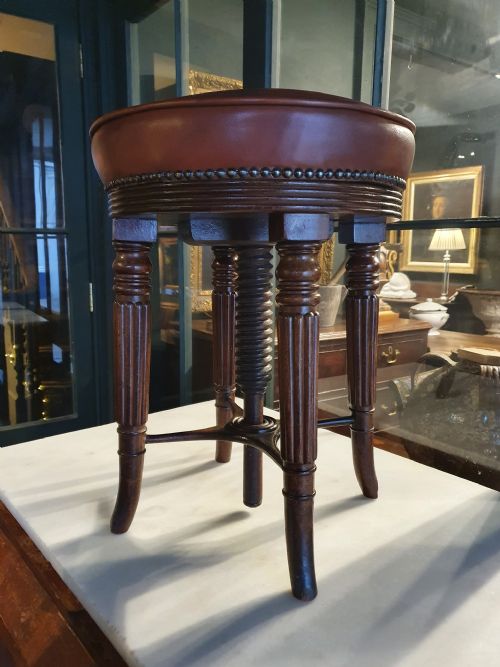
Upholstery centres on durable leather, frequently secured with brass studs and enhanced by deep buttoning techniques that create structured comfort. Secondary materials like brass fittings, iron mechanisms for revolving piano seats, and occasional maple or yew wood introduce further textural contrast.
Some nineteenth-century piano stools feature hidden swivel screws so musicians could effortlessly spin away from awkward family performances.
Assessing Quality and Execution
Quality reveals itself in the crispness of frame carving, the selection of timber veneers, and the integrity of the underlying joinery. Finely cast brass details and precise buttoning distinguish superior examples from standard utility seating.
The condition and character of the leather surface significantly influence the overall appeal, with supple hides and harmonious patination indicating careful preservation over time.
Liberty·James Shoolbred
The Leather Upholstered Stool Glossary
- Buttoned
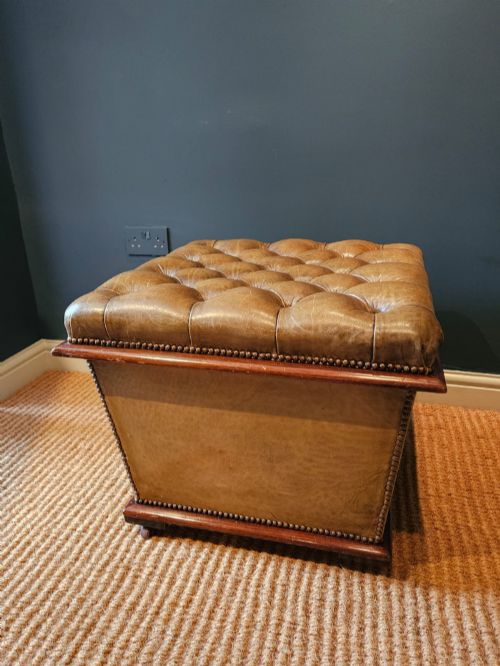
- An upholstery technique where leather is pulled deep into the padding with tufts or buttons in a geometric grid. This method secures the internal stuffing while creating a cushioned, textured surface.
- Ottoman
- A low, upholstered seat or box without arms or a back, frequently fitted with a hinged lid for storage. These pieces often serve double duty as footstools and concealed receptacles.
- Cabriole leg
- A furniture leg that curves outward at the knee and tapers inward toward the foot, echoing animal limbs. It appears frequently on walnut and mahogany seating from the eighteenth century and subsequent revival periods.
- Gout stool
- A specialised footrest featuring an adjustable inclined top designed to elevate and comfort the feet of sufferers. They often incorporate scrolling wooden frames and brass hardware.
- Joint stool
- An early form of wooden seating constructed with pegged mortise and tenon joints rather than turned legs. These sturdy pieces pre-date modern upholstery methods.
Leather Upholstered Stool: Frequently Asked Questions
How do I identify a Regency period leather stool?
Regency pieces typically feature classical mahogany or rosewood frames, often incorporating brass inlay, scroll motifs, or fluted legs. The silhouettes draw heavily on Greek and Roman archetypes.
Look for crisp joinery and traditional French polish finishes that match the cabinet-making standards of the early nineteenth century.
What is the difference between a piano stool and an ottoman?
Piano stools are generally designed for height adjustment or swivel movement to assist musicians at the keyboard. They tend to have more compact seats supported by single or multi-legged wooden bases.
Ottomans function primarily as static long seats or storage boxes with hinged tops. They offer broader proportions suited for placement beneath windows or at the foot of a bed.
How should I care for antique leather upholstery?
Maintain antique leather by keeping it away from direct heat sources and strong sunlight, which can dry and crack the hide. Gentle dusting and occasional specialist leather conditioning will preserve the supple texture.
Avoid commercial cleaning sprays that contain harsh chemicals, as these can strip the historical patina from the leather.
Where did people use long benches and window seats historically?
Long benches and window seats were positioned in spacious hallways, drawing rooms, or deep window recesses where occupants could sit and converse or enjoy the light. Their elongated proportions accommodated multiple people or allowed a person to recline.
These pieces frequently mirrored the decorative style of the surrounding interior architecture and primary seating suites.