
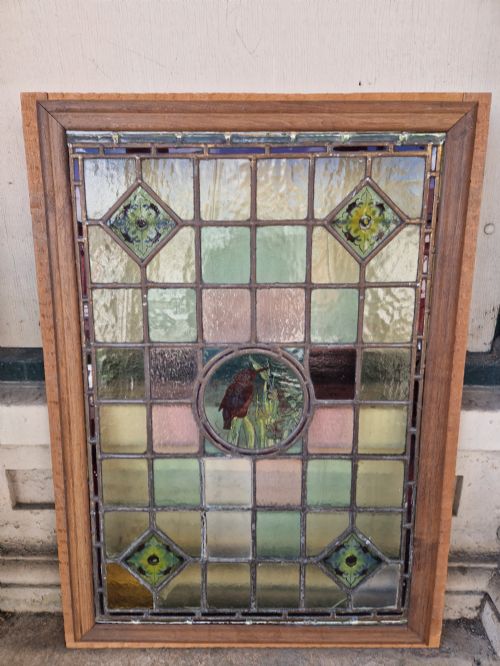


Leaded Glass Light Panel
A leaded glass light panel brings brilliant colour and architectural character to a room, filtering daylight through historic leaded and painted glass.
Leaded Glass Light Panel
When you search for a leaded glass light panel, you are looking at architectural salvage and decorative windows originating from the nineteenth and early twentieth centuries. These pieces span Victorian, Edwardian, and Art Nouveau periods, often incorporating timber frames in pine, oak, or brass elements.
The versions you are most likely to meet on this page include leaded glass windows featuring hand-painted countryside scenes, bird motifs, and floral designs with amber bullseyes. Many appear as individual panels or pairs, alongside larger structural windows and fitted bookcase cabinets incorporating glass elements.
Materials and construction
Maker construction relies on joining pieces of coloured and textured glass within flexible lead cames, soldered at the joints to secure the entire composition. Artisans frequently added hand-painted details depicting landscapes, flora, and fauna directly onto the glass surface before firing.
Support frames utilise timber such as pine and carved oak, occasionally incorporating brass fittings to house the architectural glass securely. Bullseye roundels feature prominently within these assemblies, adding texture and variation alongside clear and stained varieties.
Listings feature leaded glass light panels set within Victorian, Edwardian, and Art Nouveau styles, utilising pine, oak, timber, and brass.
Distinctions in quality
Quality rests upon the intricacy of the hand-painted pictorial work and the complexity of the leaded geometric or figurative design. Panels featuring detailed countryside scenes, birds in flight, or specific cultural motifs demand greater artisan skill than simple geometric glazing.
The integration of original timber frames and the inclusion of specialised elements like bullseyes elevate the piece. The stability of the lead matrix and the preservation of the painted surface dictate the overall integrity of the panel.
Maple & Co.
The Leaded Glass Light Panel Glossary
- Came
- The grooved lead strip used to hold individual pieces of glass together in a leaded panel. These strips form the structural grid of the design.
- Bullseye
- A small, round piece of glass with a central raised hub, formed during the glassblowing process. They add texture and amber tones to traditional windows.
- Architectural salvage
- Building components rescued from older structures for reuse in interior design or restoration. This category includes windows, panels, and fitted cabinetry.
- Stained glass
- Glass coloured by the addition of metallic oxides during its manufacture, or painted and fired in a kiln. It forms the vibrant imagery seen in period panels.
Leaded Glass Light Panel: Frequently Asked Questions
How do I hang a leaded glass light panel?
These panels require secure mounting within a window frame or against a lighted wall box to support their weight. Professional framing ensures the lead cames do not sag over time.
Weight distribution matters because the lead matrix is flexible. Fixing points should attach firmly to the surrounding timber rather than the glass itself.
Are these panels suitable for exterior windows?
Most antique panels function best as interior room dividers, wall hangings, or secondary interior glazing. Historic leadwork lacks the thermal insulation and structural strength required for exposed exterior use.
Placing them indoors also protects delicate hand-painted surfaces from harsh weather and modern wind loads. Secondary interior framing provides adequate weather protection if fitted outside an existing pane.
How do I clean historic leaded glass?
Gentle dusting with a soft dry cloth removes surface particles without disturbing fragile lead cames or paintwork. Avoid harsh chemical cleaners that might degrade the historic solder and painted pigments.
Moisture should be kept away from painted sections during cleaning. Professional restoration is recommended if the lead structure feels loose or unstable.
How can I date my glass panel?
Dating relies on stylistic clues such as the flowing organic lines of Art Nouveau or the heavy ornamentation of Victorian Gothic Revival. Subject matter like Dutch folk art or hand-painted pastoral scenes also points toward specific decades.
Timber types in associated frames, such as pine or carved oak, help confirm the era of production. Examining the construction of the lead cames provides further evidence of the period.