
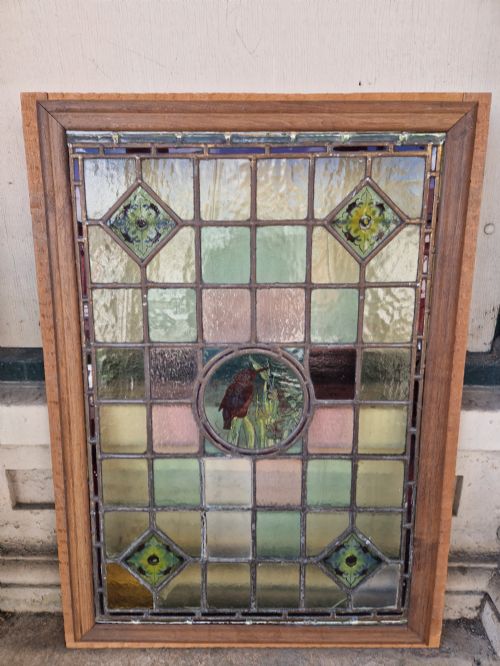


Hand Painted Glass Window
These hand painted glass window panels bring rich pictorial scenes and floral motifs into the light.
Hand Painted Glass Window
A hand painted glass window brings together architectural salvage and detailed pictorial artistry, most frequently seen in Victorian, Edwardian, and turn-of-the-century examples. These panels incorporate painted glass elements held within lead cames, often framed in wood or pine timber.
The subjects range widely from pastoral countryside scenes, castles, and lakes to birds, flowers, swags, and religious or heraldic iconography. Collectors frequently encounter single panels or pairs suitable for architectural integration or interior display.
How they were made
The construction relies on assembling individual pieces of coloured and clear glass, sometimes including bullseyes, secured together within a flexible lead network. Artisans applied enamel paints directly to the glass surface, firing the panels to fuse the pigment permanently before leading.
Support structures typically utilise timber frames, with pine wood commonly employed to house the heavy leaded panels safely. Etched and cut glass techniques frequently supplement the painted details to add texture and depth to the composition.
Hand Painted Glass Window Retail Price Guide 2026
Typical asking prices for hand painted glass window among the pieces listed under this phrase on Sellingantiques today, from the lower quarter to the upper quarter. They describe what is for sale here now, not the wider market.
Design motifs appearing in the inventory feature countryside views, castles, boats, lifeboats, winter scenes, flowers, swags, bullseyes, and birds.
What varies in quality
The refinement of the painted detail sets the finest panels apart, particularly in the rendering of facial expressions, plumage on birds, and landscape perspective. The complexity of the lead came layout and the integration of specialised elements like amber bullseyes also influence the character of the work.
Condition and integrity play a significant role in assessment, notably the stability of the lead matrix and the preservation of the fired enamel against flaking. Original wooden framing and the presence of matching pairs elevate the architectural importance of the piece.
The Hand Painted Glass Window Glossary
- Came
- A grooved strip of lead used to hold pieces of glass together in a window. These pliable strips form the geometric or organic grid supporting the entire panel.
- Bullseye
- A small, circular piece of glass featuring a central lump or concentric rings, often formed during the traditional glassblowing process. They appear frequently in borders or accent areas.
- Architectural salvage
- Building materials recovered from older structures slated for demolition or remodelling. These panels are typical examples preserved for decorative reuse.
- Enamel
- A type of coloured, powdered glass applied to the glass surface and heated until it melts and bonds permanently. This technique allows for fine pictorial detail on windows.
Hand Painted Glass Window: Frequently Asked Questions
How are antique glass windows installed?
These panels are generally mounted securely within existing window openings using timber battens or specialist brackets. Weight distribution requires careful consideration due to the heavy lead matrix.
For interior display, many collectors hang them in front of light sources using robust chains attached to the outer wooden frame.
Can these windows be cleaned safely?
Dust and grime accumulate on leaded glass over decades, requiring gentle maintenance to preserve the painted surfaces. Warm water and a soft cloth suffice for routine cleaning without harsh chemical agents.
Avoid scraping the painted areas, as fired enamel can become vulnerable to abrasion over time, particularly on nineteenth-century examples.
What styles are most common?
Victorian and Edwardian aesthetics dominate the available selections, spanning Gothic Revival, Arts and Crafts, and Art Nouveau influences. Floral motifs, pastoral scenes, and religious iconography frequently define these periods.
Distinct regional preferences and maker techniques also emerge through details like amber bullseyes and cut glass borders.
How do I identify the period?
Stylistic clues such as floral swags, knight motifs, or specific typography point toward Victorian and Edwardian origins. The weight of the timber frame and the patina of the lead provide additional physical evidence.
Examining the firing technique and brushwork of the painted enamel helps differentiate nineteenth-century work from later productions.