
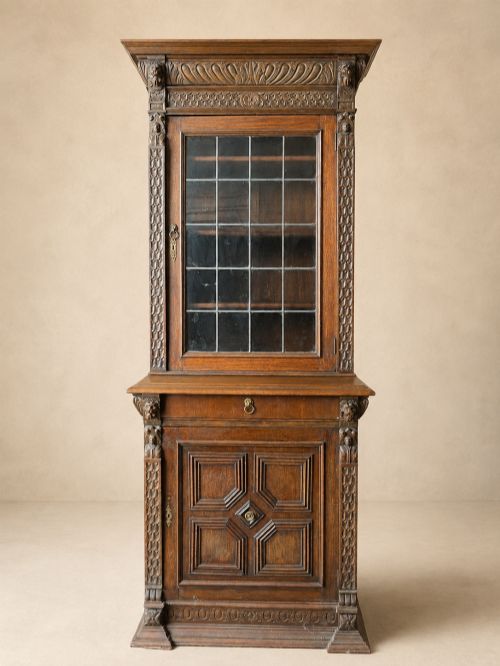
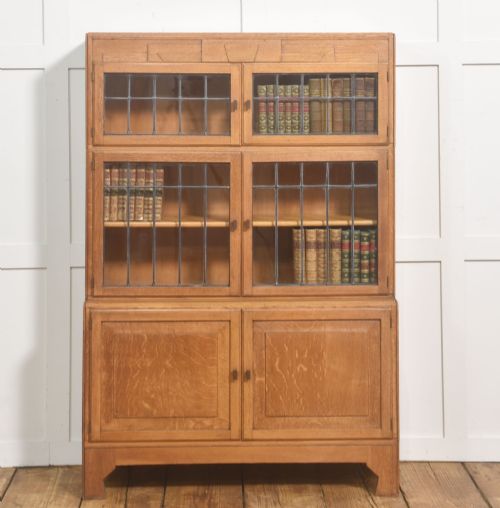
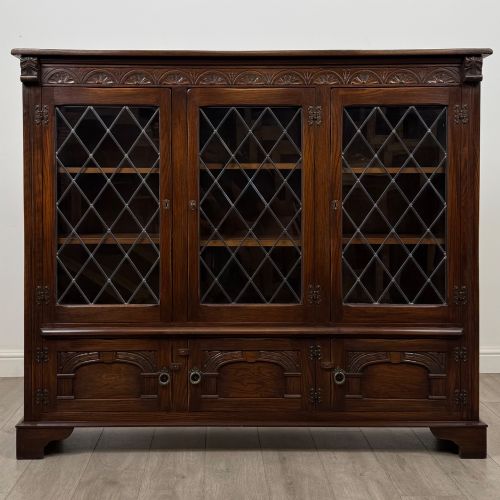
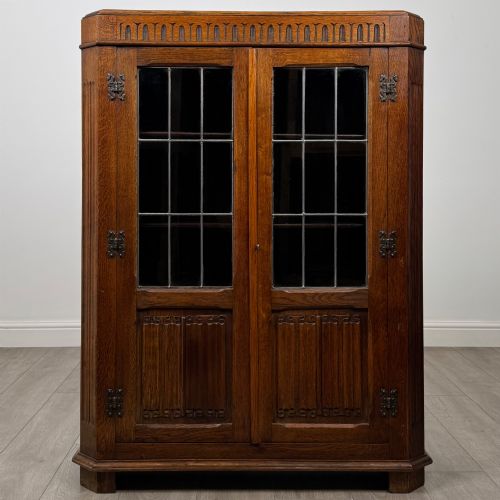




Leaded Glass Cupboard
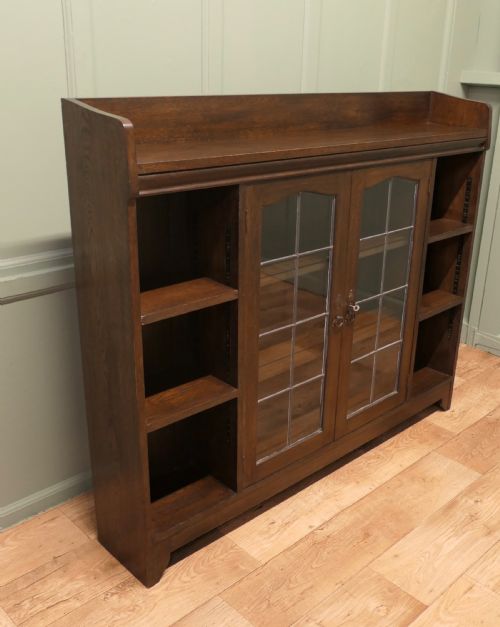
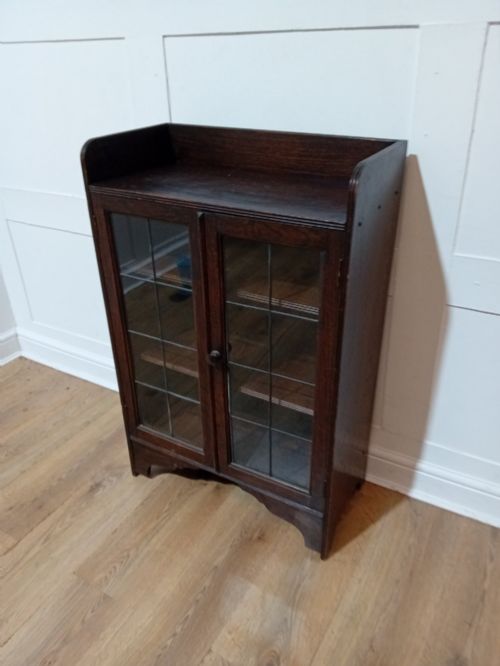
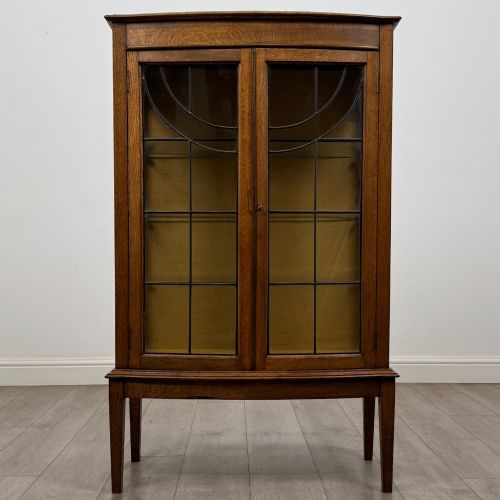
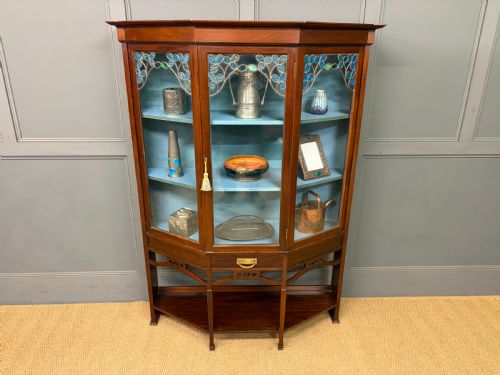
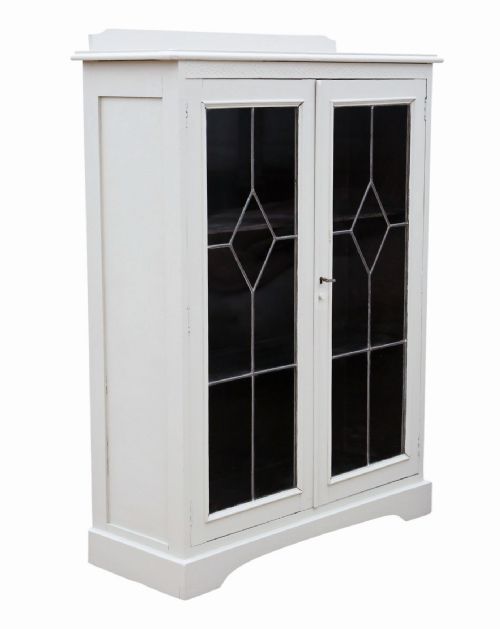
A leaded glass cupboard holds books and china behind small panes joined by came work, bringing texture and period character to a room.
Leaded Glass Cupboard
When you search for a leaded glass cupboard, you are looking at sturdy storage furniture designed to display contents while keeping them enclosed.
The versions you are most likely to meet on this page span the Victorian, Edwardian, and early twentieth-century periods, taking forms such as bookcases, corner cupboards, and display cabinets.
Makers drew on styles ranging from Arts and Crafts and Art Nouveau to Jacobean and Tudor Revivals, creating pieces primarily in oak and mahogany.
How they were made
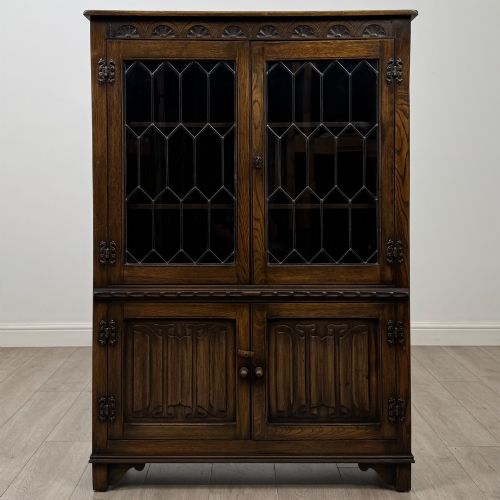
Carpenters constructed the primary frames of these cupboards using solid timbers like oak, mahogany, and pine, often incorporating carved details, linenfold panels, and inlaid motifs.
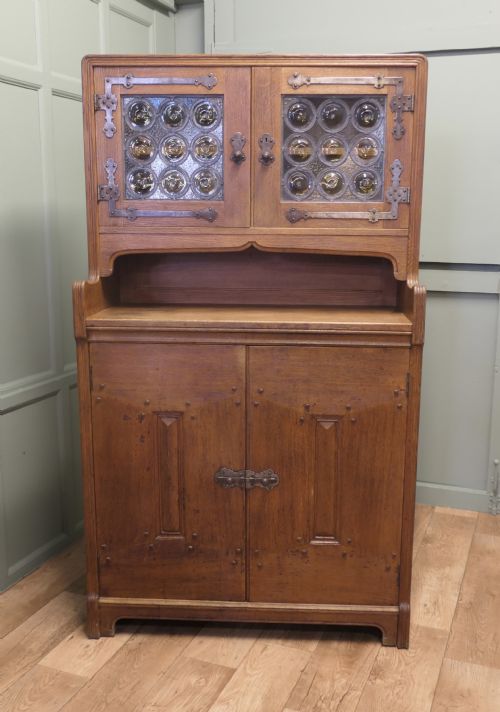
Individual panes of glass were held together within the doors using strips of lead, sometimes complemented by stained glass or supported by brass and iron hardware.
A sturdy pine farmhouse cupboard once kept household provisions safe behind hand-carved doors and stained glass.
What varies in quality
The distinction between standard utility storage and finer furniture lies in the selection of timber and the ambition of the design, with richer grain and deeper carving marking out better pieces.
Attention to detail in the assembly of the leaded or stained glass and the integration of decorative inlays or brass fittings elevates the overall execution of the cabinet.
Liberty
The Leaded Glass Cupboard Glossary
- Leaded glass
- Glass panes assembled using lead cames to form geometric or decorative patterns. This technique provides structural support while framing the contents within.
- Came
- A slender channel of lead, zinc, or copper used to hold together individual pieces of glass in a window or cupboard door. These metal strips form the linear grid of the design.
- Linenfold
- A carved wooden panel motif that emulates vertical folds of fabric. This ornamentation appears frequently on the wooden doors or lower sections of period cabinets.
- Barrister bookcase
- A stacking bookcase featuring glass doors that lift and slide inward above each shelf. These practical cabinets allowed professionals to store and access growing libraries easily.
Leaded Glass Cupboard: Frequently Asked Questions
What is a leaded glass cupboard?
A leaded glass cupboard is a storage piece featuring doors made from small glass panes joined by lead strips. These cabinets were built to house books, china, and display items.
They appear in various forms, including tall bookcases, corner cupboards, and low dressers, primarily originating from the late nineteenth and early twentieth centuries.
Where were these cupboards used?
These cabinets served as functional storage furniture in the principal rooms of homes, such as living spaces, libraries, and dining areas. They kept dust away from delicate tableware and valued books.
Kitchens and farmhouses also utilised pine and oak cupboards for everyday housekeeping storage and provisions.
How do I care for leaded glass?
Clean the glass gently using a soft cloth and mild cleaner, avoiding harsh chemicals that might weaken the old lead cames. Support the glass from behind if wiping vigorously.
Condition the surrounding wooden frame with appropriate wax or polish to keep the timber nourished without building up excess residue.