





Art Nouveau Sideboard Cabinet
An art nouveau sideboard cabinet brings flowing natural line and fine cabinetwork into a room, uniting storage with the distinct ornament of the movement.
Art Nouveau Sideboard Cabinet
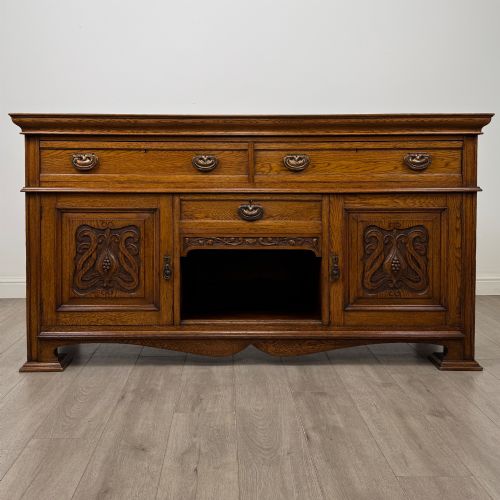
An art nouveau sideboard cabinet combines practical storage with the organic forms and stylized floral motifs characteristic of the turn of the twentieth century. These pieces appear in forms ranging from mirror-back sideboards to tall display cabinets and dressers.
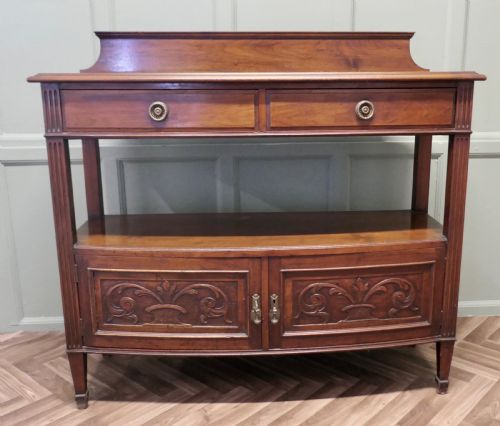
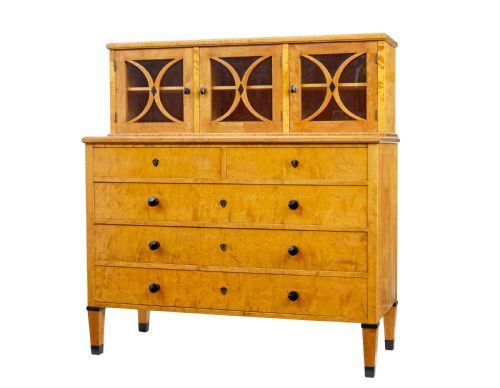
The versions most commonly met on this page date from the Edwardian era and the year 1900, drawing on both Arts and Crafts traditions and continental movements. Makers across Britain, Austria, Holland, and Sweden adapted the style into sturdy oak, mahogany, walnut, and birch.
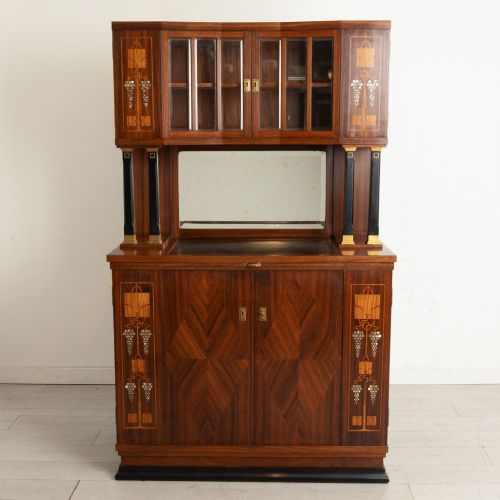
Buyers encounter hybrid forms that function simultaneously as sideboards, buffets, and display cabinets, often featuring leaded or plain glass panels and brass or copper hardware. Each example reflects the regional interpretations of the style, from British vernacular oak to continental Secessionist restraint.
Materials and Construction
Cabinetmakers built these pieces primarily in solid timbers and veneers of oak, mahogany, and walnut, frequently utilising ebonised wood or birch for striking visual contrast. Surfaces often incorporate marquetry panels and intricate carving that trace whip-like plant stems and natural asymmetry.
Metalwork played a defining structural and decorative role, with beaten copper and cast brass used for hinges, handles, and escutcheons. Glass panels, sometimes set within leaded cames, provide transparency in display cabinet doors and mirror-backs reflect light behind serving surfaces.
Periods represented across these listings include the Victorian era, the nineteenth century, the Edwardian period, and the decades around 1900 and 1910.
Markers of Quality
Quality in these cabinets rests upon the depth of the cabinetmaking and the integration of the decorative elements into the structural form. Superior pieces display thoughtful grain selection in the timber and crisp, hand-finished carving rather than applied machine mouldings.
Hardware and secondary details reveal the maker's hand, where original brass or copper handles and specialised hinges remain intact. The sophistication of the design, such as the proportion of a mirror-back or the execution of marquetry inlay, separates standard production from exceptional workshop output.
August Ungethüm·Shapland and Petter
The Art Nouveau Sideboard Cabinet Glossary
- Marquetry
- The art and craft of applying pieces of veneer to a structure to form decorative designs. It appears on cabinet doors and drawer fronts to depict floral motifs.
- Secessionist
- A modernist movement in Central Europe that rejected historicism in favor of geometric simplicity and clean lines. Viennese examples demonstrate this restrained approach.
- Ebonised Wood
- Timber treated with a chemical stain or finish to imitate ebony. Cabinetmakers used it to provide dark, high-contrast borders and structural accents.
- Mirror-Back
- A sideboard superstructure incorporating a fitted mirror plate above the main serving surface. This feature reflects light and displays decorative objects.
Art Nouveau Sideboard Cabinet: Frequently Asked Questions
Where should an art nouveau sideboard cabinet go?
These pieces suit dining rooms, living spaces, and hallways where their substantial presence and storage capacity serve a daily function. Their display sections accommodate glassware and ceramics while cupboards and drawers house linens and tableware.
Placement away from direct heat sources protects timbers and delicate veneers from drying and cracking over time. Adequate wall space allows mirror-backs and tall display cabinets to anchor the room visually.
How do I maintain the wood surface?
Routine dusting with a dry, soft cloth preserves the polish on oak, mahogany, and walnut without building up unwanted residues. Periodic application of a traditional beeswax feed nourishes the grain and maintains the natural lustre of the timber.
Harsh chemical cleaners and modern silicone polishes should be avoided as they can degrade historical finishes. Moisture must be wiped away promptly to prevent marking the polished surface.
What is the difference between a sideboard and a dresser?
A sideboard functions primarily as a low-standing storage unit with cupboards and drawers, frequently topped by a mirror or plate shelf. A dresser traditionally incorporates upper shelving or a cabinet structure designed specifically for displaying tableware.
In turn-of-the-century cabinetmaking, these functional boundaries often blur as makers combined open display areas with enclosed storage. Both forms share the characteristic organic carving and hardware of the period.
How can I date an art nouveau cabinet?
Dating relies upon stylistic markers, construction methods, and materials recorded across the piece, such as Edwardian proportions or 1900s Secessionist influences. The presence of specific hardware, hand-beaten copper, and regional timber choices helps narrow the period.
Documentation, maker signatures, or stamps inside drawers provide definitive chronological markers. Comparing the joinery and decorative motifs with dated workshop records confirms the era of production.