
Marquetry China Cupboard
A marquetry china cupboard brings floral or geometric woodwork together with glazed display space, holding porcelain behind glass while showing craft on the exterior.
Marquetry China Cupboard
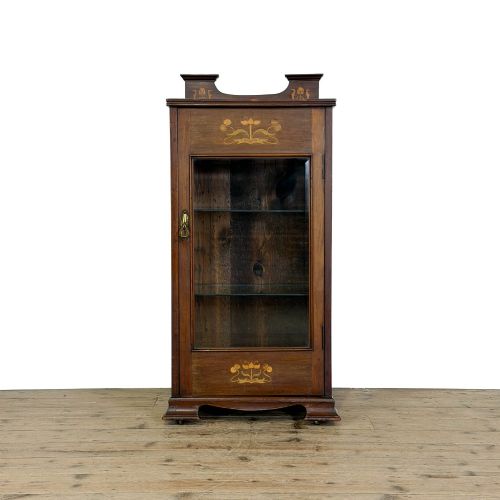
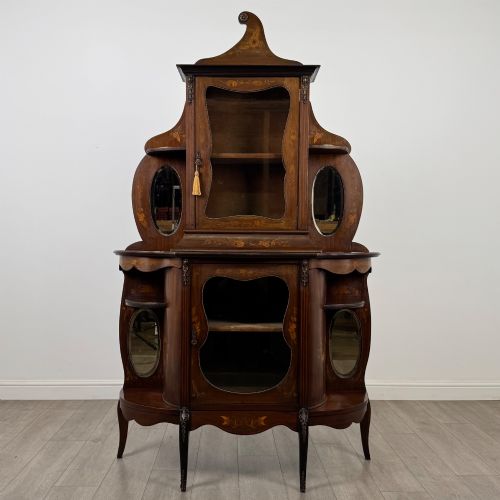
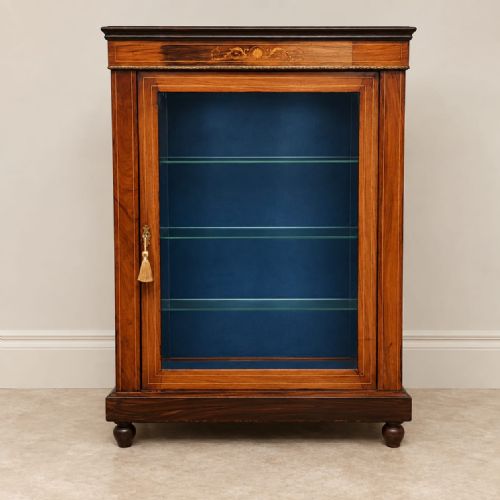
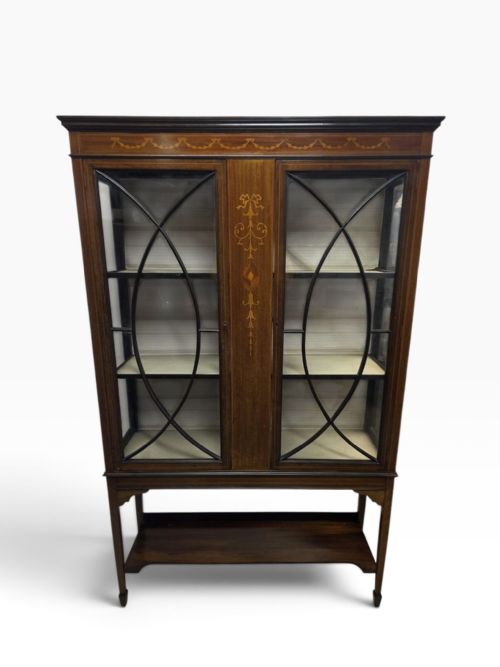
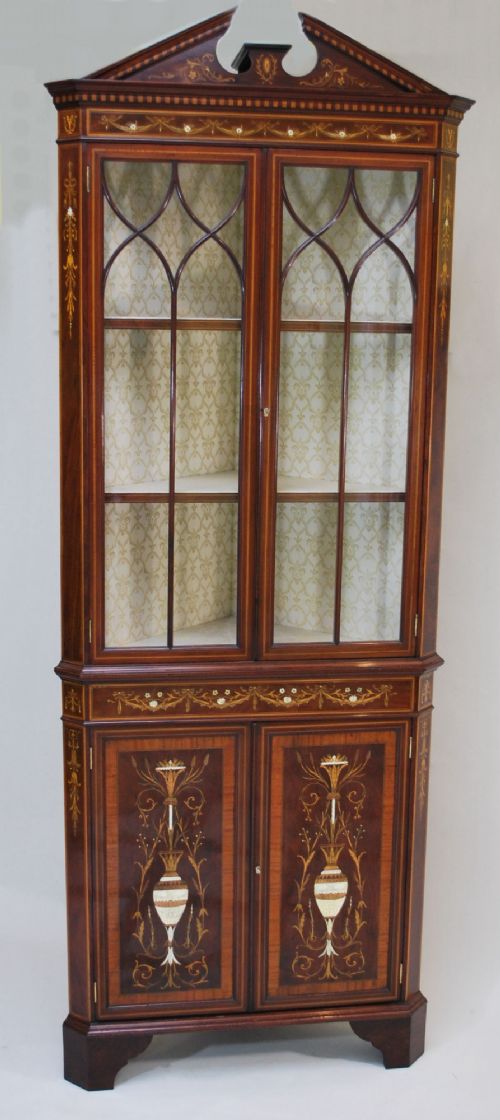
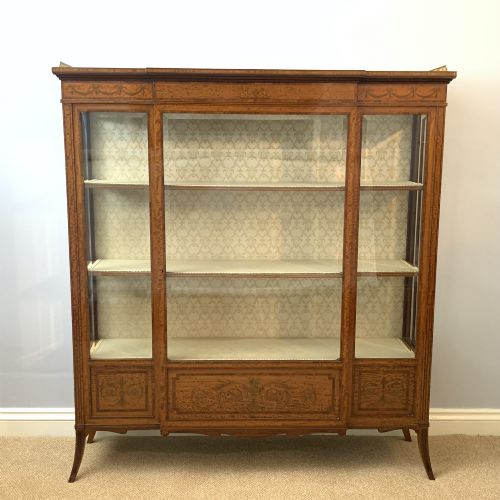
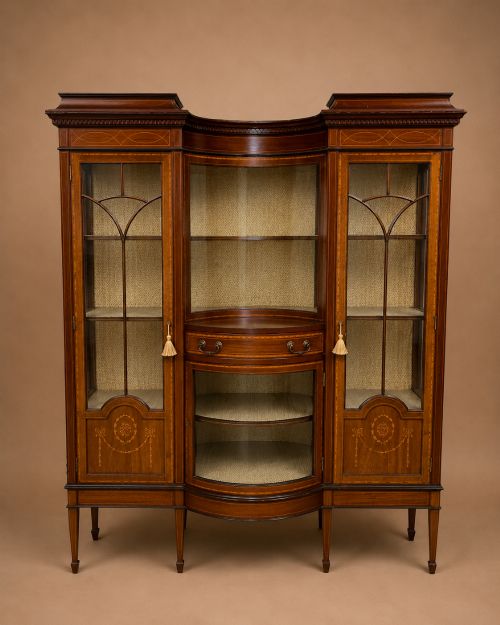
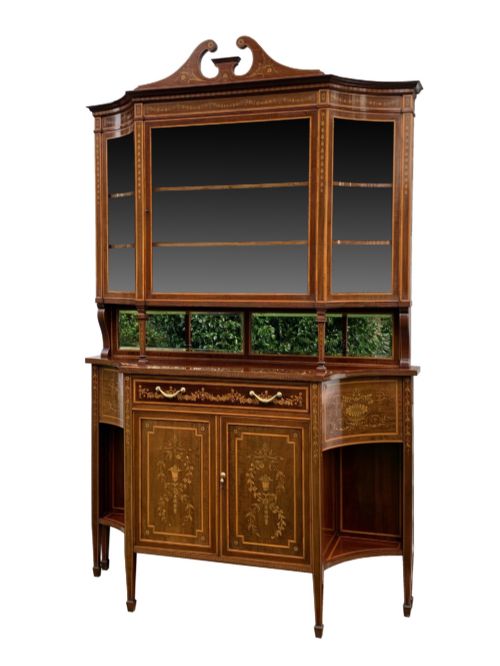
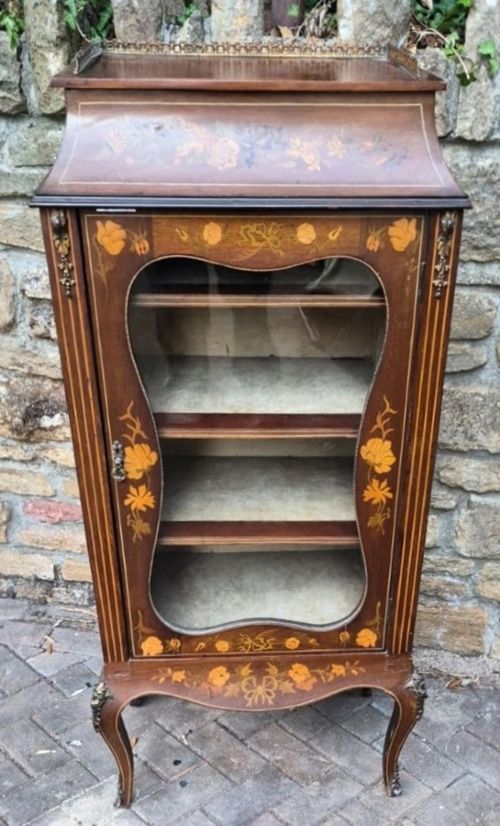
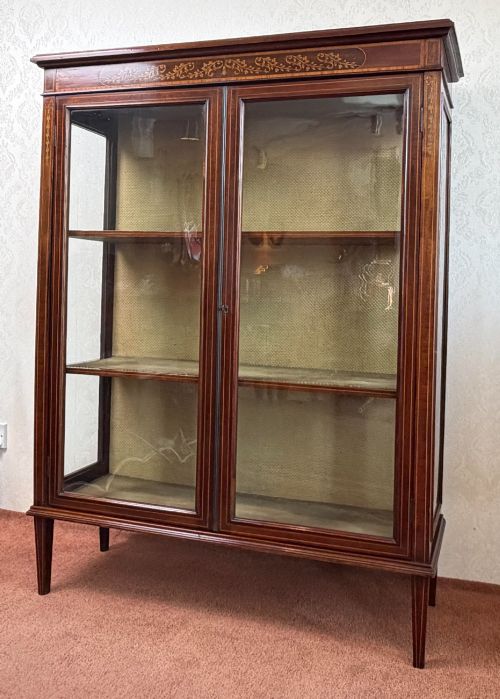
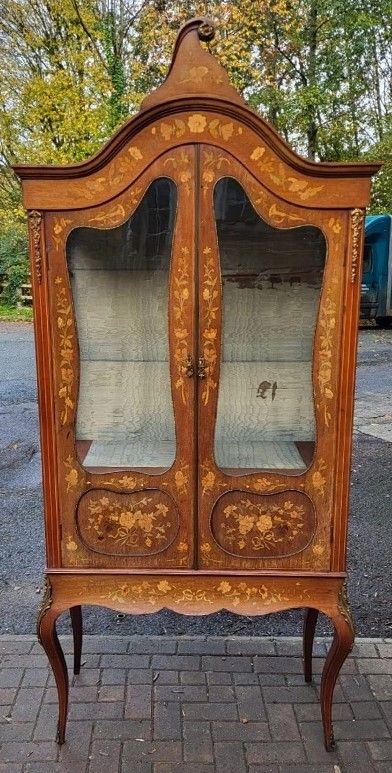
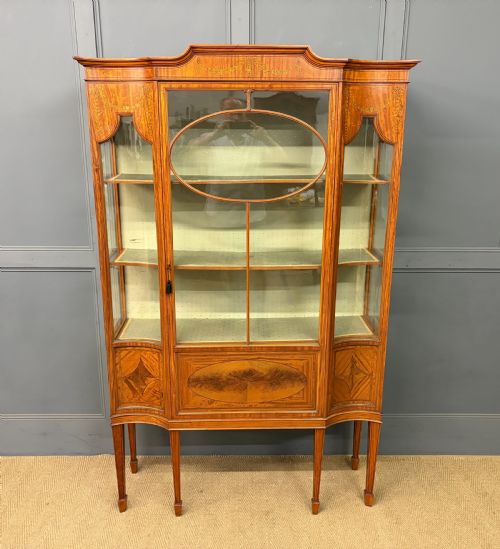
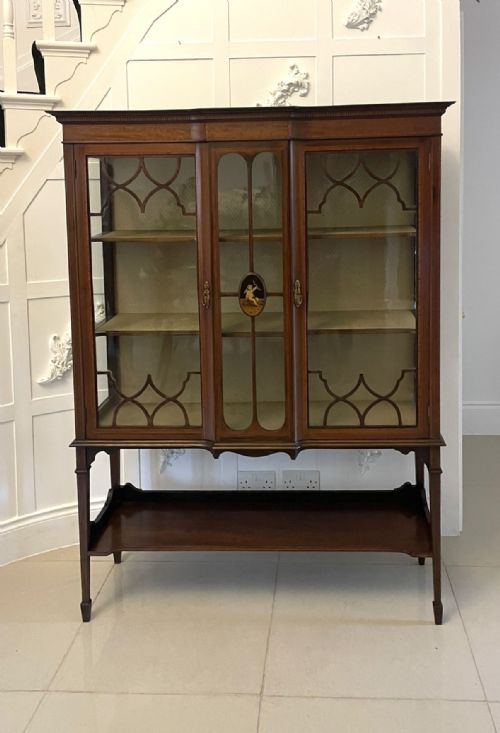
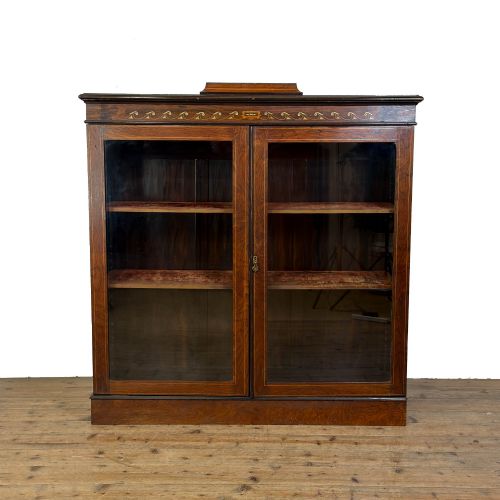
A marquetry china cupboard serves to store and display porcelain, taking the form of display cabinets, corner cabinets, and bookcases with glazed doors. Most examples found here date from the Victorian and Edwardian periods, stretching from the late nineteenth century into the early twentieth century.
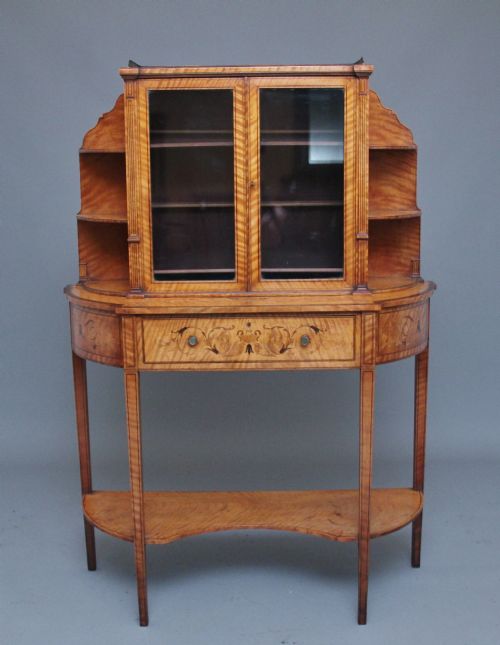
The layout typically combines wooden shelving enclosed by glass with intricate inlaid decoration on the doors or panels. Formats range from tall breakfront bookcases to compact corner units designed to fit domestic spaces.
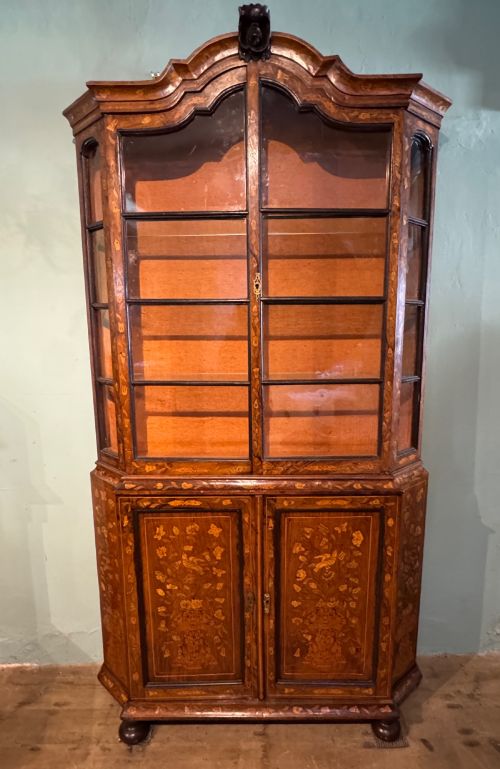
Origin styles lean heavily toward English interpretations of Sheraton and Hepplewhite aesthetics, alongside occasional continental pieces featuring Dutch floral marquetry in walnut.
How they were made
Construction relies on solid and veneered timbers, predominantly mahogany, walnut, and satinwood, which provide a stable carcase for detailed surface work. Cabinetmakers sliced contrasting woods into thin veneers to create pictorial or geometric floral patterns using hand-cut inlay techniques.
Glazing relies on timber framing, sometimes featuring astragal bars to divide the glass panes into geometric patterns. Additional decorative elements such as brass fittings, ormolu mounts, and mirrored back panels appear within the display interiors.
Listings feature periods spanning from the Victorian era through Edwardian times, utilising mahogany, walnut, and satinwood.
What varies in quality
The finesse of the inlay work marks the distinction between standard production and superior craftsmanship. Precision in matching the grain and cutting the contrasting wood veneers determines how sharply the floral or geometric motifs read.
Timber selection and secondary framing integrity dictate overall durability. Fine cabinets employ high-grade mahogany or figured walnut with consistent polishing, whereas simpler pieces rely on more uniform veneers and less complex structural detailing.
Edwards and Roberts·Maple and Co
The Marquetry China Cupboard Glossary
- Marquetry
- Decorative woodwork where pieces of contrasting veneer are fitted into a ground material to form pictures or ornamental patterns. It differs from inlay by covering the entire surface in a mosaic fashion.
- Astragal glazing
- Wooden bars that divide a glass window into smaller panes within a cabinet door. These delicate mouldings structure the view into the display interior.
- Breakfront
- A cabinet facade where the central section projects forward from the flanking wings. This architectural arrangement creates depth and shadow across the piece.
- Ormolu
- Gilded bronze mounts applied to furniture for decorative accent. It appears on mid-to-late nineteenth-century cabinetwork.
- Satinwood
- A light-coloured, lustrous timber native to India and Sri Lanka used extensively for veneers and banding. Its golden sheen contrasts sharply with darker woods like mahogany.
Marquetry China Cupboard: Frequently Asked Questions
How do I date a cabinet?
Dating relies on timber choices, construction methods, and stylistic cues such as Edwardian Sheraton Revival motifs or Victorian proportions. Comparing the secondary woods inside the carcase helps confirm the era of manufacture.
Makers' marks or stamps, where present, offer definitive attribution to firms active during the nineteenth and early twentieth centuries.
Where should I place a corner cabinet?
Corner units suit underutilised angles in a room, turning dead space into functional display areas for porcelain and glassware. Their angled backs fit flush against adjoining walls.
Consider natural light levels in the room, as bright sun can fade delicate wood veneers and fabric interiors over time.
How do I care for the wood finish?
Maintenance involves dusting with a soft cloth and applying appropriate wax polish periodically to nourish the timber surface. Avoid placing wooden cabinets in direct sunlight or near heat sources to prevent veneer lifting.
Checking humidity levels in the room protects both the polish and the structural integrity of the aged carcase.