


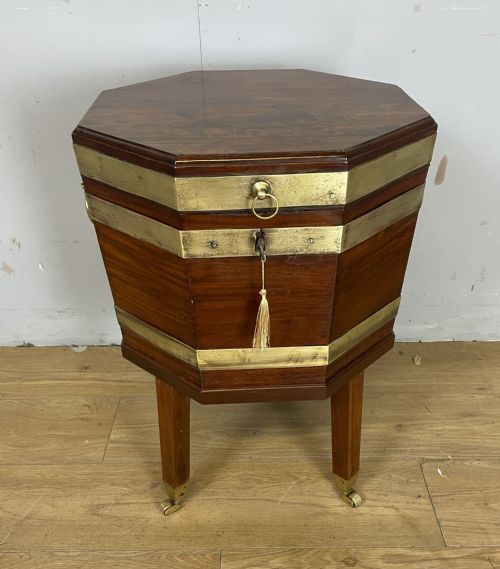


Lead Lined Wine Box
A lead lined wine box is a robust timber vessel designed to chill bottles, combining fine cabinetmaking with practical waterproof storage.
Lead Lined Wine Box
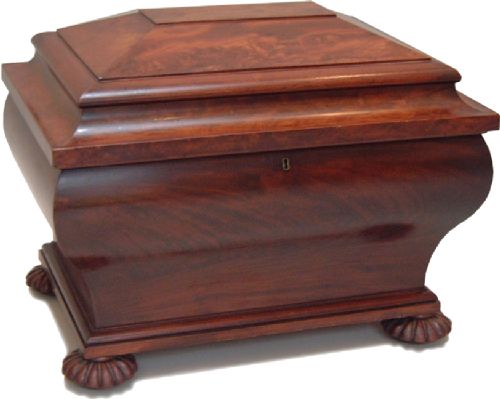
A lead lined wine box, also known as a cellarette or wine cooler, sits in dining rooms to keep bottles at the right temperature during meals. These timber receptacles date principally from the Georgian and Regency periods, stretching through the nineteenth century into Edwardian examples.
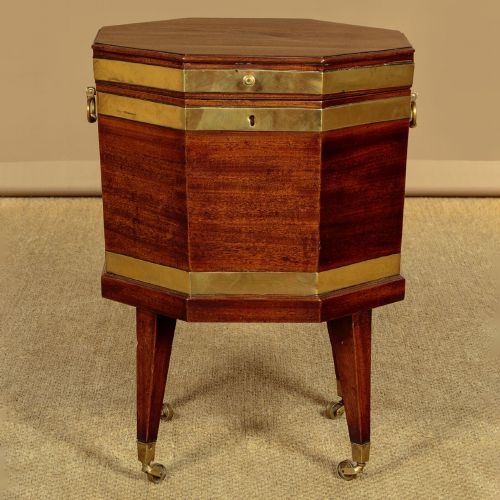
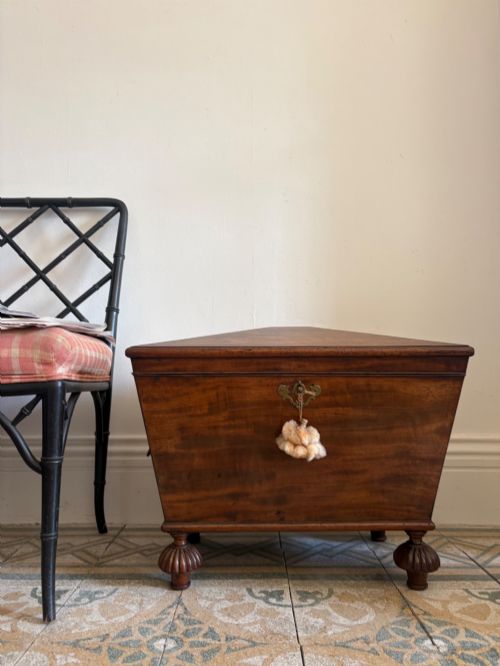
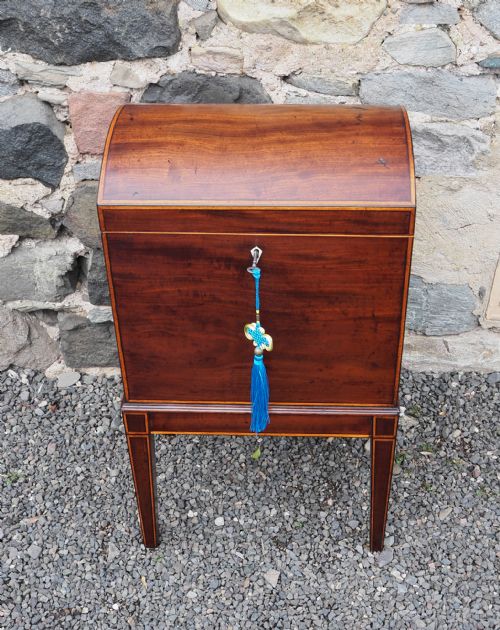
The form appears most frequently as a sarcophagus shape, alongside octagonal and rectangular variations. Mahogany forms the primary body timber, often accented with brass banding, boxwood inlay, or carved paw feet characteristic of grand interior schemes.
How they were made
Cabinetmakers constructed the main body using solid mahogany, frequently shaping the timber into sarcophagus or octagonal forms with close attention to proportion and grain. Brass banding and cast metal mounts provided both structural reinforcement and decorative contrast against the dark wood.
The interior incorporates a lead or zinc lining designed to hold ice and water safely without damaging the surrounding timber structure. Boxwood inlay adds fine linear detail to later Edwardian interpretations.
Early dining rooms required heavy metal liners so servants could pack wine in melting ice without soaking the family silver.
What varies in quality
The standard of timber selection and cabinet joinery dictates the distinction between ordinary utility items and exceptional pieces. Superior examples display carefully matched mahogany veneers, crisp carving on paw feet, and robust original metal mounts rather than later replacements.
The integrity and originality of the internal metal liner significantly influence the standing of the piece. Craftsmanship that integrates the heavy liner seamlessly into the timber framework denotes a higher grade of production.
The Lead Lined Wine Box Glossary
- Cellarette
- A lockable container used for storing and cooling bottles of wine before they were served at the dining table. They frequently stood on the floor beneath a sideboard.
- Sarcophagus
- A monumental tomb-like shape with a sloping lid, adopted by furniture designers in the Regency period for large wine coolers and cellarettes.
- Brass bound
- The practice of securing the wooden staves or sides of a vessel with metal bands, echoing the construction of coopered buckets and tubs.
- Paw foot
- A carved furniture foot resembling an animal paw, common on Regency and George IV furniture types.
Lead Lined Wine Box: Frequently Asked Questions
What is a cellarette?
A cellarette is a specialised storage box designed to hold wine bottles securely in a dining room. They were typically kept near the dining table for easy access during meals.
Inside, the waterproof lining allowed servants to pack the bottles in ice to keep the wine cool. They range from compact octagonal boxes to large sarcophagus-shaped floor standing pieces.
How were lead lined wine boxes used?
These boxes functioned as portable refrigerators for the dining room before modern cooling systems existed. Ice and water went directly into the lined compartment with the bottles.
The heavy lead or zinc lining protected the outer mahogany wood from moisture damage and rot. Once filled, the fitted lid kept the internal temperature stable throughout a long dinner.
How do I tell Georgian from Regency examples?
Georgian pieces often feature cleaner geometric lines, such as octagonal shapes with straight brass banding and bracket feet. They emphasise tidy proportions and restrained bracket supports.
Regency examples tend to adopt bolder classical motifs, including the sarcophagus silhouette, carved paw feet, and heavier brass handles. They reflect a grander archaeological influence popular in the early nineteenth century.
Can I use an antique wine box today?
Many people continue to utilise these boxes for their original purpose as wine coolers or bottle storage beside a dining table. The sturdy waterproof lining still functions well for holding ice and bottles.
Alternatively, they work effectively as storage chests for blankets, logs, or general household items in a living space. Their decorative timber grain and brass mounts make them striking standalone furniture accents.