
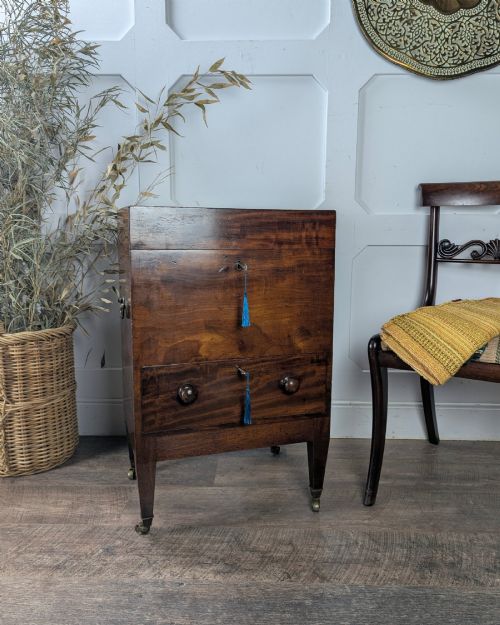
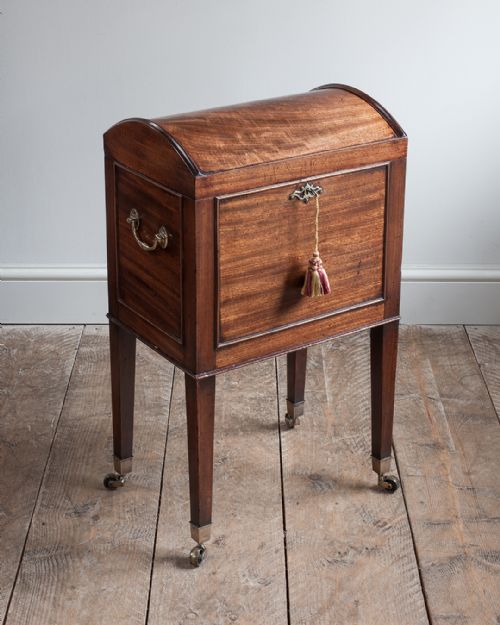


Wooden Bottle Storage Cabinet
A wooden bottle storage cabinet keeps your finest vintages secure and close at hand in handsome period timber.
Wooden Bottle Storage Cabinet
When you search for a wooden bottle storage cabinet, you encounter traditional vessels designed to hold wine and spirits safely. These pieces range from formal Georgian cellarettes to rustic pine cupboards and Edwardian storage barrels.
You are most likely to meet mahogany examples on this page, particularly from the Georgian and Regency periods. These take forms such as wine coolers, cellarettes, and drinks cabinets shaped to hold individual bottles securely.
The objects combine practical storage with formal design, reflecting how households managed their wine supplies across centuries. Makers adapted these forms to suit the dining rooms and cellars of their eras, employing substantial timber and secure fittings.
Construction and materials
Craftsmen built these cabinets primarily in mahogany and pine, often selecting flame mahogany for its striking grain patterns. Boxwood inlay frequently provides crisp geometric contrast along the edges and panels.
Metal hardware plays an essential structural and decorative role, with brass straps, bands, and carrying handles fitted securely to the timber. Glass elements and interior metal linings appear in specific cooler forms to manage ice and bottles.
Some Edwardian storage barrels came equipped with internal metal linings so they could double as ice buckets during garden parties.
Quality and craftsmanship
The quality of a piece rests upon the selection of timber and the precision of its joinery. Superior examples display carefully matched flame mahogany veneers and intricate boxwood inlay executed with exact lines.
Hardware contributes significantly to the distinction between standard and exceptional pieces. Heavy, well-cast brass mounts and original carrying handles indicate higher workshop standards during manufacture.
Gillows of Lancaster and London·Whytock & Reid
The Wooden Bottle Storage Cabinet Glossary
- Cellarette
- A lockable container or cabinet designed for holding wine bottles near the dining table. They often feature fitted interior compartments and sturdy carrying handles.
- Flame mahogany
- A highly figured wood veneer derived from the branch junctions of the mahogany tree. It produces a distinctive feather or flame pattern prized in formal furniture.
- Boxwood inlay
- A decorative technique where small strips of pale boxwood are inserted into recesses cut into darker timber. This creates sharp linear patterns and contrasting borders.
- Brass banding
- Metal strips secured around the exterior of wooden barrels and coolers to reinforce the structure. They add both structural strength and visual contrast to the timber.
Wooden Bottle Storage Cabinet: Frequently Asked Questions
What is a cellarette?
A cellarette is a specialised storage vessel designed to hold wine bottles securely in a dining room or cellar. These pieces often feature fitted interiors to keep bottles separated and protected.
Historically, they were kept near the dining table so hosts could serve guests without constantly visiting the main cellar. Many included locks to restrict access to valuable vintages.
How do I date a wooden bottle cabinet?
Dating relies on identifying the prevailing timber choices, hardware styles, and construction techniques of specific periods. Georgian and Regency pieces typically showcase solid mahogany and refined brass mounts.
Later Edwardian and twentieth-century examples often introduce pine, simpler hinges, or different inlay patterns. Examining the interior linings and wood ageing helps confirm the era of manufacture.
Where were these cabinets used?
These cabinets were primarily housed in dining rooms, drawing rooms, and dedicated wine cellars of large homes. They provided a practical station for decanting and serving wine during formal meals.
Portable designs with carrying handles allowed servants to transport bottles easily between the cellar and the dining table. Barrel-shaped versions were often positioned in service areas or large halls.
How do I care for antique mahogany?
Maintain antique mahogany by keeping it away from direct sunlight and sudden temperature changes that can dry out the timber. Regular dusting with a soft, dry cloth preserves the polished surface.
Applying quality wax polish occasionally nourishes the wood and enhances the natural grain. Avoid placing damp items directly onto the unsealed wooden surfaces.