


Lead Glass Decanter
A lead glass decanter brings weight and clarity to the table, holding spirits or wine while catching the light.
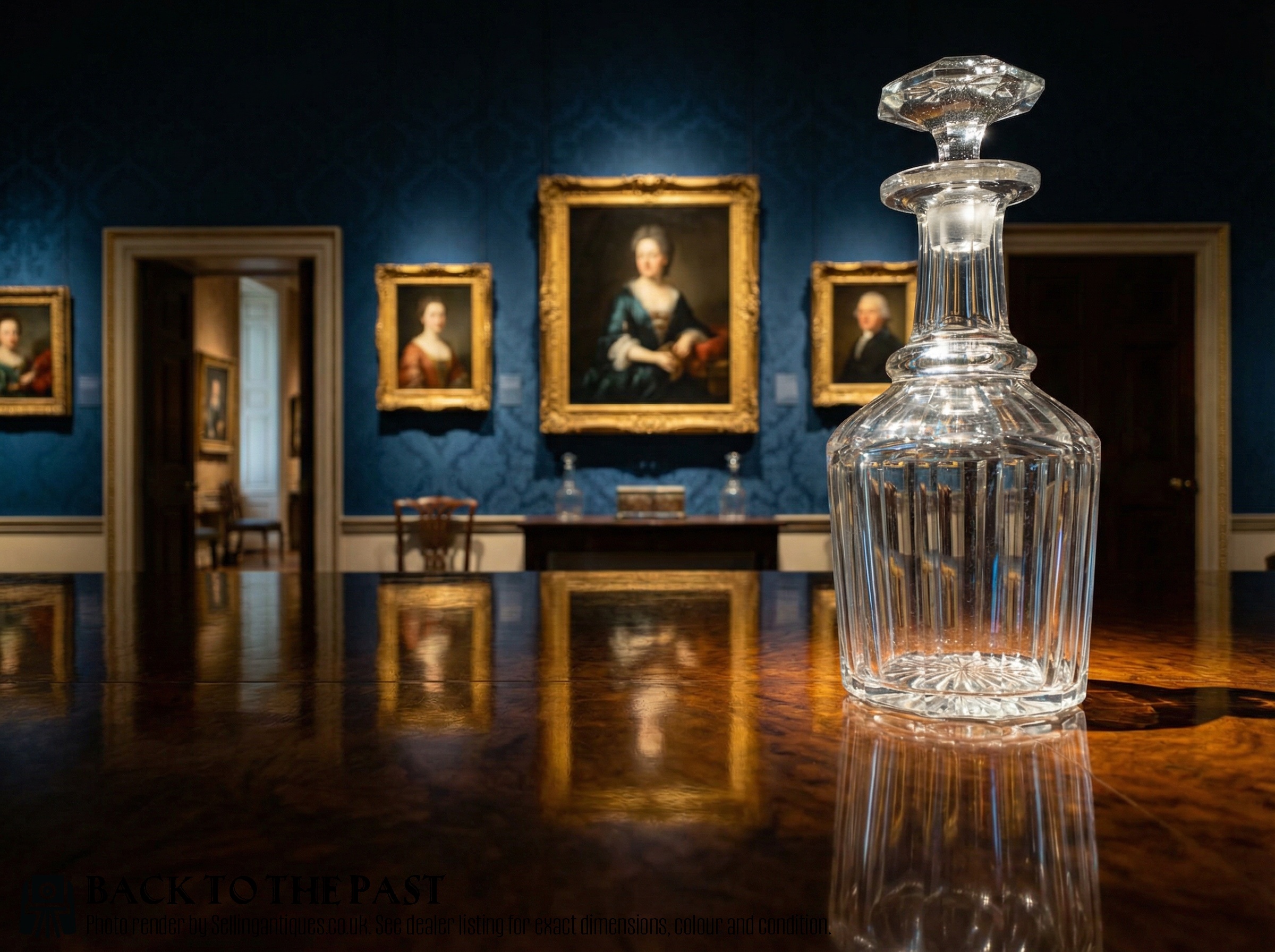
Lead Glass Decanter
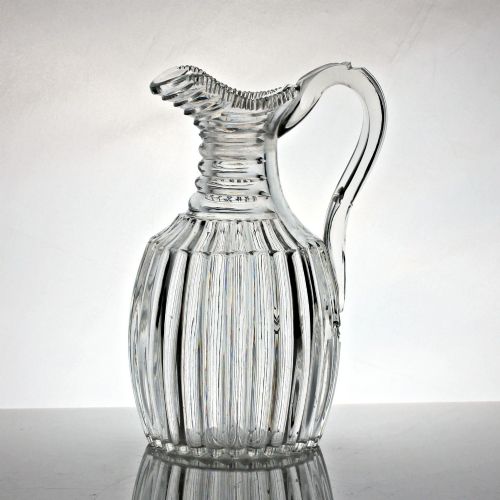
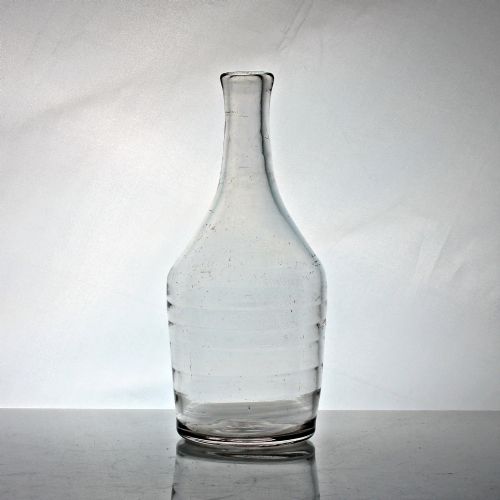
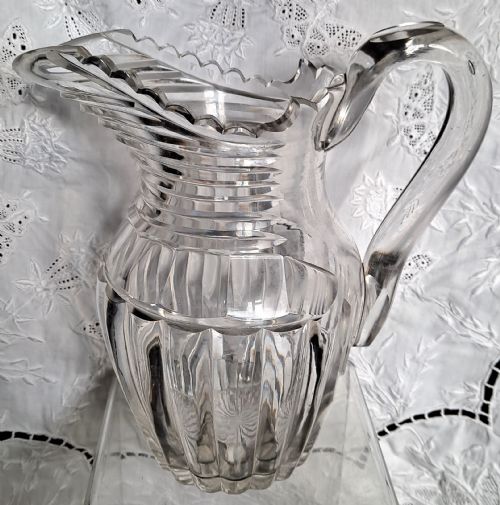
A lead glass decanter sits among a lineage spanning the eighteenth, nineteenth, and early twentieth centuries, encompassing Georgian, Victorian, and Edwardian eras. Buyers encounter various vessel types designed for spirits and wine, including shoulder decanters, prussian styles, ship's decanters, and tall ewers or jugs.
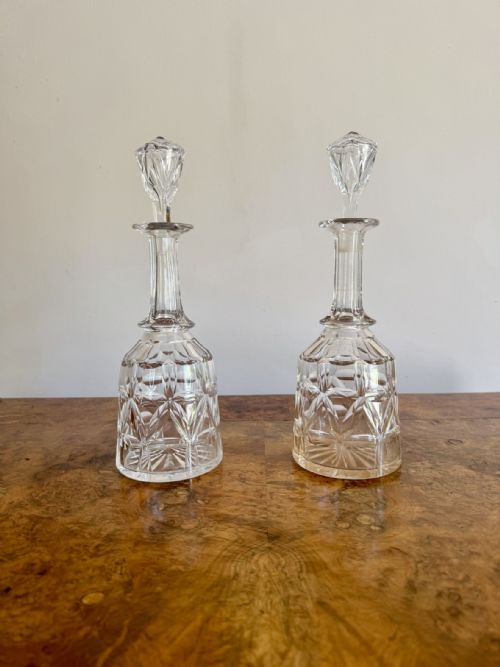
The selection ranges from early Georgian pieces featuring Lynn rings or sugarloaf proportions to heavy Victorian and Edwardian cut glass examples. Many survive in matched pairs or trios, alongside individual large formats intended for brandy, whisky, madeira, or beer.
Materials and construction methods
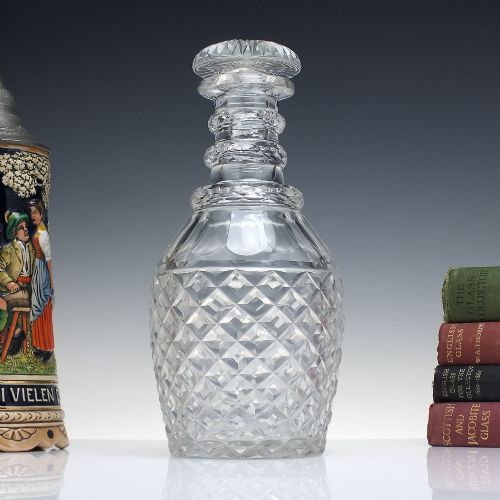
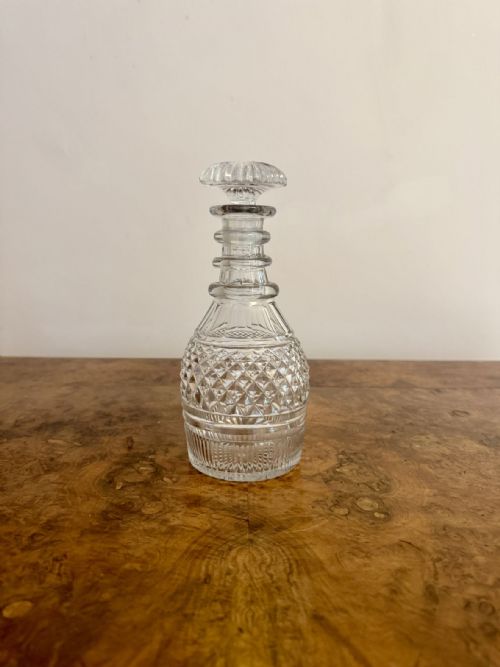
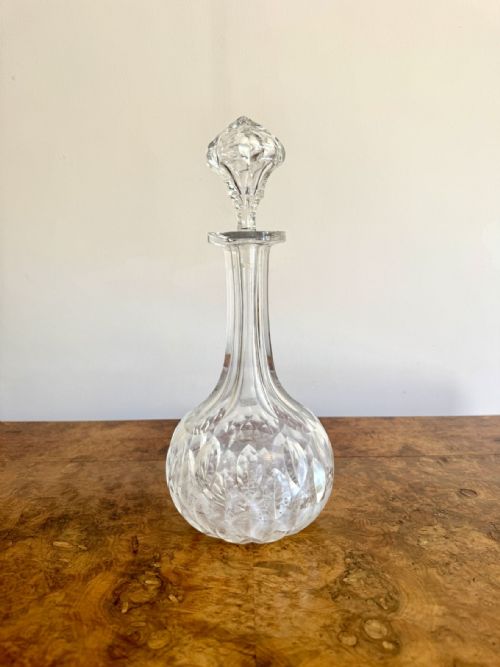
These vessels utilise heavy lead glass, crystal, and clear cut glass, shaped through blowing and optical moulding. Artisans applied deep surface cutting, pillar and prism cuts, and horizontal neck rings to reinforce grip and refract light.
Lead Glass Decanter Retail Price Guide 2026
Typical asking prices for lead glass decanter among the pieces listed under this phrase on Sellingantiques today, from the lower quarter to the upper quarter. They describe what is for sale here now, not the wider market.
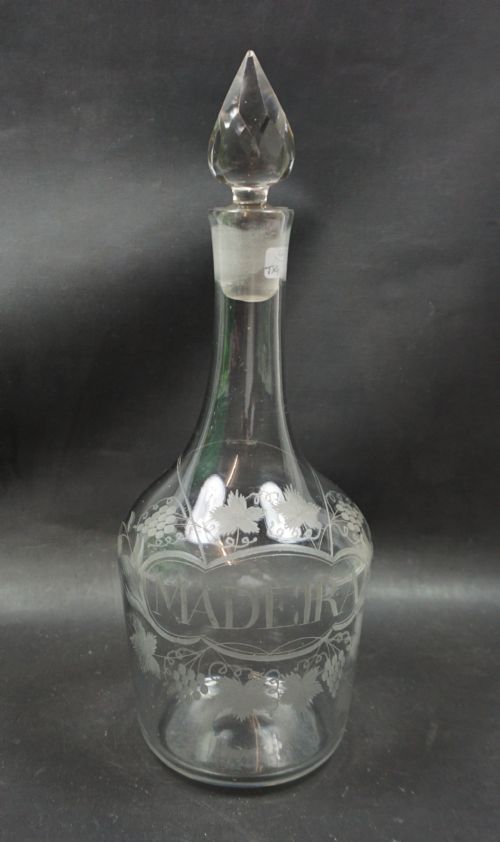
Some vessels bear specific liquor names etched directly into the glass, ensuring nobody accidentally pours brandy where the whisky belongs.
Distinctions in craftsmanship
Superior examples demonstrate crisp, deep cutting that remains sharp to the touch, paired with heavy metal weight and exceptional clarity of the glass. The precision of the neck rings and the symmetry of the body shape distinguish finer workshops from standard production.
Engraved ornamentation shows varying degrees of hand skill, where fluid lettering and balanced floral or geometric motifs elevate a utilitarian vessel into a display piece.
James Powell
The Lead Glass Decanter Glossary
- Lynn ring
- A horizontal raised glass ridge encircling the neck of a decanter, historically associated with eighteenth-century production.
- Prussian style
- A distinctive decanter shape featuring a tapered body and broad shoulders, popular during the Georgian and Regency periods.
- Pillar cut
- A linear vertical cutting style that creates flat facets down the body of the vessel, enhancing light refraction in lead crystal.
- Mell decanter
- A specific rounded bottle form with a tapered neck, often utilised for spirits during the late eighteenth and early nineteenth centuries.
- Ship's decanter
- A wide-based vessel designed with a sloping profile to prevent tipping aboard a moving vessel at sea.
Lead Glass Decanter: Frequently Asked Questions
How do I identify a Georgian decanter?
Georgian decanters typically display hand-blown bodies with distinctive neck rings, such as Lynn rings or Prussian styles, alongside deep hand-cut facets. Their glass often exhibits slight surface irregularities and a heavy, tactile quality.
Later Victorian and Edwardian versions tend toward more uniform machine-assisted clarity and heavier overall lead crystal weights with extensive overall pillar or prism cutting.
Can I use antique decanters for daily serving?
These vessels were built for functional hospitality, holding wine, whisky, brandy, and beer in domestic settings. Modern users continue to pour spirits and wine from them during dining.
Careful hand washing preserves the clarity of the lead glass and protects any delicate surface engraving.
Why do some decanters have engraved labels?
Engraved labels on the body of a decanter identify the intended contents, such as madeira, brandy, or whisky. This practice helped hosts distinguish between similar dark spirits on the dining table.
These inscriptions range from simple cursive lettering to detailed cartouches executed by hand.