



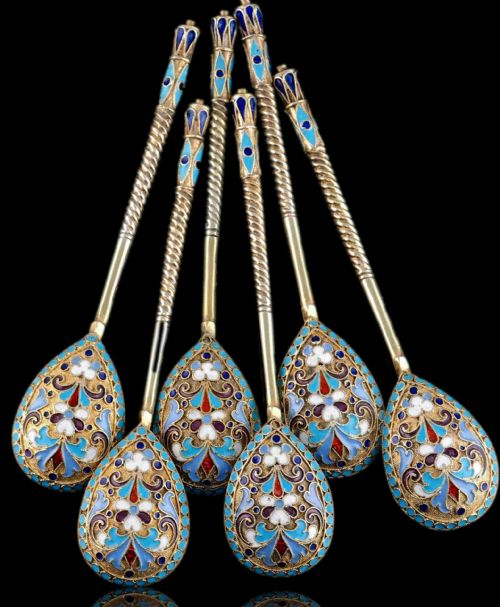


Late Victorian Silver Set
A late victorian silver set brings together matching tableware, cruets, or cutlery produced during the final decades of the nineteenth century.
Late Victorian Silver Set
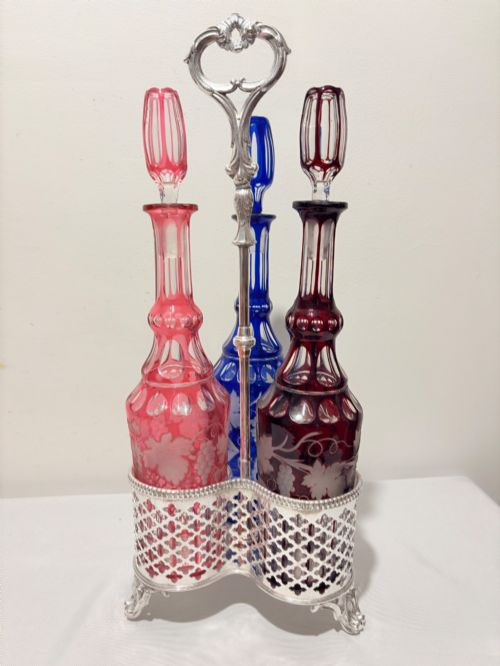
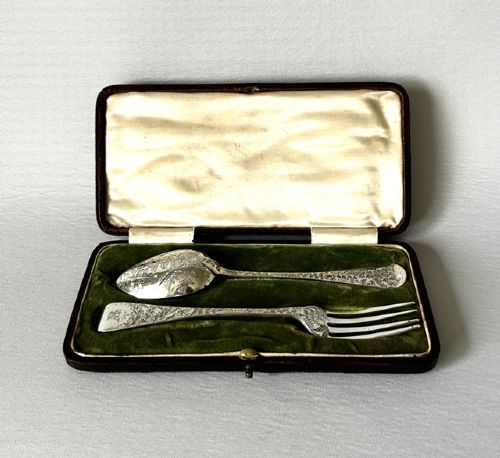
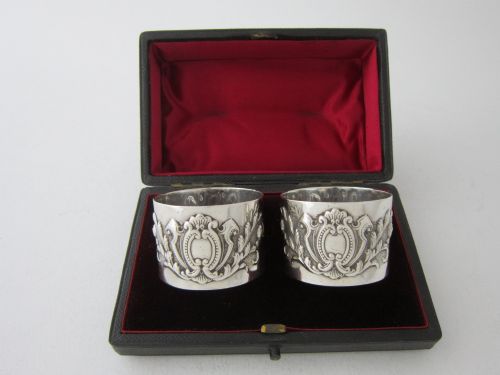
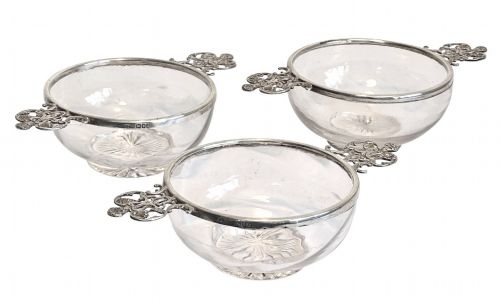
A late victorian silver set encompasses matching groupings created for dining, writing, and personal grooming during the 1880s, 1890s, and the turn of the twentieth century. These configurations range from tea services and cruet frames to boxed Christening cutlery and numbered napkin ring collections.
Cruet sets and tea services dominate the surviving material, often housed in original fitted wooden boxes lined with velvet or silk. Buyers encounter both solid sterling silver and silver plated metal, frequently combined with cut glass, ceramic inserts, or horn handles.
How they were made
Makers utilised sterling silver or applied silver plating over base metals through electroplating techniques developed during the period. Workshop assembly often combined cast mounts with hand-engraved surface patterns, chased details, and applied wirework.
Composites feature organic elements such as elephant horn, walnut, oak, coromandel, mother-of-pearl, and cut glass integrated directly into metal frames. Fitted presentation boxes lined with velvet or silk required specialised carpentry and upholstery skills.
Listings feature items from the Victorian and Late Victorian periods, spanning the 1880s through 1900.
What varies in quality
Quality rests upon the weight of the metal, the crispness of chased or engraved ornament, and the integrity of any fitted housing. Superior examples retain their original presentation boxes, matching numbering across all component parts, and undamaged glass or ceramic inserts.
The standard of assembly dictates durability, visible in sturdy hinges on wooden canteens, securely anchored handles on tea services, and even electroplate coverage across complex cruet frames without thinning on high points.
William Comyns·Daniel Arter·Walker and Hall·Dmitrii Nikolaevich Nikolaev·Frank Butler·Hukin and Heath·Lee and Wigfull·Mappin and Webb·John Grinsell and Son
The Late Victorian Silver Set Glossary
- Cruet set
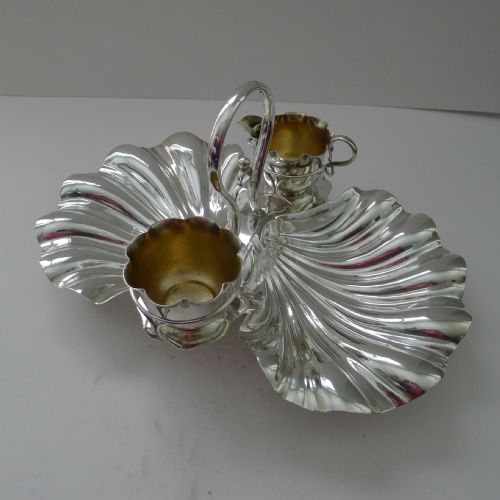
- A collection of glass bottles or jars mounted in a metal frame for holding condiments at the dining table. These typically include receptacles for mustard, oil, vinegar, pepper, and salt.
- Silver gilt
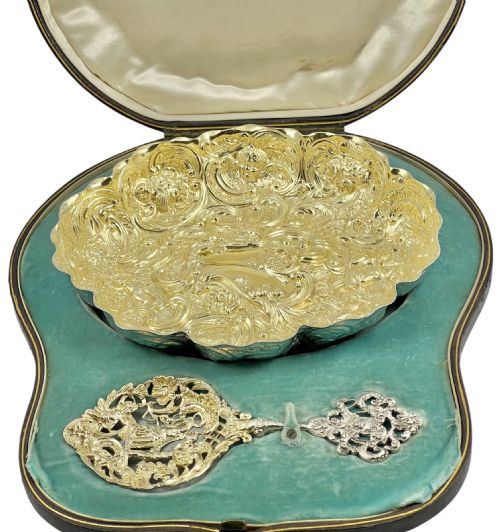
- Sterling silver that has been coated with a thin layer of gold on its surface, creating a rich two-tone or fully golden appearance. This technique appears frequently on spoons, bowls, and interior vessel linings.
- Tantalus
- A locking wooden drink cabinet featuring a metal framework that secures decanters by their necks while allowing their contents to remain visible. Oak and coromandel versions house cut glass bottles with silver plated mounts.
- Cloisonne
- An enamel decoration technique where thin metal wires form raised partitions on a metal base, creating cells filled with coloured glass paste and fired. Russian makers utilised this method extensively on silver spoon sets.
- Hallmark
- An official stamp applied to precious metals indicating the assay office, standard of purity, and year of manufacture. English silver bears distinct marks from cities including London and Sheffield.
Late Victorian Silver Set: Frequently Asked Questions
How were cruet sets used?
Cruet sets held liquid and powdered condiments during formal Victorian meals, allowing diners to season food at the table. Individual bottles accommodated vinegar, oil, mustard, and pepper within reach of guests.
Servants placed these metal frames at the centre of dining tables or upon sideboards. The fitted bottles remained in their stands throughout the meal and underwent cleaning between courses.
What is a bachelor tea set?
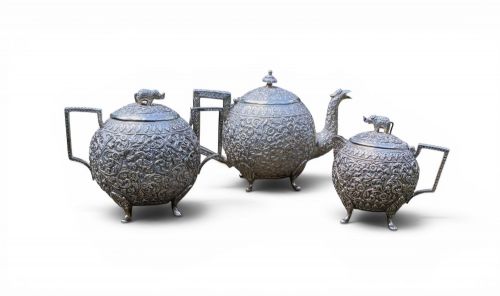
A bachelor tea set is a scaled-down tea service designed for one or two people rather than large gatherings. These compact groupings typically include a teapot, milk jug, and sugar bowl.
Such sets suited smaller Victorian households, apartments, or private sitting rooms. Their reduced proportions distinguish them from full-sized family tea services.
Are original boxes important?
Original presentation boxes protect the contents and confirm that the items were retailed as a unified suite. Fitted interiors lined with silk or velvet often feature maker stamps inside the lid.
Sets retained in their original wooden or leather cases command strong collector interest. The presence of a matching box indicates the grouping has remained together since manufacture.
How do I care for silver plate?
Silver plate requires gentle cleaning with non-abrasive polishes formulated specifically for plated objects. Harsh scrubbing wears away the thin outer layer of silver and exposes the base metal underneath.
Storing pieces in dry environments away from direct sunlight prevents tarnishing. Items with organic elements like horn or wood require protection from excessive moisture during cleaning.