


Sterling Silver Christening Set
A sterling silver christening set is a traditional gift of cutlery or small tableware, marked by Victorian and Edwardian craftsmanship.
Sterling Silver Christening Set
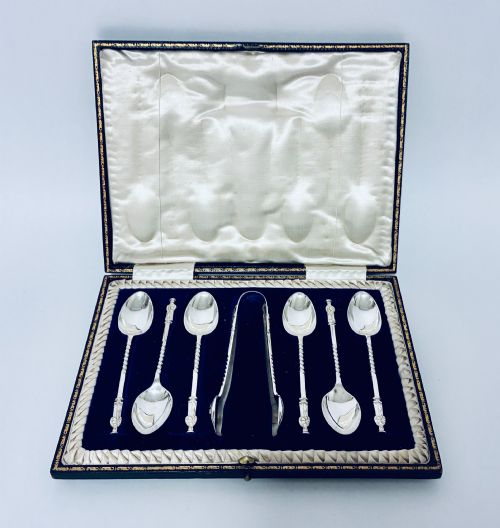
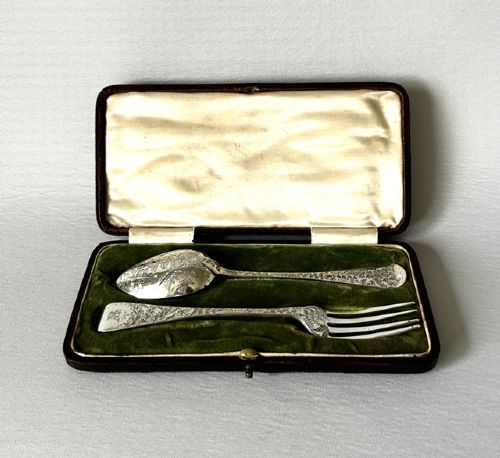
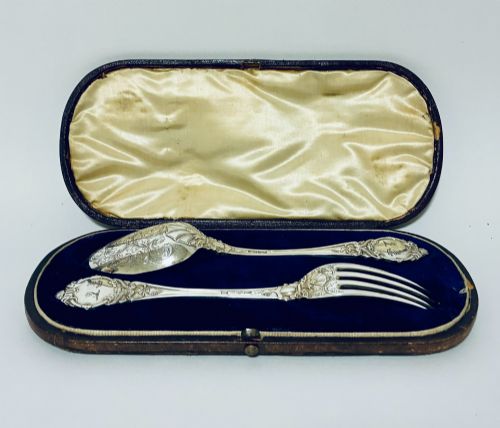
A sterling silver christening set comprises small silver tableware items presented as gifts for infants, most commonly encountered in Victorian and Edwardian boxed configurations. These groups frequently include forks, spoons, knives, or specialised pieces such as pushers and egg cups intended for a child's first meals. Buyers searching for a sterling silver christening set encounter single-piece cutlery items alongside matching three-piece services and larger presentation sets.
The objects span periods from the Georgian era through to the mid-twentieth century, with Victorian examples dominating the available selection. Many survivals retain their original fitted cases lined with silk, velvet, or leatherette, preserving the contents against tarnish and wear. Formats range from simple spoon and fork pairings to elaborate sets featuring apostle handles, child motifs, or nursery rhyme themes.
Materials and construction
Silversmiths utilised sterling silver for the primary utensils, often combining the metal with organic handles carved from mother-of-pearl or ivory. Cutlery blades and tines were shaped, hammered, and hallmarked to certify the metal standard, while specific feeding pieces like pushers and egg cups were cast or stamped.
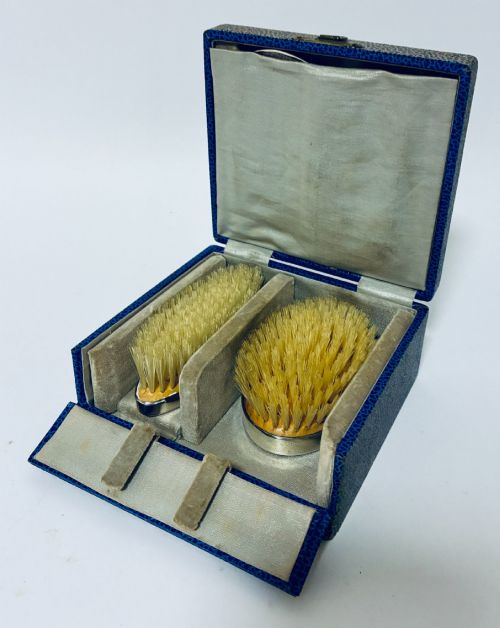
Presentation cases were constructed from wood covered in leather or leatherette, then lined with fitted beds of silk or velvet to cradle each component securely. Natural bristle brushes and vanity elements occasionally accompany the tableware in related fitted boxes.
Sterling Silver Christening Set Retail Price Guide 2026
Typical asking prices for sterling silver christening set among the pieces listed under this phrase on Sellingantiques today, from the lower quarter to the upper quarter. They describe what is for sale here now, not the wider market.
Listings span from the Georgian period through the Victorian and Edwardian eras up to the mid-twentieth century.
Evaluating craftsmanship
Differentiation across the range depends on the complexity of the silversmith's work, from plain fiddle-pattern spoons to pieces chased with cherubs or Art Nouveau ornamentation. The presence of a maker's mark from distinguished firms elevates the standing of a set.
The preservation of the original fitted case and the crispness of the hallmarked details on the silver surface separate ordinary items from finer examples.
Tiffany & Co·Walter & John Barnard·JOHN ROUND·ELKINGTON & CO·Mappin & Webb
The Sterling Silver Christening Set Glossary
- Sterling silver
- A silver alloy containing 92.5 percent pure silver and 7.5 percent other metals, usually copper. This standard composition provides the durability required for functional tableware.
- Christening set
- A matched group of small eating utensils or tableware given to mark an infant's naming ceremony. These collections often comprise a fork, knife, and spoon.
- Spoon and pusher
- A pairing consisting of a standard spoon alongside a blunt, wide-faced utensil designed to push food onto the spoon. This combination was popular in twentieth-century baby feeding sets.
- Hallmark
- An official stamp applied to precious metals indicating the standard of purity, the assay office, and the date letter. British pieces commonly display these marks on the reverse of the cutlery.
- Mother-of-pearl
- The iridescent internal layer of mollusc shells used historically for knife handles. It provides a smooth, tactile grip for a child's hand.
Sterling Silver Christening Set: Frequently Asked Questions
What is included in a christening set?
A standard set typically contains a small fork and spoon, and frequently includes a matching knife, egg cup, or food pusher.
Many examples are assembled as a three-piece service designed specifically for a child's early meals.
Are these sets safe to use?
While manufactured as functional tableware for children, most surviving antique pieces are acquired today as collectible display items or traditional keepsakes.
Silver possesses natural antibacterial properties, but the age and historical nature of antique handles recommend careful handling.
How do I date a silver set?
Dating relies upon the stamped hallmarks found on the metal components, which indicate the specific assay office and year of manufacture.
Stylistic indicators such as Victorian ornamentation or Edwardian contours also help identify the period.
Why are most sets boxed?
These items were retailed as special gifts, so they were supplied in fitted presentation cases lined with silk or velvet.
These original cases protected the silver from tarnish and kept the lightweight pieces together over generations.