


Cased Silver Christening Set
A cased silver christening set brings together precious metal cutlery or vessels housed in tailored velvet and silk boxes for an infant's milestone.
Cased Silver Christening Set
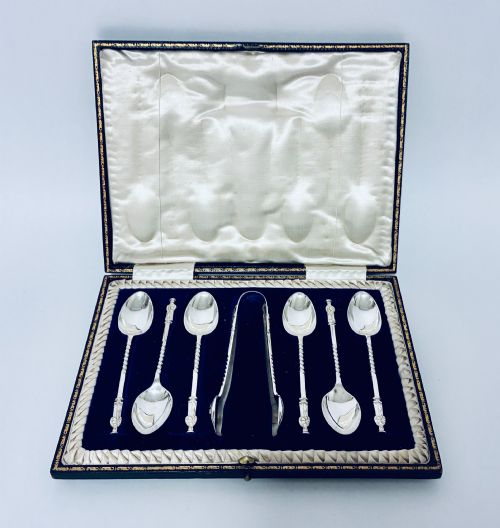
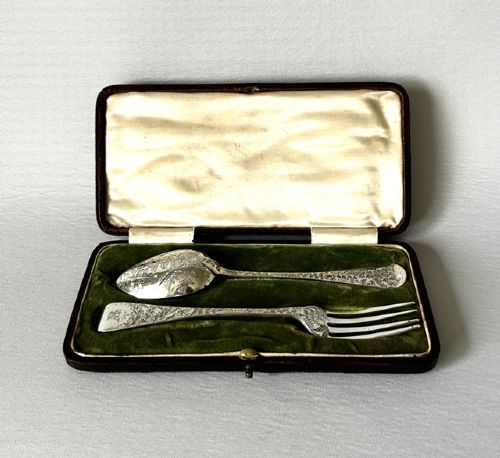
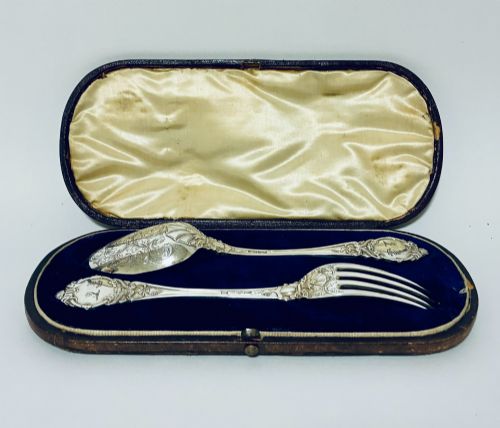
A cased silver christening set comprises bespoke eating utensils, egg cups, napkin rings, or spoons created to mark the naming of a child. You find these items principally from the Victorian and Edwardian eras, stretching through the Art Deco period.
The most common configurations on this page are three-piece cutlery collections, sets featuring a spoon and a food pusher, or ensembles including a napkin ring and an egg cup. Many incorporate Apostle spoons or whimsical handles shaped like teddy bears or the man in the moon.
Originating largely from English assay offices in Birmingham, Sheffield, and London, these items served as enduring gifts from godparents to newborns. Their survival in original fitted containers reflects careful preservation through generations.
How they were made
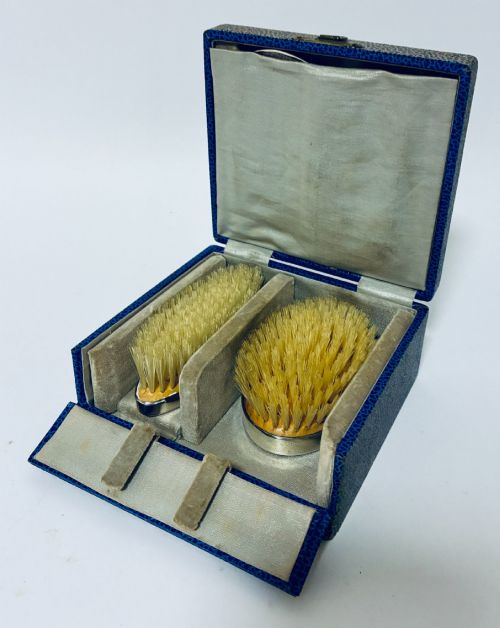
Silversmiths shaped solid sterling silver or silver plate into spoons, forks, and hollowware, often employing detailed engraving and figural casting. Handles were shaped into decorative motifs or fitted with natural bristles for related vanity implements.
The protective presentation cases relied on rigid wooden or card foundations covered in leather, leatherette, or faux leather. Makers lined the interiors with gathered silk and plush velvet to cradle each silver component securely.
Some infants dined under the watchful gaze of a silver man in the moon.
What varies in quality
Quality rests upon the weight of the solid silver and the crispness of the chased or engraved ornamentation on the handles. Substantial gauge metal resists bending during use, marking the difference between standard production and superior workshop output.
The condition and integrity of the original fitted case dictate the overall desirability of the set. Original hinges, intact silk linings, and functional clasps preserve the complete historical object.
Thomas Harwood and Co·JOHN ROUND·Sanders and Mackenzie·Lanson Ltd·Wm Adams Ltd·Broadway and Co·Docker and Burn Ltd·Henry Williamson Ltd
The Cased Silver Christening Set Glossary
- Hallmark
- An official stamp applied to precious metals indicating the maker, assay office, and year of testing. These tiny marks provide the key to dating British silver accurately.
- Pusher
- A specialised flat utensil with a broad end designed to help infants push food onto a spoon. This form is a staple of twentieth-century child cutlery sets.
- Apostle spoon
- A spoon featuring the figure of an Apostle cast on the terminal of the handle. Victorian and Edwardian silversmiths revived this sixteenth-century tradition for celebratory sets.
- Leatherette
- A synthetic material embossed to imitate leather, commonly used for budget-conscious or mid-century presentation cases. It offers durability while maintaining a smart exterior.
- Hollowware
- Tableware such as egg cups and napkin rings formed from sheet silver rather than solid cast metal. These pieces require skilled forming and soldering.
Cased Silver Christening Set: Frequently Asked Questions
What is inside a cased silver christening set?
These sets typically contain a combination of a spoon, fork, food pusher, egg cup, or napkin ring made of solid silver or silver plate. They are arranged within a custom-fitted box lined with silk and velvet.
Some configurations feature whimsical figural handles such as teddy bears or characters, while others rely on traditional floral engraving or Apostle motifs.
How do I date a silver christening set?
Dating relies on the stamped hallmarks on the silver components, which indicate the specific assay office and year letter. Style indicators such as Victorian aesthetic details or Art Deco geometric lines also help place the set in its proper era.
The exterior materials of the case, shifting from leather in the nineteenth century to leatherette later on, offer secondary clues to the period of manufacture.
Were these sets used for dining?
Many sets were intended as decorative keepsakes and display pieces rather than everyday tableware, which explains their survival in pristine condition. However, some pieces show gentle handling from actual use by infants during formal meals.
The presence of a food pusher or child-sized spoon indicates utensils scaled specifically for small hands learning to eat.
Why are the presentation cases important?
The box protects the soft silver from tarnish and physical damage while preserving the complete presentation intended by the original giver. An intact case with functioning latches adds historical context to the set.
Interiors lined with original velvet and silk display the silverware as a cohesive gift package created for a specific Victorian or twentieth-century christening.