
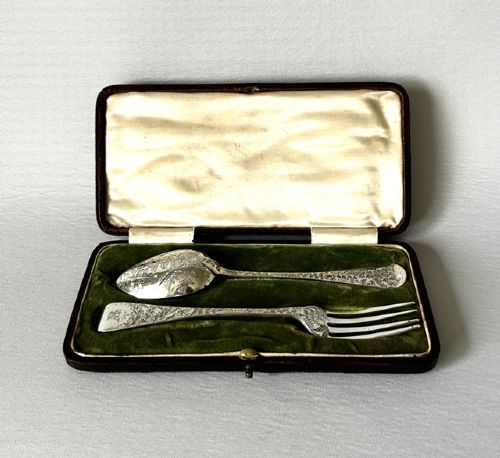
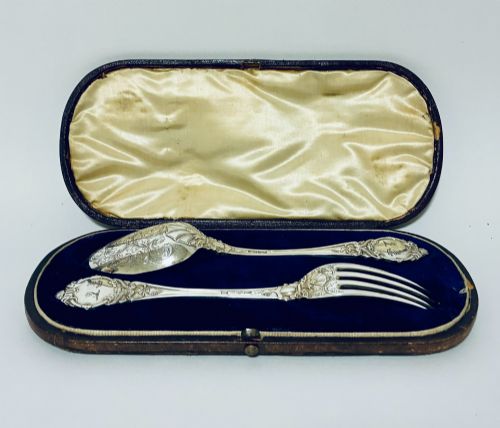


Silver Christening Cutlery Set
A silver christening cutlery set offers a tangible heirloom of nineteenth-century family life, combining precious metal with fitted presentation cases.
Silver Christening Cutlery Set
The most common versions met on this page are Victorian sterling silver sets comprising three pieces, often dated between eighteen eighty and eighteen ninety. They frequently arrive in original fitted boxes lined with velvet or silk.
Earlier Georgian examples also appear alongside nineteenth-century silver plate alternatives, expanding the range of forms beyond standard sterling. Each set provides a glimpse into domestic silver production aimed at the nursery.
How they were made
Makers utilised sterling silver and silver plate for the metal components, shaping them into diminutive forks, knives, and spoons suitable for a child's hands. Gilding occasionally appears on the silver surface to enhance the decorative effect of the eating implements.
The presentation cases demand equal note, constructed from wood or card covered in leather, leatherette, velvet, and silk. These bespoke interiors protected the soft metal of the cutlery during storage and presentation.
Infants in the nineteenth century received miniature knives designed with blunt rounded tips, ensuring nursery meals remained entirely safe.
What varies in quality
The distinction between standard items and the top of the range rests in the reputation of the silversmith and the completeness of the original fitted case. Pieces bearing marks from noted workshops command greater attention from collectors than anonymous productions.
The integrity of the lining materials within the box, such as undamaged silk and velvet, adds to the overall desirability of the survival. Engraving quality on the silver handles also separates basic workshop output from finely detailed nineteenth-century execution.
Walter and John Barnard·Thomas Harwood and Co·John Round·Martin Hall and Co·Aaron Hadfield
The Silver Christening Cutlery Set Glossary
- Sterling silver
- A silver alloy containing ninety-two point five percent pure silver by mass, standard for quality British cutlery. This metal provides the durable foundation for Victorian christening items.
- Silver plate
- A layer of silver applied to a base metal core, offering an alternative to solid sterling. This technique allowed nineteenth-century manufacturers to produce decorative sets at a lower cost.
- Silver gilt
- Sterling silver coated with a thin layer of gold on the surface. This treatment provided a rich decorative finish for specialised travelling and christening sets.
- Leatherette
- An imitation leather material utilised to cover the exterior of nineteenth-century presentation cases. It offered a durable and uniform protective shell for the velvet-lined interior.
- Assay office
- A body that tested the purity of precious metals and stamped items with official hallmarks. Birmingham and Sheffield offices frequently certified the metal standards found in these cutlery sets.
Silver Christening Cutlery Set: Frequently Asked Questions
What is a silver christening cutlery set?
A silver christening cutlery set is a collection of miniature eating utensils, typically comprising a knife, fork, and spoon, created as a traditional gift for an infant's baptism.
These pieces date predominantly from the nineteenth century and are usually preserved in fitted presentation cases lined with silk or velvet.
How were these sets used?
Despite their functional form, many christening sets served primarily as keepsake mementoes rather than everyday nursery tableware. They marked significant milestones in a child's early life and were kept safe within their original boxes.
Some travel or folding variants accommodated journeys, but the majority remained preserved as family heirlooms passed down through generations.
How do I identify Victorian sets?
Victorian sets can be identified through official hallmarks stamped on the metal components, which indicate the assay office, metal standard, and date letter. The presence of specific nineteenth-century design motifs and maker marks further confirms the era.
Associated presentation boxes lined with velvet and silk also point directly to Victorian retail practices and packaging standards.
Are all sets made of solid silver?
Not all sets consist of solid sterling silver, as nineteenth-century manufacturers also utilised silver plate over a base metal core. Hallmarks or specific maker stamps usually clarify whether a piece is solid sterling or plated.
Both solid silver and plated variants appear within nineteenth-century production, each reflecting different price points for buyers of the period.
How should I store a boxed set?
Boxed sets benefit from being kept in stable environmental conditions away from direct sunlight and excessive humidity to protect the delicate silk and velvet interior linings. The original fitted case provides the best physical protection for the soft silver cutlery inside.
Avoiding harsh chemical cleaning agents helps preserve both the silver hallmarks and the antique fabric linings of the presentation box.