


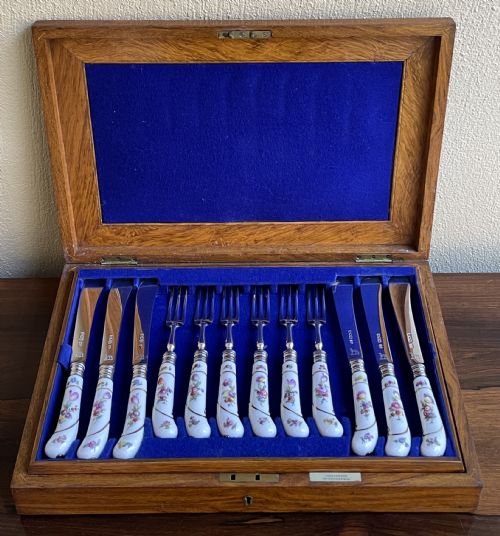


Victorian Silver Fork Knife
A victorian silver fork knife pairs matching dining implements, often housed in fitted boxes, bridging utility and fine nineteenth-century craftsmanship.
Victorian Silver Fork Knife
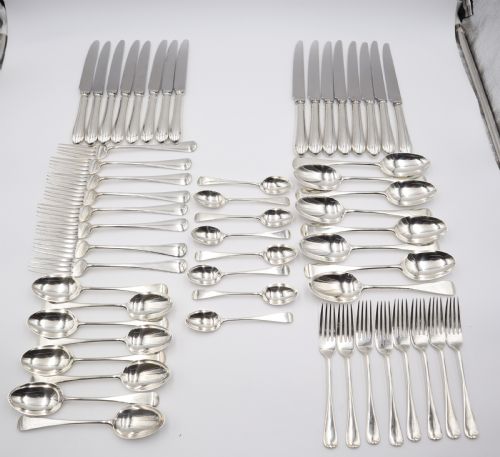
A victorian silver fork knife pairing typically appears in matched sets for fish, dessert, fruit, or christening purposes. These pieces emerge across the nineteenth century, including specific decades such as eighteen eighty and eighteen ninety, alongside Edwardian examples.
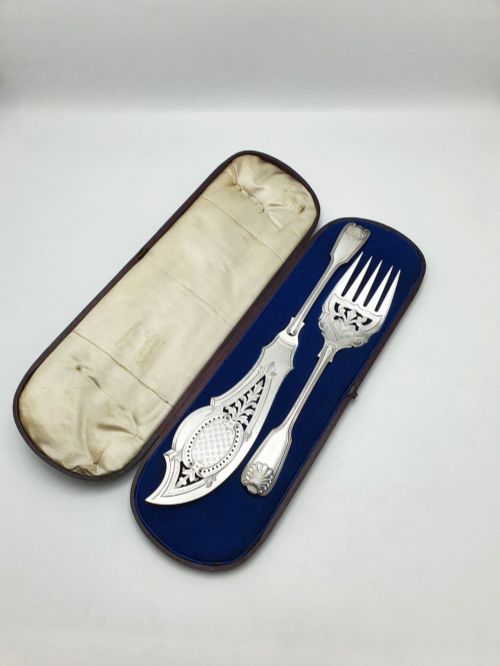
Buyers encounter boxed sets, canteens, and individual matched pairs designed for specific dining rituals. Forms range from fish servers and carving sets to fruit and dessert cutlery sets.
Originating in England, particularly hubs like Sheffield and Birmingham, these utensils reflect the domestic dining habits of the period. The assortment spans sterling silver and silver plate constructions.
Assessing Quality
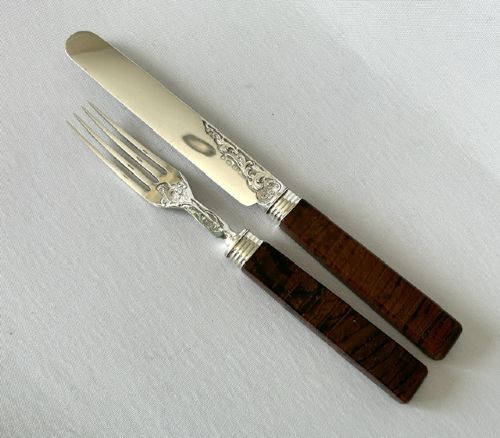
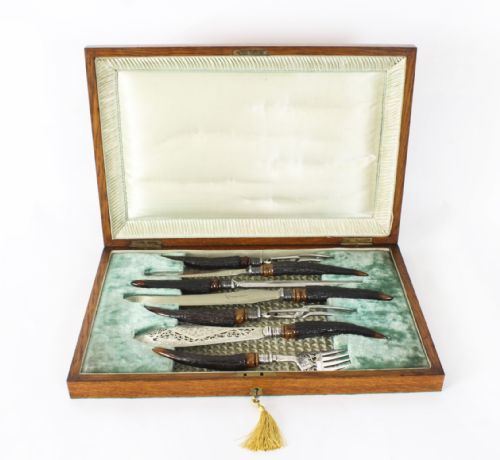
Quality rests upon the selection and pairing of natural handle materials, where deeply figured agate, unblemished mother of pearl, or well-matched antler distinguish superior sets. The crispness and depth of hand engraving on the silver blades and tines further separate standard production from finer output.
The integrity of the original fitted case, whether oak or velvet-lined, influences the overall desirability of the set. Maker attribution to notable workshops adds another dimension of distinction to surviving pieces.
Campaign cutlery sets and canteen configurations appear alongside traditional fish and dessert serving arrangements.
Walter and John Barnard·Elkington and Co·Mappin and Webb·George Unite·Walker and Hall·Harry Atkin·Carrington
The Victorian Silver Fork Knife Glossary
- Sterling silver
- A silver alloy containing ninety-two point five percent pure silver by mass, ensuring durability for cutlery. This standard metal appears frequently in nineteenth-century flatware.
- Silver plate
- A layer of silver applied to a base metal core, offering the appearance of solid silver at a different cost. Manufacturers utilised this method extensively for large serving sets.
- Mother of pearl
- The iridescent internal layer of certain mollusc shells, carved into scales for knife and fork handles. This material provides a luminous, decorative grip.
- Agate
- A chalcedony mineral exhibiting coloured bands, shaped into polished handle scales. These stone handles bring distinctive natural patterns to dining sets.
- Canteen
- A fitted box or chest designed to store a complete set of cutlery securely. These cases often feature multiple tiers or fitted slots for each fork and knife.
Victorian Silver Fork Knife: Frequently Asked Questions
What were these sets used for?
These matched implements served specific dining courses, including fish, fruit, desserts, and game, where specialised utensils were customary.
They also functioned as presentation pieces or gifts, evidenced by dedicated christening sets and fitted presentation boxes.
How do I care for silver and mother of pearl?
Clean sterling silver and silver plate gently with appropriate metal polishes, avoiding abrasive materials that damage engraved details.
Keep organic handle components like mother of pearl and horn away from extreme temperatures and moisture to preserve their surface.
Are these pieces suitable for daily dining?
Many surviving sets remain robust enough for careful everyday use, particularly solid sterling silver and heavier plated examples.
Delicate handles involving pearl or thin silver plate benefit from hand washing and careful storage in fitted cases.
How can I tell the period of a set?
Hallmarks stamped on the metal provide official assay office symbols and date letters indicating the exact year of manufacture.
Stylistic cues, handle materials, and box construction methods also help place pieces within the nineteenth or early twentieth century.